
American Sports & Pastimes
Soccer In The Land Of Football: How Good Is The Us National Soccer Team?

My fellow Americans, gather ’round. For generations, when folks across the globe thought of American sports, their minds rightly went to the crack of a bat, the roar of a basketball net, or the thunder of a pigskin soaring through the air. We’re a nation of champions in baseball, basketball, and our very own brand of football. But there’s another game, one played with a round ball and a lot of running, that’s been quietly, then not-so-quietly, weaving itself into the fabric of our sporting identity: soccer. And let me tell you, it’s a story far richer and more surprising than many realize.
I’ve seen a lot of changes in this country over my lifetime, but few have been as fascinating to watch unfold as the rise of ‘the beautiful game’ right here at home. We’ve gone from being a curious footnote to a genuine contender, with a history that includes a surprising third-place finish in the very first World Cup back in 1930. And let’s not forget our women’s team, a powerhouse that has absolutely dominated the world stage with four World Cup titles. So, where do we truly stand in the global soccer hierarchy? And just how good is the US National Soccer Team? Let’s take a heartfelt look at this incredible journey, full of warmth, hope, and that uniquely American spirit of striving for greatness.
The 1930 World Cup to Today: A History of American Soccer Milestones
It might shock some of the younger folks, but the United States actually made a statement at the inaugural 1930 FIFA World Cup in Uruguay. That year, our men’s team, made up of a mix of recent immigrants and rugged American athletes, defied expectations to reach the semi-finals, ultimately finishing third. It was there that our own Bert Patenaude etched his name in history, scoring the first-ever hat-trick in World Cup play. Imagine that, an American setting such a monumental record right at the sport’s dawn!
After that promising start, American soccer entered what many call the ‘sleeping giant’ phase. For decades, the game remained a niche sport, primarily played in immigrant communities. Yet, flashes of brilliance, like the legendary ‘Miracle on Grass’ at the 1950 World Cup, where an underdog American squad, including players like Joe Gaetjens, stunned a highly favored England team 1-0. Those stories, passed down through generations, kept the flame alive even when mainstream attention was elsewhere.
The 1970s saw a brief, dazzling resurgence with the North American Soccer League (NASL). This league brought global superstars like Pelé and Franz Beckenbauer to American shores, particularly with the iconic New York Cosmos. While the NASL ultimately folded, it planted crucial seeds, showing Americans the beauty and excitement of top-tier soccer and influencing a whole generation of future players and fans.
The true modern turning point for men’s soccer arrived when the United States hosted the 1994 FIFA World Cup. The attendance records set at stadiums like the Rose Bowl and Giants Stadium were simply astounding, proving a massive, untapped appetite for the sport. This event wasn’t just about watching games; it was about experiencing the world’s game on our own soil, igniting a passion that would fuel the creation of Major League Soccer (MLS) and set the stage for consistent World Cup qualifications for the men’s team in subsequent decades.

Vintage American Flag Heart Shirt
Wear your story with pride! Celebrate classic American values, history, and heritage with our premium crafted apparel, designed for comfort and durability.
Shop the Look →The Dominance of the USWNT: How the US Women Conquered the World Stage
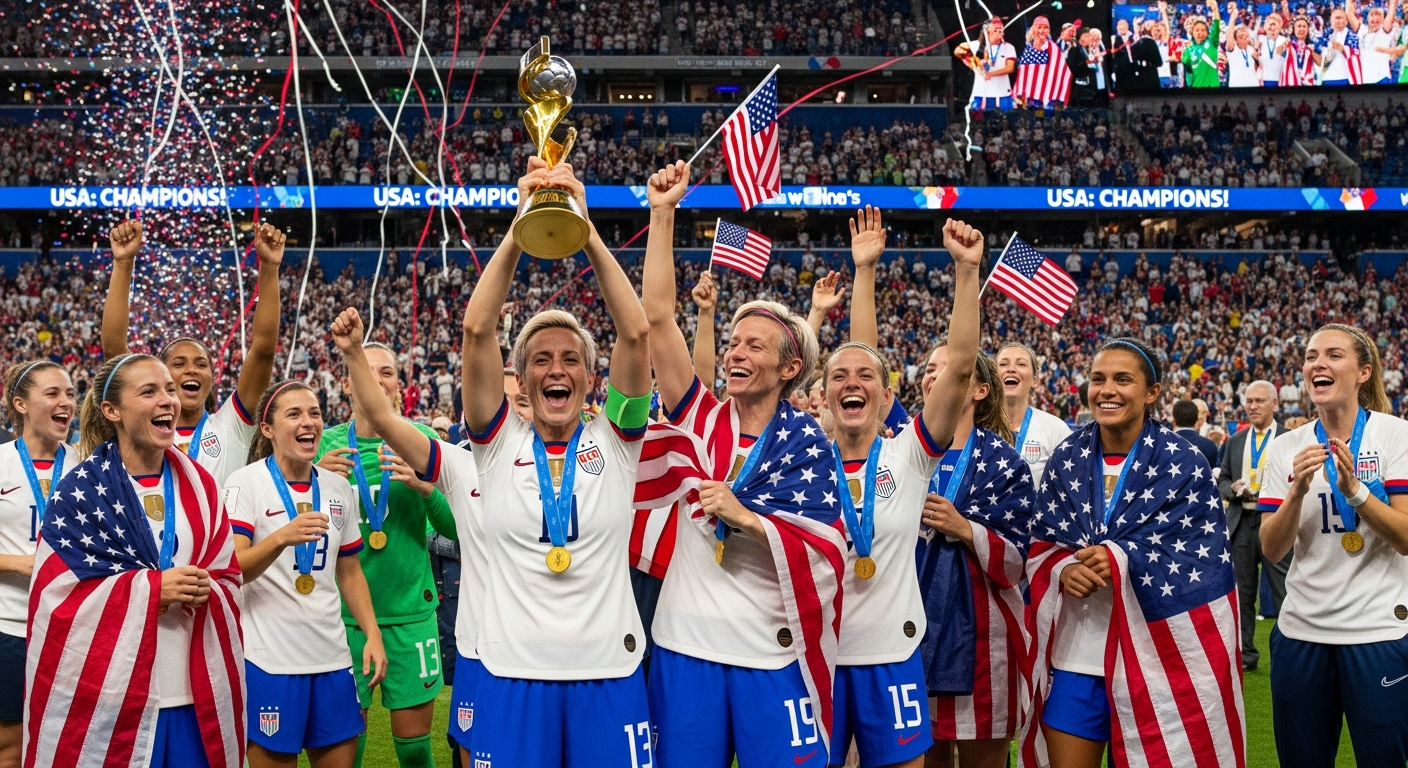
While the men’s team was navigating its peaks and valleys, a different story of pure, unadulterated dominance was unfolding with the U.S. Women’s National Team (USWNT). This is where America truly established itself as a global superpower in soccer, inspiring millions and shattering expectations along the way. The USWNT isn’t just good; they’re legendary.
Their journey to the top began with the first-ever FIFA Women’s World Cup in 1991, where they claimed the inaugural title. But it was the iconic 1999 World Cup, hosted right here in the U.S., that truly captured the nation’s heart. Who could forget Brandi Chastain’s penalty kick and celebration? That moment, played out in front of a packed Rose Bowl, became a defining image of American sports, symbolizing grit, determination, and unbridled joy. That victory wasn’t just a win; it was a cultural phenomenon, inspiring countless girls to pick up a soccer ball.
Since then, the USWNT has continued to build an unparalleled legacy, adding more World Cup trophies in 2015 and 2019. Players like Mia Hamm, Megan Rapinoe, and so many others have become household names, not just for their athletic prowess but for their advocacy, their leadership, and their fierce spirit. Their consistent success has elevated the sport, challenged norms, and fought for greater equality in sports, leaving an indelible mark that resonates far beyond the pitch. They’ve shown the world what American soccer, at its very best, can be.
The Growth of MLS and Youth Soccer: Building a Modern Football Infrastructure
The journey of American soccer from a ‘sleeping giant’ to a vibrant, growing force can largely be credited to two intertwined factors: the steady expansion of Major League Soccer (MLS) and the incredible explosion of youth soccer participation. These aren’t just statistics; they’re the grassroots, the foundational elements building a truly modern football infrastructure here in the U.S.
MLS: From Humble Beginnings to a Major Player
After the success of the 1994 World Cup, MLS was launched in 1996 with just ten teams. Many were skeptical. Could soccer truly thrive in a country so deeply rooted in its ‘big three’ sports? Fast forward to today, and the answer is a resounding ‘yes.’ MLS has grown to nearly 30 teams, each with dedicated fan bases and often, purpose-built stadiums. Look at the passion in places like Atlanta or Seattle, where MLS games draw crowds comparable to, or even larger than, many traditional American sports.
Here’s a little something that often surprises folks: in 2023, Major League Soccer averaged over 22,000 fans per game, a figure that actually surpassed both the average attendance for the NBA and the NHL. That’s not just a statistic; it’s a statement. It shows that Americans are not only showing up but are passionately engaging with their local clubs. The league has become a legitimate destination for international stars and, crucially, a proving ground for young American talent.
Youth Soccer: A Nation of Players
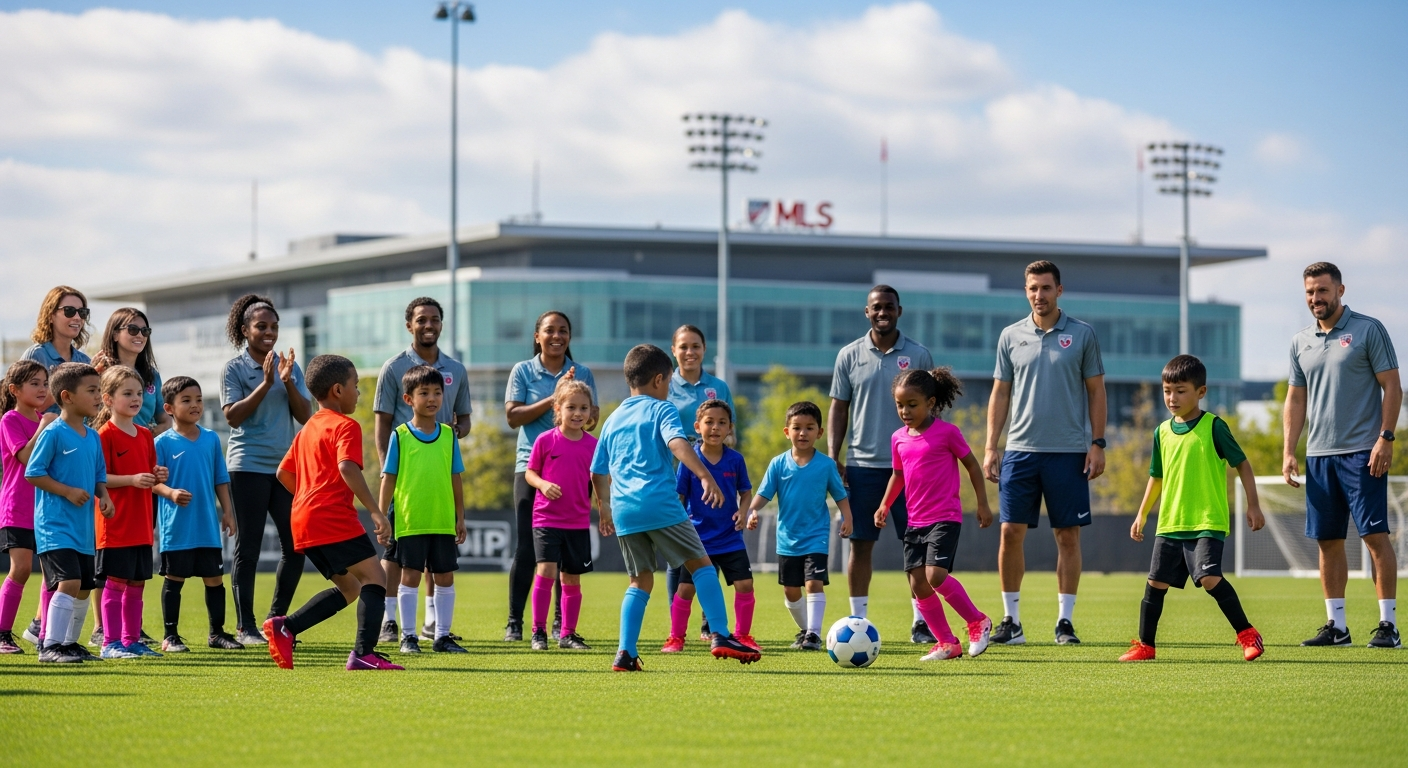
But the real engine of growth, the heartbeat of American soccer’s future, lies in youth participation. I remember when soccer was a fringe sport for kids, but now it’s everywhere. Drive past any park on a Saturday morning, and you’ll see fields dotted with kids in colorful jerseys, chasing a ball with boundless energy. This isn’t just anecdotal; the numbers back it up. Credible sources like U.S. Youth Soccer report that over 3 million young athletes are registered to play soccer across the country, making it one of the most widely played youth sports in the United States. That’s a massive talent pool, growing year after year.
The rise of youth soccer has led to a significant shift in player development. Gone are the days when American players had limited pathways; now, sophisticated academy systems, often affiliated with MLS clubs, are identifying and nurturing talent from a young age. These academies are providing high-quality coaching and competition, creating a pipeline of players who are technically proficient, tactically aware, and ready for the professional ranks, both in MLS and abroad. We’re seeing more and more American kids, many from diverse backgrounds who grew up with the sport, making their way to top European leagues, something that was almost unthinkable a couple of decades ago.
Future Outlook: Can the USMNT Compete for a World Cup Title?
Now, for the million-dollar question: Can the US Men’s National Team truly compete for a World Cup title? Looking at where we are today, compared to even twenty years ago, gives me an immense sense of optimism and pride. We’ve got a young, dynamic generation of players, many of whom are not just playing but excelling in some of the most competitive leagues in Europe. Think of names like Christian Pulisic, ‘Captain America,’ dazzling crowds in Italy; Weston McKennie, a tenacious midfielder dominating in Italy’s Serie A; Tyler Adams, a tireless leader in the English Premier League; and the immense talent of Giovanni Reyna in the Netherlands. These aren’t just good players; they are world-class talents gaining invaluable experience at the highest level of the sport.
The team’s performance at the 2022 World Cup in Qatar, where they navigated a tough group and advanced to the knockout stages, showed moments of brilliance and resilience. They might have fallen short against a more experienced Dutch side, but the potential was clear for all to see. The average age of that squad was one of the youngest in the tournament, meaning their best years are still ahead of them.
The Road to 2026: A Home World Cup
And then there’s 2026. The next FIFA World Cup will be co-hosted by the United States, alongside Canada and Mexico. This isn’t just another tournament; it’s an unprecedented opportunity. Playing on home soil, in front of passionate American crowds in iconic venues like MetLife Stadium and AT&T Stadium, gives our team a powerful advantage. The energy of a home World Cup can be truly transformative, lifting players to new heights.
Will they win it all in 2026? That’s a mighty tall order. The soccer world is incredibly competitive, filled with nations steeped in centuries of football tradition. There will be challenges: maintaining consistency, developing deeper tactical versatility, and instilling that final, unwavering winning mentality against the absolute giants of the game. But the trajectory is undeniably upward. The talent pool is deeper, the infrastructure is stronger, and the fan base is more engaged than ever before.
I believe the USMNT, with this generation of players and the momentum of a home World Cup, has a genuine chance to make a deep run, perhaps even reaching the semi-finals or beyond. Winning the whole thing is the ultimate dream, and while it might not happen in 2026, the foundation being laid means it’s no longer an impossible fantasy. It’s a goal within reach for a future generation, and that alone is something to celebrate with every fiber of our patriotic hearts.
So, let’s keep cheering, keep supporting our clubs, and keep encouraging those kids on the local pitches. The story of American soccer is a testament to perseverance, passion, and the power of believing in what’s possible. It’s an exciting time to be an American soccer fan, and the future, my friends, looks brighter than ever.