
American Sports & Pastimes
Why Fantasy Sports Became So Popular
The 1776 Winners History Premium Tee
Wear your story with pride! Celebrate classic American values, history, and heritage with our premium crafted apparel, designed for comfort and durability.
The Magic of Morning Box Scores
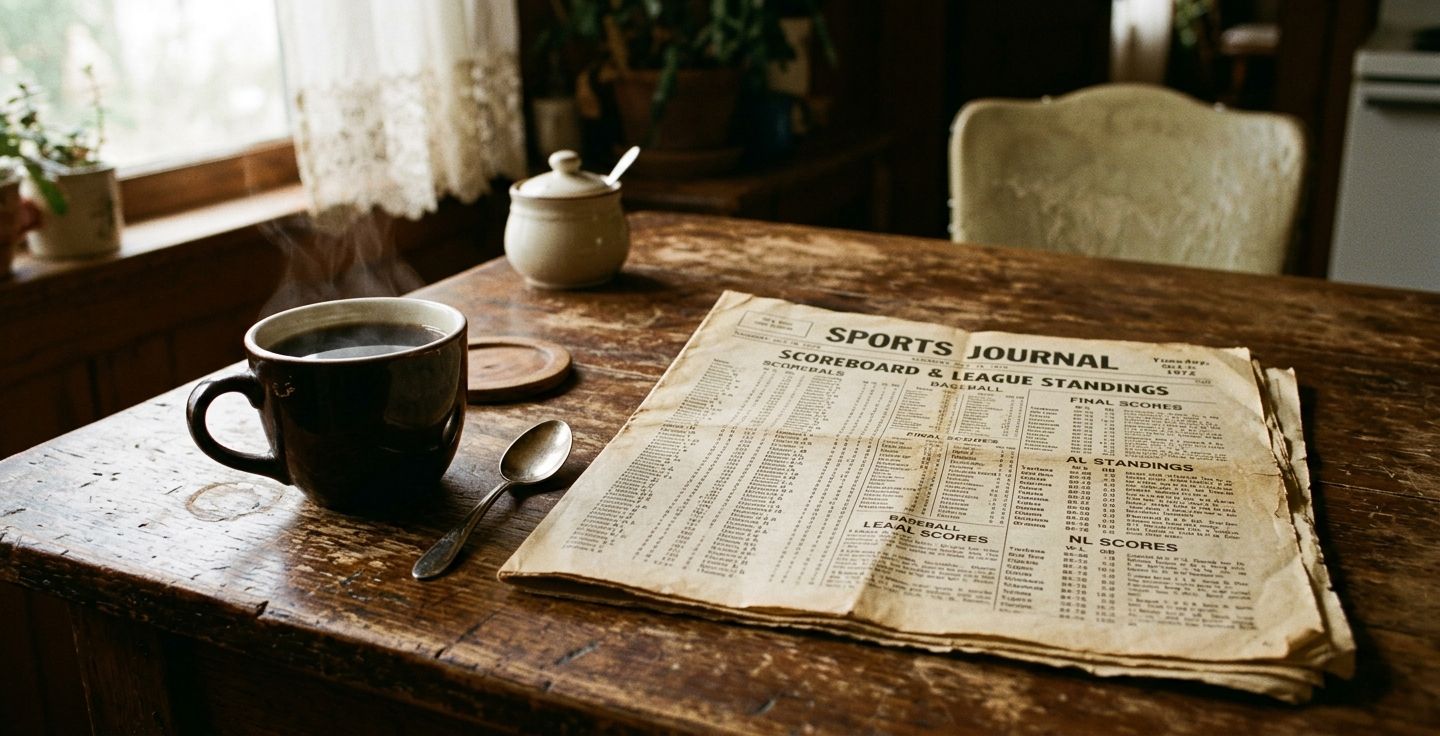
I remember the crisp autumn mornings of my youth vividly. The world felt much quieter then. The local paper boy would ride his bicycle down our street and toss the heavy Sunday edition onto the front porch with a loud, satisfying thud. I would race out in my slippers to grab it before the morning dew could soak through the fragile pages. We did not have instant updates flashing on screens in our pockets. We had newsprint. We had patience. My fingers would quickly turn black with ink as I eagerly flipped straight past the front page and the world news. I would sit down at the kitchen table while my mother poured fresh hot coffee. I would spend hours studying the tiny, densely packed grids of numbers. We loved the game of baseball deeply. We loved the heroes who stood on the diamond. More than anything else, we loved the statistics. Those numbers told a magnificent story.
Long before the modern era made things easy, everyday folks found creative ways to bring the stadium into their own living rooms. Take the famous writer Jack Kerouac (born 1922, died 1969) as a wonderful example. Long before he traveled across the country and wrote his famous books, he was just a young boy sitting in a modest house in Lowell, Massachusetts. Jack invented his very own complex baseball game using simple playing cards and marbles. He kept meticulous handwritten records for entirely fictional players. He filled countless notebooks with batting averages, home run totals, and pitching records. Jack was not alone in this habit. Thousands of us did similar things during those years. We would carefully track real life legends like Babe Ruth (born 1895, died 1948) or the great iron horse Lou Gehrig (born 1903, died 1941). We played out entire dramatic seasons in our heads.

The 1776 Winners History Premium Tee
Wear your story with pride! Celebrate classic American values, history, and heritage with our premium crafted apparel, designed for comfort and durability.
The 1776 Winners History Premium Tee
Wear your story with pride! Celebrate classic American values, history, and heritage with our premium crafted apparel, designed for comfort and durability.
From the Sidelines to the Manager Seat
That was the situation we lived in for many decades. We were deeply passionate fans who understood the rich history of the sport. We loved the intricate strategy involved in every single pitch. Yet, we faced a constant, frustrating complication. We were always on the outside looking in. We sat shivering in the wooden bleachers at historic places like Wrigley Field during the early spring games. We ate our cold hot dogs and drank our sodas while bundled up in heavy coats. We yelled at the managers when they made a bad pitching change in the late innings. We second guessed every single strategic decision from the complete safety of the stands. We all truly believed, in our hearts, that we could run a professional franchise much better than the men standing in the dugout.
This brings us to an important question. How did we go from being passive spectators in the cheap seats to active participants running our own imaginary teams? How did a quiet, solitary hobby of tracking daily numbers evolve into a massive, booming national tradition that connects families across the country? The answer is a story of ingenuity, friendship, and a deep desire to take true ownership of the games we cherished. We wanted a stake in the final outcome that went far beyond mere geographical loyalty to our local city team.
A Quiet Revolution Over Lunch
The quiet revolution happened far away from any freshly mowed grassy outfield. It happened inside a restaurant. In the early part of the nineteen eighties, a group of writers and academics started meeting regularly for lunch at a place called La Rotisserie Francaise in Manhattan, New York. They loved baseball passionately. They also enjoyed friendly wagers with one another. During those long lunches, they devised a brilliant system to draft real, active Major League players onto their own imaginary rosters. They would then track those specific players through the actual unfolding season. They named their creation Rotisserie baseball in honor of the restaurant.
This small, friendly gathering sparked a massive fire across the nation. People in offices and neighborhoods started forming their very own local leagues based on these rules. It was incredibly hard work in those early days. If you were unlucky enough to be named the league commissioner, your Tuesday mornings were an absolute nightmare of arithmetic. You had to wait patiently for the national newspaper to arrive at the local stand. You would sit at your desk with a wooden ruler and a pocket calculator. You painstakingly tallied up home runs, stolen bases, and weekly strikeouts entirely by hand. You then had to type up the weekly standings and mail them to your friends using the postal service. You waited days just to find out if you won your matchup. It was a true labor of love.
If you look at the historical numbers, the resulting growth is absolutely astonishing. According to the Fantasy Sports and Gaming Association, back in the year nineteen eighty eight, there were only about five hundred thousand people playing fantasy sports. At the time, most people thought it was a very strange, niche hobby reserved strictly for math enthusiasts. Today, the cultural landscape is entirely different. There are over sixty million active participants playing in North America alone. It has blossomed into a massive industry worth many billions of dollars. That is a staggering jump in a relatively short period of time. It proves just how deeply we as human beings crave friendly competition and meaningful connection with our peers.
The Dawn of the Digital Diamond
What caused such a massive explosion in mainstream popularity? The answer is quite simple. The arrival of the internet changed our world and our favorite pastime completely. I still smile warmly when I think about the screeching, static sound of an old dial up modem connecting to the web. It often took several minutes just to load a single, plain text webpage. However, that clunky new technology was an absolute miracle for our humble leagues. The personal computer took over all the heavy lifting. The tedious days of pocket calculators and postage stamps vanished almost overnight. Software programs automatically updated the daily box scores every single night while we slept.
Suddenly, the game was wide open to absolutely everyone. You no longer needed to be a math genius or a spreadsheet expert to play. You simply had to love the sport and enjoy having fun. You could easily join a public league with complete strangers from across the globe. Better yet, you could stay deeply connected with your oldest friends. I have a wonderful group of buddies from my early college days. We all moved away to different, distant cities after graduation to start our careers. Life got incredibly busy with jobs and kids. We stopped calling each other as often as we should have. Then we started a football league online. For the past twenty years, we have talked to each other every single week during the autumn months. We argue playfully about bad trades. We joke endlessly about terrible draft picks. The game effectively gave us our friendship back.
Draft Day Memories
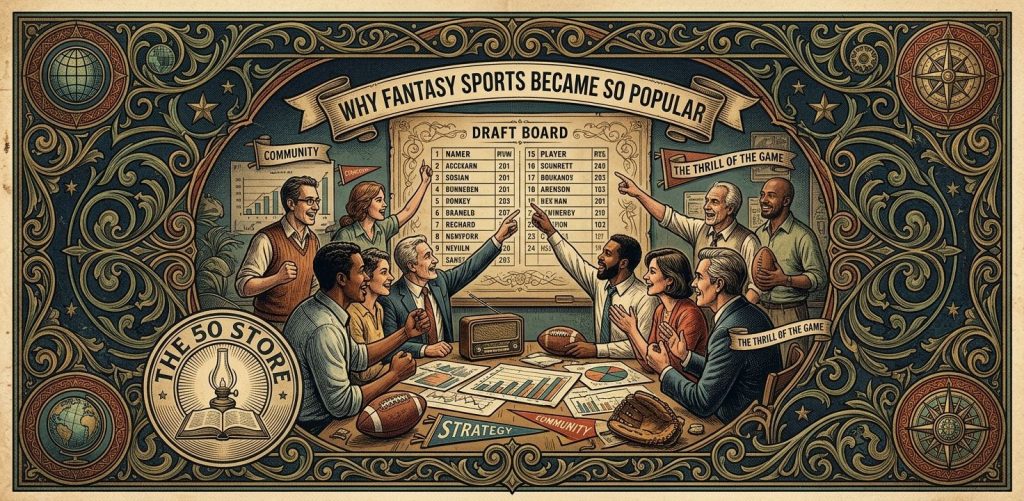
Before the digital age made everything remote, our annual draft day was treated like a sacred national holiday. We would all gather excitedly in a friend’s damp, unfinished basement. The air would smell heavily of cheap delivery pizza and old wood paneling. We would tape a massive piece of white poster board to the cinderblock wall. Someone always brought a giant pack of colorful markers. We spent hours shouting over one another, crossing out names, and making terrible predictions about the upcoming season. I fondly remember the pure joy of drafting the great Walter Payton (born 1954, died 1999) for my very first football roster. You could always count on him to grind out the tough yards on a muddy Sunday afternoon. He never let my imaginary team down.
More Than Just a Game
When I sit back in my armchair and watch the younger generation today, I feel a profound sense of warmth and genuine hope. My grandsons and granddaughters are growing up in a very fast, complicated world. They have glowing smartphones buzzing in their pockets constantly. The constant stream of information can be quite overwhelming at times. Yet, I happily see them using these modern digital devices to build and maintain genuine human bonds. They huddle together closely on the living room couch on Sunday afternoons. They cheer wildly for players on teams they do not even root for in real life. They will celebrate a random, meaningless field goal in a snowy game in Green Bay, Wisconsin with absolute joy. They do this simply because that specific kicker happens to be on their digital fantasy roster.

The true magic of this hobby is not the potential financial reward. It is not the shiny plastic trophies we mail to the winner. It is the beautiful community it builds from the ground up. It is the shared, universal language it provides to people of all ages. When I do not know exactly how to talk to my teenage grandson about his complicated school life, I can always ask him about his starting quarterback for the week. It opens a safe door for conversation. It keeps our family talking, laughing, and hoping together through the long winter months.
Common Questions About Our Favorite Pastime
What exactly is a fantasy sport?
Why did these leagues grow so incredibly fast in the early two thousands?
Is this popular hobby only focused on baseball and football?
Looking Ahead to the Next Inning
In the end, our collective journey from keeping handwritten ledgers at the kitchen table to participating in instant, global digital leagues is a beautiful story. Our deep love for the game has only grown stronger with the passage of time. The tools we use have certainly changed, but the beating heart of the pastime remains exactly the same today as it was fifty years ago. We still just want to feel the immense thrill of a hard fought victory and share the agony of a close defeat alongside our dearest friends and family members. As long as they keep playing the games on the field, we will keep playing our games at home.
I encourage you to take a moment and think back to the very first time you ever joined a league. Who was the very first player you ever drafted, and what made you choose them?