
Culture & Traditions
What Makes American Weddings Unique
Grill Chill And Freedom BBQ T Shirt
Wear your story with pride! Celebrate classic American values, history, and heritage with our premium crafted apparel, designed for comfort and durability.
The Porch and The Promise
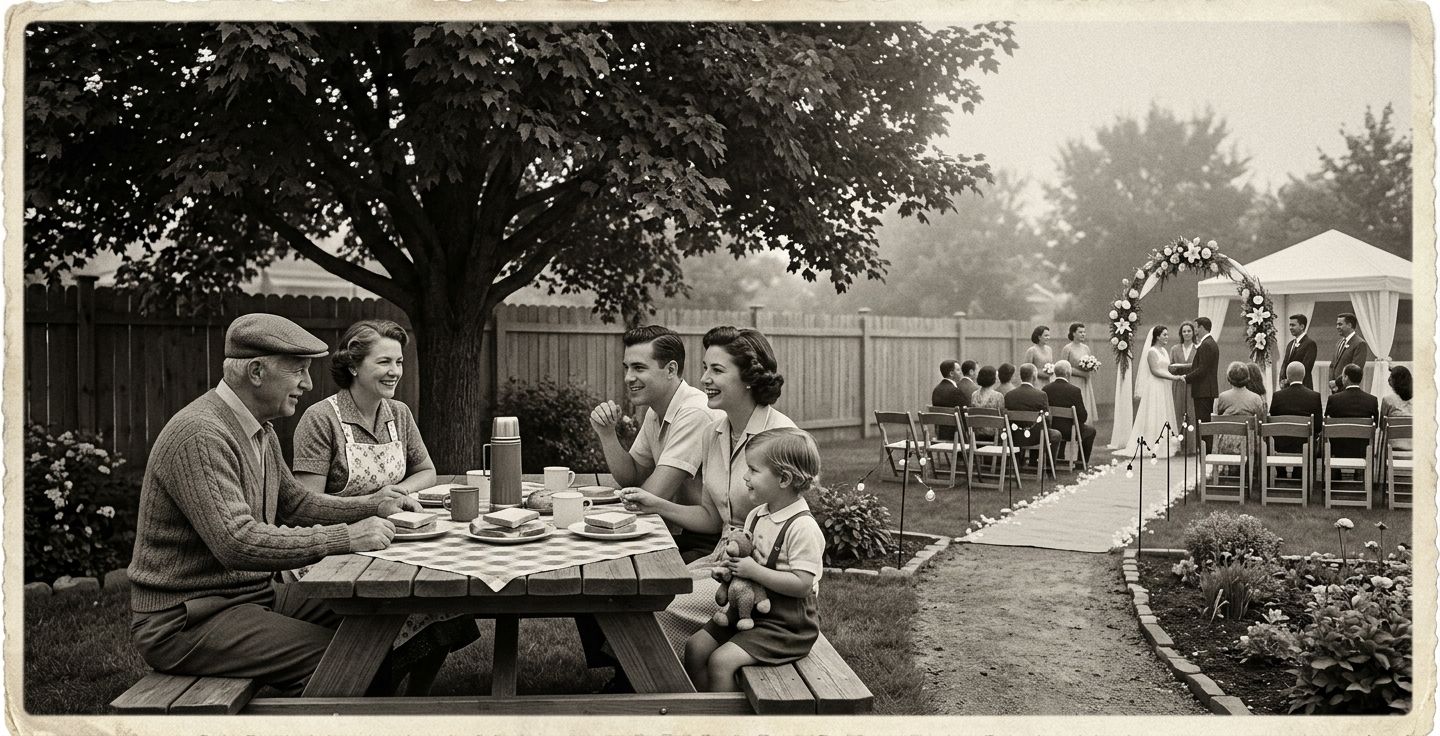
I remember standing on the creaky wooden porch of my childhood home. It was a late Saturday afternoon in the spring. The dogwoods were just starting to bloom. My older sister was getting married. The entire neighborhood walked over. There were no rented limousines or professional lighting crews. My mother baked the cake. My father set up folding chairs in the yard. We did not have a professional photographer to direct our every move. My uncle simply carried around his old film camera and snapped pictures whenever someone smiled. We cherished those blurry, candid photos more than any posed portrait. It was a simple afternoon. We celebrated with lemonade and cold cuts. That was how folks did it back then. You gathered your loved ones and you made a promise. Today, things look a little different.
Over the years, I have watched the nature of American weddings change completely. They have grown from quiet afternoon gatherings into enormous, highly coordinated extravaganzas. We see destination events across the globe, choreographed dances, and elaborate photo shoots. It can feel a bit overwhelming. Sometimes, the core meaning of the day gets buried under the weight of expectations and heavy bills. The sheer scale of it all presents a puzzle. We have to wonder about the heart of the matter. What exactly makes our celebrations unique in the grand tapestry of the world? Are we just putting on a big spectacle, or is there something profoundly special about how we say I do in this country?

Grill Chill And Freedom BBQ T Shirt
Wear your story with pride! Celebrate classic American values, history, and heritage with our premium crafted apparel, designed for comfort and durability.
Grill Chill And Freedom BBQ T Shirt
Wear your story with pride! Celebrate classic American values, history, and heritage with our premium crafted apparel, designed for comfort and durability.
A Fascinating Shift in Scale
Let us look at the numbers for a moment. You might find them astonishing. According to the Pew Research Center and the latest reports from The Knot, the wedding industry in the United States is a massive engine. It generates nearly sixty billion dollars every single year. Couples today spend an average of thirty thousand dollars on their special day. Think about that for a second. That is more than my parents paid for their very first house. Furthermore, nearly forty percent of couples now incorporate unique cultural elements into their ceremonies. Over seventy percent of weddings take place outside of traditional religious institutions. We also see an incredible shift in the length of these events. What used to be a three hour afternoon gathering has turned into a multi day festival. There are welcome dinners, rehearsal luncheons, the main event, and farewell brunches. The sheer stamina required is something to marvel at. These figures paint a fascinating picture. They show a rapid departure from the predictable, standardized ceremonies of my youth.
Borrowing the Best from the Past
To understand how we arrived at this moment, we should look back at the origins of our customs. Many of our most cherished wedding traditions are not strictly American at all. They are borrowed from distant shores. Take the classic white wedding dress. Before the nineteenth century, most American brides simply wore their best dress. It could be blue, brown, or even black. Then came Queen Victoria (1819 – 1901). When she married in a stunning white lace gown, the news traveled across the Atlantic like wildfire. American women wanted to capture that same regal magic.
But the uniquely American twist came later. Let me tell you about a man named Charles Dana Gibson (1867 – 1944). He was a brilliant illustrator. He created the famous Gibson Girl. He drew young, confident, and independent American women. His drawings defined the standard of beauty at the turn of the twentieth century. Young brides across the country modeled their wedding day looks after his sketches. It is fascinating to think about how a single drawing in a magazine could alter the course of our social customs. But that is the magic of American ingenuity. We see something we like, and we immediately adopt it as our own. We give it our own special flavor and pass it down. This was a profound shift. The bride was no longer just a daughter being handed over. She was an independent American woman making a fierce, joyous choice.
A Beautiful Blend of Backgrounds
This spirit of individuality is exactly what sets us apart on the global stage. We live in a vibrant cultural melting pot. Our weddings reflect this beautiful reality. In many parts of the world, a wedding strictly follows the rules of one specific culture or religion. Here, we mix and match. We blend complicated family histories into something entirely new.
I think of a wedding I attended a few years ago in Central Park, New York. The groom was of Jewish descent. The bride had deep roots in West Africa. Under the shade of the grand elm trees, we watched them honor both bloodlines. They jumped the broom to pay respect to her ancestors. A few minutes later, the groom stepped on a glass to honor his heritage. We all yelled Mazel Tov. It was a seamless, joyful blending. Nowhere else in the world do you see this exact kind of cultural choreography so frequently. We take the old rituals and weave them into a brand new tapestry.
Consider the joyous customs found down in the Deep South. Let us take a walk through the French Quarter. I was lucky enough to witness a celebration in New Orleans, Louisiana several decades ago. After the ceremony concluded, the couple did not just quietly slip away into a getaway car. Instead, a brass band appeared seemingly out of thin air. The newlyweds opened matching umbrellas. They stepped out into the humid, musical street. This is called the Second Line.
The band played a triumphant, booming jazz march. The guests fell in line behind the couple. But the most magical part was what happened next. The people on the street joined in. Strangers, shop owners, and tourists all fell into the parade. They waved their napkins in the air and danced along the cobblestones. This tradition originated from West African circle dances and the historic jazz funeral marches of the city. It evolved into a pure celebration of new life. Where else do strangers drop everything to celebrate a young couple they have never met? That is the heart of our country beating loud and clear.
Redefining the Inner Circle
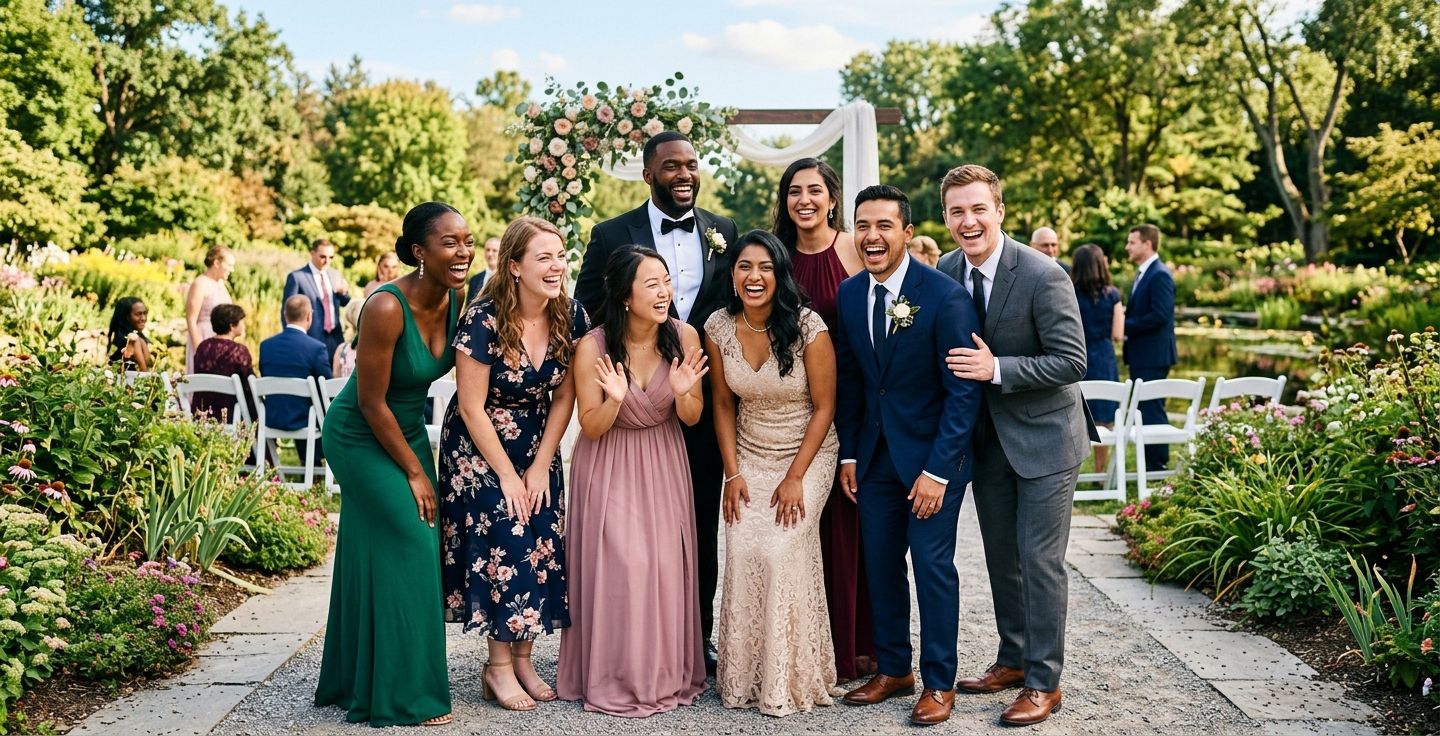
Then there is the matter of the bridal party. Historically, bridesmaids and groomsmen existed to confuse evil spirits. They dressed exactly like the bride and groom. Today, American couples have transformed this ancient superstition into a grand celebration of friendship. The wedding party is a beautiful tribute to the chosen family.
Young people are recognizing that our deepest friendships do not always align perfectly with outdated gender roles. A young man might choose his sister to stand right beside him. A bride might ask her lifelong male best friend to hold her bouquet. It takes a great deal of courage to break with tradition. When a bride asks her brother to be her man of honor, she is telling the world that her family bonds mean more to her than an old superstition. When a groom asks a female friend to stand by his side, he honors the true nature of his life journey. These small choices add up to a much larger cultural shift.
When I see this, I smile. It shows a profound honesty. We are finally stripping away the rigid rules of protocol to make room for genuine love. The people standing at the altar are the ones who held you up through the hard times. They are the ones who listened to your heartbreak. They earned their spot on that stage. It is a magnificent evolution of our customs.
A Canvas of Our Own Making
We must also discuss the reception. In my younger days, we served punch, mints, and a slice of fruitcake. Perhaps there was a modest buffet if the family had saved up for years. Today, the reception is an absolute culinary adventure. It mirrors the vast, diverse landscape of our nation. Couples serve food that tells the story of their relationship. I have seen elegant ballroom weddings serve late night slices of pizza because that is what the couple ate on their very first date. I have seen food trucks parked outside of historic barns serving Korean barbecue tacos. The food is no longer just simple sustenance. It is an open invitation to share in the personal history of the couple.
The geography of our weddings is also entirely our own. Some folks crave the bright, neon thrill of Las Vegas. They want the fast, fun impersonator ceremony. Others want the quiet dignity of a mountain top in Colorado. We are blessed with a vast and varied landscape. Couples use this land as a blank canvas. The location becomes a living character in their love story.
They write their own vows. They choose their own music. They are not bound by the strict protocols of the past. When I watch these young people today, I do not see a generation lost to extravagance. I see a generation deeply committed to authenticity. They want their celebration to look exactly like their love. It is messy, beautiful, and completely their own.
Looking Forward with Hope
This gives me so much hope for the future generations. They are brave enough to discard the rules that do not serve them. They hold tightly to the ones that bring them joy. They are redefining love and commitment for a modern world. It is a wonderful thing to witness from my vantage point.
If you are planning a celebration, or if you are helping a child or grandchild plan theirs, I encourage you to embrace this freedom. Do not worry about what the neighbors think. Do not worry about following a rigid script. Build a day that honors your unique journey. Let your history and your future collide in a way that feels true to your heart.
Common Questions From Our Readers
Why do couples stand on the left and right sides of the altar?
Historically, the groom stood on the right side so his right hand was free to draw his sword and defend his bride from any sudden threats. Today, many American couples ignore this old rule entirely and simply stand wherever the natural lighting looks best for their photographs.
Is it mandatory to have a large group of attendants?
Not at all. While standing with a large group of friends is a cherished custom, many modern couples are choosing to stand up there alone or with just one or two close confidants. The most important rule is to surround yourself with people who truly support your union.
A Final Thought on the Ties That Bind
To summarize, our customs have evolved dramatically from the quiet porch gatherings of my childhood. We have built a massive landscape of celebration. Yet, the true uniqueness of these events lies not in the money spent, but in the incredible freedom to blend our diverse cultures, honor our chosen families, and tell our personal stories. It is a beautiful merging of distinct lives.
As we watch the younger generations take these old traditions and breathe fresh, vibrant life into them, I feel a profound sense of optimism. They are proving that love is not a rigid script. It is an evolving, joyful song.
What unique family tradition or personal touch do you plan to bring to the next celebration in your life, and how will it honor the history that shaped you?