
Geography & the American Landscape
Why the American West Feels So Different
Sweet American Summer Bomb Pop T Shirt
Wear your story with pride! Celebrate classic American values, history, and heritage with our premium crafted apparel, designed for comfort and durability.
The Great Divide of the Mind and Map
I remember the first time I drove across this great country of ours. I was just a young man then, with a full tank of gas and an endless stretch of two-lane highway ahead of me. The journey started in the dense, green embrace of the eastern states. The hardwood trees hugged the roads tight, their broad leaves creating a lush canopy overhead. The towns were clustered close together, like families gathered around a warm winter hearth. The soil was dark and damp, smelling of ancient rain and deep roots. But as I rolled westward and finally crossed the wide, muddy waters of the mighty Mississippi River, something profound began to shift. The sky seemed to literally pull back and open up into a vast canopy of blue. The air grew thinner and tasted drier. By the time I reached the high plains, the claustrophobia of the forests had vanished entirely. I felt as if I had entered an entirely different world.
It is a sensation that many of us have experienced on a long cross-country road trip. You drive long enough, and the very fabric of America changes beneath your tires. The American West is not just a geographical location on a map. It is a dramatic shift in atmosphere, a change in culture, and a highly distinct state of mind.

Sweet American Summer Bomb Pop T Shirt
Wear your story with pride! Celebrate classic American values, history, and heritage with our premium crafted apparel, designed for comfort and durability.
Sweet American Summer Bomb Pop T Shirt
Wear your story with pride! Celebrate classic American values, history, and heritage with our premium crafted apparel, designed for comfort and durability.
The Stark Reality by the Numbers
Have you ever stopped to wonder why the West feels so incredibly open and wild? The situation is rooted deeply in the very dirt and rock of the land itself. We often romanticize the region through old western movies and dime novels, imagining solitary cowboys and endless cattle drives. But the reality of its wildness is backed by some truly surprising facts that tell a story of a harsh and unforgiving environment.
According to the Congressional Research Service, the federal government owns roughly forty-seven percent of the land in the eleven westernmost states. Compare that staggering figure to just four percent east of the Mississippi River. That means nearly half of the vast western territory belongs to the public domain. It is land that remains largely undeveloped, left to the wind, the wild horses, and the elements.
Furthermore, consider the sheer drop in population density. Back east, a small state like New Jersey packs in over one thousand two hundred people per square mile. It is a bustling hive of constant human activity. Out west in a state like Wyoming? You will find barely six people sharing that exact same square mile. This massive reduction in human presence is not a random accident of history. It is a direct result of the local climate and geography. These statistics paint a very clear picture. The West remains vast and empty because it has to be. The land simply cannot support a dense population in the way the well-watered East can.
Where Does the Change Begin?
This brings up an important question. What exactly makes the West so fundamentally different from the East, and how did this stark reality shape the brave pioneers who dared to settle it?
The central complication in settling the American continent was that the basic rules of survival changed completely halfway across the journey. To understand this, we have to look at an invisible line that splits our nation cleanly in two.
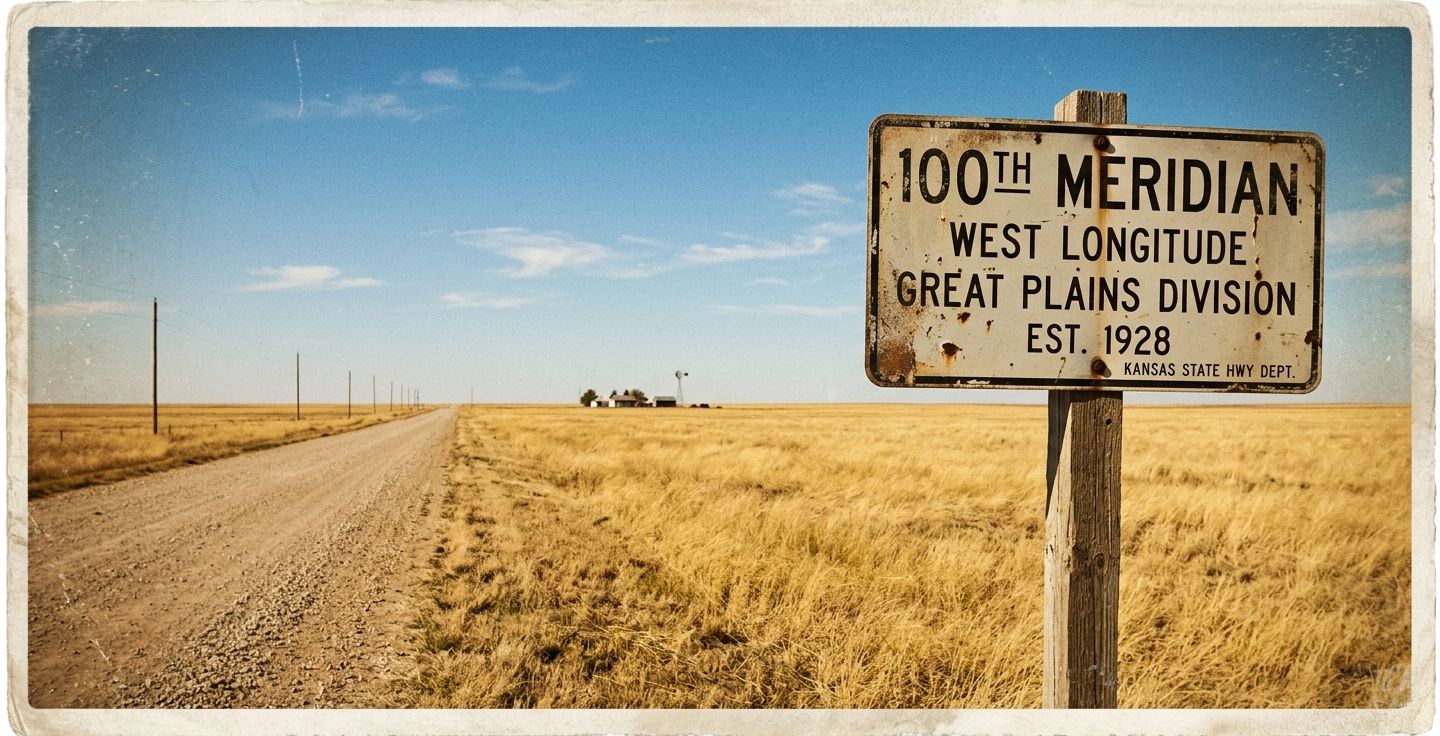
There is a quiet, unassuming town called Cozad, Nebraska. If you walk down its main thoroughfares today, you might find a prominent sign marking the 100th meridian west. This longitudinal line is widely considered the true, climatic gateway to the West. East of this invisible boundary, the country generally receives twenty inches or more of rain each year. That is the magic number needed to grow traditional crops without the need for complex irrigation. West of the line, the rain simply stops falling with any reliability. The land turns arid. The lush green forests quickly give way to short golden grasses, silvery sagebrush, and eventually, the towering snow-capped peaks of the Rocky Mountains. It is a harsh boundary.
A One-Armed Major and the Arid Lands
Let me share a small story about a man who understood this dramatic shift better than anyone else in his era. His name was John Wesley Powell (1834 – 1902). Powell was a dedicated geologist, a naturalist, and a brave soldier. He lost his right arm to a musket ball while fighting at the Battle of Shiloh during the Civil War. You would naturally think that losing an arm would end his days of adventuring. It certainly did not slow Major Powell.
In the late 1860s, he strapped himself to a wooden chair mounted on a small boat and led the very first mapping expedition down the raging, uncharted waters of the Colorado River, straight through the heart of the Grand Canyon. Powell saw the harsh, dry reality of the West up close. While ambitious politicians back in Washington were busy dreaming of endless green farms stretching all the way to California, Powell knew the hard truth.
He wrote a groundbreaking report in 1878 explaining that the western lands could absolutely not be settled like the East. He warned that water, not the amount of land, would be the true measure of wealth, power, and basic survival. People did not listen to him right away. They tried to plow and farm the dry dirt using eastern methods. Many failed miserably, and their hopes blew away in the bitter dust. But Powell’s wise vision eventually shaped how we build our massive dams, share our precious water resources, and survive in the arid West today. One stubborn man in a wooden boat fundamentally changed how we understand half of a continent.
The Boom and Bust of Harrison Avenue
You can see this unique, unpredictable western character perfectly preserved in small historical pockets, such as Harrison Avenue in Leadville, Colorado. Leadville sits nestled high in the Rockies at over ten thousand feet above sea level. It is a freezing, thin-aired place where winter lasts for most of the year. But in the late 1800s, enormous veins of silver were discovered hidden deep in those frozen hills.
Overnight, Harrison Avenue transformed from a muddy mountain trail into a bustling, wealthy metropolis of fortune seekers. Men like Horace Tabor, a modest storekeeper turned silver king, built magnificent opera houses to attract famous eastern stars. Tabor became unimaginably wealthy, married the beautiful Baby Doe, and even served briefly in the United States Senate. The street was lined with busy saloons, ornate banks, and grand brick hotels. But the West has always been a fickle friend. In 1893, when the silver market suddenly crashed due to changing political winds back east, the town emptied out almost as fast as it had filled. Tabor lost his entire vast fortune and died a poor man.
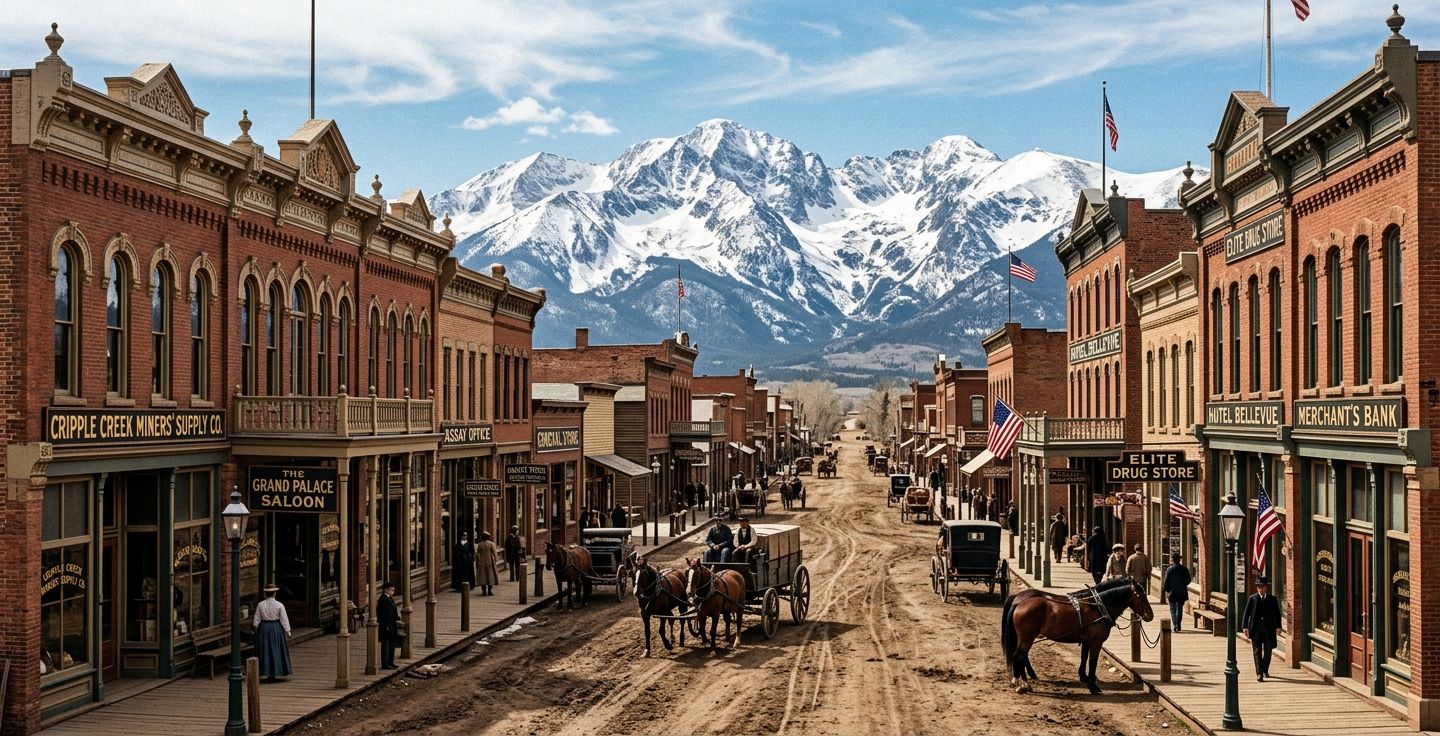
Walking down Harrison Avenue today, you can still see the grand, ornate brick facades standing quietly next to empty lots and small modern shops. This single street tells the micro-history of the entire western frontier. It is a dramatic story of incredible risk, sudden unimaginable wealth, and equally sudden loss. The people who chose to stay in places like Leadville had to be incredibly tough. They had to rely heavily on each other when the brutal winter blizzards set in. This environment forged a culture of rugged individualism paired with a deep, unspoken community bond. You might live ten miles from your nearest neighbor, but if their truck gets stuck in a snowdrift, you are always the first one there with a heavy tow rope and a hot thermos of coffee.
The Legacy of the Frontier
A brilliant historian named Frederick Jackson Turner (1861 – 1932) once argued that the very experience of expanding into this wild, open land is what made Americans exactly who we are today. He presented this idea at the World’s Columbian Exposition in Chicago in 1893, and it forever changed how we view our own history. He believed that the daily struggle against the raw wilderness stripped away our old European traditions. It created a new breed of people who were highly adaptable, intensely pragmatic, and deeply democratic.
I think Turner was absolutely onto something. When you stand on the precipice of the Grand Canyon, or look straight up at the towering, ancient redwoods in California, or watch a dark thunderstorm roll aggressively across the flat plains of Texas, you feel very small. But at the exact same time, you feel incredibly free. The sheer, overwhelming scale of the western landscape demands your absolute respect. It teaches you profound humility. It reminds you that the world is much older and much bigger than our daily, trivial worries.
Looking to the Horizon
I look at you younger folks today, the proud generations carrying the torch forward into a new century. You are navigating a fast-paced world that moves much quicker than I could have ever imagined in my youth. You face entirely new challenges, new digital frontiers, and complex shifts in our society. But I want to offer you a sincere word of encouragement.
The indomitable spirit of the West is not confined to dusty history books or old museum exhibits. It lives on vibrantly in you. The sheer courage it took to cross the dangerous prairies in wooden covered wagons is the exact same courage it takes today to start a new business, to pack up and move to a new city, or to stand tall for what you believe is right in your heart. You are the rightful inheritors of this incredible national heritage. The quiet resilience of the early pioneers flows directly in your veins.
When you feel overwhelmed by the constant noise and pressure of modern life, I encourage you to pack a bag and travel out West. Drive your car until the tall trees thin out and the massive sky takes completely over. Roll down your windows and take a deep breath of the sharp sagebrush. Listen carefully to the deep quiet of the desert. Let the vastness of the unbroken land remind you of your own endless, untapped potential. We have built a truly remarkable country together, and I know in my heart that its brightest, most prosperous days are still ahead, resting securely in your very capable hands.
Questions You Might Have About the American West
What geographically separates the American West from the East?
Why does the federal government own so much land in the western states?
How did the harsh western climate shape the local culture?
Carrying the Spirit Forward
The American West feels so remarkably different because it genuinely is different. It is a massive region defined by dramatic, shifting geography, exceptionally low rainfall, and staggering amounts of wide-open public land. From the brave mapping efforts of a one-armed major navigating river rapids, to the dizzying boom and bust of high-altitude silver mining towns, the uncompromising land forced a completely unique culture into existence. It stripped away old, comfortable habits and successfully forged a resilient, endlessly hopeful people.
As you go about your busy daily lives, working hard and building the future of our great nation, I deeply want you to remember the enduring lessons of the open golden plains and the tall granite mountains. You have the inherent strength to weather any difficult storm and the beautiful freedom to chase any distant horizon.
What exciting new frontiers are you currently exploring in your own life today, and how will you choose to leave your unique mark for the generations that follow?