
American Lifestyle
Why Americans Love Convenience and Fast Services
The 1776 Winners History Premium Tee
Wear your story with pride! Celebrate classic American values, history, and heritage with our premium crafted apparel, designed for comfort and durability.
The Magic of the Modern Aisle
Let me tell you a story about a quiet revolution. It did not happen on a battlefield or in a grand political hall. It happened in a grocery store. Before the world moved quite as fast as it does today, shopping was an entirely different affair. You would walk into a local market, hand a written list to a clerk behind a long wooden counter, and wait. You would wait while they walked back and forth, picking up a tin of flour here and a bag of sugar there. It was pleasant enough. It was also terribly slow.
Then came a man named Clarence Saunders (1881-1953). In 1916, he opened a peculiar little shop in Memphis, Tennessee called Piggly Wiggly. He did something nobody had ever thought to do before. He gave the customers a wooden basket and let them walk the aisles themselves. He put price tags on the items. He set up turnstiles to guide the foot traffic. It was the birth of the American self-service model. It changed the way we interacted with the world. It gave us back our minutes. It gave us control.
The 1776 Winners History Premium Tee
Wear your story with pride! Celebrate classic American values, history, and heritage with our premium crafted apparel, designed for comfort and durability.
The 1776 Winners History Premium Tee
Wear your story with pride! Celebrate classic American values, history, and heritage with our premium crafted apparel, designed for comfort and durability.
The Great American Balancing Act
Our beautiful country is vast. It stretches from rocky eastern shores to sunbaked western deserts. We have always been a people in motion. We built railroads that cut through mountains. We paved endless miles of blacktop that connected quiet towns to towering cities. But as our ambitions grew, we ran into a natural limit. We realized that while we could build more roads and manufacture more cars, we could never manufacture more time.
This is the great situation we found ourselves in during the boom of the twentieth century. America was expanding. Families were moving out into the newly built suburbs. Fathers and mothers were commuting longer distances to work. The daily tasks of maintaining a home, raising children, and earning a living began to stack up. We started running out of hours in the day.
The complication was simple but profound. How could we possibly do everything we wanted to do? How could we work hard, keep a tidy home, feed our families, and still have a moment to sit on the porch and watch the fireflies at dusk? The pressure was mounting. Time became our most precious and scarce resource.
This brings us to a very important question. How did we become a nation so deeply obsessed with saving minutes? How did we learn to adapt to a fast paced modern world without losing our minds?
The answer is that we invented our way out of the problem. We embraced a culture of speed, efficiency, and brilliant service. We turned convenience into an art form.
Fascinating Truths About Our Need for Speed
We often hear people say that modern folks are always in a rush. Some folks might even say we have gotten a little lazy. I smile when I hear that because the facts tell a completely different story. We are not lazy. We are highly efficient.
Let us look at some surprising statistics that show just how much we value our time. According to industry studies, over seventy percent of fast food revenue today comes strictly from the drive-thru window. That is an incredible number. Furthermore, a report by the American Time Use Survey highlighted that modern conveniences, from washing machines to ready made meals, have saved the average American household more than a dozen hours of manual labor every single week compared to fifty years ago.
Think about that for a moment. A dozen hours! That is an entire day of waking life handed back to you. The rise of the convenience store was not about avoiding work. It was about allowing us to purchase back our time. We started buying pre-sliced bread and instant coffee so we could spend an extra twenty minutes at the breakfast table with our children before the school bus arrived. We sought out instant gratification not because we were impatient, but because our lives were overflowing with responsibilities.
The Choreography of the Kitchen
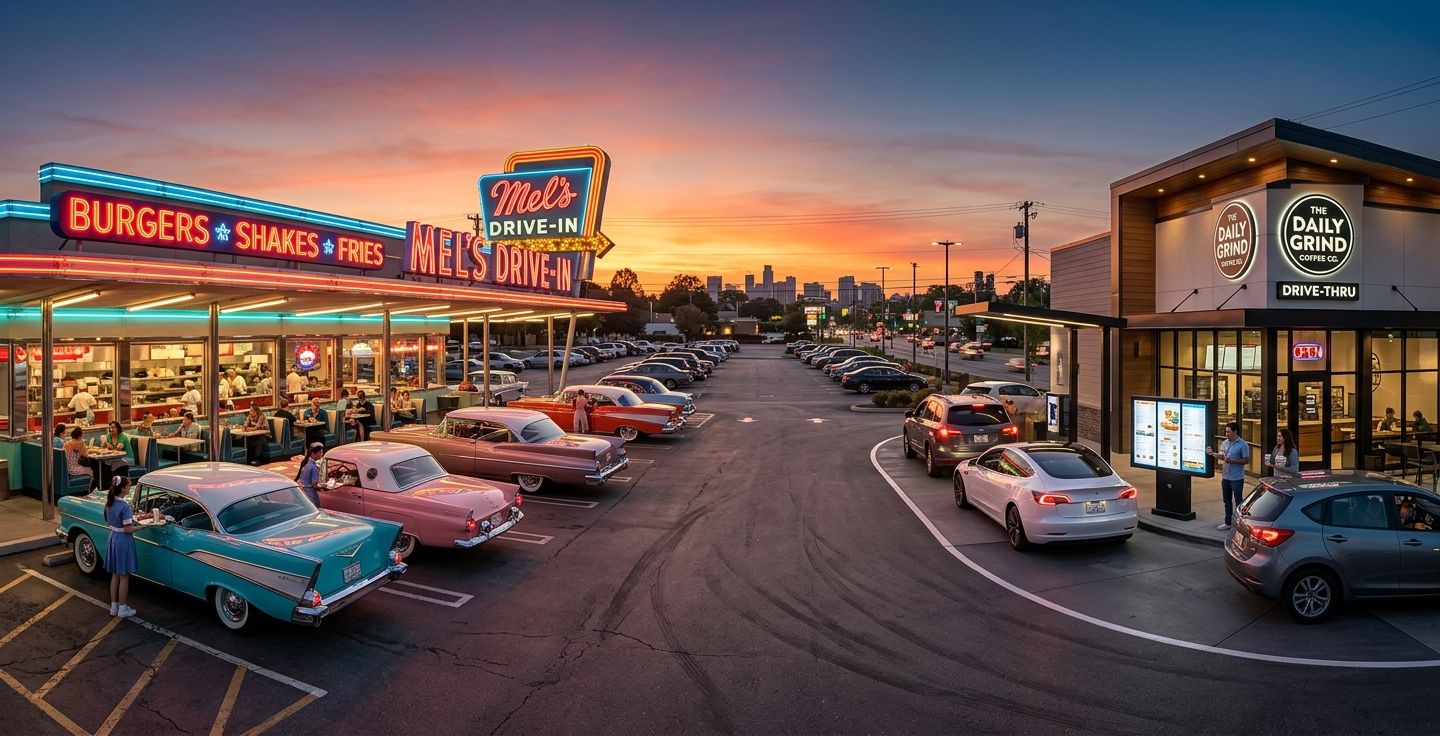
If you want to understand the true heart of American convenience, you have to look at a small hamburger stand in San Bernardino, California. The year was 1948. Two brothers named Richard McDonald (1909-1998) and Maurice McDonald (1902-1971) were running a moderately successful drive-in restaurant. They noticed that their customers wanted something simpler and faster. People were busy. They had places to be.
So, the brothers did something daring. They closed down their successful business. They took a piece of chalk and went out to an empty tennis court. They drew the exact dimensions of a new kitchen on the hard clay. Then, they had their employees pretend to cook burgers, fry potatoes, and pour drinks. They timed their movements. If an employee bumped into another, the brothers erased the chalk lines and drew them again. They treated a restaurant kitchen like a Detroit automobile assembly line.
They called it the Speedee Service System. When they finally reopened, they had created the blueprint for modern fast food. You could walk up to the window, hand over fifteen cents, and receive a hot meal in less than thirty seconds. It was a marvel of human ingenuity. They took the friction out of feeding a family on the go.
The True Desire Behind the Drive-Thru
We love fast services because we love our freedom. When you pull up to a window and receive your morning coffee without stepping out of your car, you are experiencing a small, daily miracle. You are keeping your momentum.
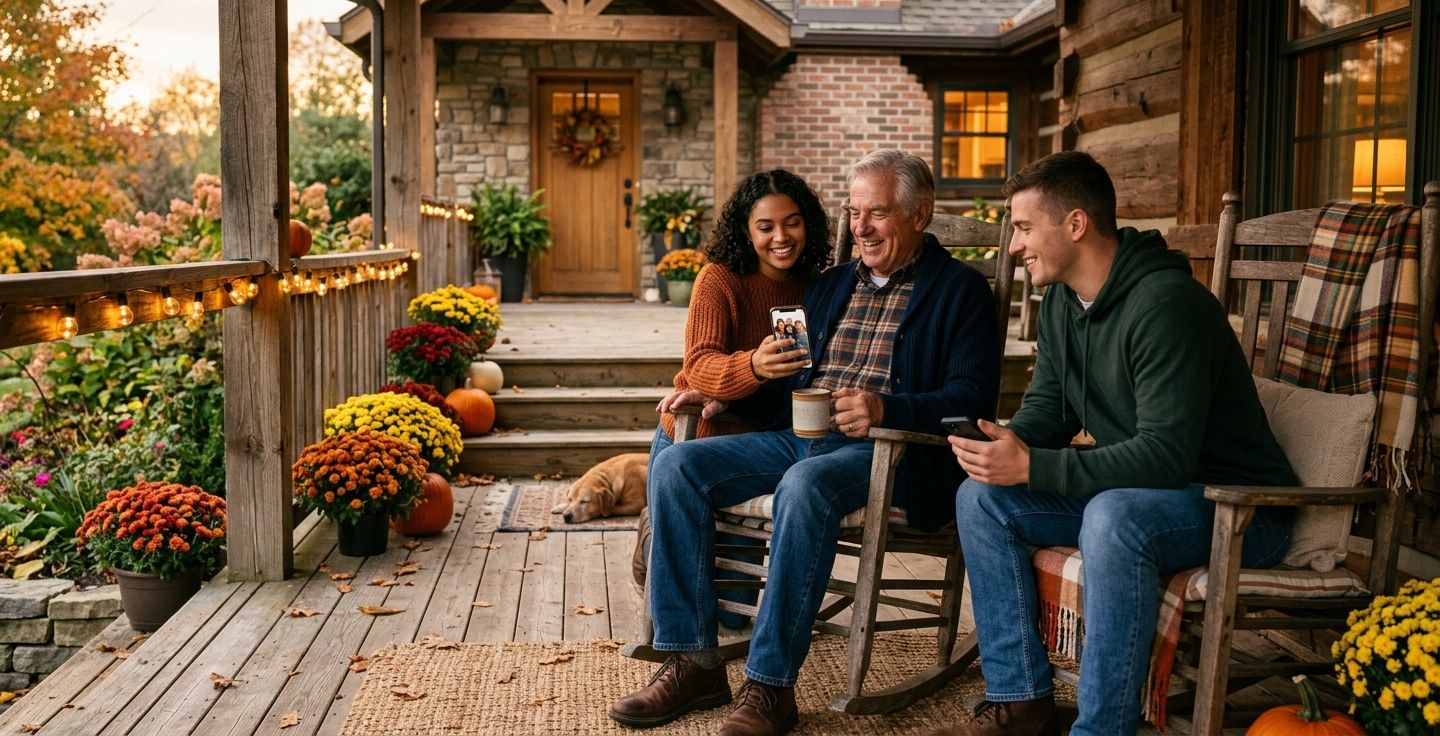
I watch my grandchildren today, and my heart swells with pride. They have tools that I could only dream of when I was a young man. They carry little glowing screens in their pockets that can summon groceries, a hot dinner, or a ride across town in a matter of minutes. They utilize on-demand services to manage incredibly complex lives. Some older folks might shake their heads at this. They might think the youth are missing out on the character building nature of hard chores. I respectfully disagree.
When my granddaughter uses an app to have her groceries delivered, she is not being idle. She is buying herself an hour to sit on the floor and build block towers with her toddler. She is buying herself an hour to read a book. She is choosing where her energy goes.
That is the deep, enduring desire that fuels our love for convenience. We want to be the authors of our own time. We want to clear away the tedious tasks so we can focus on the things that actually matter. Love. Family. Friendship. Community. That is the great promise of the modern age.
Embracing the Gift of Time
It is a wonderful thing to look back and see how far we have come. From the wooden baskets of Clarence Saunders to the intricate chalk lines of the McDonald brothers, we have constantly reinvented the way we live. We have built a society that respects the ticking clock.
As we move forward, I encourage you to look at the fast services in your life not as modern distractions, but as powerful tools. Embrace them. Let them carry the heavy burdens of your daily routine. But remember the most important part of the bargain. You must take that time you saved and spend it beautifully.
Use Your Minutes Wisely
Call an old friend. Sit on your porch and watch the neighborhood wake up. Teach your children how to skip a stone across a quiet pond. We have spent a century building a world that moves fast so that you can have the luxury of slowing down.
The story of American convenience is really a story of reclaiming our humanity. It is about clearing the path so we can walk side by side with the people we cherish.
Questions You Might Have About American Convenience
Why did fast food become so popular in America compared to other countries?
Are modern on demand services actually making us happier?
Will the desire for convenience eventually erase traditional experiences like home cooking?
A Final Thought to Carry With You
To sum it all up, our nationwide love affair with fast services and instant convenience is rooted in a deep respect for time. We have innovated through grocery aisles, chalked kitchen floors, and smartphone screens to buy back the hours of our days. We are a brilliant, hardworking people who have figured out how to lighten the load for the generations that follow.
So, the next time you tap a button on your phone and a meal appears at your door, ask yourself this: What wonderful, meaningful thing will you do with the extra hour you just earned?