
American Lifestyle
The High School Yearbook: Curating Nostalgic Signatures And Timeless Memories
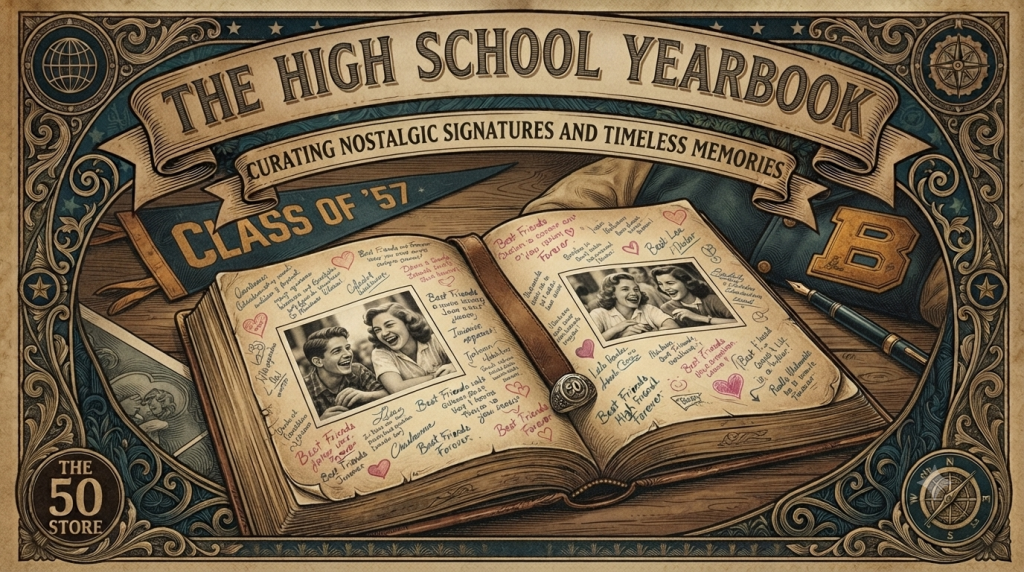
‘Stay cool,’ ‘Never change,’ and ‘Remember third period history.’ For so many of us, these familiar scribbles, penned in classmates’ hurried hands, are more than just ink on a page. The High School Yearbook is a sacred archive of youth, capturing our fashion mistakes, forgotten nicknames, and the heartfelt signatures of friends who defined our earliest years. It’s a tangible piece of our personal story, a time capsule brimming with the very essence of growing up in America.
As a folklorist who spends her days sifting through the layers of our shared American experience, I find yearbooks particularly fascinating. They are not just personal mementos; they are vital community documents, charting the trends, aspirations, and quiet dramas of countless small towns and bustling cities across the nation. Each page holds a micro-history, a snapshot of lives unfolding.
The Enduring Pages: Curating a Lifetime of Memories
The Photographic Archive: From Pamphlets to Bound Volumes
The journey of the American school yearbook is a story of evolving technology and deepening sentiment. Early iterations were humble indeed. In the mid-19th century, colleges began publishing ‘annuals’ (like Harvard’s ‘Register’ or Yale’s ‘The Yale Banner’), often simple pamphlets featuring literary contributions, club rosters, and maybe a few sketches. These were far from the glossy, photo-laden books we recognize today.
It wasn’t until the turn of the 20th century that photography became widely accessible and affordable enough to transform these publications. Schools, especially high schools, started adopting the idea of a permanent visual record for each graduating class. By the 1920s and 30s, the yearbook, as we know it, began to solidify: heavy, bound books filled with portraits, club photos, and candid shots. This shift was profound, turning a textual record into a visual narrative. For example, the earliest high school yearbooks like the ‘Phillipian’ from Phillips Academy (Andover, Massachusetts) or the ‘Quill’ from Boston Latin School, evolved from text-heavy compilations to include photographic plates, marking a significant transition in how student life was documented.
Did you know that despite the digital age, print yearbooks remain incredibly popular? An estimated 20 million yearbooks are still sold annually in the United States, a testament to their enduring appeal and importance in American culture. Major publishers like Jostens, Lifetouch, and Herff Jones continue to thrive, adapting to new technologies while preserving the core tradition.
The Senior Portrait: A Permanent Record of Teenage Identity
Ah, the senior portrait. I remember the flutter of nerves, the carefully chosen outfit, and the agony of trying to find ‘my best side’ under the hot studio lights. It’s a rite of passage, isn’t it? From the moment we step in front of the camera, trying to encapsulate our entire teenage self into one perfectly composed image, to the painstaking process of choosing the perfect, witty, or poignant quote that will forever follow our smiling face.
For generations, the senior portrait has been more than just a picture; it’s a declaration. It captures not just a face, but an era: the feathered hair of the 70s, the big bangs of the 80s, the grunge layers of the 90s, or the carefully curated social media aesthetic of today. My own senior picture, taken in the late 80s, features hairspray that could withstand a hurricane and a shy smile that hinted at future adventures. It’s a wonderful, slightly embarrassing, reminder of who I was.
The quotes we chose, often borrowed from poets, philosophers, or pop songs, were meant to be profound. Sometimes they hit the mark; other times, they became another endearing anachronism for future laughter. Regardless, each senior portrait, with its accompanying quote, forms a vital component of the yearbook, sealing our identity within the pages for all time.
The Signing Ritual: A Flurry of Friendship and Farewell
The final week of school, especially senior year, was always a whirlwind of emotions. Amidst exam anxieties and graduation planning, there was the sacred ritual of the yearbook signing. Hallways buzzed with students clutching their freshly printed annuals, navigating through crowds to track down friends, teachers, and even a few crushes. The air was thick with the scent of permanent marker and the murmur of ‘HAGS’ (Have A Great Summer) and ‘K.I.T.’ (Keep In Touch).
I recall spending hours, sprawled on my living room floor, carefully reading each note. There were the inside jokes, the promises to ‘never forget,’ the declarations of lifelong friendship, and the occasional cryptic message from someone I barely knew. Each signature, each doodle, each ‘good luck in college’ was a tiny thread weaving together the tapestry of my high school experience. My grandmother, bless her heart, had a special section in her 1947 yearbook dedicated to ‘autographs for posterity,’ a lovely term I often use now, talking to local students here in Ohio.
These notes, scrawled in various handwritings, are truly personal micro-histories. They’re candid, spontaneous, and utterly unique. A 2018 study by the National Bureau of Economic Research highlighted the power of social connections formed in adolescence, and these yearbook notes are tangible proof of those vital bonds. They preserve not just faces, but voices and sentiments from a formative period of life.
A Portal to the Past: Unlocking Decades of Memories
There’s a particular magic in opening a dusty yearbook decades later. The smell of aging paper, the crinkle of turning pages, and then – a face you haven’t thought of in years. Suddenly, the memories flood back: the awkward dance, the triumphant game, the shared laughter in the cafeteria. It’s an instant portal to the past, reminding us of who we were, and perhaps, how far we’ve come.
For me, flipping through my own yearbook is like having a conversation with my younger self. I remember the hopes, the fears, the crushes. I see friends who’ve become lifelong companions, and others whose paths diverged long ago. It’s a deeply personal journey, but also a collective one. Yearbooks are often brought out at family gatherings, sparking intergenerational discussions as parents and grandparents share stories, pointing out their own youthful exuberance or fashion faux pas.
Beyond personal reminiscence, yearbooks serve as invaluable historical documents. Local historical societies and public libraries, like the New York Public Library, often digitize and preserve yearbooks, recognizing their worth in chronicling community life, architectural changes, social trends, and even the evolution of local sports or clubs. They offer a tangible connection to the past, reminding us that while times change, the fundamental human experiences of growth, friendship, and self-discovery remain constant.
The Evolution of the American Yearbook: A Comparative Glance
To truly appreciate the journey of the yearbook, let’s look at how these treasured volumes have evolved through the years:
| Era | Key Characteristics | Photography & Design | Content Focus |
|---|---|---|---|
| Late 19th Century (1870s-1900s) | Primarily college annuals; transition from literary magazines. | Few, often hand-drawn illustrations or mounted albumen prints. Limited individual portraits. | Literary works, class rosters, faculty lists, club reports. |
| Early 20th Century (1900s-1940s) | High schools begin publishing; more accessible photography. | Black and white photography, formal studio portraits, group photos. Simple layouts. | Individual portraits (seniors), sports teams, clubs, faculty. Often simple narratives. |
| Mid-20th Century (1950s-1970s) | Growth in popularity; color photography introduced. | Increasing use of color, more candid shots, standardized portrait poses. Graphic design elements emerge. | Expanded coverage of student life, social events, fashion trends, school spirit. |
| Late 20th Century (1980s-2000s) | Advanced printing, digital design tools. | High-quality color photography, elaborate themes, sophisticated layouts, digital manipulation. | Comprehensive narratives, student features, diverse activity coverage, personal quotes. |
| 21st Century (2000s-Present) | Digital integration, online platforms, continued print excellence. | Professional-grade photography, dynamic graphic design, QR codes for video, interactive elements. | Personalized content, social media integration, detailed chronicles of modern student life. |
Keeping Your Memories Bright: A Guide to Yearbook Care
These precious time capsules deserve careful handling. A well-preserved yearbook ensures that you, and future generations, can revisit those cherished moments. Here are my tips for keeping your yearbooks in tip-top shape:
- Store Them Properly: Avoid extreme temperatures and humidity. An attic or a damp basement is a yearbook’s worst enemy! Store them flat in a cool, dry place, ideally in archival-safe boxes.
- Protect from Light: Direct sunlight can fade pages and covers. Keep yearbooks away from windows or display them in a place with indirect light.
- Handle with Care: Always use clean, dry hands. Avoid marking pages with ballpoint pens or sticky notes, as the ink can transfer or the adhesive can damage the paper over time.
- Clean Gently: For dusty covers, use a soft, dry cloth. For minor smudges on pages, a clean, soft eraser can sometimes work, but test it in an inconspicuous area first.
- Repair if Needed: For loose pages or binding issues, consult a professional bookbinder. Avoid using tape, which can yellow and damage paper over time.
- Consider Digitization: To ensure long-term preservation and easy sharing, consider digitizing your yearbooks. Many services offer high-quality scanning, creating digital archives that can withstand the test of time.
The high school yearbook isn’t just a collection of pictures and signatures; it’s a testament to growth, friendship, and the indelible mark our early years leave upon us. It’s a reminder of who we were, who we’ve become, and the people who shared the journey. These tangible pieces of history connect us not only to our past selves but also to the broader American story, celebrating the joy and camaraderie of youth.
Just as these memories never truly fade, some styles are timeless. Celebrate the classic memories that never fade with our ‘Never Change Class of ’76 Retro Tee’. Printed with vintage typography on our buttery-soft combed cotton tee, it’s a perfect way to wear your nostalgia proudly.