
American History & Origins
How Railroads Connected the United States
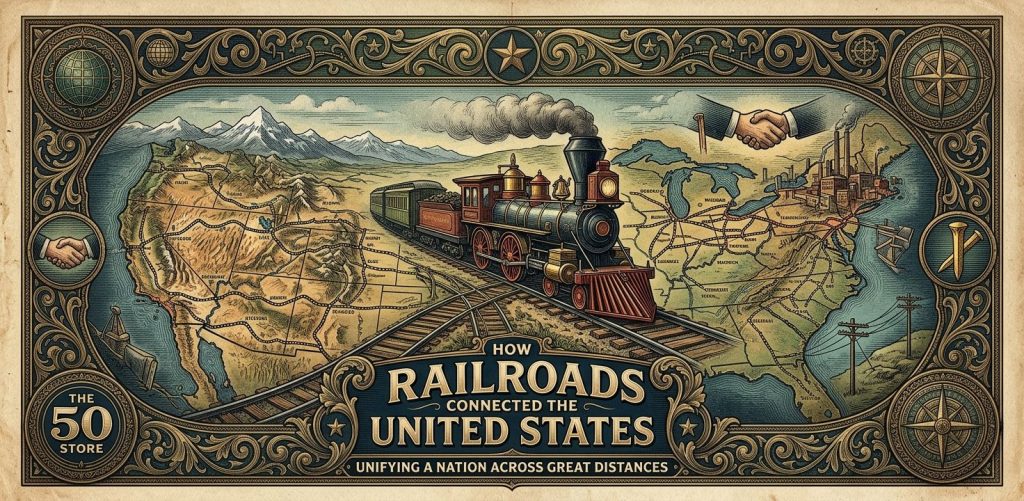
Welcome to the Journey
Hello there, friend. Pull up a chair and make yourself comfortable. It is a beautiful day to talk about the history of our great nation. I have lived in this wonderful country my entire life. I have seen our cities grow, our towns prosper, and our people overcome incredible odds. But there is one story that always brings a special swell of pride to my heart. It is the story of how we pulled together to build something much larger than ourselves. We built the railroads.
The Situation: A Vast and Intimidating Frontier
Think back to the early 1800s. The United States was a land of staggering size and untamed wilderness. If you stood on the Eastern Seaboard and looked west, you were facing thousands of miles of dense forests, rushing rivers, endless plains, and mountains that scraped the very sky. Travel was not just slow. It was deeply perilous. Families packed everything they owned into wooden wagons pulled by heavy oxen. They walked beside those wagons for months on end. They faced harsh weather, disease, and the constant threat of starvation. Going west meant saying a tearful goodbye to your loved ones, often forever. The sheer, terrifying distance kept us isolated from one another.
The Complication: A Nation Drifting Apart
This brings us to a serious problem our ancestors faced. We had claimed a vast and bountiful territory, but we were a nation drifting apart. The great distance made it nearly impossible to govern or protect the frontier. California was booming with gold, but it was completely cut off from the rest of the country. A simple letter took weeks or even months to arrive by ship around South America or overland by weary stagecoaches. During the American Civil War, the need to connect the East and the West became a matter of national survival. If California remained isolated, it might break away entirely or fall to foreign powers. We needed unity, and we needed it desperately.
The Great Question
So, the leaders of our country faced a great question. How could a young, fractured nation stitch itself together across rivers, plains, and unforgiving mountains? How could we bridge a gap so large that it took half a year to cross?
The Answer: A Vision of Iron and Steam
The answer came in a cloud of steam and the thunderous roar of the iron horse. The railroad was the miracle we needed, and the numbers alone are absolutely astonishing. According to the National Museum of American History, before the tracks were laid, a journey from New York to San Francisco took up to six months and cost over one thousand dollars. That was a massive fortune for everyday working folks.
Incredible Strides in Travel
After the tracks were completed, that exact same journey took only about a week. The price dropped to a very affordable one hundred and fifty dollars. By the year 1890, the United States had laid down over 163,000 miles of track. To put that magnificent achievement in perspective, our young country had more miles of railroad than the rest of the world combined.
This grand vision truly took flight when our president, Abraham Lincoln (1809-1865), signed the Pacific Railway Act in 1862. It was an act of incredible hope. Even as the Civil War raged and threatened to tear the nation in two, President Lincoln was looking toward a future where we were completely united. He authorized two companies to build the first Transcontinental Railroad. The Union Pacific would build westward from Omaha, Nebraska. The Central Pacific would build eastward from Sacramento, California. It was a race to the middle, and it would require the hardest work imaginable.
Mountains of Granite and Men of Hardship
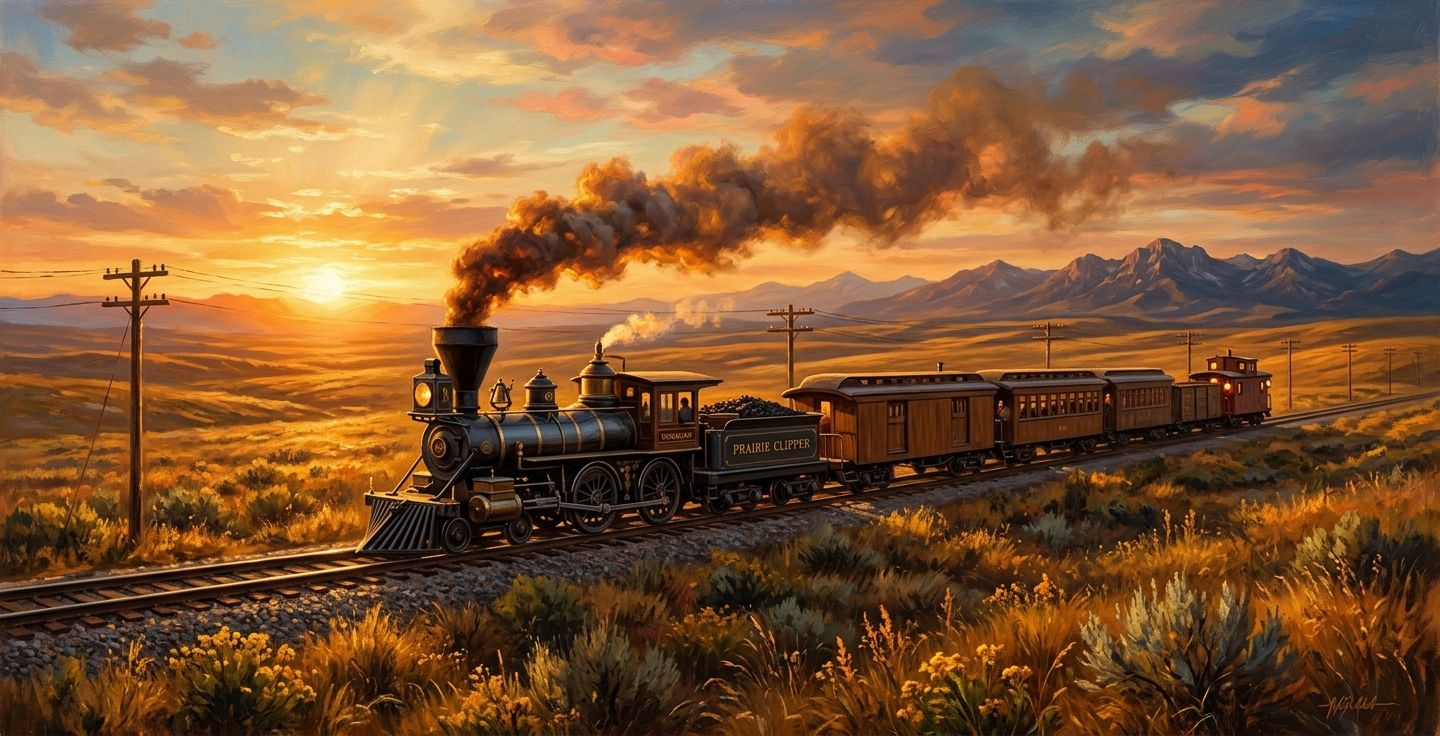
Let me tell you about the sheer grit of the people who built this country. The Central Pacific railroad faced an impossible wall of rock called the Sierra Nevada, California. A brilliant engineer named Theodore Judah (1826-1863) believed a train could climb those treacherous passes. But it took the unbelievable courage of thousands of laborers to prove him right.
Forging Through the Granite
Many of these brave souls were Chinese immigrants who came to America seeking a better life. They faced brutal winters with snowdrifts towering forty feet high. They chipped away at solid granite by hand. They dangled in handwoven baskets over terrifying cliffs to plant explosive powder, lighting the fuses and hoping to be pulled up in time. They worked tirelessly through freezing cold and blistering heat. Their quiet, steady endurance is a profound piece of our national history. Without their sacrifice, the East and West might never have met.
Further east, the Union Pacific faced its own trials across the great plains. They fought off harsh weather, built massive wooden trestles over rushing rivers, and laid miles of heavy iron track in the sweltering sun.
The Golden Spike
Finally, the great day arrived. On May 10, 1869, the two sets of tracks met at a desolate spot called Promontory Summit, Utah. Promontory Summit became the center of the world that afternoon. A tremendous crowd gathered to watch history unfold. Railroad executive Leland Stanford (1824-1893) stepped up to drive the final spike. It was a spike made of solid gold. Now, legend has it that he actually swung and missed on his first try! But the telegraph operator sent the glorious word out to the entire nation anyway. The message simply read, “DONE.” Cannons fired in major cities. Church bells rang out in small towns. People wept with joy in the streets. We had finally achieved the grand vision of Manifest Destiny. We were one nation, stretching from sea to shining sea.
Changing Daily Life: The Mail Order Miracle
The impact on daily life was absolutely beautiful. To understand it, let us look at a small story that changed everything. Up in North Redwood, Minnesota, there was a young railroad station agent named Richard Sears. One day in 1886, a local jeweler refused a shipment of pocket watches. Sears bought those watches himself and used the telegraph to sell them to other station agents down the line. It was a massive success. This simple act gave birth to the Sears, Roebuck and Company mail order catalog.
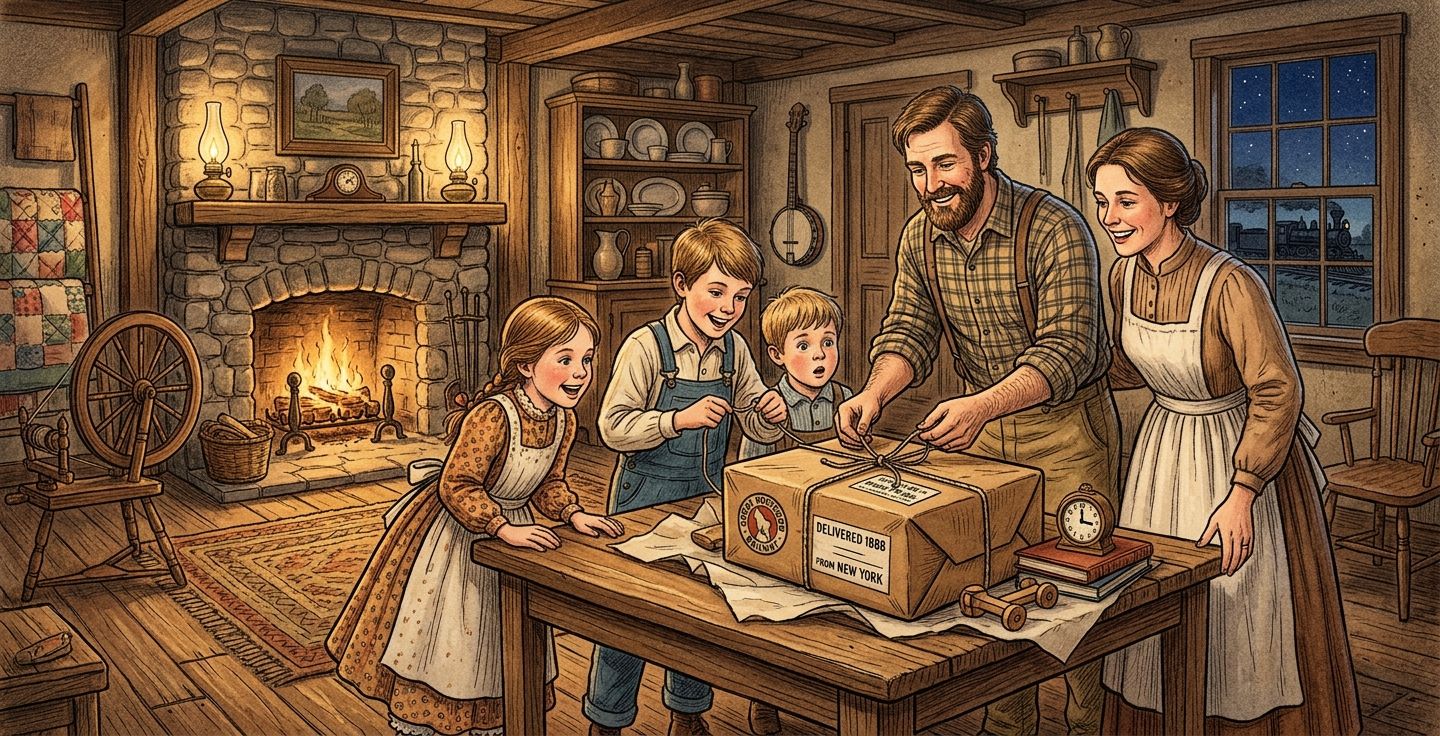
Because of the railroad, the Sears catalog became a household miracle. A farming family in rural America could suddenly flip through a thick book and order a sewing machine, a set of fine dishes, or even a complete kit to build an entire house! The train delivered these wonders right to their local station. The railroads brought the wider world into the living rooms of ordinary folks.
The Gift of Standard Time
They even changed the way we tell time. Before trains, every town set its own clocks based on the sun. High noon in Boston was a few minutes earlier than high noon in New York. This caused mass confusion and terrible train collisions. So, the railroad companies stepped in and divided our great country into four standardized time zones. The government later adopted this system, and it is the exact same system we use today. Every time you check your watch, you are feeling the lingering impact of the railroads.
Moving Forward Together
My friends, the story of the American railroad is not just a story about steel tracks and wooden ties. It is a story about connection. It is about the unyielding spirit of folks who looked at an impossible wilderness and decided to build a road right through it. It is about families finding prosperity, immigrants building a legacy, and a fractured country becoming whole.
I encourage you to take action and keep this rich history alive. Go visit a historic train station in your local town. Take an afternoon train ride with your children or grandchildren and watch the beautiful American countryside roll by your window. Read a book about the brave laborers who carved tunnels through solid rock. By remembering our past, we gain strength for our future. We are a people capable of extraordinary things when we work together.
How long did it take to build the first transcontinental rail line?
It took about six years of deeply intense labor, spanning from 1863 to 1869. Our ancestors worked through the toughest conditions to connect the tracks across the country.
Who built the railroads in America?
The massive workforce included thousands of hardworking Chinese immigrants, Irish immigrants, Civil War veterans, and freedmen. Their incredible physical labor and endurance are what truly made this great project possible.
Why was standardized time introduced?
Before the trains arrived, local towns set their own time by the sun. The railroad companies established four standard time zones in 1883 to prevent dangerous collisions and keep passenger schedules safe and accurate.
How much did train travel cost in the late 1800s?
Once the tracks were fully connected, a cross country ticket price dropped from over one thousand dollars to roughly one hundred and fifty dollars. This made travel far more accessible for everyday working American families.
Where did the eastern and western tracks finally meet?
The Union Pacific and Central Pacific lines met at a desolate spot called Promontory Summit in Utah on May 10, 1869. This historic meeting is still beautifully celebrated today.
What was the purpose of the golden spike?
The golden spike was a ceremonial final piece driven into the track to celebrate the completion of the massive project. It served as a beautiful symbol of our newly united nation.
Can I still ride passenger trains across the United States today?
You absolutely can. While modern travel is much faster now, organizations like Amtrak still offer scenic cross country train routes that let you experience the vast, enduring beauty of the American landscape.