
Immigration, Diversity & Identity
Why the U.S. Is Called a Nation of Immigrants
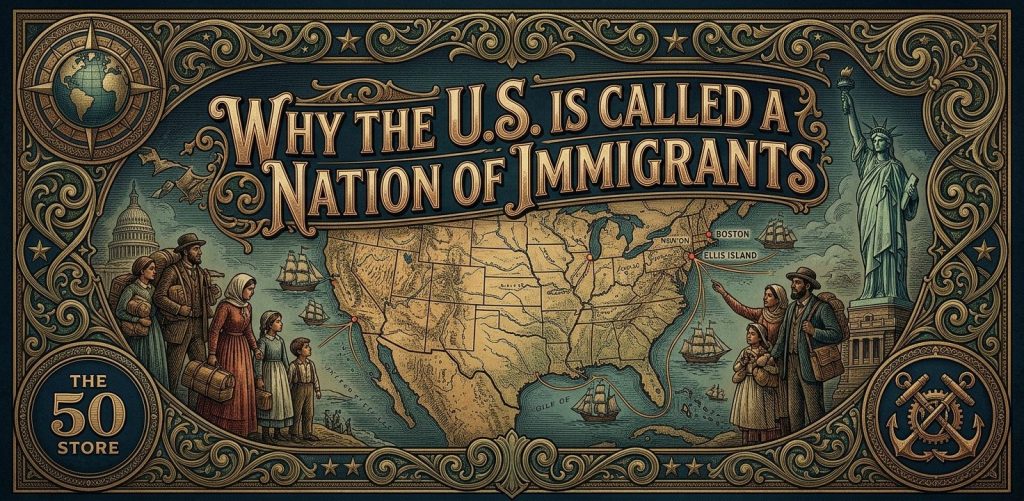
The Heartbeat of Our Great Country
Hello, friend. Pull up a comfortable chair. Let us sit quietly for a moment and talk about a phrase we hear quite often. You know the one I am talking about. We proudly call ourselves a Nation of Immigrants. I have lived on this beautiful American soil my entire life. I have traveled across our vast highways. I have seen the sun rise over the quiet, frost-kissed farms of the Midwest. I have watched the sunset paint the sky behind the glowing skyline of Chicago. In all my years of traveling and listening to folks, I have come to realize a simple truth. The true magic of America is not just found in our fertile soil or our towering mountains. It is found in our people.
We are a brilliantly woven blanket of stories. Some of us have ancestors who arrived on the Mayflower, facing brutal winters to build a new society. Others have parents who flew here just a few decades ago with nothing but a battered suitcase and a heart overflowing with hope. Some crossed deserts. Some crossed oceans. This shared heritage of movement and seeking a better life is our greatest strength. It is the very foundation of the American Dream. But how did we actually get here? What is the real story behind the faces that built our towns, laid our sprawling railroads, and grew the food that feeds the world?
The Surprising Truth About Our Roots
Here is the situation. We look around today and see a massive, unified nation. We see fifty individual states standing together under one flag. However, building this incredible unity was not always a simple task. The complication in our national story is that leaving home is a heartbreaking choice. Arriving in a completely new, unfamiliar land is terrifying. It took immense courage for millions of people to leave everything they knew behind.
Let us look at some numbers that might surprise you. They tell a fascinating story of courage. According to the Pew Research Center, a record 44.8 million immigrants lived in the U.S. in 2018. That made up about 13.7 percent of our total national population. But if you think that is high, let us go back in time to the year 1890. Back then, immigrants made up almost 15 percent of the country. Between the years 1892 and 1954, over 12 million weary people passed through the processing gates of Ellis Island alone.
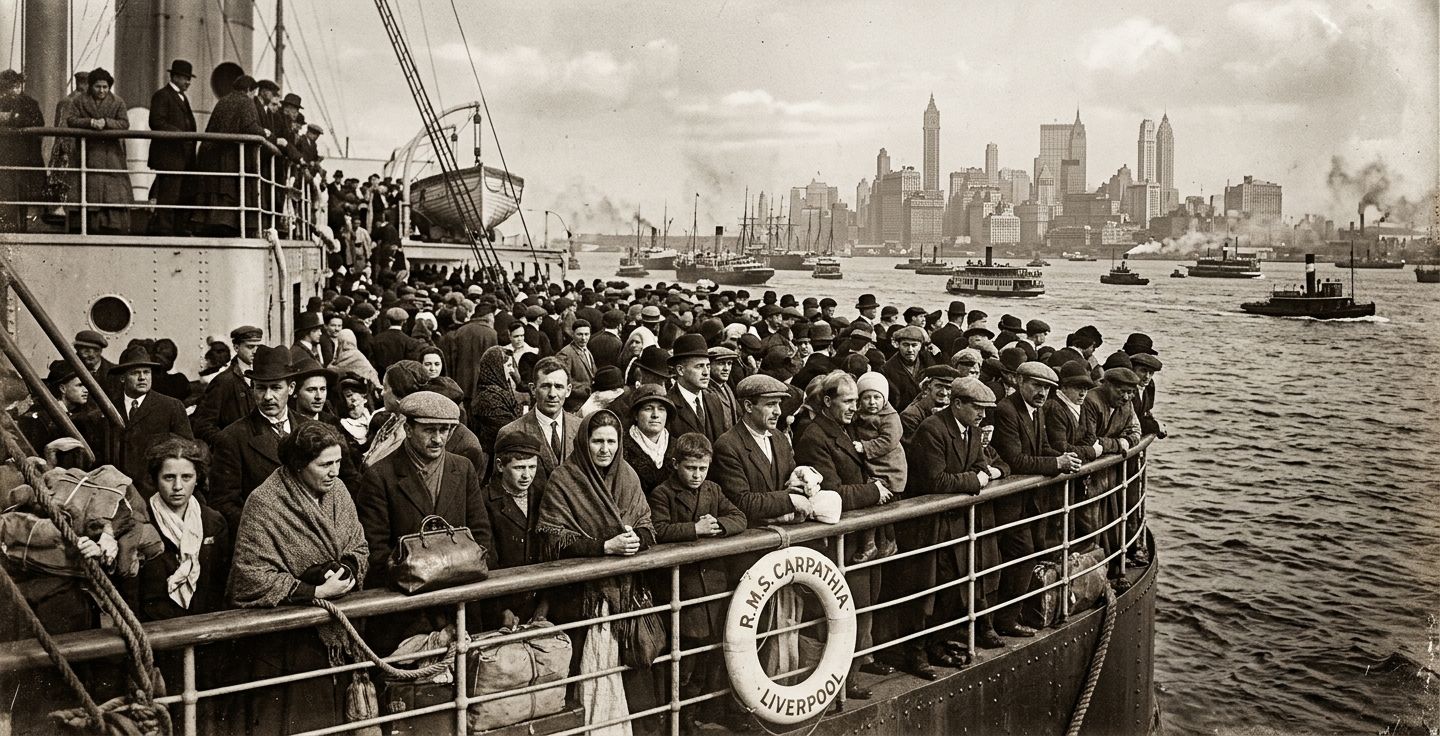
Think about that for a second. Twelve million individual souls. They arrived on crowded steamships. They brought different languages, different recipes, and different prayers. They did not arrive to a life of luxury. Many faced grueling, backbreaking labor. They worked deep in the dark coal mines of Appalachia. They stood on noisy assembly lines in Detroit for fourteen hours a day. They crowded into tiny tenement apartments in cities, trying to keep warm during harsh winters. The journey was filled with severe hardship, prejudice, and struggle. Yet, they kept coming. They believed in a promise.
How Did Everyday People Build America?
This brings us to a vital question. How did these weary, diverse travelers turn a wild, untamed continent into a global symbol of hope and prosperity? How did a fragmented group of strangers from all over the globe become a true melting pot of shared values?
The answer lies in their everyday choices. It is found in the small, quiet moments of bravery that history books often overlook. Let us look closely at a few of these micro-histories. These are the beautiful stories of ordinary folks who left an extraordinary, lasting mark on our home.
The Orphan Who Built Our Economy
Let us travel back to the very beginning. We have a young, impoverished orphan born in the Caribbean. He was brilliant but had no money and no family to support him. Local leaders saw his potential and raised funds to send him to the American colonies for an education. His name was Alexander Hamilton (1755-1804). He arrived in New York as a teenager. He threw himself into the cause of the American Revolution. He became George Washington’s most trusted aide. More importantly, this immigrant designed our entire financial system from scratch. He created the first national bank. Every time you pull a dollar bill from your wallet, you are holding the legacy of a Caribbean immigrant who believed in the future of the United States.
A Scottish Boy and the Libraries
Now consider a young boy from Scotland. His family was terribly poor. They brought him across the Atlantic Ocean in 1848 in search of steady work. He started working in a dusty textile mill at age thirteen. He earned just over one single dollar a week. His name was Andrew Carnegie (1835-1919). We know him now as a legendary giant of the steel industry. He built the bridges and skyscrapers that define our cities. But his true, lasting legacy is not just cold steel. It is the thousands of free public libraries he built across the country. He vividly remembered how hard it was to get an education as a poor immigrant boy. He wanted to make absolutely sure every child in his new home had a chance to read, learn, and grow.
A German Immigrant and the Blue Jeans
Then there is the highly relatable story of a Bavarian immigrant. He traveled to the dusty, rowdy boomtowns near San Francisco during the famous Gold Rush. He did not go to pan for gold in the freezing rivers. He went to sell dry goods. He noticed that the miners desperately needed incredibly tough pants that would not tear while they worked in the rugged mines. He partnered with a local tailor to put copper rivets in sturdy denim cloth. His name was Levi Strauss (1829-1902). Together, they created the blue jean. Today, nothing feels more traditionally American than a comfortable pair of denim jeans. Yet, they were the clever brainchild of an immigrant trying to solve a simple problem for hard-working laborers.
The Protector of the Trees
We also have the story of John Muir (1838-1914). He was born in Scotland and came to the United States as a young boy. He grew up to become one of our greatest naturalists and writers. He walked thousands of miles across this vast land, completely in awe of its wonders. He fell deeply in love with the towering redwood trees and the sweeping, majestic valleys of the West. He fought passionately to protect the wilderness from destruction. Because of his relentless passion, we now have protected places like Yosemite National Park. An immigrant helped teach America how to love, appreciate, and protect its own natural beauty.
The Creator of the Summer Classic
Let us not forget the simpler joys of American life. Think of a sunny afternoon at the ballpark. What are you eating? Probably a hot dog. We owe that classic experience to a German immigrant named Charles Feltman (1841-1910). He arrived in New York and started pushing a small pie cart along the sands of Coney Island. He wanted to serve a hot meal that people could easily eat while walking on the beach. He put a warm frankfurter inside a specialized elongated bun. It was a massive hit. That simple, clever innovation gave birth to a food that is completely synonymous with American summers, baseball games, and backyard barbecues.

The Spirit of the Statue
These stories are not isolated, rare incidents. They represent the standard, ongoing pattern of our history. Whenever America needed a burst of new energy, a fresh idea, or a pair of willing hands, an immigrant was there to provide it. They brought music, art, science, and food. They built the transcontinental railroad. They fought bravely in our military.
Let us think deeply about the magnificent Statue of Liberty. She stands proudly in the harbor, lifting her glowing lamp beside the golden door. She was a beautiful gift of friendship from France. But her profound meaning was truly defined by a young poet whose family fled religious persecution in Europe. Emma Lazarus (1849-1887) wrote the famous, stirring words that call out to the tired, the poor, and the huddled masses yearning to breathe free. Those words are a sacred promise. They say that no matter where you come from, no matter your past, you have a place by our warm fire.
When we talk about deep, abiding patriotism, this is exactly what we mean. True patriotism is not just loving the physical land. It is loving the high ideals and the promise of the land. It is looking directly at your neighbor, knowing they might have a totally different background or speak a different first language, and saying, “We are in this together. We are fellow Americans.” The incredible beauty of our country is that you do not have to be born here to be an American. You just have to believe in the shared ideals of freedom, hard work, and mutual respect.
Embracing Our Shared Heritage Today
My good friend, we have a vital duty to keep this welcoming spirit alive. The bright flame of hope requires constant, loving tending. We must always remember our roots to understand where we are going.
I encourage you to take a moment today to explore your own unique family history. Ask your parents or grandparents where their ancestors came from. Look up old photographs. Cook a traditional meal from your ancestral homeland and share it with your children. Visit a local cultural festival to learn about the beautiful traditions of your neighbors. Most importantly, welcome the new families moving into your community with a genuine smile and a warm, helping hand.
When we celebrate our diverse, colorful backgrounds, we do not divide ourselves. We make our national union stronger, tighter, and braver. We prove to the whole world that out of many, we are truly one. Keep loving this great, big, beautiful country. Keep believing in its bright future. Together, standing shoulder to shoulder, we will continue to write the greatest story of hope the world has ever known.