
American Mythos & National Character
The One-Room Schoolhouse: Building Frontier Education And Community Hope

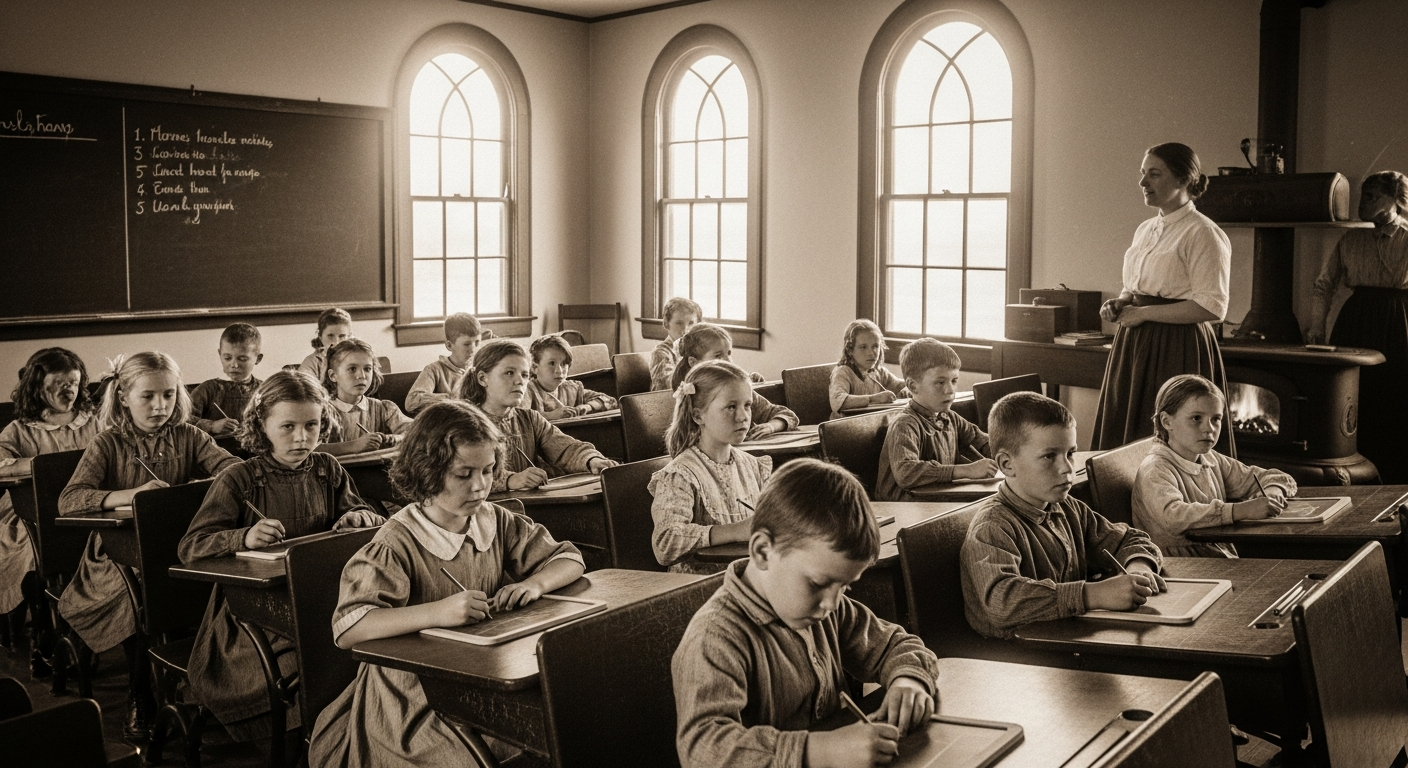
My grandpa used to tell me stories about his schooling, way back in the day. He’d describe a single wood-burning stove in the center of the room, crackling warmth radiating outwards. He’d talk about a hand-painted blackboard on the wall, showing lessons in copperplate script. And he’d always marvel at how students from age 5 to 18, sometimes even older, sat side-by-side on rough-hewn benches, learning all together. That, my friends, was the one-room schoolhouse, the undeniable heart of frontier education, and it truly shaped the American civic character in ways we often forget today.
It’s easy to romanticize these places, isn’t it? To see them through a sepia-toned lens. But the truth is, they were tough. They were vital. They were the very bedrock upon which our nation built its unique belief in universal, accessible public education for every child, no matter their station or where they lived. These simple buildings, often made of logs or rough-sawn timber, stood as a testament to the American spirit of self-reliance and community. They weren’t just places of learning; they were the central nervous system of countless small towns and burgeoning settlements across our vast continent.
Learning Together in the Wild: A Story of Grit and Growth
Can you imagine the scale of it? By 1913, an astonishing over 200,000 one-room schoolhouses dotted the American landscape, educating fully half of the nation’s children. Think about that for a moment. Half of all American kids, learning their ABCs, their multiplication tables, and their civics lessons, all under one roof, often with a single teacher guiding them. It’s a statistic that still gives me pause, reminding me of the sheer dedication and ingenuity of those early communities.
It wasn’t just about reading, writing, and arithmetic. These schools were crucibles where young Americans learned resilience, cooperation, and a deep respect for both elders and peers. They learned that their success was intertwined with the success of the person sitting next to them, regardless of age.
Built by the Neighbors, For the Future
Unlike today, where school construction is often a large, state-funded endeavor, most one-room schoolhouses were literally ‘raised’ by the very people whose children would attend them. Picture this: a local farmer might donate a plot of land, perhaps a corner of his property that wasn’t ideal for crops. Neighbors would then pool their labor, their timber, and whatever meager funds they could spare. Men would fell trees, saw planks, and raise the walls. Women would organize meals, sew curtains, and gather supplies. It was a true community barn-raising, but for education.
There was no grand architectural plan, just practical necessity. Many were simple log cabins at first, evolving into modest frame buildings as settlements prospered. This direct involvement fostered an incredible sense of ownership and pride. This wasn’t ‘the government’s school’ or ‘the state’s school.’ This was our school, built by our hands, for our children. This spirit, I believe, is a powerful lesson for us today about local engagement and collective responsibility.
The Multi-Age Class: A Teacher’s Masterpiece
Now, imagine being the teacher. A young woman, often barely out of her own schooling herself, tasked with educating sometimes 40 or more students, ranging from the youngest beginners learning their letters to teenagers grappling with algebra or American history. There was no ‘grade level’ system as we know it. It was a true multi-age classroom.
These teachers, often holding only a high school diploma or a special teaching certificate, were masters of efficiency and individualized instruction. They’d divide the day into segments: first, the youngest would have their alphabet drills, then the middle group would practice their sums, while the oldest might read aloud from a history book. While one group recited, others worked quietly at their desks, a hum of activity filling the small room. Discipline was often gentle but firm, with an emphasis on self-management and mutual respect. Figures like Catharine Beecher championed the role of women as educators, emphasizing their natural nurturing qualities for this challenging environment. It truly was a daily masterpiece of organization and dedication.
The Peer Tutoring Blueprint: Learning from Each Other
One of the most remarkable aspects of the one-room schoolhouse was the inherent peer tutoring system. It wasn’t just encouraged; it was essential. Older students weren’t just fellow pupils; they were mentors. A 16-year-old might help a 7-year-old sound out a difficult word. A 12-year-old, having just mastered long division, would patiently explain it to an 8-year-old struggling with the concept. This wasn’t seen as a burden, but as a responsibility, a natural part of the community fabric.
This fostered a deep sense of cooperation and empathy. The older students reinforced their own learning by teaching others, developing leadership skills and patience. The younger students received individualized attention they might not otherwise have gotten. It built a familial atmosphere, a genuine team spirit. It’s a model that modern educators are even revisiting today, recognizing the profound benefits of students teaching and learning from one another. It taught them, quite simply, how to be good neighbors.
The Civic Center: More Than Just Books
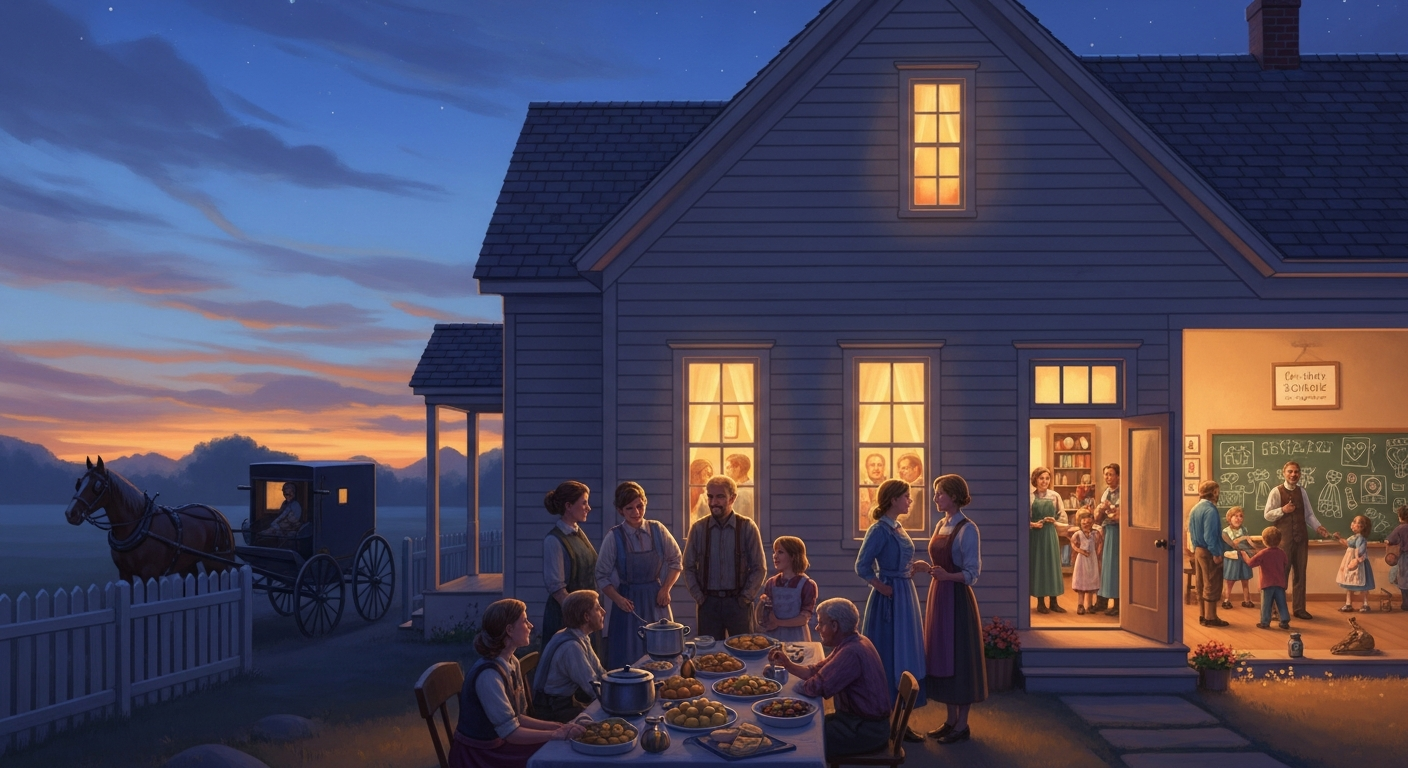
The schoolhouse wasn’t just a place for ‘book learning.’ It was the gravitational center of the entire community. On Sundays, it might transform into a church, hosting services for various denominations. During the week, it could be the polling place for elections, where citizens gathered to exercise their democratic rights. Town meetings, debates, social gatherings, potluck dinners, even traveling lecturers or entertainment would all find their home within those humble walls.
This dual role as both an educational institution and a civic hub cemented its importance. It was where community decisions were made, where social bonds were strengthened, and where a shared American identity was forged. The schoolhouse taught children and adults alike what it meant to be part of a vibrant, self-governing community. It was the original town square, a beacon of light in often isolated rural areas. Places like the Old Sturbridge Village in Massachusetts offer fantastic opportunities to step back in time and see these living classrooms in action, reminding us of their multifaceted roles.
Embracing the ‘One-Room Schoolhouse Spirit’ in Modern America
While the vast majority of one-room schoolhouses have faded into history, consolidated into larger districts as our nation grew, the spirit they embodied remains profoundly relevant. That spirit of self-reliance, community cooperation, and a deep-seated belief in education for all is still a cornerstone of our American identity. It reminds us that progress isn’t just about bigger and newer, but sometimes about remembering the core values that truly build a resilient society.
Here’s a snapshot of what made these institutions so powerful:
| Aspect | One-Room Schoolhouse Reality | Enduring Lesson for Today |
|---|---|---|
| Curriculum | Basic ‘3 Rs’ (Reading, ‘Riting, ‘Rithmetic), morality, civics. Practical skills taught alongside academic ones. | Focus on foundational skills; interdisciplinary learning; character education. |
| Community Role | Educational hub, voting precinct, church, social center, town hall. | Schools as community anchors; fostering local engagement beyond academics. |
| Teaching Method | Multi-age instruction, recitation, individual work, extensive peer tutoring. | Personalized learning; mentorship programs; collaborative classrooms. |
| Building & Maintenance | Built and maintained by local residents, often through donated labor and materials. | Volunteerism; local ownership; community fundraising for shared resources. |
| Challenges | Limited resources, isolation, teacher turnover, harsh weather, diverse learning needs. | Resilience in resource scarcity; creative problem-solving; valuing dedicated educators. |
How We Can Still Build Strong Communities Like the Old Days:
That old schoolhouse wasn’t just a building; it was a way of life. And we can still bring some of that spirit into our modern communities. Here’s how:
- Support Your Local Schools: Volunteer, join parent-teacher groups, attend school board meetings. Remember, these are our schools.
- Get to Know Your Neighbors: Organize block parties, start a neighborhood watch, or simply strike up conversations. Strong communities are built on strong relationships.
- Embrace Multi-Generational Learning: Create opportunities where older community members can share skills or wisdom with younger ones, and vice-versa. Think mentorship programs or community workshops.
- Utilize Local Spaces as Hubs: Encourage your local library, community center, or even a local park to host diverse events that bring people together, just like the schoolhouse did.
- Participate in Local Governance: Attend town halls, vote in local elections, and make your voice heard on issues that affect your community.
- Share Resources and Skills: If you’re good at gardening, help a neighbor. If you can fix things, offer your expertise. The old frontier spirit was all about helping each other out.
The one-room schoolhouse may be a relic of the past, but the lessons it taught us about community, cooperation, and the enduring value of education for every American are timeless. They are the foundations upon which we continue to build our hopes and dreams for this great nation. Let’s remember those humble beginnings, honor the pioneers who built them, and carry forward that spirit of hope and togetherness.
And speaking of honoring those roots, why not celebrate the very essence of American learning? We’ve designed a special ‘One-Room Schoolhouse Class of ’18 Tee’ that captures that vintage spirit. It features clean, classic typography, just like you’d see on an old school certificate, printed on our ultra-breathable, ring-spun cotton tee. It’s more than just a shirt; it’s a wearable reminder of where we came from, and the shared values that still bind us together. Wear it with pride, knowing you’re carrying a piece of our nation’s educational heritage.