
American Mythos & National Character
Why Failure Is Often Seen as Success in the U.S.
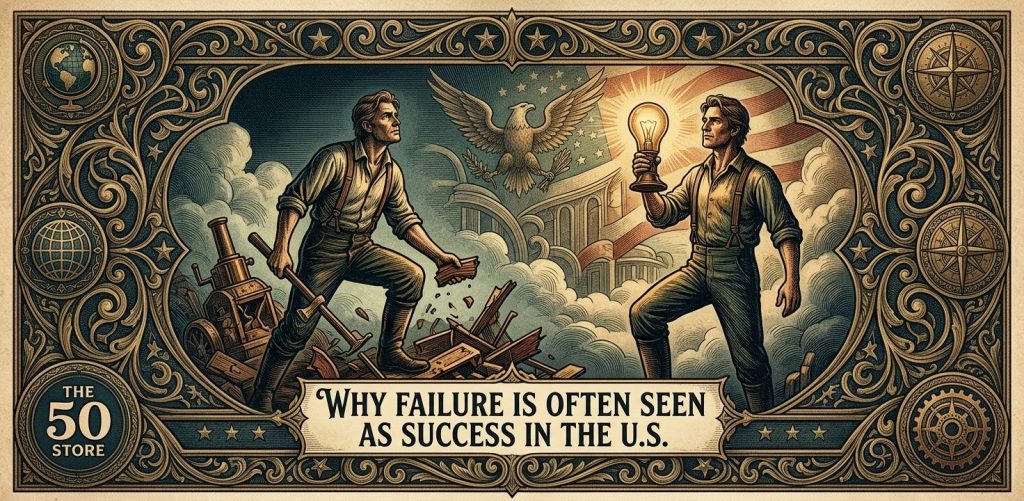
The Beautiful Mess of Progress
Looking out over the quiet streets of my neighborhood, I often catch myself thinking about how much this country has grown over the decades. I see the old brick buildings downtown, standing shoulder to shoulder with new glass storefronts. I see young folks hurrying down the pavement, carrying their coffee cups and their big ideas. They have a certain fire in their eyes. They are chasing a better life, trying to build something out of nothing. We have always been a nation of eager chasers and restless builders. Our ancestors looked at empty, sprawling fields and envisioned bustling, vibrant towns. They looked at rushing, unpredictable rivers and saw the raw power needed to turn heavy mill wheels. We are constantly dreaming up the next big chapter. Moving forward is deeply woven into our national fabric.
Yet, if you pause and look closely at the soil beneath our feet, you will notice something peculiar. This land is completely scattered with the remnants of broken things. We leave behind a massive trail of bankruptcies, ruined reputations, abandoned projects, and shattered expectations. Things fall apart constantly. Promising businesses lock their doors forever. Brilliant inventions simply fail to spark.
This reality brings up a rather fascinating question. Why do we continue to celebrate the folks who stumble? Why is falling flat on your face so often seen as a badge of honor in this society?
The answer is simple but holds deep wisdom. We know that the stumble is an essential, unavoidable part of the dance. We understand that every single misstep teaches us the rhythm required to eventually glide.
Rewarding the Bruises
You might find it quite shocking to learn just how common it is to fall short. According to historical data from the Bureau of Labor Statistics, about twenty percent of small businesses close their doors within their very first year of operation. By the end of the fifth year, roughly half of those ambitious dreams have completely evaporated. Those sound like heavily discouraging numbers. But here is a truly surprising statistic from a Harvard Business School study that changes the entire picture. Researchers found that entrepreneurs who have experienced a prior business failure have a significantly higher chance of succeeding in their next venture compared to completely new founders. A newcomer might have a standard twenty percent shot at making it. But the person who has already lost it all? Their chances of success climb drastically higher. The American market literally rewards the bruises. It puts a high premium on the difficult lessons learned from falling down.

The Laboratory of Ash
Let us take a slow walk down a quiet street in Menlo Park, New Jersey. Back in the late nineteenth century, this was the home of a dusty, crowded laboratory that literally changed the world. It belonged to the famous Thomas Edison (1847-1931). Today, we remember him as a brilliant mind. We picture him holding up a glowing glass bulb, bringing warm light to the dark corners of the globe. But his daily routine was actually a masterclass in getting things terribly wrong. He sat at his cluttered wooden workbench day after day, week after week, testing out different materials to serve as a tiny lightbulb filament. He tried plain cotton thread. He tried exotic bamboo. He tried thousands of different plant fibers and rare metals. Thousands of times, he flipped a brass switch and watched his incredibly hard work pop and burn to worthless ashes in a single instant.
Most ordinary folks would have packed up their heavy tools and walked home. They would have accepted their defeat. But Edison viewed every burned piece of bamboo as a small victory. He had simply found another path that did not work. His profound resilience was the actual invention. The lightbulb was merely the bright byproduct of his stubborn refusal to quit. He taught generations of Americans that true innovation is almost always born right in the ashes of our previous mistakes.
The Sweet Taste of Redemption
Or we can consider the remarkably sweet taste of redemption. Long before his famous name was proudly stamped on chocolate bars in every single grocery store across the world, Milton Hershey (1857-1945) was just a tired young man struggling to make ends meet. He started his first ambitious candy business in the busy city of Philadelphia. It collapsed entirely. He poured his whole heart and soul into his daily work, but the money quickly ran dry. He moved halfway across the country to Chicago to try again. That venture failed miserably too. He traveled to New York City, desperately hoping the bustling, crowded streets would finally bring him some luck. Once again, the heavy doors locked shut and the business went deep under.
Imagine the heavy, crushing burden he carried on his shoulders. He had borrowed precious money from his hardworking family. He had spent years standing over hot stoves, boiling sugar and stirring massive pots, only to be left with absolutely nothing but empty pockets and sticky shoes. It was only when he finally returned home to Lancaster, Pennsylvania, carrying the incredibly heavy weight of those closed shops, that he discovered the fresh milk caramel recipe that finally changed his life. His massive empire was built brick by slow brick entirely on the solid foundation of his previous bankruptcies. He did not achieve the beautiful American dream in spite of his early missteps. He achieved it entirely because of them.
Reading the Wind
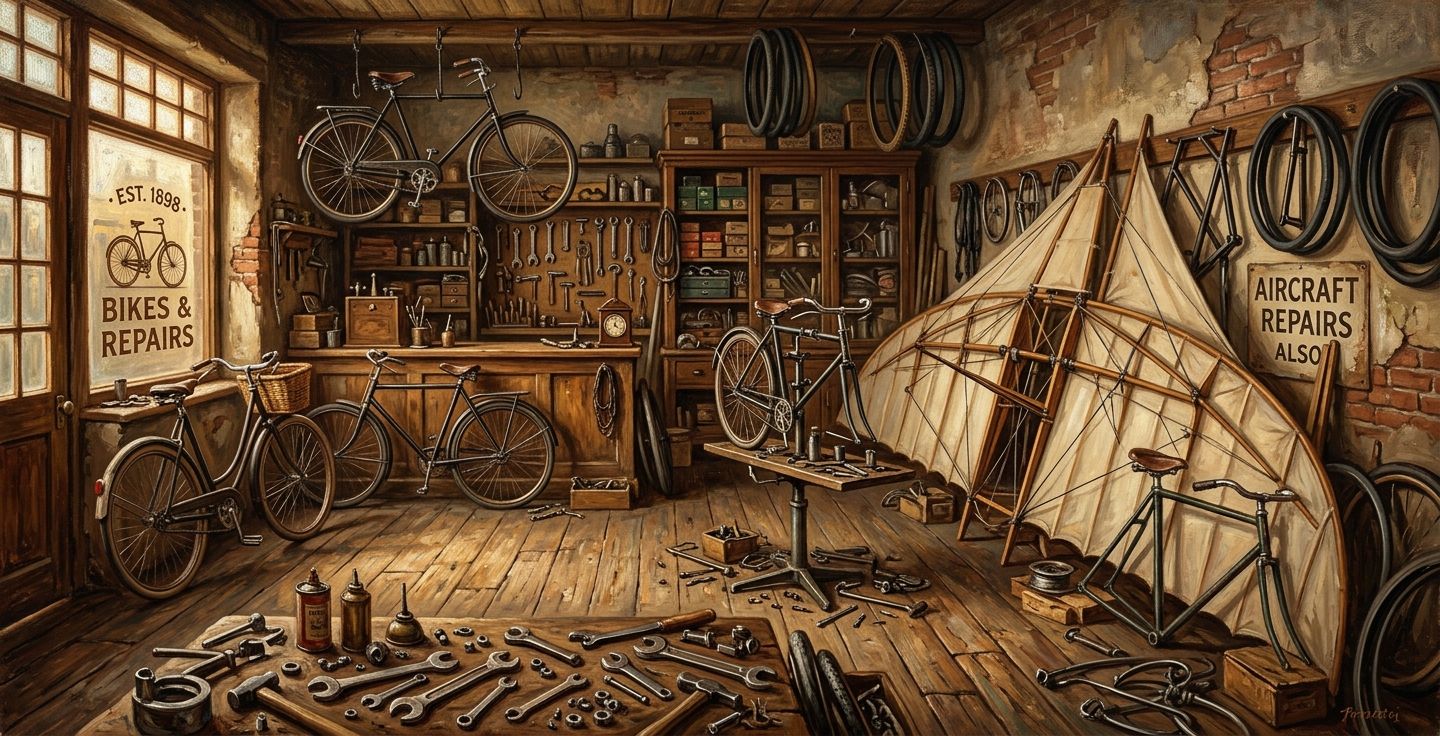
We can also cast our memories out to the vast, windy, and lonely sand dunes of Kitty Hawk, North Carolina. Today, there is a grand, beautiful stone monument standing there. But long before that historic day in 1903, Orville Wright (1871-1948) and Wilbur Wright (1867-1912) experienced brutally crushing defeats. They crashed into the soft sand constantly. They built delicate, beautiful gliders out of light spruce wood and tightly stretched canvas. They spent entire seasons meticulously measuring wings and sewing fabric together by hand, only to watch their beloved creations spiral wildly out of control and smash violently into the ground. They spent years watching their absolute best work splinter into useless, jagged firewood.
They could have so easily given up. The coastal wind was harsh, the blowing sand stung their tired eyes, and the wider world loudly mocked their impossible ambition. But they patiently and quietly picked up the broken pieces of wood and tangled wire. They closely studied the breaks. They used the twisted wreckage to better understand the wildly unpredictable nature of the wind. Every single crashed glider contained a hidden secret about aerodynamics. They just had to remain humble enough to read it.
To the Generation Growing Up Today
To the wonderful younger folks reading these words today, I want to offer you some genuine comfort. The modern world might seem incredibly heavy right now. You are surrounded by glowing screens that show you highly polished pictures of other people living seemingly perfect, flawless lives. You only see their grand victories, their bright smiles, and their effortless achievements. Please, I beg you, do not believe the polish. True living is remarkably messy.
We live in a fast paced culture that often demands instant results. But you must always remember that the strongest, most beautiful trees grow extremely slowly. They survive incredibly harsh winters and terrible, violent summer storms. The fierce wind batters their green branches and sometimes breaks them entirely. But those painful breaks force the tree to grow much thicker bark and send down much deeper roots into the soil. You are no different at all. Your early missteps do not ever define your true worth. They are simply developing your strong character.
Step out into the wide world with boundless courage. Start that creative project you have been quietly dreaming about. Write that beautiful story. Open that risky small business. Apply for that challenging job that seems just slightly out of your reach. You might stumble. You might fall completely flat on your face. But when you do, I want you to look up and smile. Dust off your scraped knees. Look closely at the wreckage and find the hidden lesson. You are simply joining a long, proud tradition of brave dreamers who finally learned exactly how to fall forward.
A Few Common Questions
Now, I know quite a few of you might have a few questions gently lingering in your busy minds. Let us address some of the common things folks often wonder about this whole messy process of trying and failing.
Why is failure so terribly common in new businesses?
New businesses require an enormous variety of skills. A founder must quickly learn about accounting, marketing, hiring, and product development all at once. It is incredibly rare for a person to master all these areas immediately. The missteps are simply part of the steep learning curve required to understand the complex marketplace.
How can I safely overcome the deep fear of making a mistake?
Start by changing your perspective. Treat your initial attempts as small experiments rather than final exams. When a scientist runs an experiment that does not work, they do not cry over it. They simply record the data and adjust their next approach. Lower the stakes in your mind and allow yourself the grace to be a beginner.
Are all mistakes actually beneficial in the long run?
Not all mistakes are created equal. Careless mistakes made out of pure laziness offer very little value. However, ambitious mistakes made while genuinely trying to build something new are incredibly valuable. The key is to carefully analyze what went wrong so you do not repeat the exact same error twice.
How do I clearly know when to quit and when to keep trying?
This is perhaps the hardest question to answer. Generally, if your core passion remains strong but your current method is not working, you should pivot your method rather than quit the dream entirely. But if the work is destroying your health or causing severe harm to your family, it takes immense courage to gracefully close the door and start a completely different chapter.
Can a ruined reputation from a major business collapse ever be fixed?
Yes, it absolutely can. Americans are remarkably forgiving people when they see genuine effort and honest accountability. If you own your mistakes, apologize to those affected, and demonstrate clear personal growth, the community will eventually respect your comeback story even more than your original attempt.
How can loving parents effectively teach their children to handle unexpected setbacks?
Parents should actively praise the honest effort rather than just the final grade. Let your children see you make mistakes and calmly fix them. If you burn dinner, do not lose your temper. Laugh about it, order a pizza, and explain how you will change the recipe next time. Model the exact resilient behavior you wish to see in them.