
Culture & Traditions
The Evolution of the American Christmas
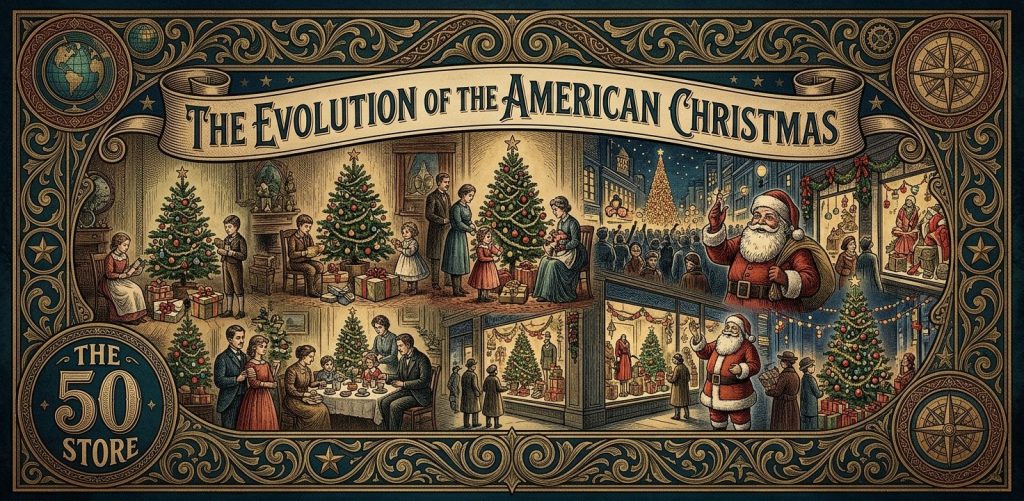
The Magic of the Winter Season
The air turns crisp, the days grow short, and soon enough, strings of colored lights begin to twinkle from the eaves of our homes. I have seen many Decembers come and go across this great country of ours. Each year, the familiar scent of pine needles and roasting cinnamon brings back a flood of fond memories. We gather around the fireplace, wrap brightly colored packages, and share meals that leave us entirely too full. This is our Christmas season. It is a time of warmth, a time of family, and a time of lasting peace.
But as I sit in my favorite armchair, watching my grandchildren carefully hang fragile decorations on the evergreen branches, I often think about how different things used to be. The quiet, glowing Christmas we cherish today was not always the norm in this country. In fact, our earliest ancestors would hardly recognize the celebrations we hold so dear. This brings us to a rather surprising piece of our past.
A Bumpy Start in the Early Days
Many folks today believe that the early settlers brought a fully formed, merry holiday with them across the ocean. The truth is much more complicated. In the early days of our nation, the end of December was often marked by a boisterous, rowdy street festival. It looked more like a wild carnival than a peaceful night at home.
Some groups, particularly the strict Puritans, despised the celebration altogether. They firmly believed it was nothing more than an excuse for bad behavior, excessive drinking, and public disruption. They wanted their communities to remain quiet and devout, so they went to great lengths to stamp out the festivities entirely.
The Boston Ban
So, how did we get from a banned, rowdy street party to the gentle, family centered morning of giving we experience today? How did the holiday we love grow into the beautiful season of goodwill that defines the end of our American year?
By the Numbers and Through the Years
To understand this journey, we have to look at the facts, and they might surprise you. According to recent surveys by the Pew Research Center, roughly ninety percent of Americans celebrate Christmas today. Furthermore, the National Retail Federation reports that holiday spending in our modern era regularly exceeds nine hundred billion dollars. We buy millions of trees, ship billions of greeting cards, and travel countless miles across highways and skies just to be with the people we love.
Yet, back in 1659 in Boston, Massachusetts, you would be fined five shillings just for showing the holiday spirit. The strict laws of the time meant that colonial american christmas traditions were practically non existent in New England. There were no trees, no carols, and certainly no jolly men in red suits. People went to work. Shops stayed open. The day was treated exactly like any other cold winter Tuesday. It took a long time for the frost to thaw on our national celebration. The change did not happen overnight. It happened slowly, person by person, and story by story.
Washington Irving and the Gift of Peace
The real shift began in the early nineteenth century. We owe a great deal of our modern holiday warmth to a talented writer named Washington Irving (1783-1859). You might know him for his spooky tales of sleepy hollows and headless horsemen, but his greatest gift to us was his vision of a cozy winter holiday.
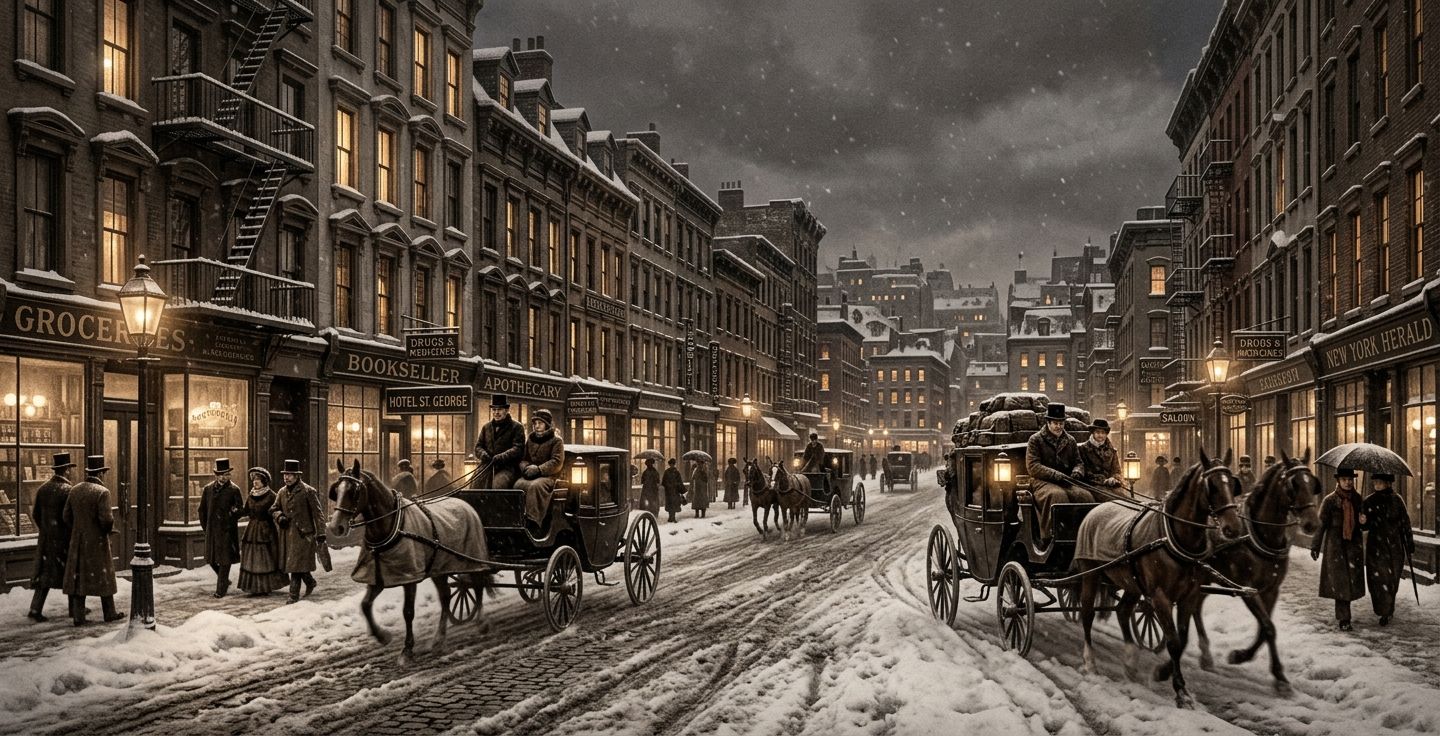
In 1819, Irving wrote a series of stories about a wealthy English squire who invited his workers to his manor for a peaceful, warm, and harmonious holiday feast. Irving painted a vivid picture of a celebration that brought rich and poor together around a roaring fire. At the time he wrote this, such a peaceful Christmas did not really exist in New York City. The streets there were usually filled with noisy, disruptive crowds that frightened families staying indoors.
Irving basically invented a peaceful tradition in his mind, and the American people fell in love with the idea. Families started to retreat from the cold, noisy streets to gather inside their cozy parlors. They began to focus on children, on sharing gifts, and on creating a peaceful sanctuary from the winter chill. A single writer, dreaming of a kinder world, helped change the heart of an entire nation.
Thomas Nast Gives Us a Friendly Face
As the idea of a family holiday grew, we needed a figure to represent this new spirit of giving. This is where a talented political cartoonist named Thomas Nast (1840-1902) enters our story.
During the dark, difficult years of the American Civil War, President Abraham Lincoln asked Nast to draw something that would bring a little hope to the weary Union soldiers. Nast drew a jolly, bearded man handing out gifts in a military camp. Over the next few decades, Nast continued to draw this wonderful character for Harper’s Weekly magazine.
He gave us the plump, pipe smoking figure we recognize instantly today. Nast even decided that this jolly fellow lived at the North Pole and kept a busy workshop full of elves. Before Nast, the gift giver was often depicted as a tall, thin, and rather stern bishop. Nast made him a friend. He gave a smiling face to our generosity, and that friendly face has smiled down on generations of American children ever since. He shaped the visual soul of Christmas.
Frank Winfield Woolworth and the Sparkle of Glass
By the late nineteenth century, the indoor, family centered Christmas was firmly established across the country. People were bringing evergreen trees into their living rooms, a lovely tradition brought over by German immigrants. But decorating those trees was mostly a homemade, simple affair. Families used apples, nuts, and long strings of popcorn.
Then, a young shopkeeper named Frank Winfield Woolworth (1852-1919) made a business decision that would put a little magic into every home. In 1880, a supplier visited Woolworth’s five and dime store in Lancaster, Pennsylvania. The supplier showed him some fragile, hand blown glass ornaments imported from Germany. Woolworth was very hesitant. He thought no everyday American would pay hard earned money for such fragile trinkets.
He reluctantly bought a small batch and put them on his counter. They sold out in just two days. The next year, he ordered a much larger batch. Soon, millions of glass ornaments were sparkling on trees in small farm towns and big cities alike. A simple choice by one young man in Pennsylvania allowed everyday folks to fill their homes with brilliant, affordable light and color.

Passing the Flame to the Next Generation
When I think about these small moments of history, a writer dreaming of peace, an artist drawing a jolly face, a shopkeeper taking a chance on a glass star, I feel a profound sense of gratitude. Our modern American Christmas is not just a date marked on the calendar. It is a beautiful patchwork of stories, traditions, and hopes passed down through the years.
We have built a holiday that celebrates the very best parts of who we are as a people. We have turned away from the coldness of our early history and embraced a season of incredible warmth. We string up lights to defy the longest, darkest nights of the year. We travel great distances just to share a hot meal. We give gifts to remind our loved ones that they are seen, valued, and deeply cherished.
If you are reading this, you are the keeper of this flame today. Whether you are in your thirties, managing the busy, joyful rush of a growing family, or entering your golden years like myself, you hold the power to make the season bright. Keep your family traditions alive. Bake the sweet cookies that your mother taught you to bake. Tell the old stories to the little ones who sit wide eyed by the glowing tree.
Do not worry if the string lights are slightly tangled or if the wrapping paper is not perfectly folded. What truly matters is the love you pour into the season. Our history shows us that the holiday is always growing and evolving. You have the complete freedom to start brand new traditions today that your grandchildren will remember fondly fifty years from now. Let us face the future with great hope, knowing that the greatest gift we can leave the next generation is the memory of a home filled with love, laughter, and light.
Frequently Asked Questions About Our Holiday History
Now, I know some folks love to learn a little more about how things came to be. Here are a few questions I often hear when we start talking about our history around the fireplace.