
American History & Origins
Why Frontier Life Became a National Myth
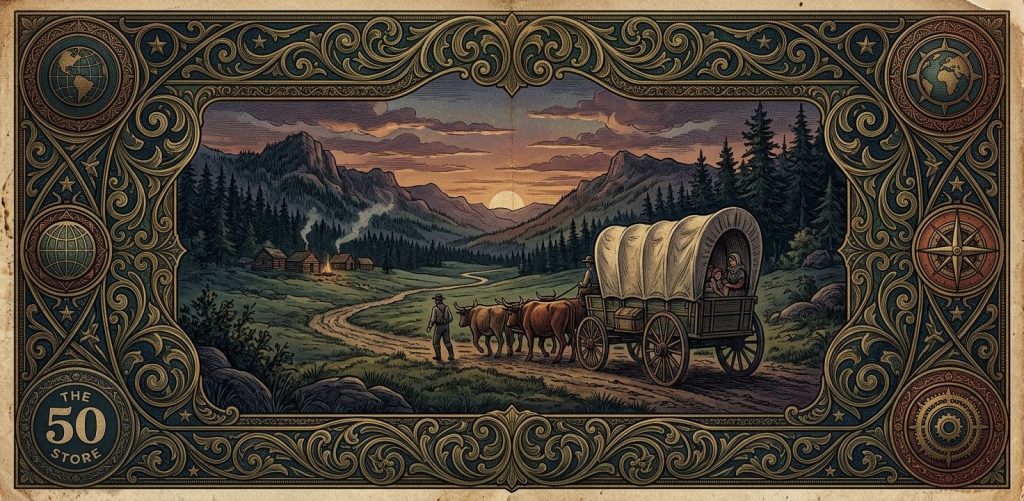
The Dust on Our Boots and the Open Horizon
I have spent many a quiet evening sitting on the porch, watching the sun dip below the trees, and thinking about the folks who came before us. We Americans have always been a people looking toward the horizon. There is a restlessness in our bones. We love the idea of setting out into the unknown to carve out a new life. But sometimes, the stories we tell our children around the campfire take on a life of their own. The reality of frontier life was a lot rougher, a lot louder, and a lot muddier than any picture show you might see today.
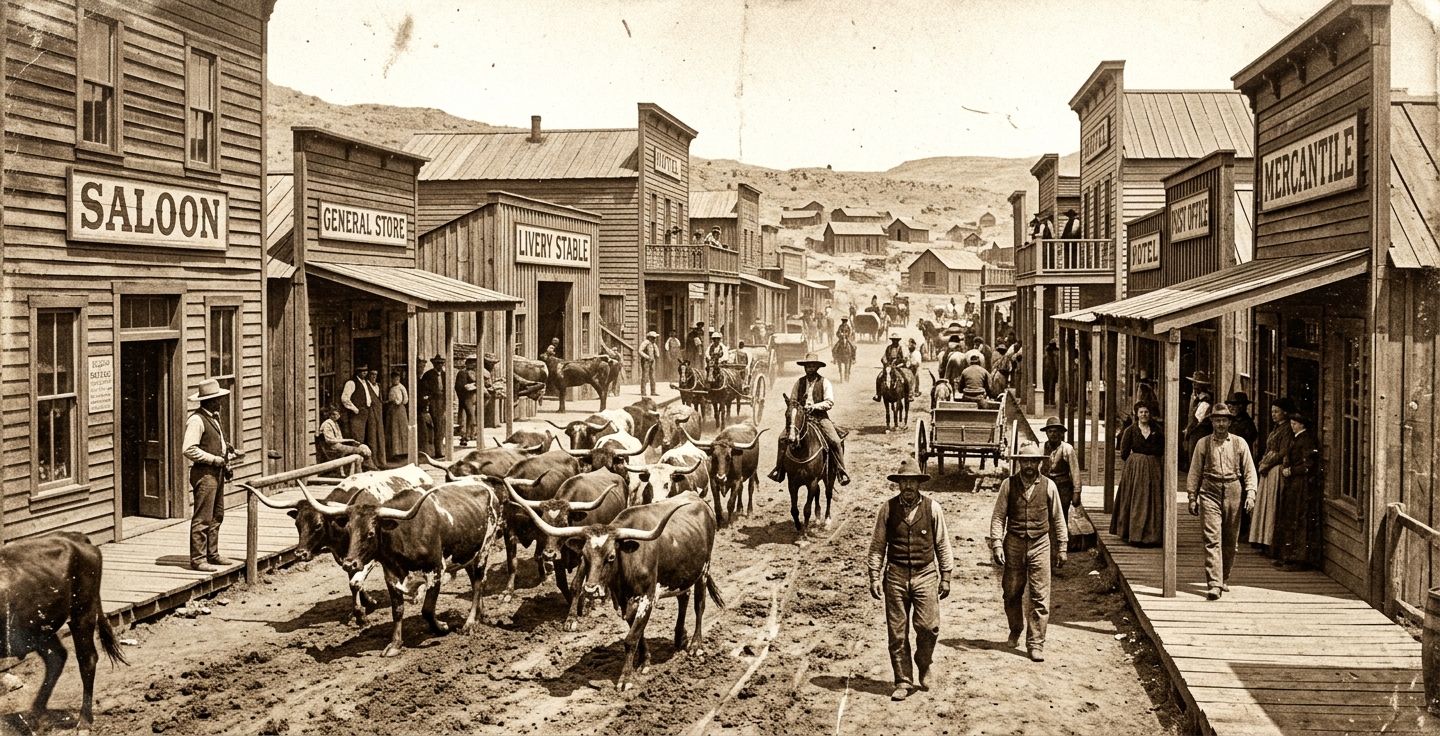
Let us take a walk back to a place like Abilene, Kansas, in the years right after the Civil War. It was just a handful of wooden huts on a vast, unforgiving prairie. Then a businessman named Joseph McCoy (1837-1915) came along with a vision to build a massive shipping point for cattle. Almost overnight, Abilene became a boomtown. The streets were choked with dust, thousands of bellowing cattle, and tired people working from the first light of dawn until they could barely stand. They were not wearing shining silver spurs or singing perfect harmonies around a fire. They were just trying to survive the week.
Many of us grew up reading the beautiful books written by Laura Ingalls Wilder (1867-1957). She captured the sweetness of a warm fire and the joy of a fiddle playing in the dark. But she also wrote about the terrifying blizzards that buried homes in snow for months, and the fever that swept through young families without a doctor in sight. Her family moved from town to town, struggling to find a place where the soil was rich and the weather was kind. That was the reality for so many. The edge of the map was not just a place for adventure; it was a daily test of a person’s physical and mental endurance.
The Surprising Numbers Behind the Legends
If we really want to understand how the West was won, we have to look past the tall tales and look at the actual ledgers. You might find it quite surprising to learn the real statistics of our pioneer days. For instance, the famous Homestead Act of 1862 offered 160 acres of free land to anyone willing to farm it for five years. That sounds like a dream come true. However, records tell a much harder story. Up to sixty percent of the families who went out to claim that free land ended up turning back. The brutal winters, the swarms of locusts, and the deep, aching isolation broke many strong spirits. Out of all who tried, only about 1.6 million successful claims were ever finalized.
Our image of the cowboy is also a bit out of focus. The lone, rugged white hero of the silver screen is not the whole truth. Historians estimate that up to twenty five percent of all cowboys were Black, and another twenty five percent were Mexican vaqueros. Men like Nat Love (1854-1921) rode the trails, faced down storms, and lived the genuine, unvarnished life of the cattle drives. It was a diverse, difficult world where your skin color mattered a whole lot less than whether you could rope a calf or repair a broken wagon wheel in the pouring rain.
When the Horizon Closed and the Complication Arose
The situation in our country was changing fast as the nineteenth century drew to a close. Millions of miles of railroad track had been laid, shrinking the vast distances. The golden spike was driven in at Promontory Summit, Utah, and suddenly a journey that took months could be done in days. Then came the year 1890. The United States Census Bureau looked at their maps, tallied their numbers, and declared that a visible frontier line simply did not exist anymore. The land was settled. The open range was being fenced in with barbed wire.
This created a profound complication for the American spirit. Right at the moment the empty lands vanished, our cities were exploding into massive industrial hubs. Look at places like Chicago or Pittsburgh during that time. The skies were choked with ash from the steel mills. Men and women who had grown up with dirt under their fingernails were now standing on concrete factory floors, tightening the same bolt thousands of times a day. Folks were migrating from open farms into crowded tenement buildings. They traded the rhythm of the seasons for the harsh ringing of the factory bell. People began to feel trapped. They felt a deep, spiritual yearning for the freedom of the open plains, a place where a person was judged by their own two hands and not by a factory boss.
Why Did the Frontier Become Our National Myth?
This brings us to a very important question. How did a grueling, muddy, and often unsuccessful struggle to survive transform into our greatest national myth? Why did we choose to remember the West not as it was, but as a grand, heroic adventure?
The answer is that we desperately needed a shared story to give us hope. As the world became faster, more industrial, and far more complicated, everyday folks needed a reminder of their own strength. They needed to believe in the idea of the self reliant individual. Publishers in New York City understood this hunger perfectly. They began printing thousands of cheap dime novels featuring exaggerated tales of lawmen and outlaws. They took real people like James Butler Hickok (1837-1876) and turned them into invincible superheroes who never missed a shot.
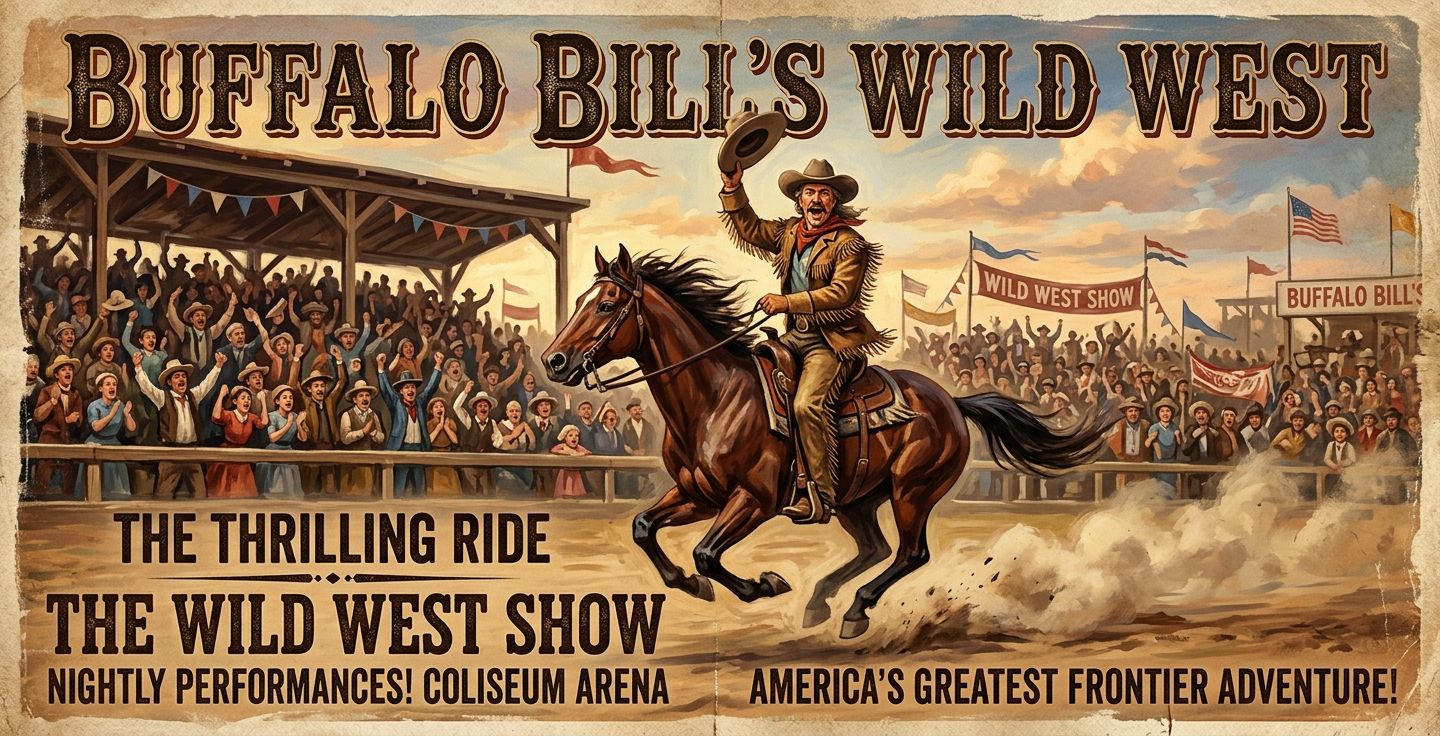
Then came the great showmen. William Frederick Cody (1846-1917) packed up the plains, removed the starvation and the boredom, and paraded pure spectacle through the streets of our crowded cities. He brought the wild west directly to the people who were starving for it. In doing so, he helped cement the idea of Manifest Destiny into our hearts forever.
It is fascinating to see how eagerly we embraced this polished version of our past. We wanted a story where the good guys always won, where the lines between right and wrong were as clear as a cloudless summer sky. In our haste to feel proud, we often smoothed over the truly painful parts of our expansion, including the deep tragedies experienced by Native American communities who were forced from their ancestral homes. The myth was comforting. It was a warm blanket for a nation that was growing up too fast and facing terrifying new challenges on the world stage.
Looking Forward with the True Pioneer Spirit
As I look at my grandchildren and the young folks of today, I sometimes hear people say that the frontier is gone. But I do not believe that for a single second. The geography might be settled, but the true American identity was never really about the dirt under our boots. It was about our willingness to face tomorrow with a hopeful heart.
The most important thing our ancestors did was not riding horses or shooting pistols. The most important thing they did was build communities. They raised barns together. They shared their harvests. They looked out for the widow and the orphan when the winter winds howled. They knew that nobody survives the wilderness entirely alone.
Today, you all are facing frontiers that I could never have imagined when I was a boy. You are navigating incredible new technologies, working to heal our natural world, and trying to build stronger, kinder communities. You are holding the same pioneer spirit in your hands. You do not need an endless stretch of empty land to be brave. You just need to look at your neighbor, offer a helping hand, and keep stepping forward into the future together. We have always been a people who can build something beautiful out of nothing, and I know you will continue to do just that.
Common Questions About Our Pioneer History
What does the term frontier actually mean in American history?
In the context of our history, it refers to the moving edge of settlement where European American expansion met the wilderness and Native American territories. It was a zone of constant change, officially declared closed by the national census in 1890.
Did the government really give away free land to anyone who wanted it?
Yes, through the Homestead Act of 1862, citizens could claim 160 acres of surveyed government land. However, turning that raw land into a successful farm was incredibly grueling, and a majority of settlers failed and moved back to the cities.
Were cowboys really the glamorous heroes we see in the movies?
Not at all. Cowboys were essential agricultural workers who did exhausting, poorly paid manual labor. They spent long hours in the saddle driving cattle through terrible weather, completely unlike the romanticized, gun slinging life shown on television.
How diverse were the people living and working in the West?
The western trails and towns were incredibly diverse. A huge percentage of working cowboys were Black Americans and Mexican vaqueros. There were also large populations of Chinese immigrants who played a critical role in building the railroads.
Why are the traveling Wild West shows so important to this history?
These traveling spectacles were the bridge between the harsh reality and the romantic legend. They packaged the struggle into thrilling entertainment, cementing a highly dramatized and sanitized version of the era into the public imagination.
What lessons can modern generations take from the pioneer days?
We can learn the profound value of community and resilience. The people who survived out there did not do it as lone wolves. They relied on their neighbors to help raise barns, harvest crops, and get through hard times together.