
American Mythos & National Character
How the Idea of “Self-Made Success” Took Over
The Front Porch and the Assembly Line
If you take a stroll down Woodward Avenue in Detroit today, you will notice a city that is constantly reinventing itself. It is a beautiful thing to witness. But my mind always goes back to a different era. I remember the deep, resonant hum of the automobile plants that served as the heartbeat for our entire neighborhood. The air smelled of hot metal, roasted coffee from the corner diner, and the raw energy of a people who were building the future together. In those days, success was something you shared with the folks next door. If a man got a promotion at the plant, the whole street felt a little richer. We understood that the roads we drove on, the schools our children attended, and the safety of our neighborhoods were shared victories. It was a collective prosperity. You knew the foreman, you knew the baker, and you knew the postman. We relied heavily on our community support. The idea of climbing up a ladder and pulling it up behind you was completely foreign to us. We were all on the same heavy scaffolding, lifting each other up one rung at a time. Things were loud. Things were real.
The Shift to the Solitary Climber
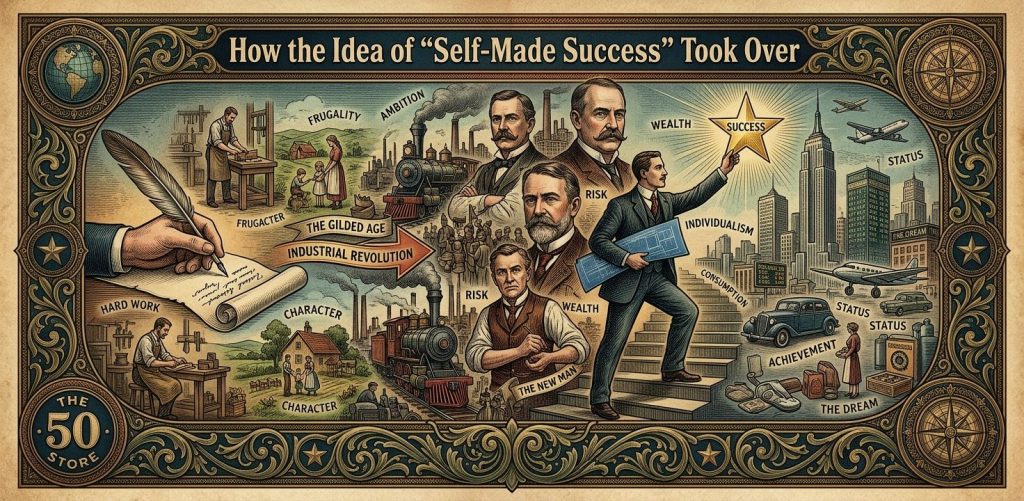
But somewhere along the line, the narrative began to drift. It is fascinating what we choose to believe about ourselves as time marches on. A few years back, I was reading the morning paper and saw a 2019 study by the Pew Research Center. They found that 73 percent of Americans believe that hard work is the single most important factor for getting ahead in life. When you compare that to the rest of the world, where the global median sits right around 50 percent, it paints a very clear picture of our national character. We are an incredibly hopeful bunch. We want to believe that our own two hands are enough to shape our destiny. However, there is a harsher truth running parallel to that hope. According to the Economic Policy Institute, the compensation for top corporate executives has grown by a staggering 1,322 percent since 1978. Meanwhile, the wages for the typical worker have barely kept pace with the cost of groceries. The gap between the man sweeping the floors and the man sitting in the corner office became an ocean. We traded our shared neighborhood victories for a system that rewards the solitary climber above all else.
How Did We Get Here?
This shift leaves us with a very important question. How did the idea of self-made success take over our culture so completely? How did we move from a nation of barn raisers and block party organizers to a nation that worships the myth of the lone genius who needs nobody but himself?
A Tale of Pluck and Pennies
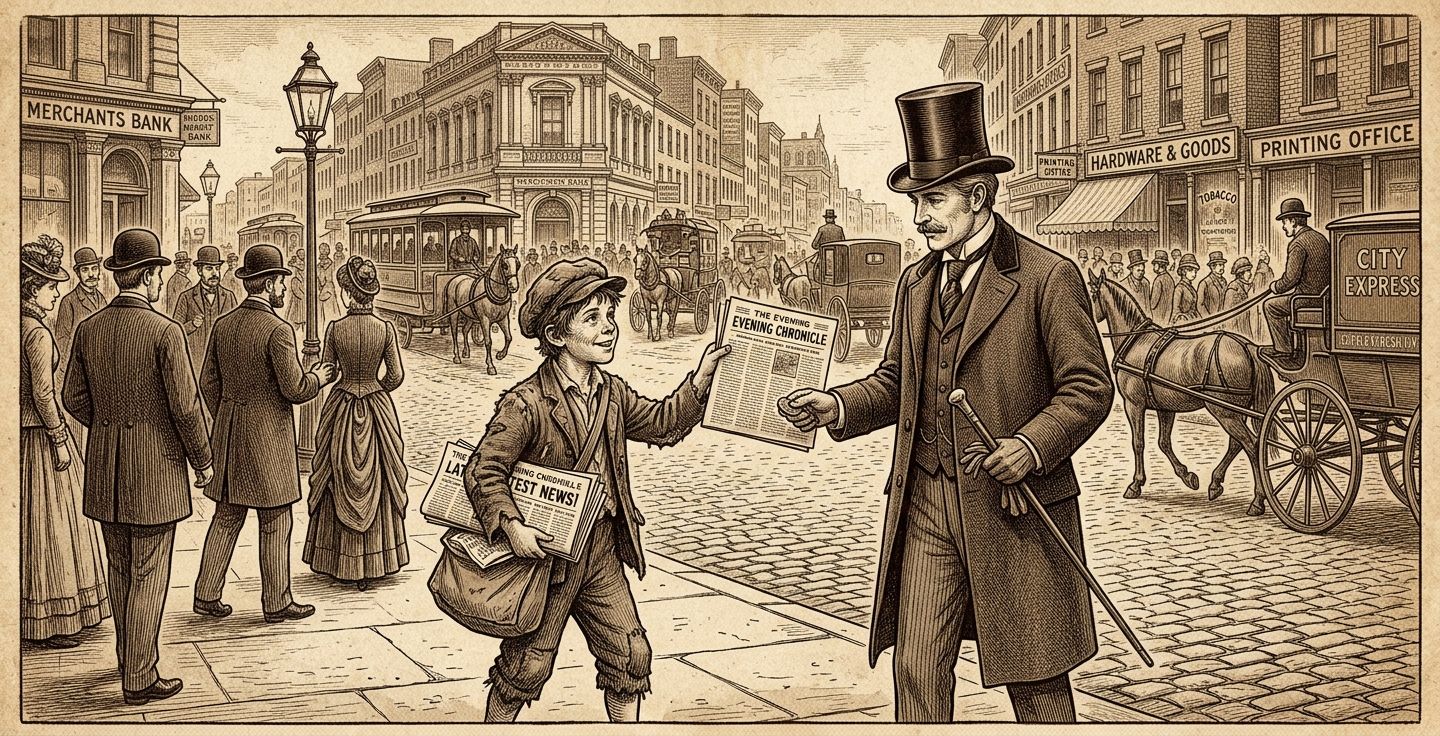
The answer has deep roots in our history, and it often starts with the stories we tell our children. If you want to understand how this idea took hold of our imaginations, you have to look back at a man named Horatio Alger (1832-1899). He was an author who wrote over a hundred cheap, wildly popular novels in the late nineteenth century. Alger perfected a very specific formula. His most famous work, Ragged Dick, told the story of a streetwise shoeshine boy. This boy was always honest, cheerful, and incredibly hard working. Through sheer grit and a perfectly timed stroke of luck, like rescuing a wealthy banker from a runaway horse, the boy would be rewarded with a steady job and a path to riches. Millions of these books were printed and devoured by the public. Alger planted a seed in the American consciousness. He made us believe that poverty was just a temporary state for those who lacked proper motivation. He gave birth to the modern myth of individual success. It was an attractive piece of fiction. We swallowed it whole because it felt good to believe that the universe was entirely fair and that grit alone was the magic key.
The Steel Mills and the Libraries
But fiction is one thing. Reality is far more complex. To see how this myth played out in the real world, we can look at the giants of industry. Consider the life of Andrew Carnegie (1835-1919). Here was a man who truly seemed to embody the rags to riches story. He came to America as a penniless immigrant and built an empire of steel. If you ever stood near the Monongahela River back in the day, you would have seen the massive, smoke belching mills that generated his immense fortune. The skies were permanently gray with soot. Carnegie was a ruthless businessman who firmly believed in his own exceptionalism. He drove his workers to the bone, often violently suppressing their attempts to organize for better pay and safer conditions. He believed he was entirely self made.
Yet, Carnegie eventually realized something profound. In his later years, he wrote about the Gospel of Wealth, arguing that rich men had a moral obligation to give their money back to the society that made their wealth possible. He funded thousands of public libraries across the country. I spent many quiet afternoons in one of those libraries. The smell of old paper and polished wood is forever etched in my memory. Those libraries were an admission, conscious or not, that nobody makes it entirely on their own. Carnegie needed the thousands of men sweating near the blast furnaces. He needed the public roads to transport his steel. He needed the courts to enforce his contracts. The libraries were his way of paying back the very community infrastructure that allowed his empire to exist in the first place.

The Heart of the Real Dream
This brings us to the true heart of the American Dream. There is a beautiful nobility in honest labor. Waking up early, putting on your boots, and striving to provide a better life for your family is a sacred thing. I have the utmost respect for anyone who puts their shoulder to the wheel. Work matters. Ambition matters. But we have to be honest with ourselves about the scaffolding that holds us up. When we glorify the solitary winner and ignore the village that raised him, we do a terrible disservice to our history. Every successful business owner relies on teachers who educated their workforce. They rely on the sanitation workers who keep the streets clean. They rely on the police and fire departments that protect their investments. True success is never a solo performance. It is a massive symphony of moving parts, mostly played by unrecognized hands.
Passing the Torch
That is why I am writing this to you today. Many of you are well into your careers, raising families, and navigating a world that seems more complicated than the one I knew. You are told every day that you must hustle harder, that you must build your personal brand, and that you must conquer the world on your own. I want to encourage you to reject the lonely version of that dream. You young folks have such bright eyes and strong hearts. I see the way you care for your neighborhoods. I see you supporting local businesses, organizing community gardens, and checking in on each other. You give me so much hope. You understand something very vital that my generation occasionally forgot. You know that climbing to the top of a mountain is a lonely experience if you have nobody to share the view with. Keep working hard, absolutely. But remember to reach out your hand and pull someone else up with you. Build businesses that treat their workers like neighbors. Build lives that are measured not just by personal bank accounts, but by the richness of your friendships and the strength of your community.
What does the term self made actually mean?
The term typically refers to a person who has achieved wealth, status, or success entirely through their own efforts, without the benefit of inherited wealth or influential family connections. It celebrates personal grit and determination as the primary engines of achievement.
Did the famous historical industrialists succeed entirely without help?
Not at all. While figures from history possessed incredible drive and vision, they benefited greatly from government subsidies, public infrastructure, the labor of thousands of workers, and an expanding consumer market. Their achievements were deeply connected to the society around them.
Why do we still hold onto the idea of self reliance so strongly?
It is deeply ingrained in our cultural DNA. Stories of individual triumph provide a sense of hope and control over our own destinies. It is comforting to believe that regardless of your starting point, your personal effort will guarantee a specific outcome.
How can a person balance personal ambition with community support?
You can pursue your biggest goals while staying grounded in gratitude. Acknowledge the mentors, public resources, and local support networks that help you along the way. Giving back through mentorship or local investment keeps that balance healthy and strong.
Are younger generations changing the definition of success?
Yes, they absolutely are. Many younger adults are moving away from purely financial metrics of success. They are placing a much higher value on work life balance, mental health, community impact, and finding a sense of purpose that goes beyond simply accumulating wealth.
What is the danger of believing completely in the solitary success myth?
When we believe that success is entirely self generated, we often conclude that poverty or failure is entirely a personal fault. This can lead to a lack of empathy for those facing systemic hurdles and can cause us to neglect the public resources that give everyone a fair chance.