
American Sports & Pastimes
How College Sports Became a Big Deal in the U.S.
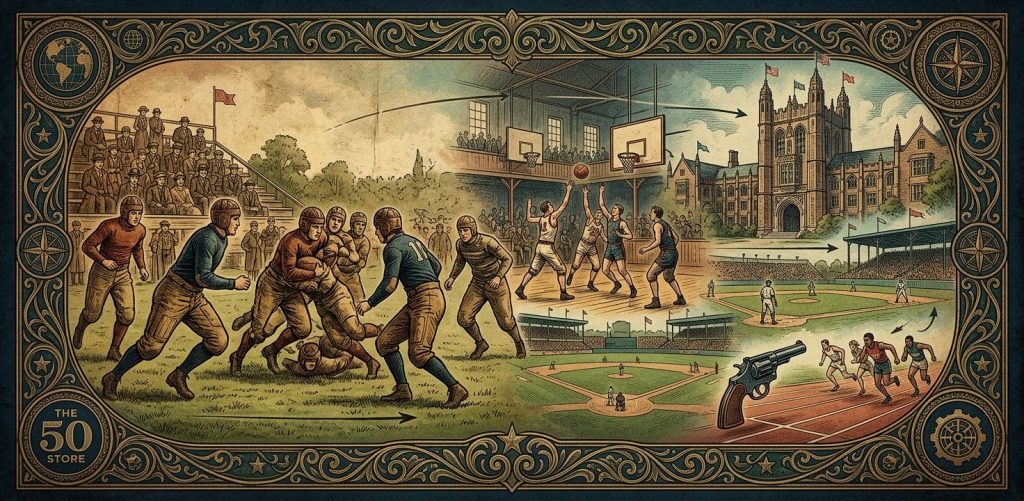
The Magic of an Autumn Saturday
The crispness of the autumn air always brings back a rush of fond memories for me. You feel the distinct change when late August rolls around and the leaves just begin to hint at turning yellow and gold. The heavy summer humidity finally drops, leaving a fresh, welcomed chill in the morning breeze. Soon, the familiar sounds begin to echo through town. You hear the steady rhythm of a snare drum drifting from the local practice field. You smell roasted peanuts and hot charcoal from the crowded parking lots. Saturday mornings have a special magic in this country. Walking toward a grand stadium with your family, clutching a simple paper ticket, and seeing those massive concrete walls rise against a clear blue sky is an experience that stays with your heart forever.
A Staggering Transformation
But how did we arrive at this spectacular point? That is a complicated question I often ponder when I sit comfortably in the bleachers today. We went from a handful of local farm boys kicking a swollen leather ball on muddy grass to constructing colossal arenas holding well over one hundred thousand cheering souls. It is a staggering transformation. How did a simple extracurricular activity meant to burn off youthful energy turn into an absolute pillar of our national culture? Why do we care so deeply about the specific shades of crimson, navy, or gold that we proudly wear on our backs?
The Numbers Behind the Passion
The sheer scale of the sport today is enough to make a person dizzy. According to a recent financial report from the National Collegiate Athletic Association, their athletic departments generated over eighteen billion dollars in total revenue during the 2022 season alone. That is a mountain of money that is frankly hard for a fellow my age to even comprehend. Think about how many hot dogs and programs that represents. In addition, a survey by the National Football Foundation found that more than one hundred and seventy-five million Americans consider themselves loyal fans. Even more remarkable is that nearly five hundred thousand young men and women compete as student-athletes every single year. These surprising statistics reveal an industry larger than the economies of some nations. Yet, beneath all the bright stadium lights, the beating heart of the game remains the same.
A Muddy Field in New Jersey
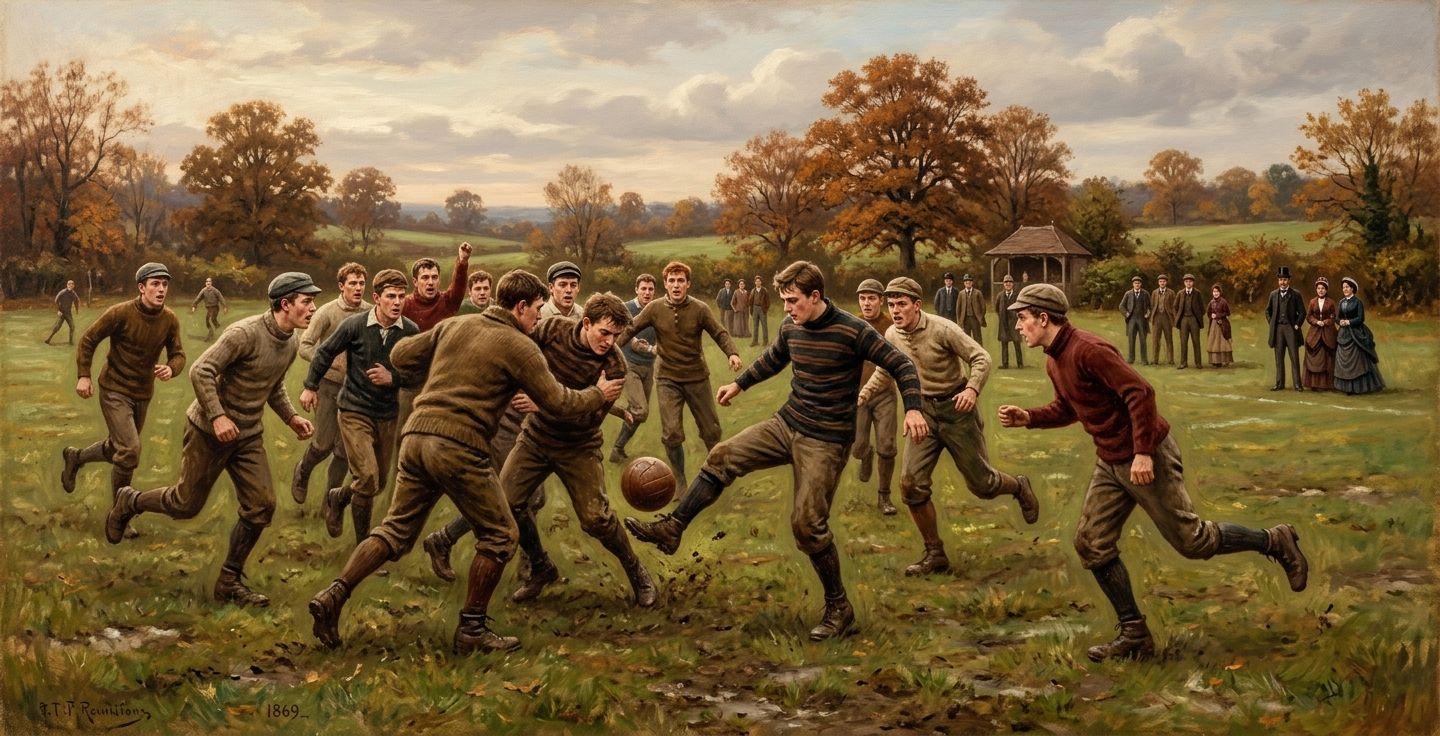
To really understand this deep connection, we have to look back to a quiet afternoon in New Brunswick, New Jersey. On November 6, 1869, the young men of Rutgers College challenged the students from the College of New Jersey, now called Princeton, to a friendly match. The Rutgers captain was a bright fellow named William J. Leggett (born 1848, died 1925). Leggett just wanted a bit of healthy exercise and camaraderie. The game involved twenty-five boys on each side chasing a round ball across a cold, uneven field. They wore whatever old clothes they had, often shedding their heavy wool coats right there on the grass. Rutgers won that day by a score of six to four.
Bringing Order to the Chaos
That single afternoon was a tiny seed planted in the fertile ground of American culture. The game grew rapidly, but it was incredibly rough. The sport was so physically brutal that many college presidents wanted to ban it entirely. It desperately needed structure. Enter a visionary named Amos Alonzo Stagg (born 1862, died 1965). When he took over the athletic program at the University of Chicago, he began inventing things we now take for granted. Stagg created the first tackling dummies by filling canvas sacks with heavy sand so his boys could practice safely.
His most brilliant idea was incredibly simple. He decided to sew large numbers onto the backs of the players jerseys. Before that clever innovation, fans had a terrible time figuring out who was carrying the ball. By adding numbers, Stagg turned a confusing mass of tangled bodies into a clear story. A father and son sitting in the bleachers could cheer for a specific young man by name. This small change created a deep bond between spectators and the team. It laid the firm foundation for modern college athletics as a beloved spectator event.
The Birth of the Spectacle
Soon enough, the spectacle expanded into the grandstands and out into the surrounding towns. Out in South Bend, Indiana, a charismatic coach named Knute Rockne (born 1888, died 1931) understood that football was a grand theatrical performance. He perfected the forward pass, turning the grounded game into a fast, aerial ballet. People from all walks of life started paying close attention. You did not even have to attend the university to feel a strong personal connection. Working class folks and newly arrived immigrants started rooting for their local colleges. It fostered an incredible, binding sense of community pride. Wearing the bright colors of the local team meant you truly belonged to something bigger.
Music in the Autumn Air
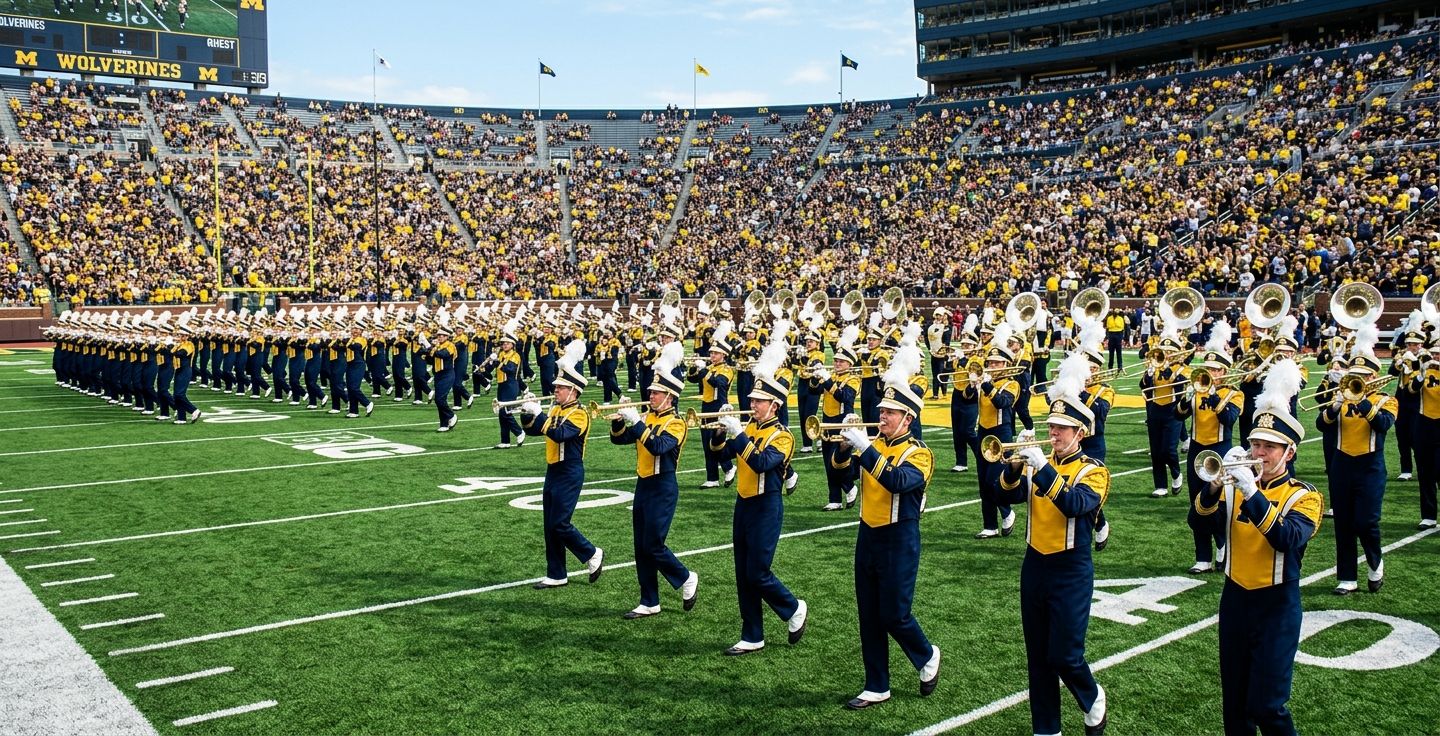
The universities began to heavily invest in the surrounding pageantry. The crisp autumn air was soon filled with the glorious sounds of brass and heavy percussion. The rise of collegiate marching bands added a completely new, joyous layer to the experience. I vividly remember the first time I saw a full band step onto the field. The bright sun caught the polished bells of the trumpets. The heavy, rhythmic thump of the grand tubas vibrated right through the wooden bleachers. The synchronized marching and intricate formations were absolutely mesmerizing. They provided the triumphant soundtrack to our weekends.
As the country grew more connected by reliable railroads, the intense desire to travel and see these games expanded. People would save up their hard earned money all year just to take a long train ride. Think about the majestic Rose Bowl Stadium in Pasadena. People stuck in the freezing, snowy Midwest would eagerly huddle around their crackling radio sets on New Years Day, listening as announcers described the warm California sunshine. The intense, yearly pursuit of elusive national championships gave every season a dramatic, sweeping storyline. It was an annual epic tale of plucky underdogs and unbelievable last minute miracles.
A Hopeful Look Forward
When I sit back in my old armchair today and watch the games, I am filled with a profound sense of warmth and deep hope for the future. Sure, the modern stadiums are vastly bigger now, and the business side is massive. But when the referee blows the whistle, all of that modern noise fades away. You are left watching young people giving their absolute best effort. You see the pure joy of a hard earned victory and the quiet resilience learned in sudden defeat. These kids are learning vital life lessons about teamwork and personal discipline. They will carry those lessons into their adult lives, building stronger families and stronger communities.
That is exactly why I encourage you to keep this wonderful, historic tradition alive. Call up an old friend or your next door neighbor. Buy a pair of affordable tickets to a local community college or a regional university game. Take your children or your grandchildren with you to the stadium. Buy them a warm hot dog wrapped in foil. Teach them the proud words to the historic fight song. Let them feel the deep rumble of the drumline in their bones. By passing these simple joys down, we ensure the beautiful spirit of our shared American history continues to thrive.