
American Sports & Pastimes
Why Baseball Is Called America’s Pastime
The Sounds of Summer
The late afternoon sun dips below the grandstand. A cool breeze finally cuts through the thick summer heat. I can still close my eyes and hear the precise, sharp crack of a wooden bat meeting a leather ball. That sound echoed across the radio on warm July evenings when our windows were left open to catch the crosswinds. It was the background music of our neighborhoods. We sit on our porches and listen to the innings unfold. We call it America’s pastime. It is a slow, deliberate game. It gives us time to talk. It gives us time to think. It allows a moment to breathe in a world that rarely stops moving.
A Changing World
Things have certainly sped up since my youth. Football hits much harder. Basketball moves so much faster. People today carry glowing little screens in their pockets. Those screens demand every single second of their attention. The modern world has grown loud and incredibly rushed. We have instant news, instant food, and instant gratification. There is very little patience left for a slow build.
So why do we still sit in the sun for three hours waiting for a hit? How does this humble game of dirt and green grass keep its hold on the American soul? Why do millions still care about a pitch thrown on a Tuesday night in May?
The answer is simpler than you might think. Baseball is not just a sport. It is the story of us. It is the story of fathers and daughters, grandfathers and grandsons. It serves as a timeline of our nation, marking the years with pennant races and autumn classics. It is a shared clock and a shared calendar.
The Numbers Behind the Passion
To truly understand this lasting devotion, you have to look at the sheer numbers. They are quite remarkable. During the middle of the nineteenth century, the game spread like wildfire. Soldiers from different states shared the game in remote camps to pass the time. By the early twentieth century, it was a full blown national obsession. According to historical records from the Baseball Almanac, over ten million fans attended Major League Baseball games in the year 1920 alone. That was a truly staggering number when you consider how small the population was back then, and how difficult travel could be.
The passion has not faded. Today, the National Hot Dog and Sausage Council reports that fans consume over nineteen million hot dogs at stadiums each and every season. Think about that for a moment. Nineteen million hot dogs. The Elias Sports Bureau and Forbes consistently note that regional television ratings for local baseball teams frequently beat out massive national prime time television shows. We never really stopped watching. We never stopped caring. The game just became part of our daily routine. 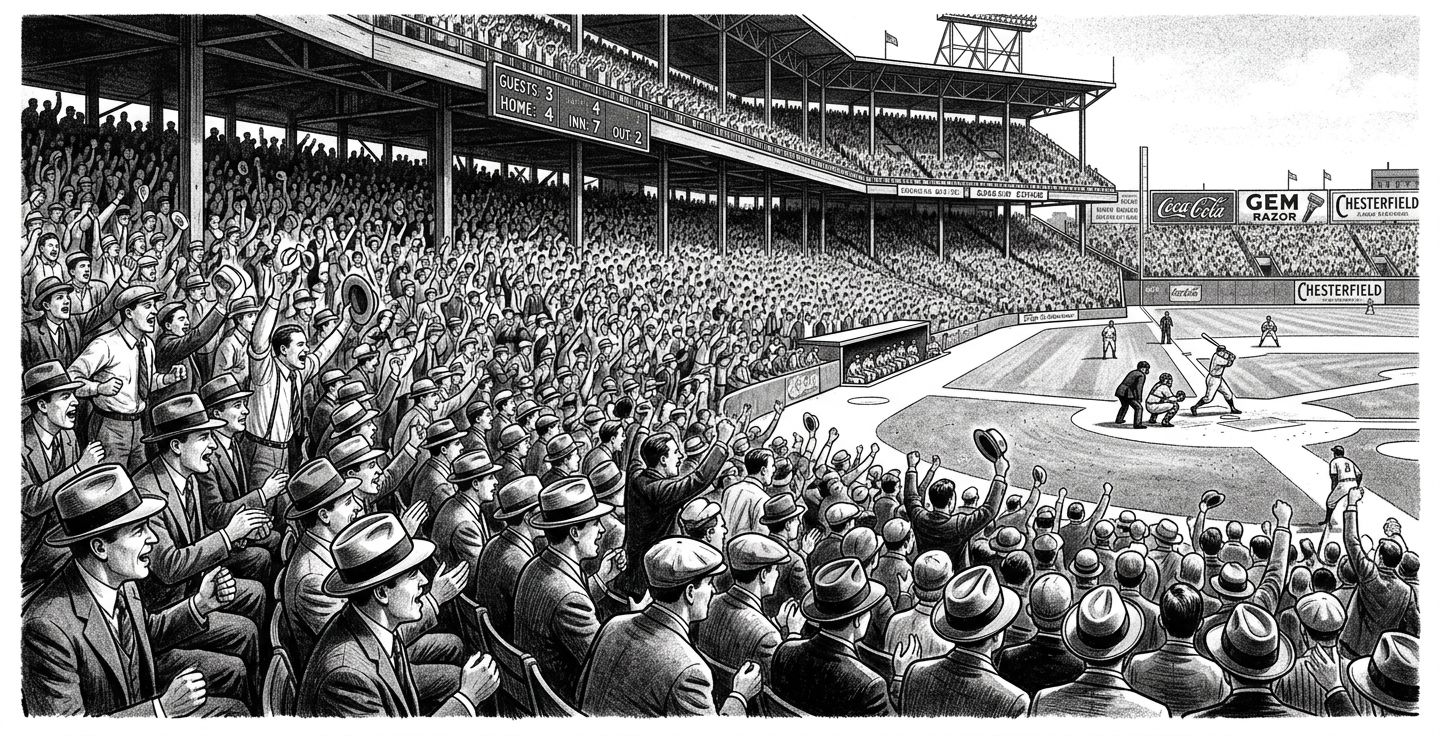
Stories from the Diamond
A Small Field in New Jersey
Let us take a walk down a grassy field in Hoboken, New Jersey. The year was 1846. A young bank clerk named Alexander Cartwright (born 1820, died 1892) and his friends formed the Knickerbocker Base Ball Club. They played their matches at the Elysian Fields. Cartwright did something very important. He formalized the rules. He set the bases exactly ninety feet apart. He firmly ruled that you could no longer throw the heavy ball at a runner to get him out. That small act of writing down rules in Hoboken changed the entire country.
It turned a chaotic, sometimes violent schoolyard game into a gentlemanly pursuit. It gave young men a reason to gather after a long, exhausting week of working in factories and foundries. The game traveled along the expanding railroad lines. It popped up in small farming towns and big city lots. Towns formed teams. Local pride was put on the line every Saturday afternoon. Baseball grew right alongside the nation.
The Sultan of Swat
There were times when the game stumbled. In 1919, a terrible gambling scandal nearly broke the trust of the public. But then came a larger than life figure from Baltimore. Babe Ruth (born 1895, died 1948) arrived with a massive swing and an even more massive personality. He swung a heavy piece of ash wood. He completely changed the geometry of the game. Before Ruth, teams scored by stringing together small hits and stolen bases. Ruth just hit the ball over the fence. He brought joy and spectacle back to the ballpark. People flocked in record numbers just to see him swing. He built his stadium with sheer star power.
Courage in Brooklyn
But the most important moment in our baseball history did not involve a home run record. Fast forward to the spring of 1947. We find ourselves at Ebbets Field in Brooklyn. A young man from Cairo, Georgia, stepped onto the dirt around first base. His name was Jackie Robinson (born 1919, died 1972). The moment he put on that crisp white uniform, he carried the weight of millions of marginalized citizens on his broad shoulders.
The entire nation watched. They watched as a single man faced unspeakable hatred with unyielding grace and immense talent. Baseball was the mirror we held up to ourselves. If the sporting world could integrate, maybe our schools and our neighborhoods could too. Robinson forced America to look at its promises and finally start living up to them. He endured the taunts and the threats. He just kept playing hard. He stole bases. He won games. That is the true magic of this sport. It has the power to change minds without ever raising a fist.
The Rhythm of Life
Think about the rhythm of the baseball season. It mimics the rhythm of life. It begins in the gentle, hopeful days of spring. Teams gather in sunny Florida and Arizona for Spring Training. Everyone is tied for first place. Hope springs eternal. As the summer gets hot and grueling, the long season tests the endurance of the players. It is a daily grind. They play one hundred and sixty two games. You have to show up every single day, put on your cleats, and go to work. Then comes autumn. The air turns crisp. The leaves change colors. The playoffs arrive, bringing unbearable tension and unforgettable moments. The season closes just as the cold winter sets in, leaving us to dream of spring all over again.
When I was a boy, television was a rare luxury. We relied on the radio. Announcers painted vivid pictures with their words. You had to use your imagination to see the bright green grass and the crisp white uniforms. You learned the names of players from distant towns. You memorized their batting averages from the back of cardboard trading cards. It taught us math, geography, and how to deal with failure. A man who fails seven times out of ten at the plate is considered a true legend. Baseball teaches you that failure is just part of the journey. You just have to step back into the batter box and try again.
A Bright Future
I have sat in the wooden seats of Fenway Park and watched the green ivy grow thick at Wrigley Field. The game is a sturdy bridge between the ages. The rules remain largely the same. A strike is still a strike. Ninety feet is still ninety feet. When you sit in those stands, you share an invisible bond with generations long gone.
But I am even more excited for the future. Some folks my age complain about the new generation. Not me. I see young kids throwing incredible fastballs. I see athletes from all corners of the world bringing new joy, flair, and energy to the diamond. They flip their bats when they hit a home run. They dance in the dugout. They smile wide. They remind us that it is, at its absolute core, a game meant to be enjoyed. The future of baseball is bright, diverse, and incredibly talented. 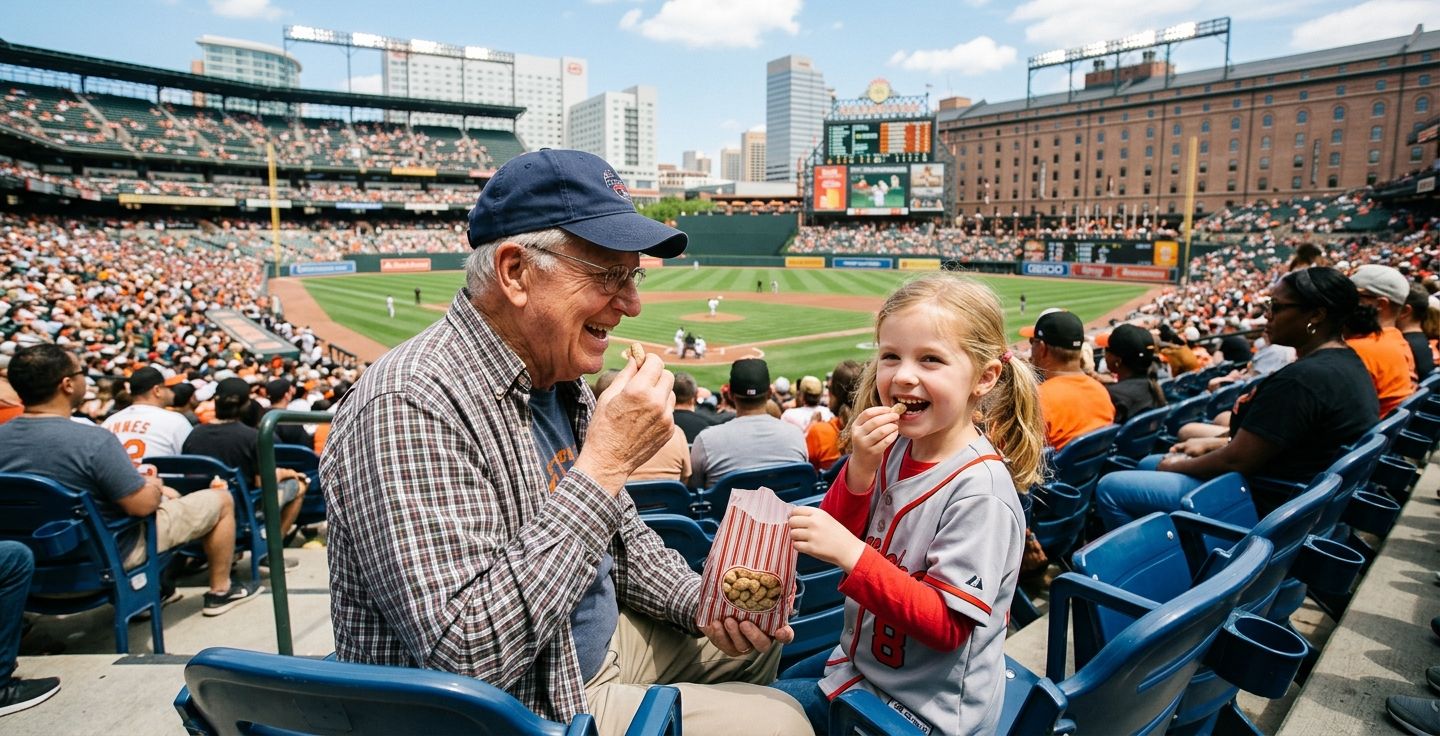
Pass the Torch
Do yourself a huge favor this summer. Buy a cheap ticket. Take someone you love to a minor league game or a big league stadium. Buy a bag of warm peanuts. Teach your grandson or granddaughter how to keep score on a paper program. Let the afternoon unfold slowly without checking your phone. Give them the precious gift of your time and your full attention. Pass the torch of our national sport down to the next generation. They need the quiet, steady focus of this beautiful game just as much as we did. They need to know the feeling of the sun on their face and the hope of a bottom of the ninth rally.