
American Lifestyle
The Rise and Fall of the Shopping Mall—And What Replaces It
The Echoes of the Glass Palaces
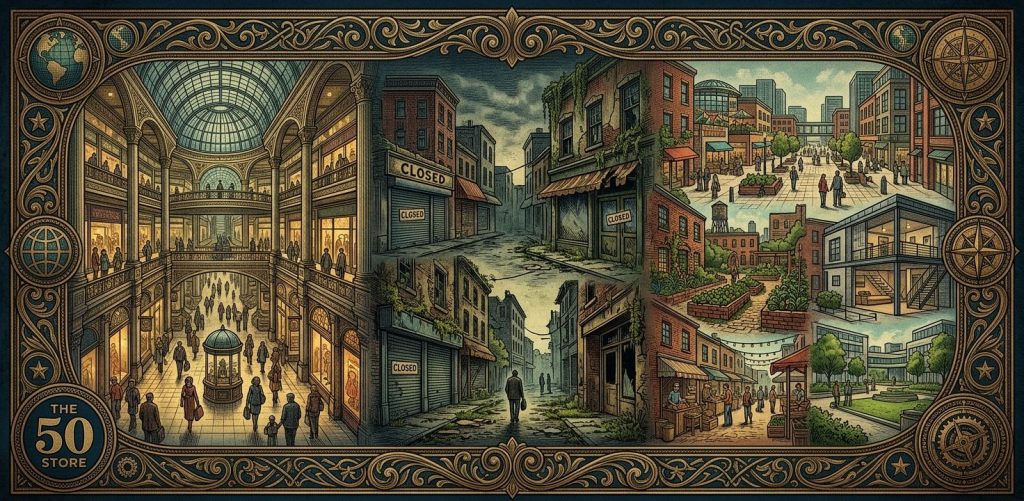
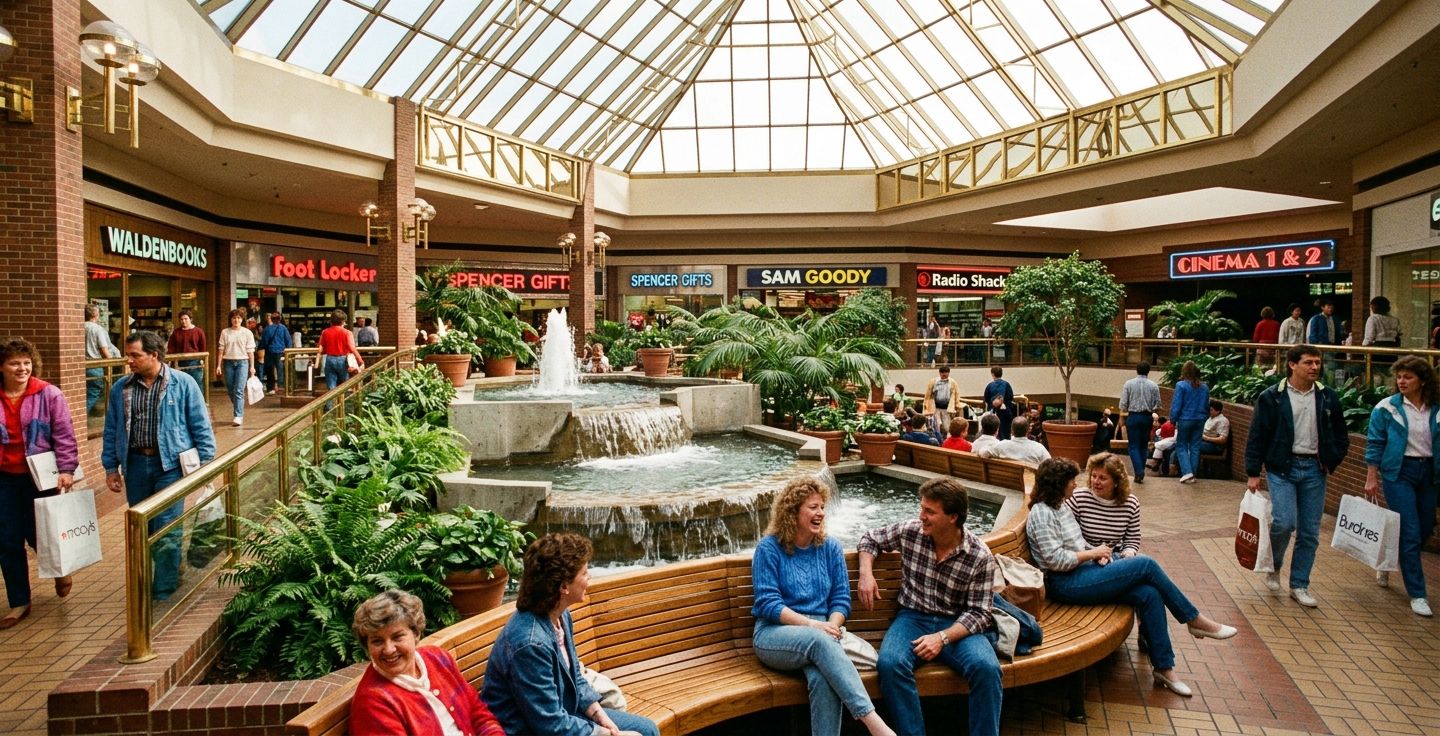
I remember the soft echo of water splashing in the grand indoor fountains. If you close your eyes, you can probably still smell the warm cinnamon pretzels and the roasted nuts drifting down the long, brightly lit corridors. For a long time, the massive indoor shopping mall was the beating heart of our weekends. We gathered there to escape the summer heat, to walk away the winter chill, and simply to be around each other. It was a place where teenagers found their first jobs, where families spent their Saturday afternoons, and where folks would sit on wooden benches just to watch the world walk by.
Those glass and steel palaces felt permanent. They felt like they would stand forever as the monuments of our bustling society. But cities change, habits shift, and the structures we build eventually reflect the new ways we choose to live our lives. Today, we are watching a massive transition in how we gather, and it is a fascinating story to witness.
A Vision from Across the Sea
To understand where we are going, we have to remember how we got here. The enclosed mall was not originally designed to be a massive machine of endless consumption. It started as a deeply personal dream of community. The concept was brought to life by an architect named Victor Gruen (born 1903, died 1980). He came to this country from Vienna, and he missed the lively, pedestrian-friendly plazas of his homeland. He looked at our growing suburbs and saw a lot of houses, but no real center. He wanted to build a place where people could walk safely, drink coffee, look at art, and talk to their neighbors.
His vision became reality at Southdale Center in Edina, Minnesota. Opened in the 1950s, it was a marvel. It was fully climate-controlled to protect the locals from the harsh Minnesota winters. When you walked through those heavy glass doors back then, you were stepping into a utopian idea of an indoor town square. It worked beautifully. People flocked to it, and soon, nearly every town in America wanted a Southdale of their own.
The Tides Turn
For decades, the indoor mall reigned supreme. But then, the wind began to shift. The sprawling parking lots and massive department stores slowly lost their magic. The complication in our story was twofold. First, we simply built too much space. Second, the internet arrived and changed the rules entirely. The convenience of e-commerce meant that if you just needed to buy a pair of shoes or a new pan, you did not need to drive twenty minutes and walk a mile past stores you had no interest in.
The numbers regarding this decline are quite staggering. According to a 2017 report by the financial services firm Credit Suisse, analysts made a shocking prediction that up to a quarter of all American malls would shut their doors within five short years. Furthermore, Business Insider reported a striking statistic. They noted that traditional enclosed malls dropped from a peak of nearly 1,500 thriving locations in the 1980s to roughly 700 operational centers today. To add to this picture, the analytics firm Green Street Advisors reported that traditional department stores lost more than half of their total market share in just two decades.
I watched this happen in my own neighborhood. The bustling anchor store on the edge of town, where I bought my first real suit, slowly became a quiet, empty shell. The parking lot, once packed with station wagons, started sprouting weeds through the asphalt. It was sad to see at first. It felt like we were losing our common ground.
So, What Happens Now?
This brings us to an important question. If the grand indoor plazas are fading, what happens to our public spaces? Did we lose our desire to be around one another? Will we just stay in our homes, waiting for cardboard boxes to arrive on our porches?
The answer is a resounding no. We never lost our need for community. We just grew tired of the artificial environment. We wanted fresh air again. We wanted sunlight that didn’t have to pass through a tinted skylight. The fall of the enclosed mall is not the end of our gathering spaces. It is merely a return to something older, better, and much more human.
The Return to the Village
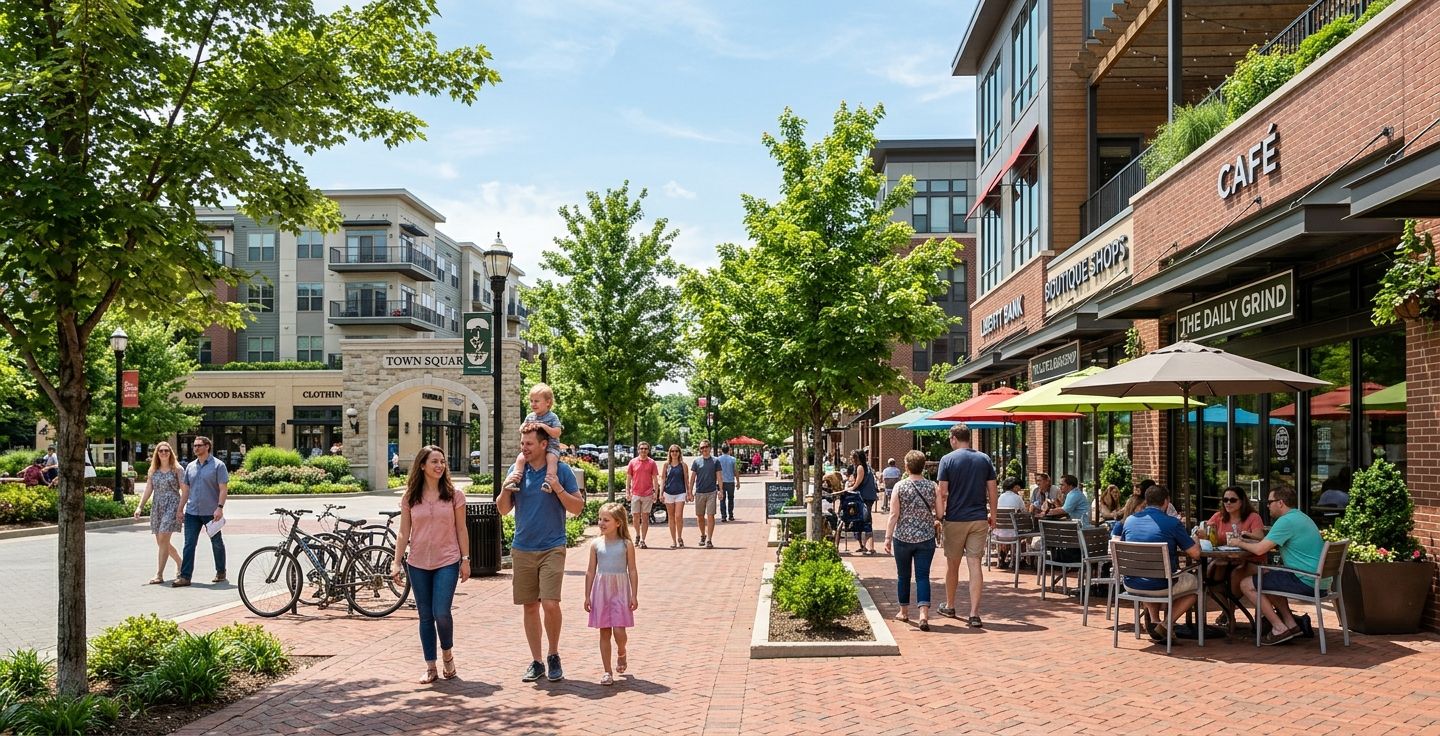
What replaces the hollowed-out concrete boxes is something incredibly hopeful. Across the country, developers and city planners are tearing up those massive parking lots and building the open-air town center. These are mixed-use spaces. They combine apartments, office spaces, public parks, and retail all in one walkable neighborhood.
This is not a completely new idea. Decades ago, another visionary named James Rouse (born 1914, died 1996) saw that enclosed malls were becoming sterile. He believed in bringing life back to historic city areas and pioneered the festival marketplace. You can see his brilliant work at the Faneuil Hall Marketplace in Boston, Massachusetts. People loved the fresh air, the cobblestones, and the authentic energy.
Today, we are taking that spirit and building it everywhere. Instead of a food court, there is a local farmers market. Instead of endless rows of identical chain stores, there are local bakeries and independent bookstores sitting below residential apartments. People are actually living in these new centers. I see young parents pushing strollers on wide sidewalks, sitting under real trees instead of plastic ones. I see folks bringing their dogs to outdoor cafes. It feels like a real village.
Embracing the Next Chapter
Change is always a little bittersweet. I will always cherish the memories of sharing a milkshake at the indoor food court with old friends. But when I look at what the younger generations are building today, my heart is full of optimism. They are creating spaces that are sustainable, beautiful, and focused on real human connection.
I encourage you to take a walk through one of these new revitalized main streets or modern mixed-use centers. Buy a cup of coffee from a local shop. Sit on a bench under the open sky and watch the children play on the grass. You will see that the American spirit of community is not fading at all. It is simply stepping out into the fresh air, ready for a bright and wonderful future.
Common Questions About Our Changing Retail Spaces
Why did the traditional indoor malls start to decline?
The decline was largely driven by a massive shift in consumer habits and the rapid rise of online shopping. Additionally, America simply built too much retail space over the decades. When convenience became the priority, the massive indoor complexes could not sustain the foot traffic needed to keep their large anchor stores in business.
Are all enclosed malls going to disappear entirely?
No, not all of them. The highest quality properties in prime locations are still doing very well. These top-tier destinations have adapted by adding high-end dining, entertainment venues, and unique experiences that you cannot get online. However, the middle and lower-tier properties are the ones facing the most significant challenges.
What exactly is a mixed-use development?
A mixed-use development is a type of urban planning that blends residential, commercial, cultural, and entertainment uses into one space. Instead of driving from your home to a separate shopping center, a mixed-use space allows you to live in an apartment building that has a grocery store, a coffee shop, and a park right right downstairs.
How does the closing of a large mall affect a local town?
Initially, it can be very hard on a town because of the lost tax revenue and local jobs. It leaves a massive empty building that can be an eyesore. However, in the long run, it provides the town with a huge piece of land to rebuild something better, like affordable housing, public parks, or medical centers that serve the community in new ways.
What happens to the abandoned buildings?
Many are being creatively repurposed. Some are turned into community college campuses, medical facilities, or modern office spaces. Others are completely demolished to make way for green spaces and new walkable neighborhoods. The concrete and steel are often recycled into the foundation of whatever new dream the community decides to build next.
Is online shopping the only reason for this change?
While online shopping gets most of the blame, changing generational preferences play a huge role. Younger people tend to prefer spending their money on experiences, dining out, and traveling rather than just buying material goods. They want authentic, unique local spaces rather than identical national chain stores.
Can an everyday person help shape what comes next?
Absolutely. You can participate by attending local town hall meetings when redevelopment projects are proposed. Most importantly, you can vote with your wallet by supporting the local businesses, farmers markets, and mixed-use spaces in your area. Community spaces thrive when the community actually shows up to use them.