
American Sports & Pastimes
What Game Day Culture Is Like in America
The Arrival of Autumn
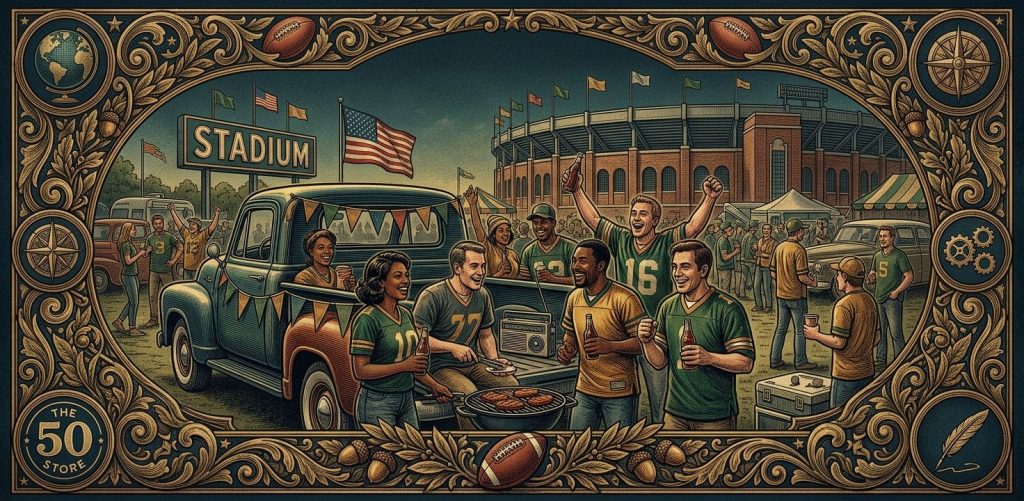
I can still remember the exact moment the autumn air would change. It happens every September without fail. The oppressive heat of summer finally breaks. A crisp breeze sweeps through the neighborhood. You can hear the distant rhythmic thumping of a local high school drumline practicing down the street. That sound is a promise. It is the promise that the greatest tradition in our country is back. I have spent decades watching this ritual unfold. It never gets old. The excitement is just as palpable now as it was when I was a boy carrying my fathers seat cushion up the wooden bleachers. It is a feeling of pure anticipation.
The Heartbeat of Our Hometowns
The Situation We Face
We live in a world that moves incredibly fast today. People are constantly glued to glowing screens. We are often rushing from one obligation to the next, frantically checking our watches. We commute long hours on crowded highways and barely have time to wave to the folks living next door. We buy our groceries online instead of at the market. That is our modern situation. Efficiency has replaced personal connection.
The Complication of Modern Life
The complication is that this hurried pace makes it far too easy to drift apart. We lose touch with our neighbors. We forget to pause and celebrate the simple, messy joys of community. We can become isolated in our own homes, surrounded by digital friends but lacking physical companionship. When the cold weather rolls in, this isolation can feel even heavier.
The Big Question
So, how do we bridge this gap? How did a simple sporting event become the heartbeat of our hometowns? Why does this specific autumnal ritual still matter so much to us today, perhaps now more than ever?
The Answer
The answer lies in the shared physical experience. It is found in the micro-histories of our neighborhoods and the way we have slowly perfected the art of gathering over the decades. Game Day is our modern campfire. It gives us a valid, universally accepted reason to stop the clock. It invites us to stand shoulder to shoulder with people from all walks of life, regardless of our different backgrounds or beliefs. For three or four glorious hours, we are united by a single common goal.
The Scope of the Gathering
You might think it is just a game. The reality is far more magnificent. When we talk about American culture, we have to look at the numbers behind our passions. According to research from the Tailgating Institute, an estimated fifty million Americans participate in a tailgate party every single year. That is a staggering portion of our population. It gets even more fascinating. The National Chicken Council reports that Americans consume over one billion chicken wings on the weekend of the professional championship alone. The American Meat Institute notes that we eat millions of hot dogs in arenas across the country each season.
These statistics are not just random trivia. They are a profound testament to our deep human need to break bread together. We do not just watch sports. We feast. We celebrate. We turn massive asphalt parking lots into temporary cities of joy.
The Evolution of the Parking Lot Feast
The evolution of tailgating is a beautiful story all on its own. I remember when it was just a few families opening the trunk of a wood-paneled station wagon. We would bring a plaid wool blanket. We had a thermos of hot tomato soup and some simple sandwiches wrapped in wax paper. It was quiet. It was intimate. Now you walk through the parking lots and it is a vibrant culinary festival. You see massive grills. You smell hickory wood smoking ribs for hours. You hear laughter echoing across the lots.
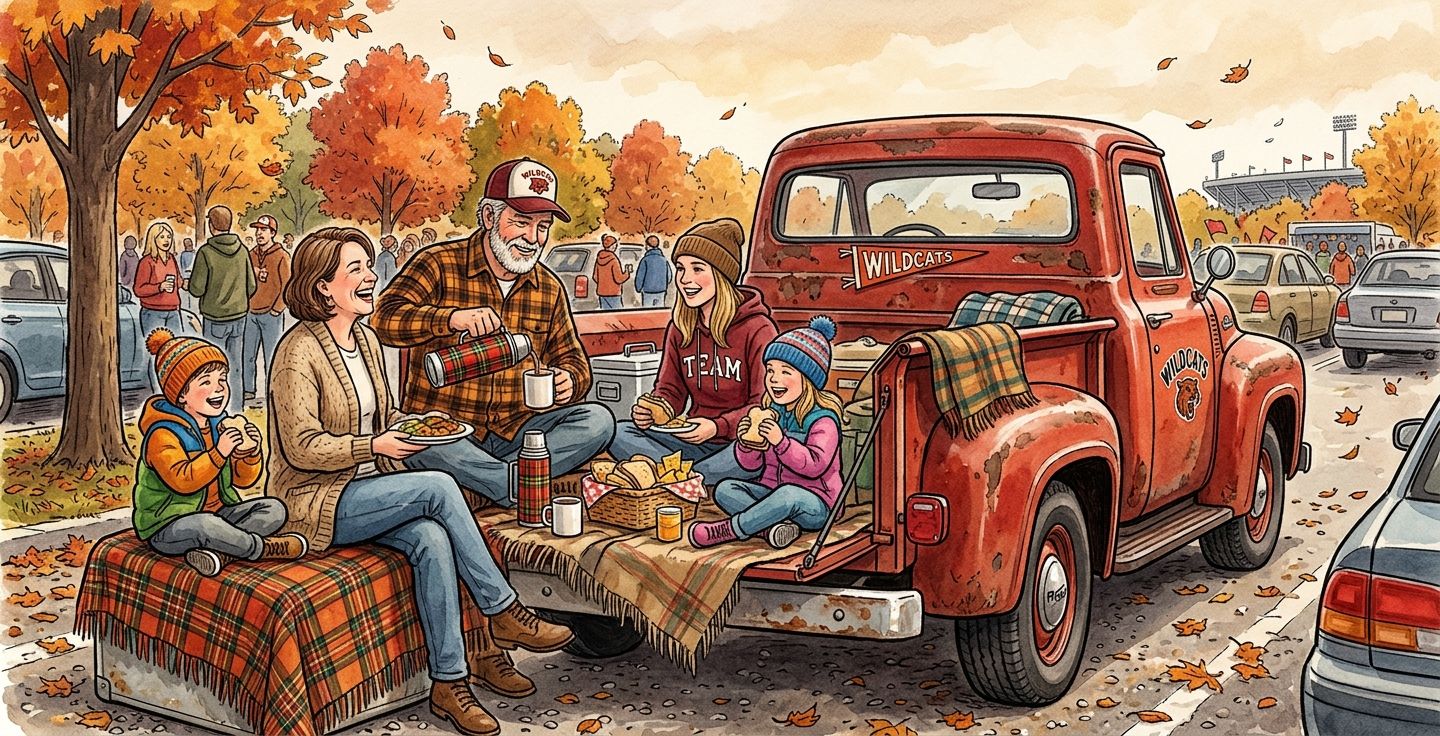
This evolution reflects a big national change. As our suburbs grew and our society spread out across highways, we needed a place to come back together. The parking lot became our shared backyard. You can walk up to a total stranger wearing your team colors and you are instantly family. They will offer you a warm burger and a cold drink without a second thought. That kind of hospitality is a rare and precious thing.
I recall a time in the late seventies when it started heavily raining right before kickoff. A family two cars down had a large canvas tent. They did not just huddle inside it alone. They waved all of us over. We squeezed twenty soaking wet strangers under that canvas. We passed around a single thermos of hot cocoa and laughed until our sides hurt. The final score of the match faded from my memory decades ago. But I will never forget the warmth of that crowded tent. The shared struggle against the elements bonded us instantly.
Micro-Histories and Hometown Heroes
To truly understand this culture, we need to look at the people and places that built the foundation. Let us talk about Vince Lombardi (born 1913, died 1970). He was a man who believed deeply in discipline, hard work, and the incredible power of unity. He did not just coach a team. He molded a community. When you look at the town of Green Bay, Wisconsin, you see his legacy alive in the streets.
Take a walk down Shadow Lane. It is a quiet residential street right next to Lambeau Field. On a regular Tuesday afternoon, it is just normal homes with nicely manicured lawns. But on a Sunday in autumn, a miraculous change occurs. The residents open their front yards to the public. They allow fans to park cars right on the grass. Neighbors bring out folding tables and large slow cookers filled with spicy chili. They share coffee with folks who drove hundreds of miles just to be there for a few hours. This small street explains the broader phenomenon perfectly. It proves that the sport is just an excuse to be a good neighbor. The stadium is the cathedral, but the neighborhood is the congregation.
The Glow of Friday Night Lights
If you want to witness the purest form of this culture, you must travel to a small town in Texas on a Friday evening. In these communities, the high school field is the absolute center of the universe. I remember visiting a town where nearly every storefront on Main Street closed early on Friday. A hand-painted sign hung in the diner window. It simply read that they had gone to the game.
The local hardware store owner was the public address announcer. The school principal sold popcorn at the concession stand. The star player was the son of the town mechanic. The entire local economy and social structure paused to support the youth. The lights glowed like a beacon against the dark prairie sky. It was not just about winning or losing. It was about civic pride. It was a weekly reunion for farmers, teachers, and shopkeepers. They sat on cold aluminum benches wrapped in heavy blankets, sipping cheap coffee, and felt completely connected to one another. This is the bedrock of our culture. It is the realization that we belong to something larger than ourselves.
The College Town Pageantry
The professional leagues have their distinct charm. But college towns hold a very special magic all their own. If you have ever visited the Rose Bowl Stadium in Pasadena on the first day of the new year, you know exactly what I mean. The San Gabriel Mountains glow a brilliant purple in the late afternoon sun. The massive marching bands step onto the pristine green grass. The sheer pageantry of it brings a tear to my eye every single time.
Let us remember another legend who understood this passion. Paul Bear Bryant (born 1913, died 1983) understood the very soul of Southern athletics. He knew that for those rural communities, Saturday was everything. Families would work hard in the fields or factories all week just to earn those few hours of glorious distraction. They dressed in their Sunday best to go to the games. Today the suits and ties might be replaced by painted faces and loud cotton t-shirts. The devotion remains the exact same. It is a beautiful passing of traditions. The grandfather teaches the father. The father teaches the daughter. The old songs never fade.
Hope for the Next Generation
I look at the young people today and I feel a profound sense of hope. Sometimes older folks like to complain that the youth are disconnected from the real world. I do not see that at all. I see them gathering just like we did. They might use a mobile phone to organize the potluck, but they still show up early. They still learn the old fight songs by heart. They still stand shoulder to shoulder when the weather gets freezing cold. This incredible camaraderie bridges the gap between generations. It heals the divides we sometimes create in our minds.
Keep the Fire Burning
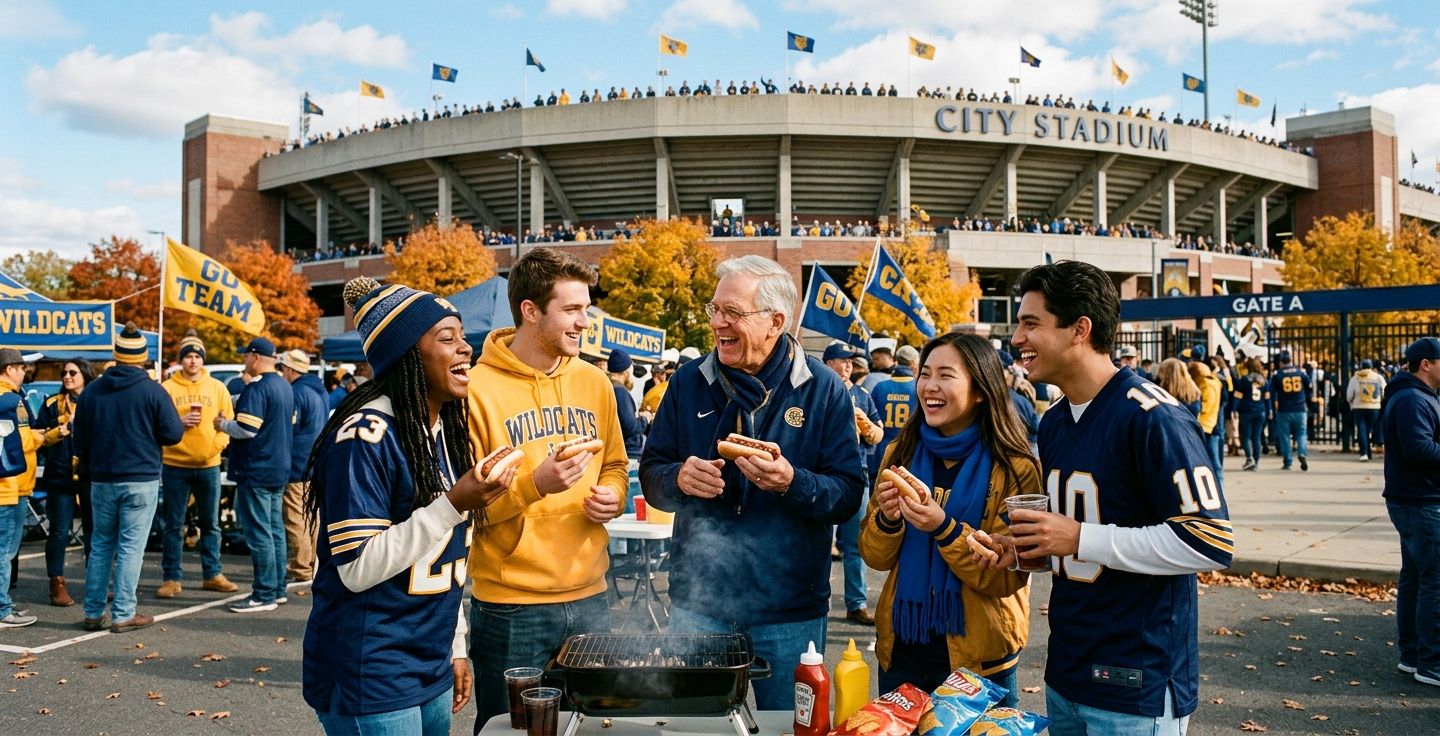
My humble advice to you is to actively participate in this great tradition. Do not just watch the screen from the comfort of your living room couch. Step outside. If you have a local high school team playing, go sit in the bleachers on a Friday night. Buy a hot dog from the parent booster club. Cheer for the kids playing their hearts out. If you are hosting a watch party on Sunday, invite the neighbor you rarely speak to. Tell them to bring their favorite dip. These small actions keep our communities vibrant and strong. They keep the spirit of this country alive. We are always better when we cheer together.
Common Questions About the Culture
Over the years, many folks have asked me about these traditions. Sometimes newcomers to our country or those who did not grow up with sports feel a little lost. I have gathered a few common questions. I want to share them with you to help you feel right at home at your next big gathering.
What exactly is a tailgate party?
A tailgate party is a social gathering that happens right around the open tailgate of a vehicle. We usually host these in the parking lots of arenas before a big event. Friends and friendly strangers bring food, portable grills, and coolers to share a meal outdoors. It is a fantastic way to build excitement before the teams actually take the field.
Why do folks care so much about college sports?
For many towns across the country, the local university is the absolute center of community life. We do not all have a professional team nearby. The college teams represent our local pride. Many people also feel a deep loyalty to the schools they attended. This creates lifelong bonds and traditions that are passed down through the family.
What should I bring if I am invited to a watch party?
The best rule of thumb is to bring something simple that you love to eat. A bag of chips with a nice homemade dip is always welcome. You could also bring a platter of cookies or some cold beverages. The most important thing to bring is a positive attitude. The host will just be happy you showed up to share the day.
How early do people usually arrive for the festivities?
It really depends on the scale of the event. For local high school games, arriving an hour early is plenty of time. For major college or professional events, folks will arrive four or even five hours before kickoff. Some dedicated fans even set up their tents and grills the night before. The pregame hours are often just as fun as the main event.
Can I participate even if I do not understand the rules?
Absolutely. You do not need to be an expert to enjoy the day. The true joy is in the fellowship, the wonderful food, and the festive atmosphere. If you find yourself confused by what is happening on the field, just ask the person next to you. Folks love explaining the game to newcomers. It is a wonderful way to strike up a new conversation.