
Culture & Traditions
The American Roadside Attraction: From Wonder to Kitsch
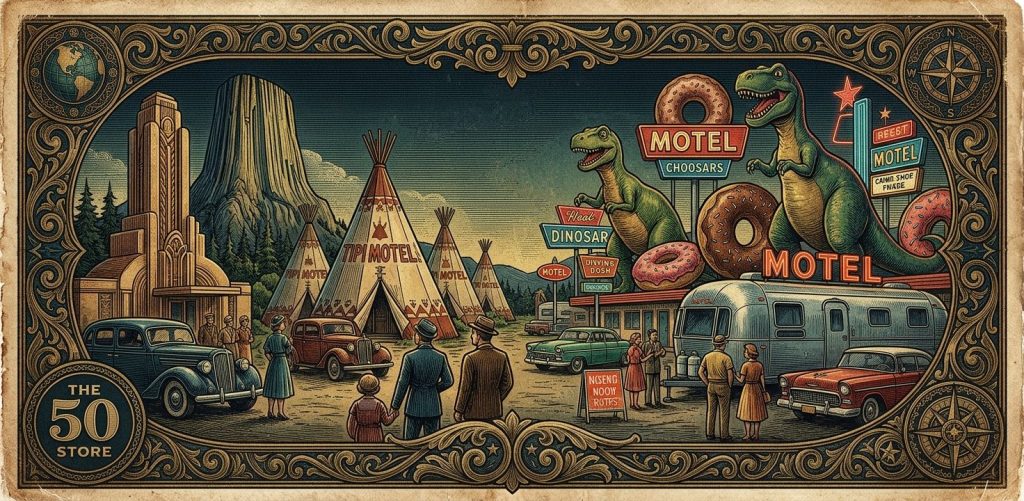
I remember the smell of gasoline and hot vinyl seats like it was just yesterday. The windows were rolled all the way down, the wind was roaring through the cabin of our old station wagon, and the AM radio was crackling with static as a distant, sweet tune drifted in from a local station. The country was unfolding right before our eyes, mile by beautiful, sunlit mile. We did not have glowing screens in our hands to keep us entertained. We had the wide, clear windshield. And out there, shimmering in the hazy summer heat, stood things you simply could not believe until you pulled the car over to the gravel shoulder to take a good, long look.
There was a time when the open road was a blank canvas. After the war, American families packed up and took to the two lane roads. Every small town had a story. Every stretch of asphalt held a promise. You never quite knew what was waiting for you around the next bend. It might have been a giant ball of twine, a petrified forest, or a diner shaped like a hot dog. We lived for the journey, not just the destination.
Sweet American Summer Bomb Pop T Shirt
Wear your story with pride! Celebrate classic American values, history, and heritage with our premium crafted apparel, designed for comfort and durability.
The Pioneers of the Pavement
Long before the modern road trip became a national tradition, folks were figuring out how to get travelers to stop. Let me take you back to a time before cars ruled the world. Down in Margate City, New Jersey, back in 1881, a land speculator named James V. Lafferty (1856-1898) had a wild idea. He wanted to sell real estate. So, what did he do? He built a six story wooden building shaped exactly like an elephant. He called it Lucy the Elephant. Potential buyers would climb up into Lucy, look out the windows at the ocean, and listen to Lafferty make his sales pitch. The real estate boom faded, but Lucy stayed. She survived hurricanes, neglect, and the wrecking ball. Today, she is a beloved monument. She proves that a touch of eccentricity has incredible staying power.
That is the beauty of the American roadside attraction. It usually starts with just one person who refuses to build something ordinary. Take a fellow named Edward Leedskalnin (1887-1951). He was a quiet, heartbroken man from Latvia who settled in Florida. Over twenty eight years, working alone at night, he carved and moved more than a thousand tons of coral rock to build a monument for his lost love. He called it Rock Gate, but today you know it as Coral Castle. Nobody knows exactly how he moved those massive stones without heavy machinery. He just wanted to leave a beautiful mystery behind. And he certainly did.
Sweet American Summer Bomb Pop T Shirt
Wear your story with pride! Celebrate classic American values, history, and heritage with our premium crafted apparel, designed for comfort and durability.
Sweet American Summer Bomb Pop T Shirt
Wear your story with pride! Celebrate classic American values, history, and heritage with our premium crafted apparel, designed for comfort and durability.
When the World Sped Up
But the world started moving much faster. The passing of the Federal Aid Highway Act of 1956 changed everything for the American traveler. We enthusiastically traded those winding, scenic two lane roads for wide, straight, high speed Interstates. We traded the joy of discovery for sheer speed and convenience. Small towns that had once thrived on traveler traffic withered away over a single summer when the new bypass finally opened. You might wonder just how drastically things shifted in such a short amount of time.
According to the Federal Highway Administration, our interstate system now covers over 48,000 miles. It is a marvel of modern engineering, absolutely. A comprehensive study from the Bureau of Transportation Statistics shows that Americans take over 1.5 billion person trips every single year. Yet, the vast majority of these miles are driven on those monotonous, visually identical interstates. We gained remarkable efficiency, but we lost the local scenery. We completely bypassed the quirky, family owned stops.
Here is a surprising statistic that really catches my eye and highlights the complication of our modern travel habits. A recent travel survey by AAA found that while over 60 percent of Americans still take traditional family road trips, nearly 40 percent admit they rarely stop anywhere other than a generic gas station or a fast food drive through. That breaks my heart a little bit. According to the Society for Commercial Archeology, a wonderful organization dedicated to preserving these historic structures, over half of the original mid century roadside attractions have been completely lost to time or corporate development. The golden age seemed to be slipping away.
Have We Lost the Magic?
So, you have to ask yourself the big question. Did we lose the soul of the great American road trip for good? Did the mighty highway strip away all our wonder and leave us with nothing but concrete walls and green exit signs?
I am here to tell you, the answer is no. Not at all.
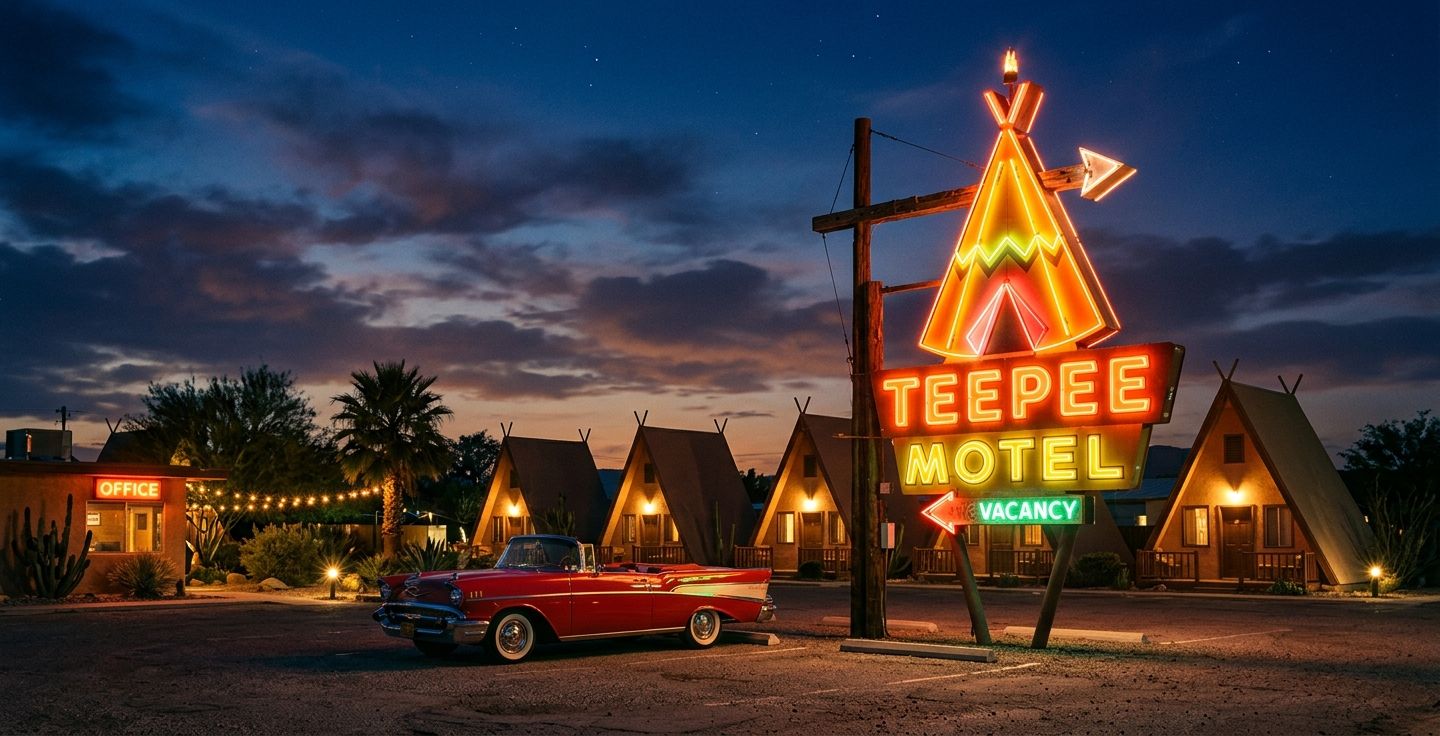
The wonder just aged into something else entirely. It turned into kitsch, and I say that with the utmost affection and respect. Kitsch is just history wearing a bright neon shirt. It is a monument to the stubborn, beautiful optimism of regular folks who wanted to leave a mark. It is the purest definition of Americana.
Water, Whales, and the Mother Road
Let us take a trip down to the Dakota plains to see exactly what I mean. Imagine the dry dust, the endless summer horizon, and a desperate thirst. In 1931, a young pharmacist named Ted Hustead (1902-1999) bought a little drug store in a town of three hundred people. The town was literally in the middle of nowhere. Business was terrible. He and his wife Dorothy were struggling to feed their growing family.
Then, Dorothy had a brilliant idea. The road was full of hot, exhausted travelers headed to the Black Hills. She suggested they put up signs offering free ice water. Just free ice water. They went out and planted wooden signs along the dusty road. It worked like a charm. Today, millions of people follow those signs to Wall Drug. It grew from a tiny pharmacy into a sprawling, joyous maze of cowboy boots, giant jackalopes, and singing animatronic cowboys.
It is loud. It is incredibly crowded. Some might call it silly. But when you walk through those doors, you are stepping into a testament to survival and American ingenuity. Ted and Dorothy just wanted to make an honest living. They ended up creating an enduring legend.
If you really want to understand this country, you have to look at the Mother Road. Route 66 stretches from Chicago all the way to Santa Monica. It was the main artery of a changing nation. Families fleeing the Dust Bowl traveled this road looking for hope. Decades later, happy families traveled it looking for fun vacations.
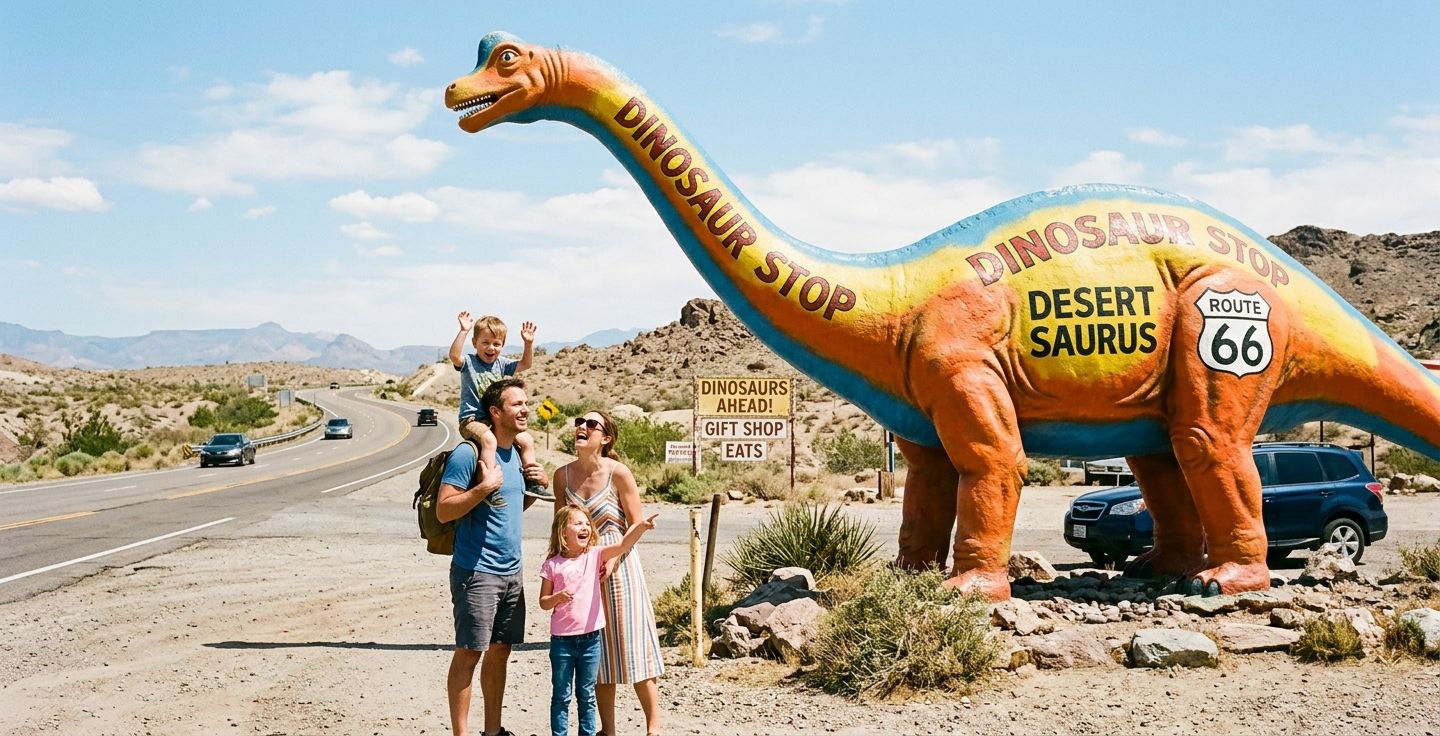
Along this route, you will find places like the Blue Whale of Catoosa. It is a giant, smiling blue whale sitting quietly in a pond in Oklahoma. Why is it there? Because a loving man named Hugh Davis (1910-1990) wanted to build a nice anniversary gift for his wife Zelta. She loved collecting whale figurines. He built it with his own hands in the early 1970s. It soon became a swimming hole for the whole community. It was an act of deep, enduring love. It stands today as a cheerful reminder that ordinary people can build extraordinary things.
A Slower Pace for a New Generation
I sit on my porch these days, watching the modern cars speed by on the new roads. Sometimes I worry that everyone is in too much of a hurry. I worry that folks are missing the good stuff. But then I read the reports from local tourism boards. The U.S. Travel Association notes a wonderful surge in younger generations deliberately seeking out these very old fashioned stops. People are craving the strange, the wonderful, and the unique.
I see young parents taking their kids out in an old camper van. I see them taking the scenic route. I hear them talking about wanting to see the world not through a glowing glass screen, but through their own eyes.
It gives me a tremendous amount of hope. Your generation is incredibly smart. You know that getting there fast is not always the best way to travel. I want to encourage you to pack up the car. Put away the phones. Take the exit that does not have any familiar fast food logos on the sign. Stop at the diner shaped like a coffee pot. Buy a postcard at the alligator farm. Spend five dollars to see the world’s largest pistachio. You are not just buying a cheap trinket. You are keeping a rich, beautiful story alive. You are teaching your children that the world is weird, and wonderful, and built by dreamers.
Questions You Might Have Before Hitting the Road
How can I find the best oddities on my next cross country trip?
While an old, folded paper map used to be our very best friend on the road, today you have great modern resources at your fingertips. Websites and phone apps dedicated to obscure travel are fantastic for finding hidden gems along your specific route. But I will tell you a little secret from my many decades of driving. My absolute favorite method is simply talking to the locals when you stop for gas, buy a cup of coffee, or sit down for a slice of cherry pie at a small town diner. They will always point you toward the real treasures.
What makes something an official roadside attraction?
There is no official rulebook out there, and that is part of the fun. Generally speaking, it is a novelty piece of architecture, a strange little museum, or a giant sculpture built near a public road specifically to draw the attention of passing drivers. It could be a building shaped like a giant coffee pot, or a farm offering you the chance to feed an ostrich. If it makes you hit the brakes, pull over to the shoulder, and say wow, it absolutely counts as an attraction.
Are these old stops still safe to visit with my family?
Absolutely they are. Most of the surviving attractions are deeply beloved by their local communities. They have been lovingly restored by historical societies, local tourism boards, or passionate fans of American history. I always recommend checking local maps and internet listings for opening hours before you start your engine, as some are family run and operate on their own unique, laid back schedules. You will find that the folks running these places are some of the friendliest people in the country.
The End of the Road
We have journeyed all the way from the era when winding two lane roads promised endless wonder, to a time when giant concrete dinosaurs and singing cowboys have become cherished symbols of our past. These quirky, beautiful stops survived the sheer speed of the modern interstate by turning into beacons of joy and nostalgia. They stand proudly by the side of the road, reminding us of the simple beauty of taking our time.
So, the next time you are driving across this beautiful, wide open country of ours, I have to ask you a question. Will you put your foot on the gas and stay in the fast lane, or will you take the exit that promises something you have never seen before?