
American Sports & Pastimes
The Golden Era: Inside The Last Knicks Championship And New York’S Historic 1973 Victory
Decades before modern superteams, before Twitter debates and analytics dominated every play, a special group of men in blue and orange captured the hearts of basketball fans with a masterclass in teamwork and defense. This isn’t just a story about a basketball team; it’s a chapter in American history, a testament to a time when grit and unselfishness truly ruled the hardwood. We’re taking a nostalgic journey back to 1973, to the true story of the roster that brought the ultimate glory to Madison Square Garden and secured the last Knicks championship.
I remember it like it was yesterday, though the years have a way of blurring the edges. The early seventies in New York City felt different. There was an energy, a pulse that vibrated through every street and alley. People worked hard, dreamed big, and looked to their sports heroes for inspiration, a common thread woven into our nation’s fabric. The Knicks of that era weren’t just a team; they were a mirror reflecting the spirit of the city itself. They were tough, resilient, and utterly united.
You see, today’s NBA often focuses on individual brilliance, the singular superstar carrying a team on his back. And don’t get me wrong, that’s exciting in its own way. But the 1972-73 Knicks offered something profoundly different, something that still resonates with true basketball purists. They embodied a philosophy, a way of playing the game that many thought was lost to the sands of time. How did a team, without a single player dominating the scoring charts by today’s standards, manage to conquer the league? How did they overcome the immensely talented, record-setting Los Angeles Lakers, a squad that had just won 33 consecutive games the season prior? It’s a question that brings a smile to my face every time, because the answer lies in something far more fundamental than raw talent alone.
It’s interesting to consider how much the game has changed. Back in the 1972-73 season, the NBA consisted of only 17 teams, a much smaller pool than today’s 30, meaning talent was concentrated differently across fewer franchises. The average NBA team scored around 107.5 points per game, a far cry from the high-octane offenses we see now, which routinely push past 115 points a night. This was a league where defense was king, where every possession was a battle, and where teamwork wasn’t just a buzzword, but the very foundation of success. The Knicks weren’t just good at it; they perfected it. They proved that a collective will, a shared purpose, could be more powerful than any individual’s brilliance, a concept that sometimes feels surprising in our modern, often individualistic world.
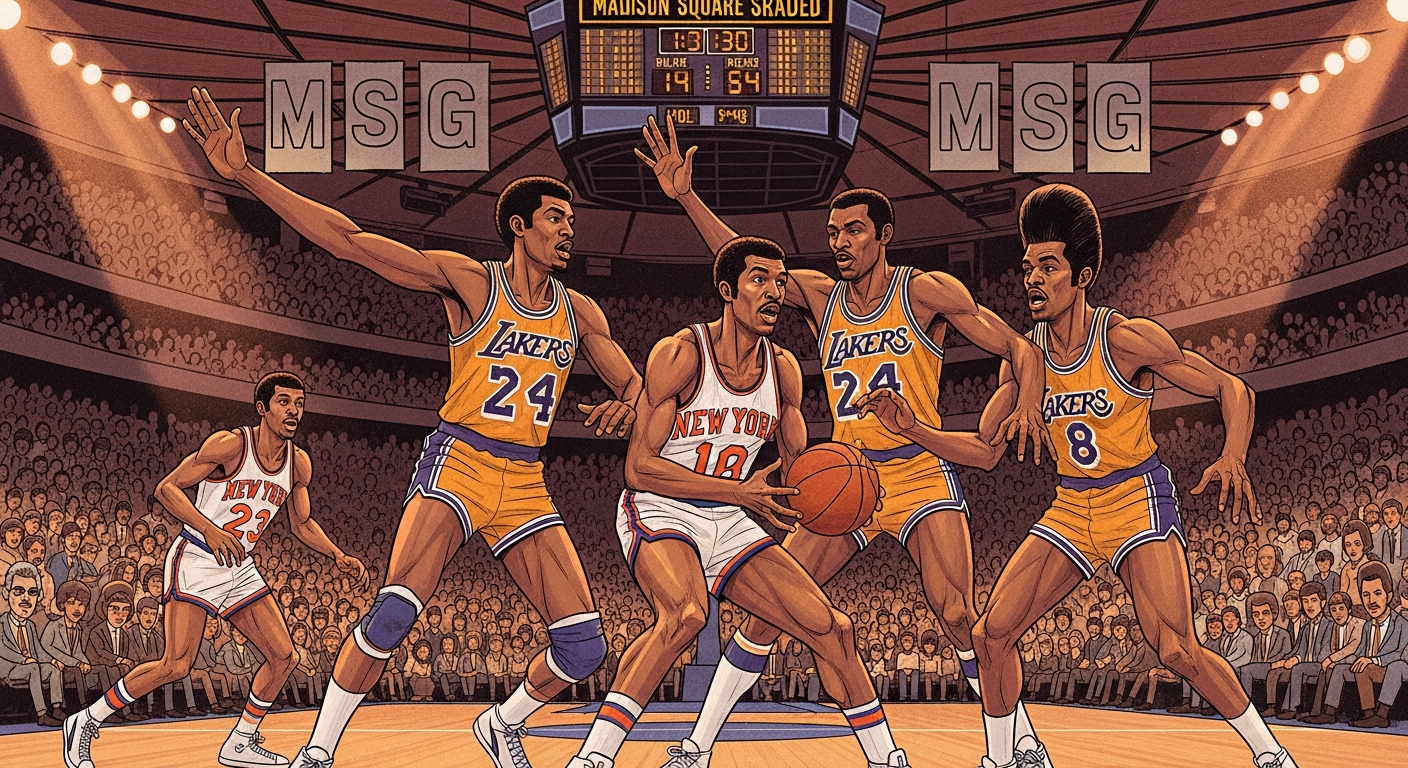
The 1972-73 Knicks: A Roster of Legends
To understand that championship team, you need to know the men who made it. This wasn’t a collection of mercenaries; it was a family, forged in the crucible of hard-nosed practices and intense competition. They had an undeniable bond, a trust that transcended the court.
Willis Reed: The Captain’s Heart
At the center of it all was Willis Reed, ‘The Captain.’ Willis was the heart and soul of the team. He wasn’t always the flashiest player, but his leadership, his toughness, and his unwavering presence were the bedrock of their success. He epitomized the concept of playing through pain, of putting the team first. I remember one game, not even the Finals, where he looked absolutely battered, but he still pulled down a crucial rebound and calmly sank free throws. That was Willis, pure determination.
Walt Frazier: Clyde’s Cool Command
Then there was Walt ‘Clyde’ Frazier, the epitome of cool under pressure. With his smooth style and incredible defensive prowess, Clyde ran the show from the guard position. He could score when needed, but his vision and ability to dissect defenses were unmatched. He had a knack for the big play, always seemed to know exactly when to make a steal or dish out a perfect assist. He was an artist on the court.
Earl Monroe: The Pearl’s Poise
Earl ‘The Pearl’ Monroe brought a different kind of magic. Acquired from the Baltimore Bullets, Monroe was an offensive wizard, known for his dazzling dribbling and acrobatic shots. Some worried how his individualistic style would fit with the team’s selfless philosophy, but under Coach Red Holzman‘s brilliant guidance, Monroe seamlessly integrated, becoming a vital scoring threat and a testament to the team’s adaptability.
Dave DeBusschere: The Unsung Hero
And let’s not forget Dave DeBusschere, the rugged forward who did all the dirty work. He rebounded, played ferocious defense, and hit timely jumpers. Dave was the glue guy, the embodiment of a role player who understood his purpose and executed it flawlessly, a true professional in every sense. He was the kind of player every team needs, but few are lucky enough to get.
Bill Bradley: The Thinking Man’s Player
Bill Bradley, a Rhodes Scholar, brought an intellectual approach to the game. His intelligence on the court, his precise passing, and his understanding of spacing were crucial. Bradley might not have had the flash of a Frazier or a Monroe, but his fundamental soundness and cerebral play were indispensable to the Knicks’ intricate offensive sets.
These weren’t just individuals; they were a unit. Coach Holzman instilled a system of ball movement, relentless defense, and shared responsibility. Every player knew his role, and every player embraced it. They played for each other, for the city, and for the sheer joy of the game. That’s a powerful thing, and it’s what created such an enduring tradition.
The Road to the 1973 NBA Finals
The 1972-73 season wasn’t without its challenges, but the Knicks were a machine. They finished the regular season with a 57-25 record, good for second in the Eastern Conference, trailing only the mighty Boston Celtics. Their path through the playoffs was a masterclass in resilience.
In the Eastern Conference Semifinals, they faced the Bullets, a tough, physical team. The series went six games, with the Knicks ultimately prevailing, demonstrating their resolve early on. Then came the true test: the Boston Celtics in the Eastern Conference Finals. The Celtics, led by John Havlicek and Dave Cowens, were a formidable foe, a historical rival, and a team that pushed the Knicks to their absolute limit. It was a brutal, seven-game slugfest, a series that felt like a championship in itself. The Knicks’ experience, their poise, and their unwavering belief in their system ultimately carried them through, winning Game 7 on the road in Boston Garden, a notoriously difficult place to play.
This victory set the stage for a rematch of the previous year’s NBA Finals against the Los Angeles Lakers. The Lakers had dominated the 1971-72 season, winning 69 games and beating the Knicks in the Finals. This time, New York was hungry for revenge. The Lakers still boasted an incredible roster with legends like Jerry West, Wilt Chamberlain, and Gail Goodrich. They were formidable, a dynasty in their own right, and playing them in the Finals was the ultimate challenge. The psychological hurdle alone of facing the team that had bested them just a year prior was immense. But this Knicks team was different. They had a singular focus, a quiet confidence that radiated from Reed, Frazier, and the rest of the squad. They knew what they were capable of.
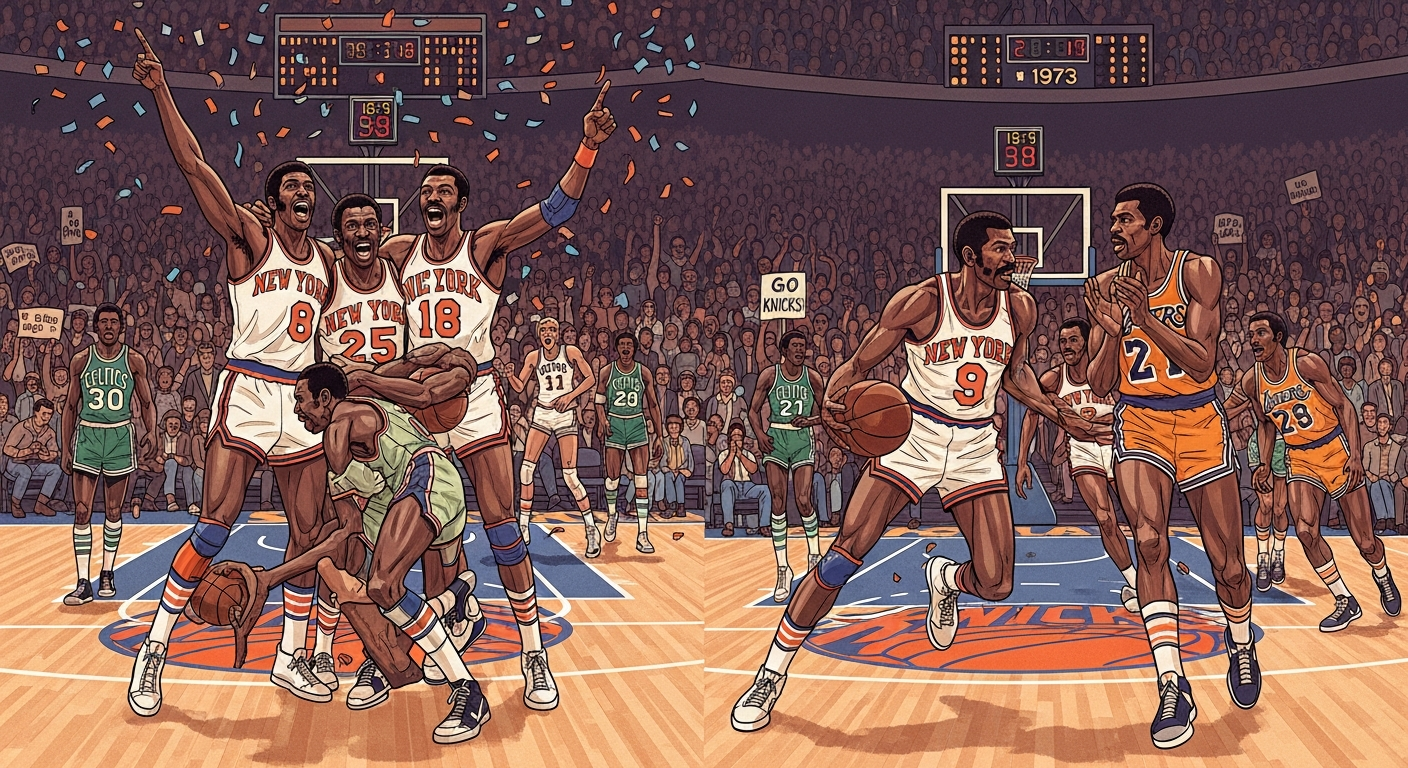
Game 5 Victory: How the Knicks Silenced the Lakers
The Finals began with a shocker. The Lakers, playing at home at The Forum, blew out the Knicks in Game 1. It looked like history might repeat itself. But the Knicks didn’t flinch. They rallied, winning Game 2 in Los Angeles, regaining home-court advantage. They then took Games 3 and 4 at Madison Square Garden, showcasing their defensive tenacity and balanced offense. The series stood at 3-1, with Game 5 back in Los Angeles on May 10, 1973.
I remember the anticipation, the nervous energy humming through the city. Everyone knew this was it. One more win. But against the Lakers, in their own building, nothing was guaranteed. The game started tight, a defensive struggle as expected. The Knicks, however, came out with an intensity that was palpable even through the grainy television screens of the day. They stifled the Lakers’ offense, forcing tough shots and dominating the boards. Frazier was magnificent, driving to the basket, distributing the ball, and playing suffocating defense on Jerry West. Willis Reed, despite his always-present knee issues, commanded the paint.
In the second half, the Knicks began to pull away. It wasn’t a sudden explosion, but a steady, relentless chipping away at the Lakers’ resolve. Every defensive stop, every hustle play, every perfectly executed pass built their lead. The Lakers tried to mount a comeback, as great teams do, but the Knicks’ defense was impenetrable. They rotated flawlessly, communicated constantly, and denied passing lanes with a ferocity that broke the Lakers’ spirit. By the fourth quarter, the outcome was clear. The Knicks were in control. The final score, 102-93, secured the championship.
The celebration was pure joy, a catharsis for a city that had waited patiently. You could feel it radiating all the way from the West Coast, a surge of pride and collective triumph. It wasn’t just a championship for a team; it was a championship for New York, a symbol of what dedication and unity could achieve. It was the last Knicks championship, a golden memory etched into the hearts of every fan who witnessed it.
Legacy and the Decades-Long Quest to Return to the Top
The 1973 Knicks left an indelible mark on basketball and on the spirit of New York City. They established a blueprint for success based on selflessness, fundamental soundness, and a ferocious defensive identity. Their style of play became synonymous with Knickerbocker basketball, a standard against which all future teams would be measured. Their victory isn’t just a distant memory; it’s a living part of the franchise’s identity, a constant reminder of what ‘Knicks basketball’ truly means. It’s about more than just winning; it’s about *how* you win.
For me, and for so many others, that team represents a golden era. It’s a cherished memory, a foundational story in our collective experience. The victory parade through the Canyon of Heroes was a spectacle of civic pride, a moment when the city truly united behind its champions. That sense of unity, that shared success, is a powerful thing that lingers, a cherished part of American history for sports fans. It set a `tradition` that fans still yearn to see replicated.
The decades since 1973 have been a long, often frustrating quest for the Knicks to return to that pinnacle. There have been other great teams, other memorable moments, but that elusive championship has remained just out of reach. We’ve seen incredible players don the orange and blue, from Patrick Ewing to Carmelo Anthony, each giving their all, but none quite able to replicate the magic of ’73.
As we pass the 50th anniversary, the50 years since that glorious day, the longing for another championship remains as strong as ever. Every season brings new hope, a fresh chance to rekindle that fire. But even as we look to the future, we carry the lessons of 1973 with us: that teamwork, dedication, and a commitment to defense can overcome seemingly insurmountable odds. The legacy of Willis Reed, Walt Frazier, and the rest of that legendary squad continues to inspire, reminding us that with enough heart and collective will, anything is possible. Maybe, just maybe, the next chapter of that incredible New York story is waiting to be written.