
Icons & Symbols of America
What the Liberty Bell Represents Today
A Morning Walk Through History
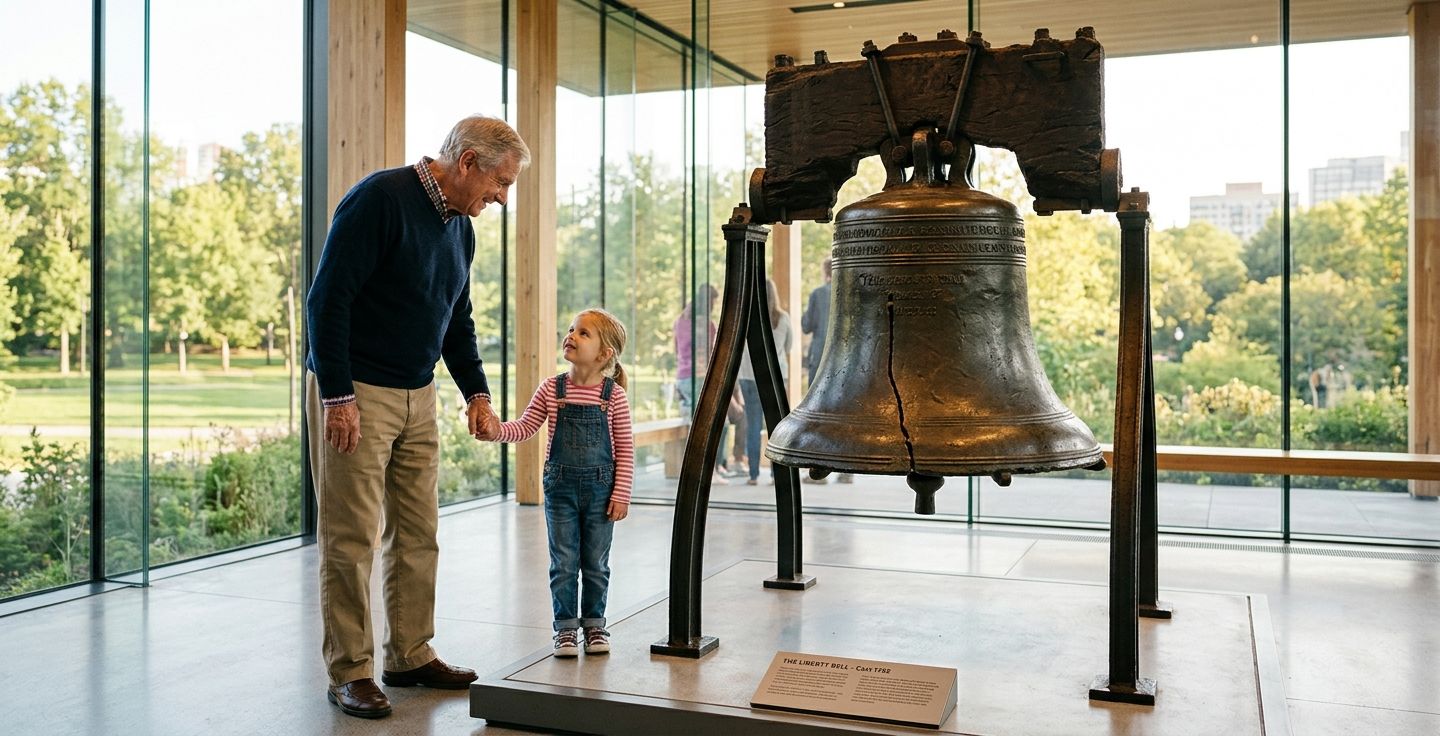
Whenever I take a slow walk down Chestnut Street in the heart of Philadelphia, I feel a deep sense of time settling around my shoulders. The air here feels different. It carries the faint, distant echoes of horse hooves on cobblestones and the loud, urgent debates of men trying to build a nation from scratch. I like to stop and rest near Independence Hall, a place that looks remarkably small to have held such massive, world altering ideas. You stand there, looking at the brickwork, and you realize that the founders were just people. They were ordinary men with extraordinary hopes, standing in the same humid summer heat we feel today. Down the block sits the glass pavilion that houses our most famous broken artifact. Seeing it now, with its wide fracture exposed to the light, always makes me reflect on my own long life in this beautiful, complicated country. We bear our own scars, our own lines of experience. And just like us, that heavy bronze bell has a story that is far from perfect.
This brings us to a truth that we sometimes try to gloss over when we teach our grandchildren about the past. The situation we face when looking back at our history is that it is inherently flawed. The bell itself cracked almost the very first time it was rung in 1752. It broke immediately. They had to melt it down and recast it, and even then, the metal remained brittle. That is the true complication of the American story. We hold onto these grand, golden ideals, yet the reality of living up to them has always been fragile. The people who built our government were brilliant but flawed, leaving a legacy of profound freedom right alongside deep, systemic injustices. For a long time, the bell just sat there in the tower, a utilitarian object ringing for fires, meetings, and the reading of the news. It was not a magical item. It was a tool, and it was broken.
The Big Question For Us Today
So, we have to ask ourselves a vital question. What does the Liberty Bell truly represent for us today? If it is just a cracked piece of old metal from an imperfect era, why do we still line up to look at it? Why does my heart still beat a little faster when I see the sunlight catching its copper rim? The answer lies not in the physical perfection of the object, but in the stubborn, relentless hope it has come to stand for over the centuries. It represents the ongoing, never fully finished work of making our nation better.
Surprising Numbers Behind the Bronze
You might find it fascinating to look at the sheer numbers behind this artifact. The statistics gathered by the National Park Service always surprise folks who hear them for the first time. To give you an idea of its scale and popularity:
- Over one million people walk through the doors of the Liberty Bell Center every year.
- The bell weighs a massive 2,080 pounds.
- It is cast from a mixture of seventy percent copper and twenty five percent tin, with traces of other metals.
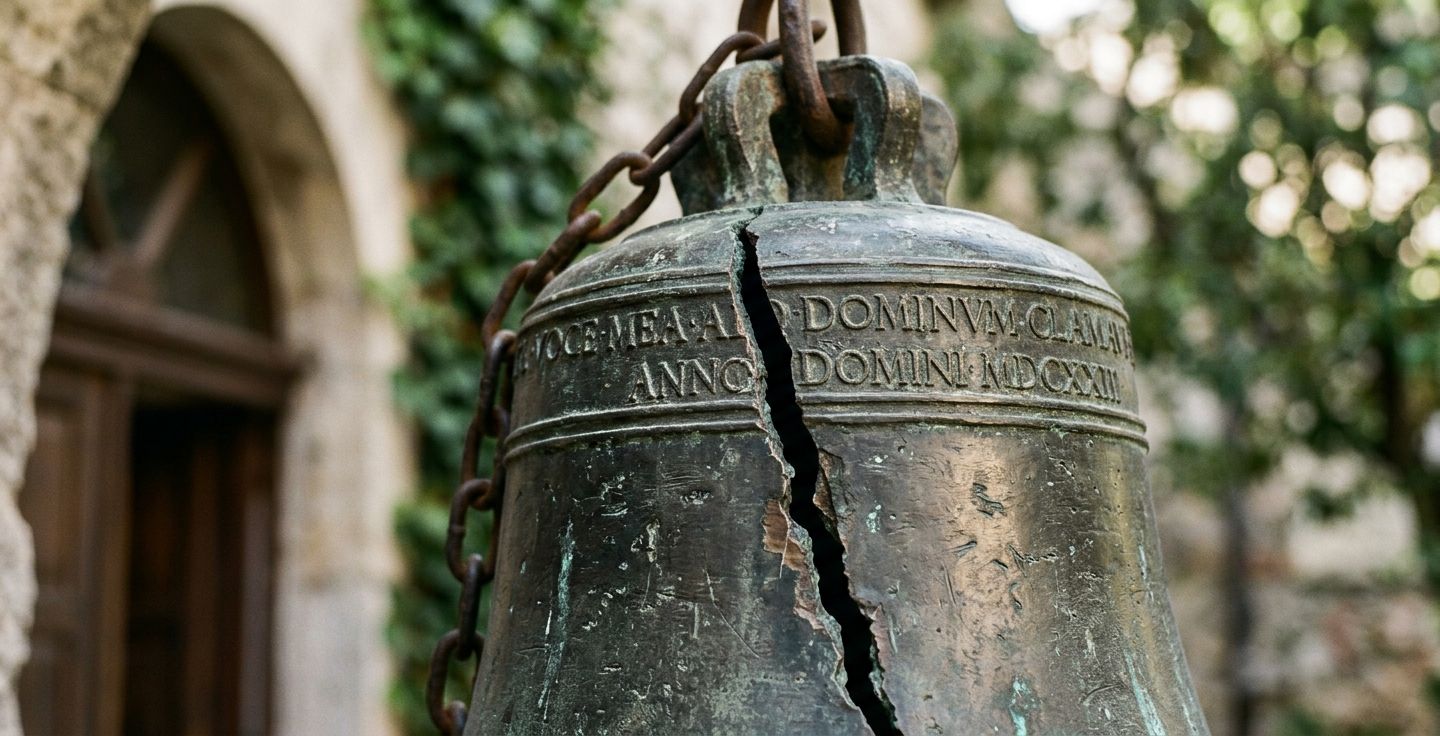
Here is the most surprising fact. That famous, jagged crack you see in photographs is not the original fracture. It is a repair job. In 1846, metalworkers drilled and filed the original hairline crack into a half inch gap. They did this to stop the two sides from vibrating together when struck. The repair failed to save the voice of the bell, but it created the iconic symbol we recognize today.
A Small Detail That Changed Everything
To understand how this simple state house bell became a legend, we have to look at a small, almost forgotten chapter of history. Let me tell you about Isaac Norris (1701-1766). He was the speaker of the Pennsylvania Assembly. He was just a politician trying to get a bell for the state house tower to call the assembly to order. When he wrote his letter to the foundry in London, he instructed them to cast a specific verse from the Book of Leviticus on the side. The verse read, Proclaim Liberty Throughout All the Land Unto All the Inhabitants thereof. Norris was likely thinking of religious freedom, or perhaps he just liked the ring of the words. He never could have guessed how those specific words would change the destiny of the object he ordered. For decades, nobody paid much attention to that inscription.
The true shift happened far away from the halls of government, driven by people who were actively denied the very freedom the country promised. In the 1830s, the early abolitionists began looking for symbols to rally the public to the cause of ending slavery. A young, fiery publisher named William Lloyd Garrison (1805-1879) and his friends noticed the words Isaac Norris had chosen. They saw the phrase Unto All the Inhabitants and realized the profound hypocrisy of a nation that kept millions in chains while boasting of liberty. They began publishing poems and pamphlets featuring the bell. They were the ones who finally gave it the name we use today. Before them, it was simply called the State House bell. By taking a small, overlooked detail on a piece of public property, these activists fundamentally changed the heart of the nation. It is a perfect example of how everyday citizens take ownership of the American narrative.
A Symbol for Every Generation
After the horrific division of the Civil War, the country was bleeding and fractured. The government decided to load the bell onto a train and send it on tours across the United States. Think about that for a moment. They put a two thousand pound cracked bell on a rail car and stopped in small towns from New Orleans to San Francisco. Grandfathers lifted their grandchildren up just to touch the cold metal. It was an act of healing. The bell became a mirror reflecting the desire of the people to be whole again. The message was clear. We are cracked, we have been broken, but we are still in one piece. We still belong to each other.
Years later, the bell stood as a silent witness to another great struggle. Leaders of the civil rights movement gathered near it, drawing strength from its enduring promise. Great souls like Martin Luther King Jr. (1929-1968) spoke of letting freedom ring from every mountainside, echoing the old hope cast into the side of the bronze. Even earlier pioneers like the quiet but fiercely determined Lucretia Mott (1793-1880) understood that true equality requires constant, unyielding pressure. They understood that the bell did not ring itself. It required hands to pull the rope. It required voices to demand that the original promise be kept for every single citizen.
Hope for the Road Ahead
I have lived through my fair share of turbulent times in this country. I have seen us divided, angry, and confused about our future. Yet, when I think about the story of this old bell, I feel a profound sense of warmth and optimism. We have survived the growing pains of our past. American freedom is not a static thing kept safely behind museum glass. It is a living, breathing effort. It is the teacher staying late to help a struggling student. It is the neighbor checking on an elderly friend during a winter storm. It is the peaceful protester marching down Main Street demanding a better tomorrow. We are the ones who give the bell its voice today.
So, I have a request for you. If you ever find yourself in Philadelphia, go stand in front of it. Take your children or your grandchildren. Do not just take a quick picture and walk away. Stand there and tell them the story of the crack. Tell them that perfection is not required to do great things. Tell them that their voices matter in the ongoing chorus of our republic. We have a beautiful duty to pass these stories down to the next generation. Let us leave them a country that is a little kinder, a little more just, and deeply rooted in the enduring hope that we can always repair our fractures.
When did the Liberty Bell actually crack?
The original bell cracked upon its first test ring in 1752. It was recast twice by local craftsmen. The crack we see today developed in the early 1800s and was widened in 1846 to prevent a buzzing sound.
Who gave the Liberty Bell its famous name?
For decades, it was simply known as the State House bell. Anti-slavery activists in the 1830s adopted it as a symbol because of its inscription demanding liberty. They started calling it the Liberty Bell in their pamphlets.
Where exactly is the bell located today?
Today, the bell rests in a glass enclosure known as the Liberty Bell Center in Philadelphia. It is located across the street from Independence Hall, allowing visitors to view both historic sites at once.
Can you still hear the bell ring?
No, the bell is no longer rung because doing so would risk breaking it completely. The crack ruins the structural integrity of the metal. However, it is gently tapped on special occasions to produce a soft resonance.
Why did the bell travel on trains across the country?
After the Civil War, the nation was deeply divided. The government sent the bell on train tours across the United States to serve as a symbol of unity. Millions of Americans gathered at train stations to see the artifact.