Culture & Traditions
Why Drive-Thru Culture Took Over the U.S.
The Open Road and the Shifting American Landscape
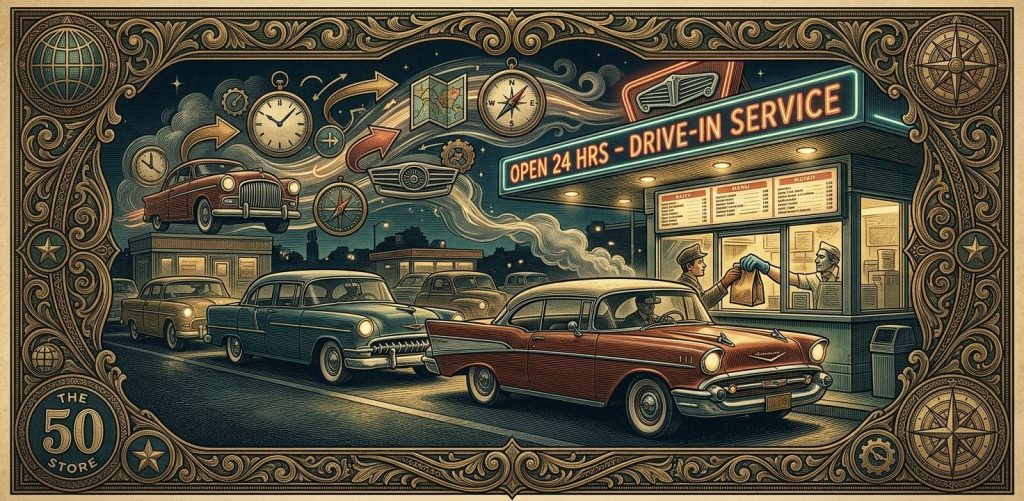
I remember the deep, steady hum of heavy tires on freshly laid asphalt. Back then, the world felt incredibly vast and full of open sky. Families would pile into heavy steel automobiles, windows rolled completely down, the scent of sharp pine or warm desert dust rushing into the cabin. When we got hungry, we stopped our journey entirely. We walked into local roadside diners with familiar checkered floors and sat comfortably at the long counter. The waitresses knew the regular customers by name. The black coffee was always hot. The pace of life was just a little slower, a little more deliberate.
But the country was rapidly waking up to a totally new rhythm. The end of the Second World War brought a rushing tide of massive industry and eager ambition. President Dwight D. Eisenhower (born 1890, died 1969) championed the Federal Highway Act of 1956, and suddenly, the very earth was changing. Millions of tons of concrete were poured across the plains. These beautiful new interstate highways cut directly through the rural dirt, stitching distant towns and massive states together in a grand web. Families were moving rapidly out of the dense city blocks. They were laying down permanent roots in the fresh green spaces of the emerging suburbs. We became a nation entirely in motion. Time suddenly became a precious commodity. It was a luxury we could not afford to waste. Commutes grew longer. The minutes of the day felt shorter. People wanted their hot meals, their banking, and their medicine without ever stepping away from the wheel. The very fabric of our daily routine was stretching tight across the miles.
The Tipping Point of American Dining
This brings us to a natural, quiet crossroads. How exactly did we trade the familiar, warm diner counter for the front seat of a moving vehicle? Why did the drive-thru culture take over the entire United States, reshaping our vibrant cities and our personal habits?
The answer is simple. We fell completely in love with our cars, and we fell in love with absolute convenience. The automobile was no longer just a way to get from one point to another. It became an extension of the American living room. It was fiercely private. It was incredibly comfortable. You could listen to your favorite local radio station. You could talk openly with your family without any strangers listening in. It was a rolling, personal sanctuary. Naturally, we wanted the entire world to come directly to our windows.
The Numbers That Tell the Story
Now, you might assume the drive-thru is just a very small piece of the massive restaurant business. The truth is far more astonishing. When you look at the solid statistics from trusted industry publications like QSR Magazine, you see a completely different picture of our society. Even before the highly unusual events of recent years, drive-thru lanes accounted for roughly 70 percent of all fast food sales in America. That staggering number skyrocketed to well over 90 percent during times when indoor dining rooms had to temporarily close their doors.
Today, there are well over 200,000 drive-thrus scattered across the vast country. They serve tens of millions of hungry customers every single day. A comprehensive study by the NPD Group showed that drive-thru visits increased by nearly 30 percent between 2019 and 2022 alone. It is definitely not a fading trend or a brief fad. It is the absolute, undeniable backbone of the modern food industry. These numbers paint a vivid, moving picture of a country that still refuses to slow its pace.
The Spark Before the Flame
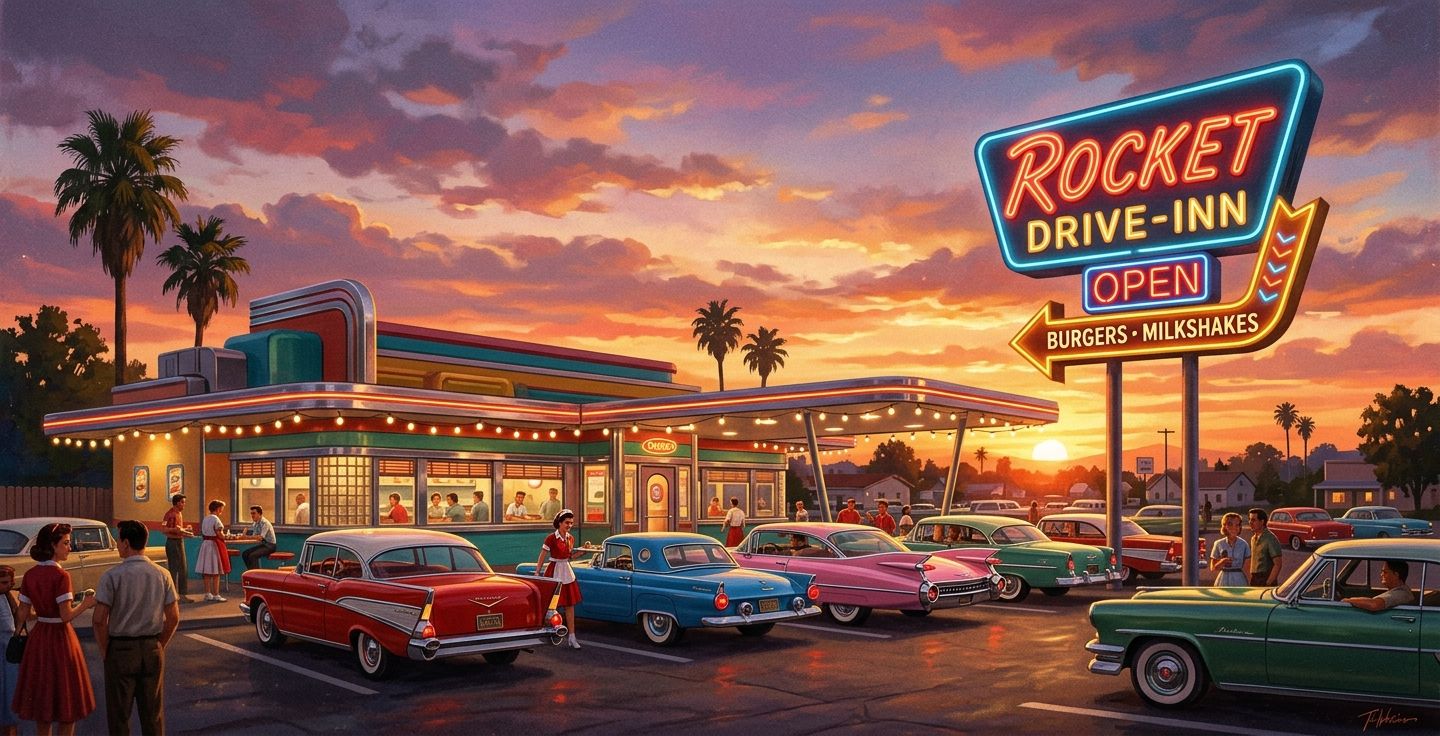
Before we get to the modern magic of ordering into a microphone, we have to look slightly further back in the rearview mirror. You see, the deep romance between the American driver and their dinner actually started in Dallas, Texas. The year was 1921. A clever, observant businessman named Jesse G. Kirby (born 1877, died 1939) noticed that people who owned expensive new cars loved to stay inside them. He opened a unique restaurant called the Pig Stand. His famous, playful motto was that people with cars were so relaxed they did not even want to get out of them to eat.
At the Pig Stand, eager young men known as carhops would literally jump onto the running boards of cars as they slowly pulled into the dirt parking lot. They delivered hot barbecue pork sandwiches and cold glass bottles of Coca-Cola directly to the waiting window. It was a thrilling spectacle. It was purely fun. It was the very beginning of our long national romance with eating behind the steering wheel. But the Pig Stand was just a small taste of what was to come. It was the brilliant precursor. The real, lasting revolution required something much faster.
A Voice Through the Static
To truly understand this massive national shift, we have to look closely at the smaller stories. We have to zoom in on a quiet, sunny street in Baldwin Park, California. It was there in 1948 that a practical, hardworking man named Harry Snyder (born 1913, died 1976) opened a tiny burger stand. He called it In-N-Out Burger.
Harry was a very observant man. He noticed that the traditional carhops were sometimes slow. On busy nights, they might bring the wrong food. During bad weather, the service suffered terribly. Harry wanted to feed hardworking people quickly and accurately. He went into his own garage and started tinkering endlessly with spare wires and old radio parts. After much trial and error, he built a functioning two-way speaker box. It was a crude, simple little device. But it worked beautifully.
A hungry customer could drive up, speak their order into the metal box, and have their hot meal cooking before they even reached the pickup window. That small, oily patch of pavement in California sparked a blazing national fire. It felt like pure magic. You did not have to leave your comfortable car. You did not have to wait patiently for a walking carhop. You just spoke your dinner into existence. That single innovation laid the permanent groundwork for the modern car culture we know today.
Beyond the Burger
Of course, this intense national desire for speed did not stop at simple hamburgers and hot French fries. The convenient drive-thru window soon became a staple of everyday errands. Drive-up banking became incredibly common in the prosperous 1950s. Pharmacies quickly realized that people who felt sick did not want to walk through brightly lit store aisles. Eventually, even local coffee shops realized that the busy morning commute required a fast, hot cup of coffee handed straight through the driver side window.
The rapid suburban sprawl made walking to the corner store entirely impractical. The physical distances were just too great for a casual stroll. The personal car was no longer a rare luxury. It was an absolute daily necessity. And the local businesses that survived and thrived were the ones that accommodated the bumper to bumper reality of American life. We systematically built an entire world around the glowing dashboard.
The Warmth of the Window
It is very easy to look back and mourn the loss of those slow-paced roadside diners. It is easy to assume that handing a paper bag through a sliding glass window lacks genuine human connection. But I see it entirely differently. I remember the bright smiles of the local teenagers working the late evening shift. I remember the loud, shared laughter in the backseat when a sweet milkshake accidentally spilled. I remember the quiet, deeply peaceful moments eating a warm meal in the car with my own growing children, watching the heavy rain hit the windshield under the glow of a neon sign.
There is a unique beauty to the American drive-thru. It represents our deep national ingenuity. It represents our constant, unwavering forward momentum.
Looking Down the Road
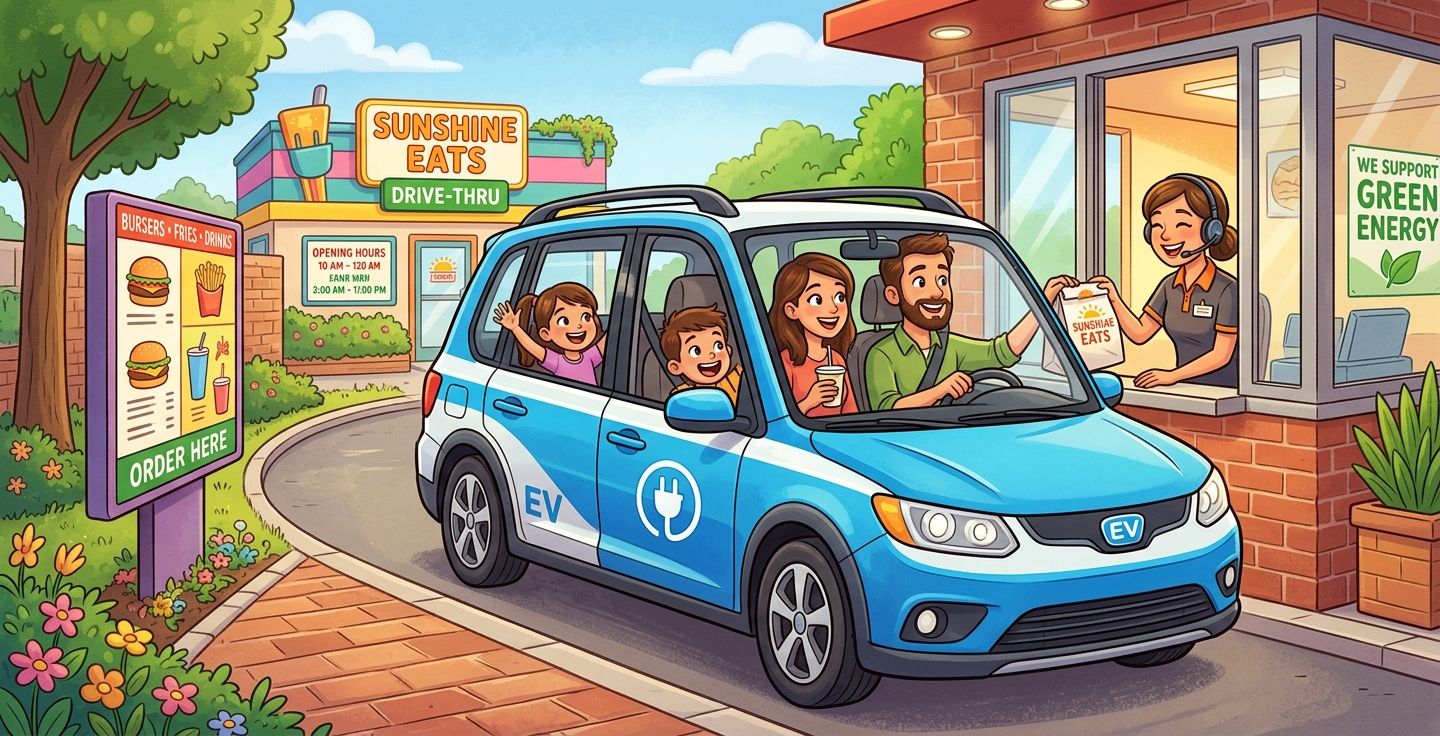
Today, I sit back and watch the younger generations pull up to the exact same windows in completely silent electric vehicles. They smoothly order their food using glowing digital screens in the palms of their hands. The underlying technology has changed dramatically, but the core human desire remains exactly the same. We still deeply want that little familiar slice of comfort while we are constantly on the go.
I encourage you to appreciate these small, fleeting moments. The very next time you find yourself idling in a long line of cars, waiting for your morning coffee or your evening meal, take a deep breath. Look at the complex, bustling dance of the busy kitchen inside. Share a warm, kind word with the hardworking person handing you your bag. The pace of the world is not going to slow down. But you can always find a brief moment of grace, even in the passing lane. We proudly built this grand country on constant motion, but it is the wonderful people we meet along the way that make the long journey truly worthwhile.
Frequently Asked Questions
When was the first drive-thru created?
While basic carhop service started in the early 1920s in Texas, the first true two-way speaker drive-thru was introduced in 1948 by In-N-Out Burger in California. This brilliant innovation set the absolute standard for modern fast food.
Why did drive-thrus become so popular in the United States?
The massive boom of the expanding suburbs and the creation of the interstate highway system made cars essential for everyday American families. People suddenly had much longer commutes and far less free time. Buying hot meals directly from the car simply matched this new, much faster way of daily living.
Are drive-thrus only used for fast food?
Not at all. The convenient concept quickly expanded to many other industries. Today you can easily find drive-up windows at local banks, pharmacies, coffee shops, and even neighborhood dry cleaners. Any smart business that benefits from quick, efficient transactions has enthusiastically embraced the model.
How do drive-thrus impact local communities?
They provide incredible, reliable convenience for busy families and individuals with daily mobility issues. However, they also require significant open land for wrapping car lanes and can deeply change the walkability of a growing neighborhood. It is a constant balance between desired speed and thoughtful community design.
Will drive-thrus continue to exist in the future?
Yes, they are currently evolving rapidly. With the massive rise of advanced mobile ordering and dedicated, fast pickup lanes, the modern drive-thru is becoming even more efficient. The deep desire for quick, reliable, mobile service is deeply ingrained in our culture and will absolutely adapt to exciting new technologies.
What exact role did the speaker box play in drive-thru history?
The two-way speaker box completely revolutionized the entire ordering process. Before it was invented, customers had to wait patiently for a worker to walk all the way to their car to take a simple order. The speaker allowed the busy kitchen to start cooking while the car was still moving through the line, drastically cutting down frustrating wait times.