
American History & Origins
How Industrialization Transformed American Cities
The Quiet Before the Roar
I sit by my window on a bright Tuesday morning, watching the world outside. The street is a symphony of moving metal, honking horns, and bustling sidewalks. Delivery trucks hum as they drop off packages. People hurry past with coffee cups in hand. It is a beautiful, chaotic dance. Looking at this vibrant urban landscape today, it is hard to believe how recent all this noise really is.
Not so long ago, our nation was a quiet land. Most folks lived out their days on scattered farms. Life moved at the steady, predictable pace of the seasons. You woke with the sun. You planted in the spring. You harvested in the fall. The loudest sounds you might hear were a rooster greeting the dawn, the heavy thud of a horse walking down a dirt lane, or the wind rustling through tall corn. A city was just a busy trading post near a harbor. It was a completely different world.
The Sudden Shift
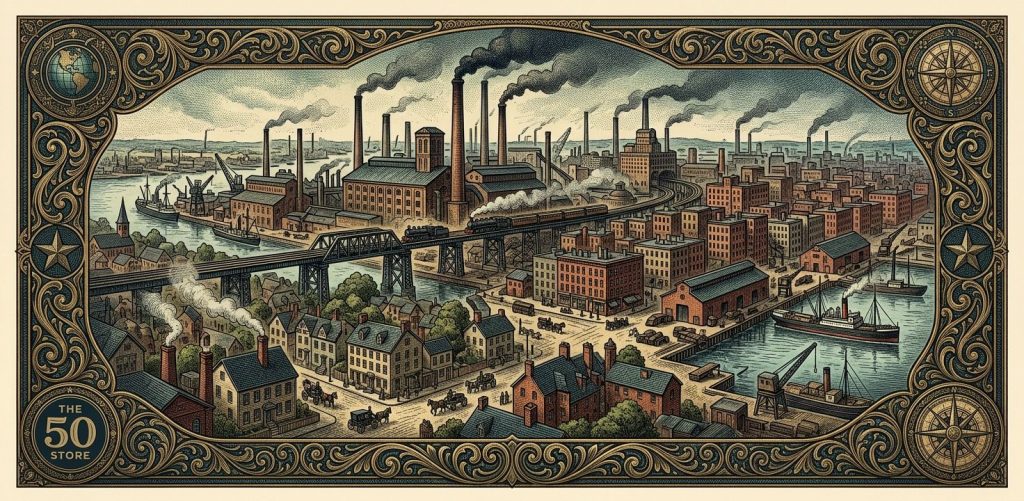
Then, almost overnight, the air filled with thick smoke. The quiet countryside was interrupted by the shrill blast of factory whistles. People packed their bags and left their plows behind. They headed toward the glowing lights of new, towering skylines. The pace of daily life quickened.
The speed of this change was staggering. According to the United States Census Bureau, in 1880, half of the entire nation still worked the soil. But the cities were calling. By the time the 1920 census was taken, a historic tipping point had been reached. For the very first time, more Americans lived in cities than in rural areas. The statistics from those days are truly shocking to read. Take Chicago, for example. In 1850, it was a modest town of about 29,000 souls. By the year 1900, it had exploded into a massive metropolis of 1.7 million people. That is not just growth. That is an absolute explosion of humanity.
This rapid urbanization brought incredible growing pains. Streets became terribly crowded. The air turned dark with soot. Disease spread quickly through cramped tenements. It was a messy, loud, and often dangerous time to be alive.
How Did We Get Here?
You have to wonder when you look at those old black and white photographs. How did a nation of quiet farmers become a nation of ambitious builders? Why did millions of people willingly walk away from the open fields to sweat inside dark, noisy brick buildings? The answer lies in the deeply human desire for a better life. We traded the unpredictability of nature for the steady wages of industry.
A Town Built on Water and Woven Thread
To really understand this massive shift, you have to look closely at the small stories. You have to look at ordinary people. Let us take a walk down the streets of Lowell, Massachusetts. Before the factories arrived, it was just a quiet stretch of land along the Merrimack River.
A clever merchant named Francis Cabot Lowell (1775-1817) changed everything. He traveled overseas, memorized the design of power looms, and brought the secrets back to our shores. He helped give birth to the modern factory system in America. Suddenly, massive brick textile mills rose up along the riverbanks.
Imagine a young woman named Sarah in the 1840s. She grew up on a rocky, unforgiving farm up in New Hampshire. The harvest was poor. Her family was struggling to survive. So, Sarah packed a single trunk and took a stagecoach down to Lowell. When she arrived, the sheer scale of the mills terrified her. The noise inside the weaving rooms was absolutely deafening. Thousands of wooden looms slammed back and forth all at once. The air was thick with white cotton dust. She could not even hear her own thoughts.
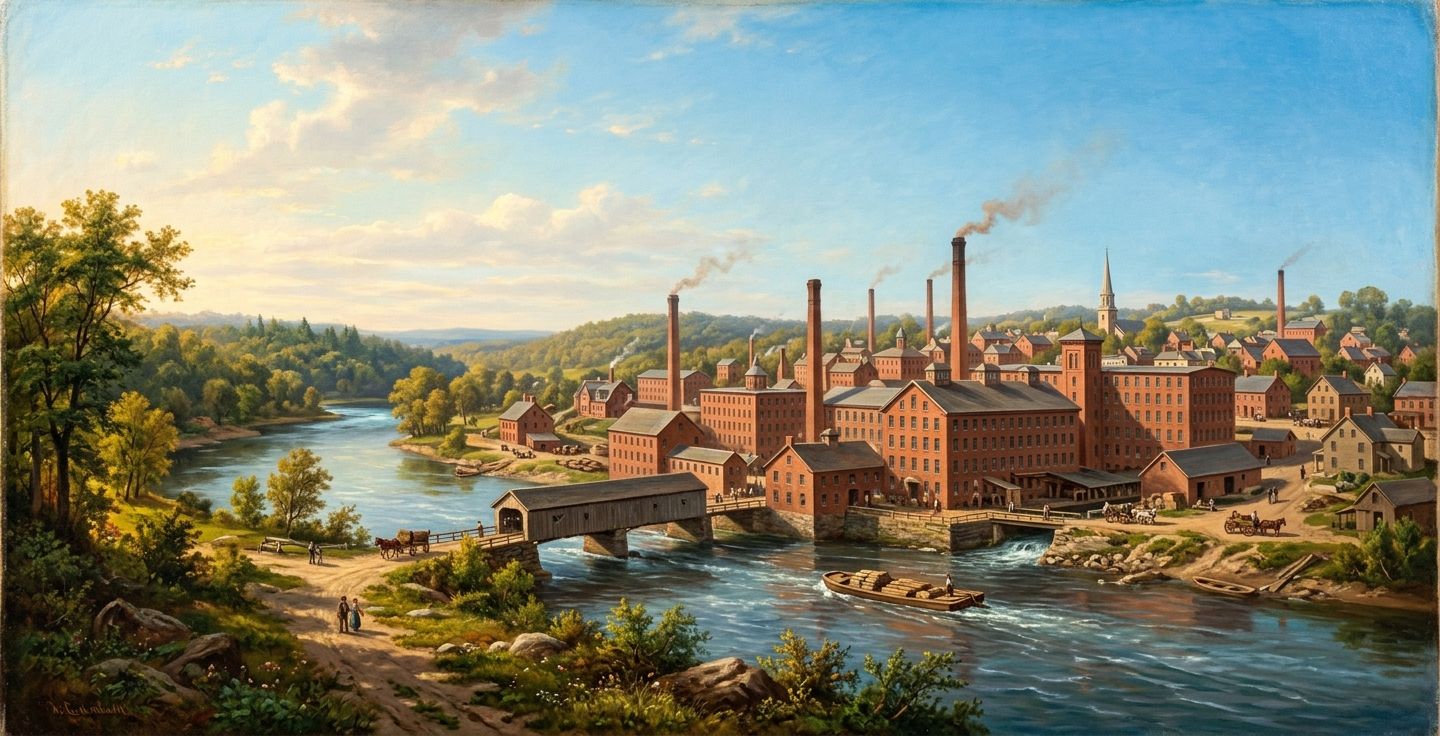
Yet, Sarah stayed. She lived in a crowded boarding house with dozens of other young women. They worked fourteen hours a day, dictated by the strict ringing of the company bell. Why did she endure it? Because for the first time in her life, she had her own money. She could buy a book. She could send a few dollars home to save her father’s farm. Sarah and thousands of young women like her became the very first gears in the great engine of the industrial revolution. They built a new way of life.
The City That Forged a Nation
As the decades rolled on, the hunger for growth shifted from woven cloth to heavy metal. To see this next chapter, we must travel to the muddy banks of the Monongahela River in Pittsburgh, Pennsylvania.
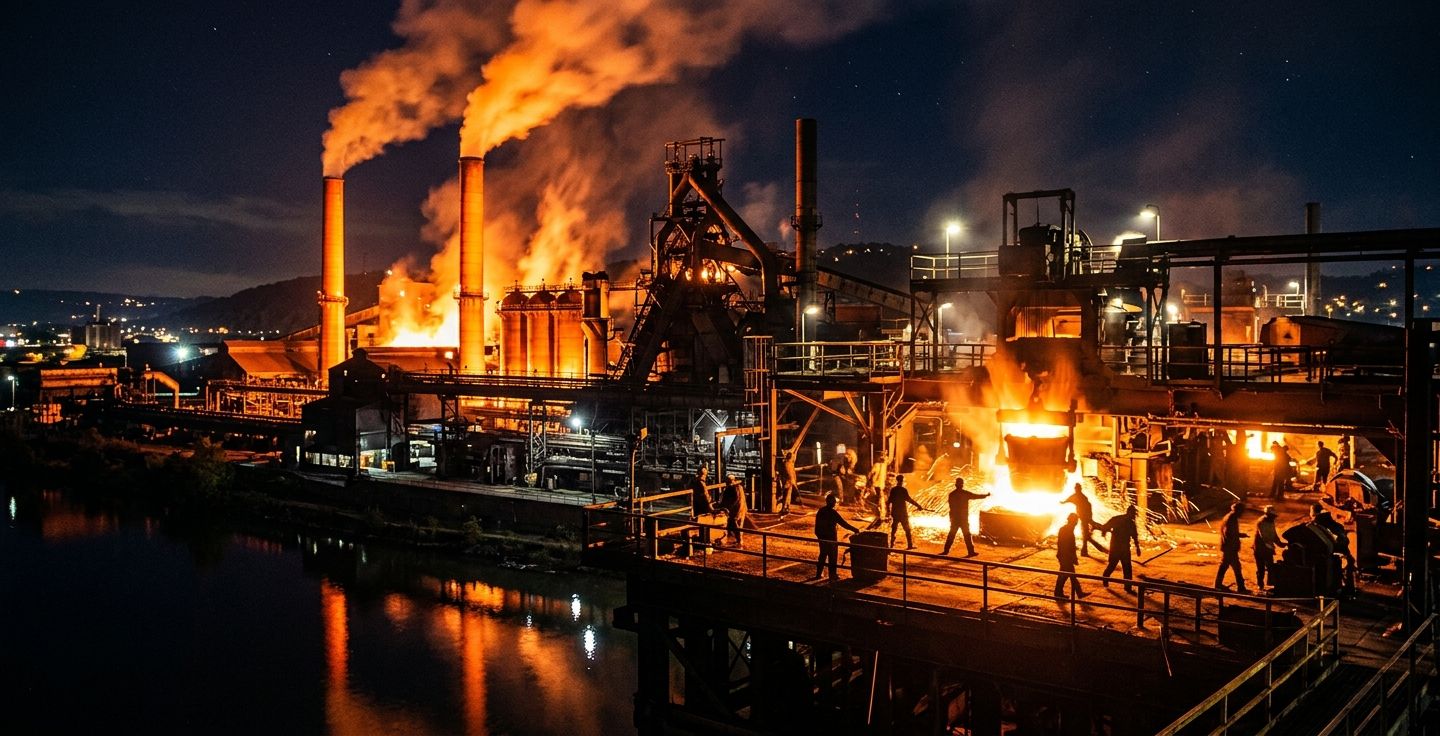
It was here that a young immigrant named Andrew Carnegie (1835-1919) saw the future. He realized that the new cities needed strong bones. They needed steel. Carnegie built massive furnaces that turned the night sky a brilliant, terrifying orange.
Think of a young man named Thomas working in one of those steel mills in the 1890s. Thomas stood in front of roaring blast furnaces that reached temperatures hot enough to melt solid rock. He wiped sweat from his eyes as sparks rained down around him like deadly fireflies. It was grueling, backbreaking labor. Men often lost fingers or even their lives to the heavy machinery. But the mass production of steel that Thomas helped create changed the entire world. The steel he poured went into railroad tracks that connected distant shores. It became the beams for the very first skyscrapers, allowing our cities to grow up toward the clouds instead of just spreading out across the dirt.
The Growing Pains and Triumphs
These big shifts were not easy. The rivers ran thick with chemical waste. The skies were choked with black coal smoke. Families were crammed into tiny, airless apartments. Children as young as ten were sent to work in coal mines. It was a harsh, unforgiving era.
But the story of America is always a story of pushing forward. The people pushed back against the darkness. Workers stood together and demanded fair treatment. They fought for the eight-hour workday. They fought for safety regulations. They fought to get children out of the factories and into schools. Out of all that soot and struggle, a strong middle class was eventually born. The comforts we take for granted today came from their sacrifices. Our warm homes, our electric lights, and our weekend rests were paid for by the sweat of folks like Sarah and Thomas.
Passing the Torch
I look out my window again. The smog of the old factories has mostly cleared. The tall brick smoke stacks have been replaced by shining glass towers. The noise is different now. It is a cleaner, sharper hum.
I see young folks walking down the street, looking at devices in the palms of their hands. You are the new builders. You are the new dreamers. Instead of coal and steam, you are building with wind, solar power, and computer code. You are creating a cleaner, smarter way to live together.
The past was tough, but it gave us a magnificent foundation. Honor the hard work of those who came before you. Remember the farm hands who became factory workers. Take their grit, take their courage, and build a beautiful future. I know you will.
Frequently Asked Questions
Why did people willingly leave their farms to work in crowded factories?
Farming was incredibly hard and unpredictable. A bad storm or a drought could mean ruin for a family. Factories, despite their harsh conditions, offered a steady, guaranteed wage. For many young people, the city also offered excitement, independence, and social opportunities they could never find in an isolated rural community.
What were working conditions like during the early days of these big changes?
Early working conditions were very difficult. People often worked twelve to fourteen hours a day, six days a week. Factories were extremely loud, poorly ventilated, and dangerous. There were no safety nets or injury compensations at first. It took decades of hard fought labor movements to establish the safer conditions and shorter hours we enjoy today.
How did the arrival of trains affect city growth?
Railroads were the lifelines of the new cities. Before trains, towns had to be located on major rivers or coastlines to move goods. Trains allowed heavy materials like coal and steel to be transported anywhere across the country quickly. This created massive inland hubs like Chicago and allowed the entire nation to become deeply connected.
Did immigration play a large role in building these cities?
Absolutely. The massive factories needed an endless supply of willing hands. Millions of immigrants arrived from countries all over the world seeking a better life. They worked alongside rural Americans who had moved to the cities. Together, they provided the essential muscle and diverse spirit that built the modern American city.
How did early factories get their power before electricity was common?
The very first factories were built directly alongside fast moving rivers. They used giant water wheels to capture the energy of the flowing water, which turned the belts and gears inside the mill. Later on, steam engines burning massive amounts of coal allowed factories to be built anywhere, far away from rivers.
What role did women play in early factory work?
Women were absolutely vital to early industry, especially in textile manufacturing. Young, unmarried women made up the vast majority of the workforce in places like Lowell. It was one of the first times in history that large numbers of women left the domestic sphere to earn their own independent wages in the formal workforce.