
Culture & Traditions
What Americans Eat on Major Holidays
The Scent of Memories
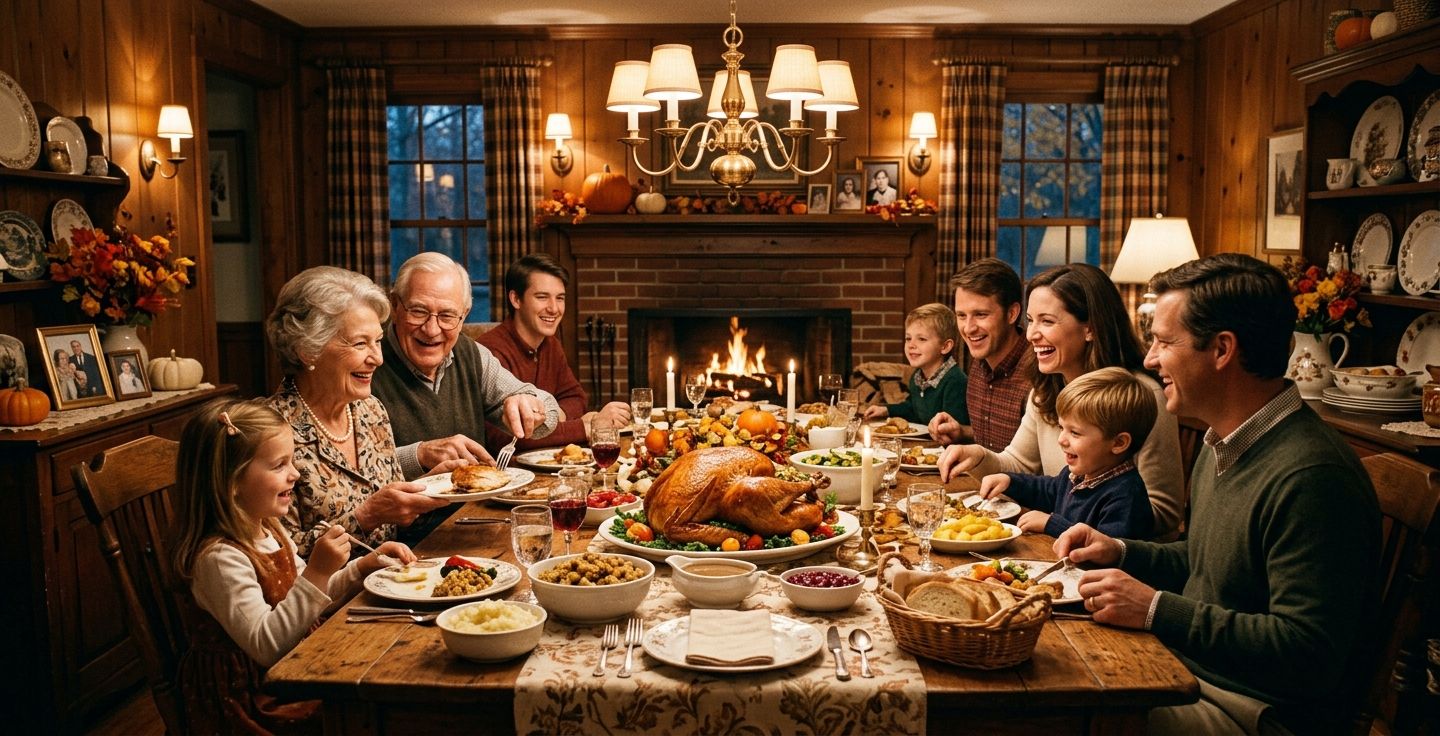
There is a very specific quiet that falls over a house right before a big gathering. It is the deep breath before the joyous storm. For as long as I can remember, my life has been measured in the aromas drifting from the kitchen oven. I close my eyes and I can still see my mother tying her apron, the heavy cast iron pans clanking on the stove, and the windows fogging up from the boiling potatoes. Over my eight decades in this beautiful country, I have watched the world outside change at a dizzying pace. Yet, when we gather around the dining table, time slows down. Food is our living history on a plate. It tells us where we came from and reminds us of who we are.
The Changing Face of Our Feasts
Surprising Numbers on Our Plates
We are a hungry, busy nation. Sometimes we do not realize just how much we consume when we celebrate. The statistics are truly astonishing. According to the National Turkey Federation, Americans roast and carve roughly 46 million turkeys every single Thanksgiving. During that same autumn week, the United States Department of Agriculture reports that we consume over 80 million pounds of cranberries. In the summer, the National Hot Dog and Sausage Council notes that we eat 150 million hot dogs on Independence Day alone. To put that into perspective, that is enough hot dogs to stretch from Los Angeles to Washington D.C. more than five times over.
These numbers are staggering. But they hide a quiet complication. The modern world spins faster today than it did when I was a boy. Families are scattered across different states. People work longer hours. We often rely on store-bought pies instead of rolling out dough on a floured counter. Time is a luxury. Because of this rush, we risk losing the deep roots of our traditional American food. We risk forgetting the vital stories that make these meals so special.
Holding Onto the Past
So, here is the question we must ask ourselves. How do we hold onto the comforting echoes of our heritage while embracing the busy reality of our present? How do we pass these culinary fires to the next generation without demanding they spend four days tied to a hot stove?
The answer is wonderfully simple. We learn the history. We share the stories behind the dishes. When food has a story, it is never just a meal. It becomes an enduring memory.
Autumn Abundance and Stubborn Hope
Take the Thanksgiving turkey for example. Most folks assume it has always been our national feast. But let us take a short walk down memory lane to a bustling street in Philadelphia in the nineteenth century.
A woman named Sarah Josepha Hale (1788-1879) sat at her wooden desk, dipping her pen into ink, year after year. She was a magazine editor with a quiet, unyielding vision. She wrote letters to five different presidents, passionately arguing for a unified national day of thanks. She envisioned a nation, fractured and weary from war, sitting down on the exact same day to share roasted meat and sweet pies.
Through her remarkably popular magazine, she published the precise recipes that would define the holiday. She instructed her eager readers to bake deep-dish pumpkin pies, boil sweet potatoes, and carefully roast the native wild birds. Her persistence finally paid off when Abraham Lincoln established the national holiday in 1863. Every time you carve a bird today, you are serving a slice of Sarah’s stubborn hope.
If you ever visit Plymouth, Massachusetts in the autumn, you can feel the sharp chill in the air. You can imagine the early settlers praying over their meager harvest. Their meals were about mere survival. Today, our holiday feasts are about overwhelming abundance. But the core spirit of gratitude remains identical. We sit. We eat. We give thanks.
A Summer Crown Jewel
The seasons eventually turn. The snow melts. The days grow long and gloriously hot. By July, the scent of charcoal smoke floats over backyard fences from coast to coast. The Fourth of July barbecue is the undisputed crown jewel of American summer. It is loud, it is casual, and it is entirely ours.
Let us look closely at the humble hot dog. In the late 1800s, a German immigrant named Charles Feltman (1841-1910) pushed a pie cart around the sandy beaches of Coney Island, New York. He noticed people wanted hot food on the go. He had a brilliant, simple idea. He served hot frankfurters inside sliced, elongated buns.
This meant everyday working people could hold their hot, delicious meal in one hand while enjoying a leisurely stroll along the ocean shore. That humble small cart revolutionized how we eat outdoors. It gave birth to the fast, portable food we now take for granted at every parade and summer picnic.
Winter Warmth and Hearth
Traditions of the Cold Months
Winter rolls back around, bringing the sharp scent of pine needles and peppermint. Christmas dinners look wonderfully different in every home. Some families roast a giant, peppery slab of beef, its edges crusted with salt and herbs. Others glaze a beautiful ham with brown sugar, mustard, and cloves, the sweet scent filling the entire house.
I often think about our very first president during this time of year. George Washington (1732-1799) had a famous recipe for eggnog that was heavy enough to drop a horse. He served it generously to guests at his estate. A heavy mixture of rye whiskey, rum, and sherry blended with rich milk, thick cream, and freshly beaten eggs. Today, we mix ours with a little more milk and a lot less whiskey, but the joy of raising a glass with loved ones is unchanged.
If you walk the snowy cobblestones of Williamsburg, Virginia during the holidays, you will see warm candles in every single window. You will smell roasted game meats and sweet baked puddings drifting from the taverns. It is a gentle reminder of how straightforward hospitality used to be. A warm hearth and a full plate were all it took to show someone you cared deeply.
The First Day of the Year
Let us not forget the very first day of the new year. Down in the South, New Year’s Day brings a deeply symbolic menu. We eat Hoppin’ John. It is a humble, beautiful dish made of black-eyed peas, rice, and smoky pork. The peas represent coins. A side of collard greens represents folding money. A thick slice of golden cornbread represents gold. You eat the entire plate to ensure luck and prosperity for the coming twelve months. It is a ritual of hope.
If you wander through the historic, moss-draped streets of Charleston, South Carolina, you can smell the pork fat cooking down in heavy cast iron skillets. This tradition stems directly from West African roots, brought over by enslaved people who shaped the very foundation of our country’s cooking. Their incredible knowledge of agriculture and seasoning created the soul of Southern food.
Speaking of agriculture and roots, we must recognize George Washington Carver (1864-1943). He was a brilliant agricultural scientist who completely revitalized the soil of the South. Because of his tireless teachings on sweet potatoes and peanuts, sweet potato pies became a proud, permanent resident of our celebratory tables.
A Bright and Delicious Future
We all want our children to know these wonderful tastes. We want them to know the absolute comfort of a warm kitchen on a bitterly cold afternoon.
So, here is what I ask of you. Invite your family into the kitchen this year. Let the flour spill on the floor. Let the grandchildren stir the gravy, even if they make a terrible mess. Write down those faded family recipes before the ink disappears completely. Share the stories of the remarkable people who stirred the pots long before us.
The future of our country is incredibly bright. It will be built by the kids sitting at our tables right now. Feed them well. Tell them stories. Every single meal is a bridge between our history and our future. Walk across it together, and enjoy every bite.
Frequently Asked Questions About Our Holiday Plates
Why do Americans eat turkey on Thanksgiving?
Turkey is native to North America and was abundant in the wild during the autumn months. A magazine editor named Sarah Josepha Hale popularized the idea of a roasted turkey as the centerpiece of the Thanksgiving table through her widespread articles in the nineteenth century, creating a standard menu we still follow today.
How did hot dogs become the standard for the Fourth of July?
Hot dogs became incredibly popular at baseball games and summer boardwalks like Coney Island after vendors realized they were cheap, easy to hold, and did not require plates. This made them the absolute perfect food for outdoor summer celebrations, parades, and casual backyard gatherings.
What are the origins of the sweet potato casserole?
Sweet potatoes have long been a staple in Southern agriculture, thanks in part to scientists who taught farmers how to grow them to heal depleted soil. Eventually, early twentieth century food companies published recipes topping the mashed potatoes with toasted marshmallows to sell more sweets, and a holiday classic was born.
Why is ham often served on Easter Sunday?
Historically, pigs were slaughtered in the late fall. The meat was naturally cured and smoked to last through the long, freezing winter months. By the time spring arrived, the hams were fully cured and ready to be sliced, making them the most practical and delicious choice for a large spring celebration.
What is the significance of eating black-eyed peas on New Year’s Day?
Eating black-eyed peas on the first day of the year is a deep rooted Southern tradition with West African origins. The peas physically swell when they cook, which symbolizes expanding wealth. They are traditionally served alongside green leafy vegetables to represent paper money, ensuring good fortune for the year ahead.
Did George Washington really have his own eggnog recipe?
Yes, the first president was well known for serving a very potent version of eggnog to his guests at his estate. His personal recipe included a heavy mixture of rye whiskey, rum, and sherry blended with milk, cream, and eggs. It was a remarkably strong drink meant to keep out the deep winter chill.
Why do we eat cranberry sauce with holiday poultry?
Cranberries are native to the bogs of North America, and Indigenous peoples used them for food and medicine long before European settlers arrived. Their natural tartness beautifully cuts through the heavy, rich fat of roasted meats, creating a perfect balance of flavors on the palate that has stood the test of time.