American Sports & Pastimes
The Golden Era Of Bowling Leagues: Fostering Working-Class Camaraderie And Community
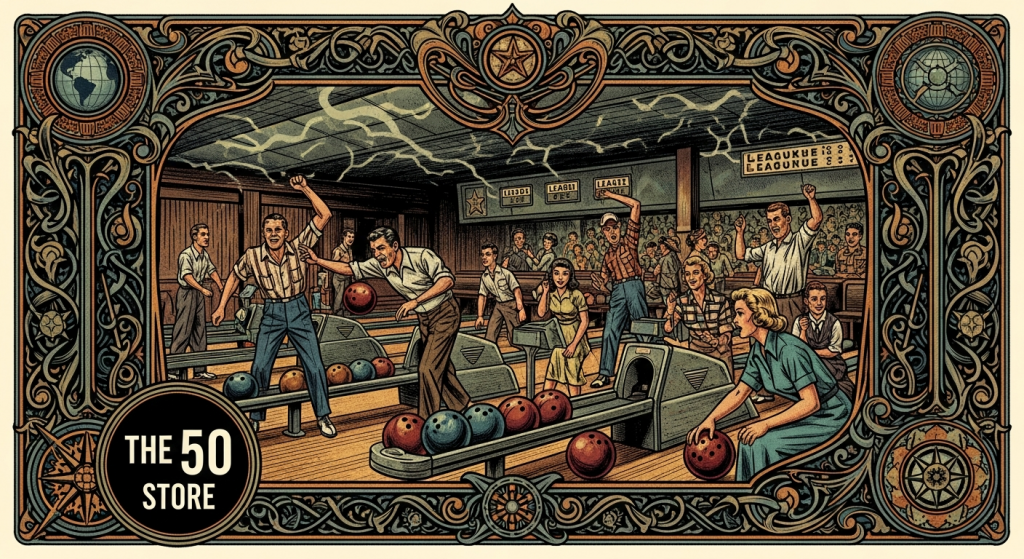
Ah, the scent of nostalgia! If you were around in the good old days, you know exactly what I’m talking about. In the 1960s and 70s, Tuesday night wasn’t just another night; it was sacred. For millions of Americans, men and women alike, it was a ritual. They’d slip into those brightly colored, often customized shirts, grab their trusty, heavy urethane balls, and head straight for the comforting glow of the bowling alley. This wasn’t just a game; it was an institution. The bowling league, my friends, was the ultimate anchor of working-class camaraderie and community, a place where friendships were forged, rivalries blossomed, and life’s everyday worries seemed to roll away with each perfectly thrown strike.
The Strike of Community: A Golden Era Remembered
The Industrial Leisure Boom
I remember my own dad, after a long week at the steel mill just outside Pittsburgh, Pennsylvania, always looking forward to his league night. After World War II, America changed in wonderful ways. Our industrial might, honed during the war, turned towards prosperity. Factories hummed, producing everything from cars to dishwashers, and with that boom came something incredible for the average American worker: more steady jobs, better pay, and, crucially, scheduled free time. It wasn’t just about punching a clock anymore; it was about building a life. Suddenly, folks had not just the means, but the precious hours to pursue leisure. And pursue it they did!
This was the dawn of the ‘industrial leisure boom.’ Companies, recognizing the value of worker morale and community, often sponsored recreational activities. Bowling, with its accessibility and team spirit, quickly became a national favorite. The numbers tell a powerful story: while precise figures vary, many historians note that the average American worker gained roughly eight additional hours of leisure time per week between 1940 and 1965. Think about that, an entire extra workday‘s worth of free time, every single week! This wasn’t just a matter of having more hours; it was about having the disposable income to enjoy them. Mass production made leisure activities more accessible, from owning cars that could take families to the lanes to affordable equipment. This unprecedented shift fueled the growth of social clubs, company sports teams, and especially, bowling leagues.
At its absolute peak, the American Bowling Congress (ABC), which governed men’s organized bowling, boasted over 9 million active members competing weekly. Nine million! And that doesn’t even count the women’s leagues or youth leagues. It was a phenomenon, a vibrant heartbeat echoing in every town across our great nation. It wasn’t just a pastime; it was a way of life, a social fabric woven with strikes, spares, and a good-natured groan at a gutter ball.
The Bowling Alley Cathedral
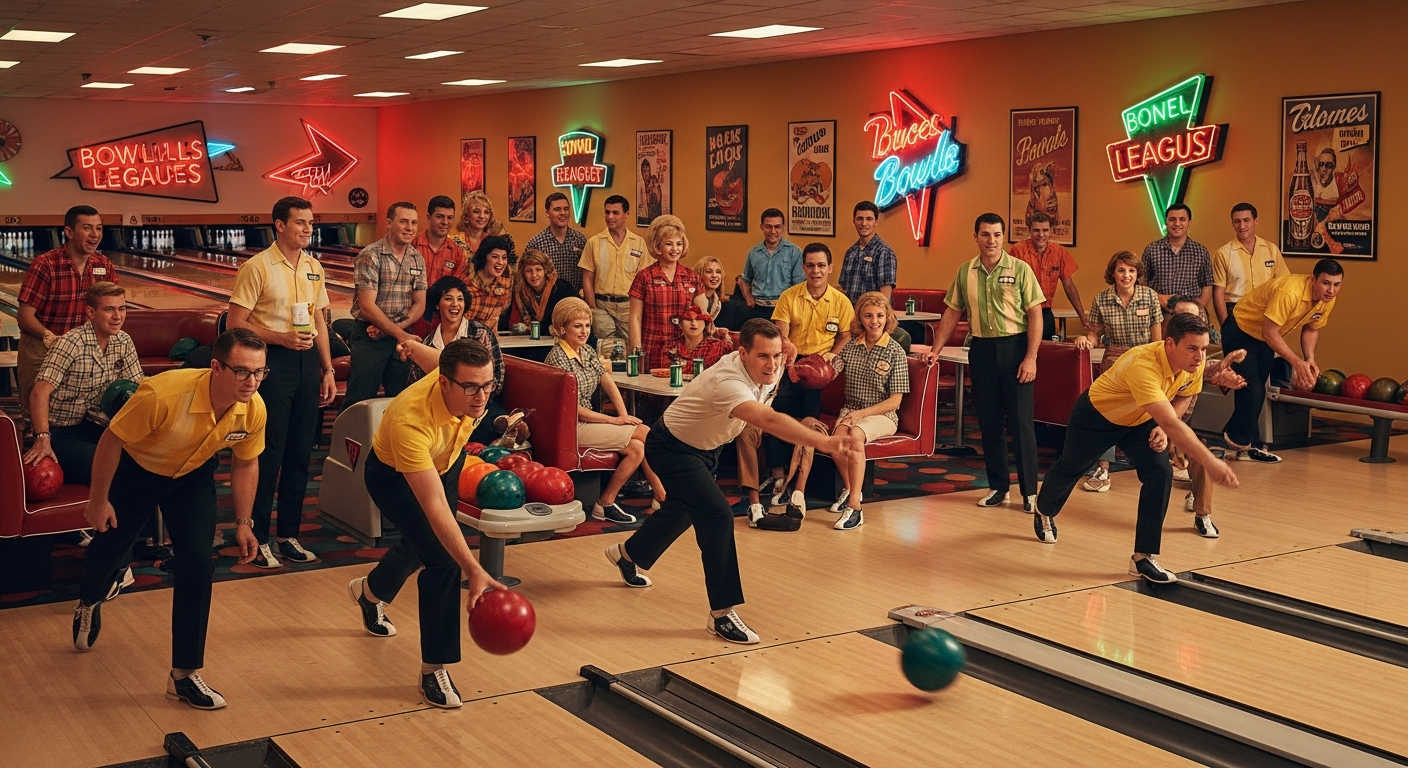
And what a place the bowling alley was! For many of us, it was a second home, a brightly lit cathedral of community. The moment you stepped through those doors, a distinct, almost intoxicating aroma hit you: the sweet, waxy scent of the lanes themselves, mingling with popcorn, cheap beer, and a hint of industrial cleaner. It was a smell that promised good times. The clatter of pins echoing down the lanes, the rumble of balls, the excited cheers, the occasional frustrated sigh, all blended into a symphony of shared experience.
These weren’t just places to throw a ball; they were entertainment hubs. Imagine the vibrant glow of the pinspotters, the satisfying ‘thwack’ of a ball hitting the lane, and the joyous eruption of pins scattering. The decor was often pure Americana: mid-century modern design, comfortable booths, gleaming polished wood that stretched for sixty feet. It wasn’t uncommon to find a pool table in the corner, a jukebox loaded with the latest hits, and a snack bar counter piled high with hot dogs, soft drinks, and maybe even a slice of apple pie. These were places that hummed with life, where the worries of the world seemed to melt away the moment you picked up your ball. Each alley, from the grandest multi-lane complexes in big cities to the smaller, cozy four-lane centers in rural towns, felt like a true hub. They weren’t just businesses; they were community cornerstones, woven into the very fabric of American social life.
I can still picture the worn-out, heavy leather rental shoes, each pair holding countless stories of glory and defeat. You’d pick your size, lace them up, and instantly, you were part of the game. It was democratic, too. Anyone could play. Young, old, skilled, or just starting out. The lanes welcomed all. Places like the historic Highland Park Bowl in Los Angeles or the classic Grand Central Bowl in Portland, Oregon, weren’t just businesses; they were community cornerstones.
Custom Shirts and Team Pride
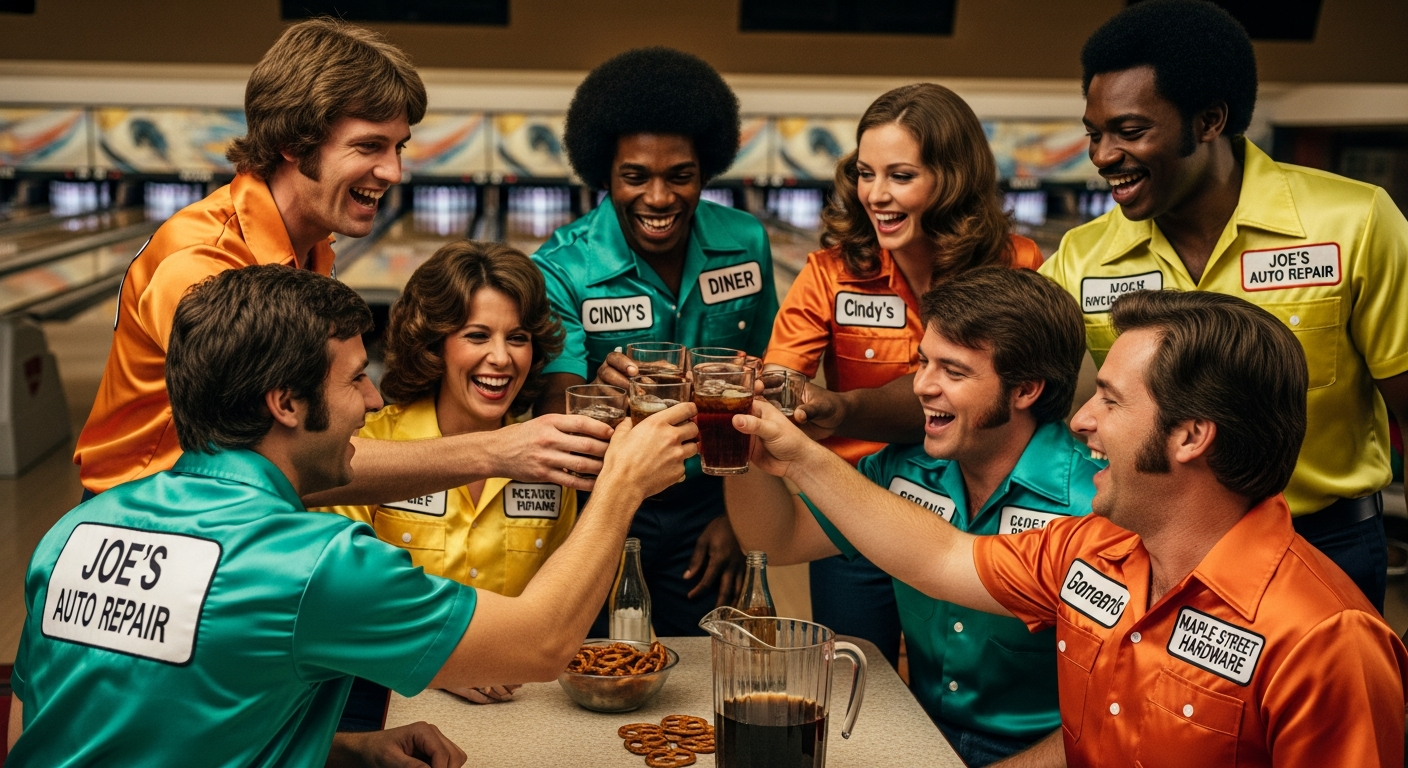
The team shirts, oh, the team shirts! They were a point of immense pride. Each league had its own flavor, its own character, but the shirts were universal. Short-sleeve button-ups, usually in bold colors, with custom embroidery. You’d see ‘Joe’s Garage’ emblazoned on one back, ‘Miller’s Bakery’ on another, and ‘Acme Tool & Die’ on a third. Local businesses weren’t just sponsoring teams; they were investing in the very fabric of their community. My uncle’s team, ‘The Pin Busters,’ sponsored by the local hardware store, had matching cardinal red shirts with white lettering. He wore that shirt with more pride than almost anything else. It wasn’t just a uniform; it was a badge of belonging, a visible sign of shared identity.
These teams weren’t just about the bowling scores. They were micro-societies. You learned about your teammates’ kids, their struggles, their triumphs. You celebrated birthdays, commiserated over setbacks, and occasionally, after a particularly good game, you’d all head to the local diner or tavern for a celebratory drink and a slice of pie. Legendary bowlers like Don Carter and Ray Bluth were heroes, but on your local lane, your team captain or that guy who always managed to pick up the 7-10 split felt just as important. It built bonds that extended far beyond the alleys, creating networks of support that truly defined a neighborhood.
The Bowling League Legacy
What a powerful antidote these organized leagues were to social isolation, long before we ever had a name for it. In an age where digital screens often separate us, the bowling alley brought us together, face-to-face, with real laughter, real handshakes, and real conversations. It wasn’t just about the competition; it was about the routine, the shared expectation, the friendly faces you could always count on seeing. Lifelong friendships were forged, families connected, and a true sense of belonging flourished. They knit communities together, one frame at a time. It was a time when a neighbor wasn’t just someone living next door; they were your teammate, your confidant, your fellow American.
I remember, clear as day, a story my grandmother told me about her league. Old Mrs. Henderson, a sweet lady with a fierce hook, took a bad fall at home one winter. Before anyone could even think about what to do, her teammates, ‘The Alley Cats,’ sprang into action. They organized a meal train that lasted weeks, took turns driving her to doctor’s appointments, and even chipped in to help fix her leaky roof. That wasn’t an isolated incident; it was the norm. These leagues fostered a deep sense of mutual support, creating safety nets long before government programs were widespread. It wasn’t charity; it was simply what families and communities did for one another. It was genuine, grassroots solidarity, a beautiful example of people looking out for one another. In an era before constant digital connection, these weekly gatherings were vital lifelines, ensuring no one felt truly alone. They taught us the value of showing up, not just for a game, but for each other. That, my friends, is the enduring legacy of the golden age of bowling leagues: not just strikes and spares, but unwavering human connection.
Bringing Back That Golden Spirit
Times have changed, of course. The rhythms of modern life are different, faster, and often more isolating. The grand era of the bowling league, with its massive membership and unwavering community spirit, has, in many ways, faded into memory. But the longing for that connection, that sense of belonging, is as strong as ever. We crave places where we can simply be ourselves, among friends, sharing a laugh and a common purpose. We yearn for the simple joy of coming together, away from the endless scroll of screens, to build something real, to share something tangible.
That spirit, though perhaps quieter now, is still very much alive. You see it in local volunteer groups, in neighborhood block parties, in small town festivals. It’s that deep-seated American desire to connect, to build, to belong. The golden era of bowling leagues reminds us of the profound human need for community, for shared experiences that transcend the everyday and become the cherished memories of a lifetime.
Celebrate the Legacy with a Retro Tee
So, as we reflect on those vibrant days, why not carry a piece of that spirit with you? We’ve created the ‘Golden Lanes Bowling Club Retro Tee’ to celebrate that mid-century working-class style, that indelible camaraderie. This isn’t just a shirt; it’s a nod to an era when community was king, when friends gathered, and good times rolled. Printed on premium, heavy-weight combed cotton, it’s designed for a classic, relaxed fit, perfect for bringing a touch of that golden age back into your everyday. Wear it with pride, knowing you’re honoring a truly American tradition of friendship and shared joy.
Let’s remember those days fondly, and perhaps, inspire a new generation to find their own ‘golden lanes,’ their own communities where laughter echoes, and friendships grow stronger with every shared moment. Our nation was built on such bonds, and it’s in these simple, everyday connections that the true heart of America continues to beat.