
Culture & Traditions
How American Festivals Bring Communities Together
I remember a time when Main Street was the center of our universe. You walked down the sidewalk and you knew the shopkeepers by their first names. We shared our days over the hum of the hardware store and the quiet corners of the neighborhood diner. That was our situation for decades. We lived deeply intertwined lives. We knew who had a bumper crop of tomatoes in their garden and who needed a little extra help fixing their roof before the winter snow began to fall. This was the natural order of things. We relied on one another. We looked each other in the eye.
But the world turned its pages quickly. I have watched the dirt roads turn to smooth asphalt, and the two lane highways swell into massive concrete interstates. Progress is a wonderful thing, do not get me wrong. We have medicines and comforts my parents could only dream of. Yet, somewhere along the way, we started trading our wide front porches for enclosed, air conditioned living rooms. We began to commute long hours, returning home exhausted, pulling our cars into garages and shutting the heavy doors behind us. We built lives of tremendous comfort, but sometimes, terrible isolation. This complication of modern life has left many folks feeling entirely disconnected.
I hear young folks talking about loneliness today. It breaks my heart. How did we get so far apart? More importantly, how do we find our way back? How do we rebuild that quiet, sturdy trust that makes a group of houses into a real hometown?
The answer does not lie in a new piece of technology. It lies in a very old habit. We gather. We throw open the streets, strike up the band, and celebrate the harvest. We find our way back to each other through the enduring magic of American festivals.
The Magic of the Town Square Gathering
Let me tell you about a little spot called Circleville, Ohio. Over a hundred years ago, a man named George Haswell was the mayor. He looked around his town and saw farmers toiling away, isolated in their fields. He decided to invite them to bring their best pumpkins to the middle of town. He just arranged a few simple tables on the street. It was a modest gesture. But that tiny act of gathering changed the town forever. The Circleville Pumpkin Show was born. Today, that small idea brings hundreds of thousands of folks to those same streets. It shows us that a single idea can build a bridge across generations. The simple act of displaying the fruits of hard labor creates a common ground.
Surprising Truths About Why We Celebrate
You might look at these gatherings and see only funnel cakes and marching bands. You might think they are just silly distractions from the serious business of life. But let me share something that might surprise you. I was reading the morning paper recently, and I saw some numbers that made me smile. According to the National Endowment for the Arts, nearly 70 percent of adult Americans participate in local arts and cultural festivals. These events are mighty engines for our towns. The U.S. Travel Association reports that local festivals generate over 14 billion dollars in community revenue every single year. They keep the lights on for small businesses.
But the most important number is not about money. The Knight Foundation conducted a big study and found that folks who attend their local festivals are far more likely to vote in local elections, volunteer for charities, and express high levels of trust in their neighbors. Those surprising statistics prove that our community spirit is not a thing of the past. It is alive and kicking. It is just waiting for the music to start. These events remind us that we are part of something bigger than ourselves.
The Roots of Our Celebrations
Let us go down south to Dothan, Alabama. Down there, they celebrate the National Peanut Festival every fall. Now, peanuts were not always the king of the Southern fields. The cotton crop had been completely devastated by the boll weevil. Farmers were losing their homes and their livelihoods. But a brilliant, quiet man named George Washington Carver (born 1864, died 1943) traveled around the region, teaching farmers to plant peanuts to restore the nitrogen in the soil. He showed them hundreds of uses for the humble legume. Because of his teachings, the region survived and eventually thrived.
The festival that happens in Dothan today is not just a carnival. It is a massive, joyful thanksgiving for a man who saved their way of life. When people gather there to eat boiled peanuts and ride the Ferris wheel, they are participating in a living history lesson. They are celebrating survival. 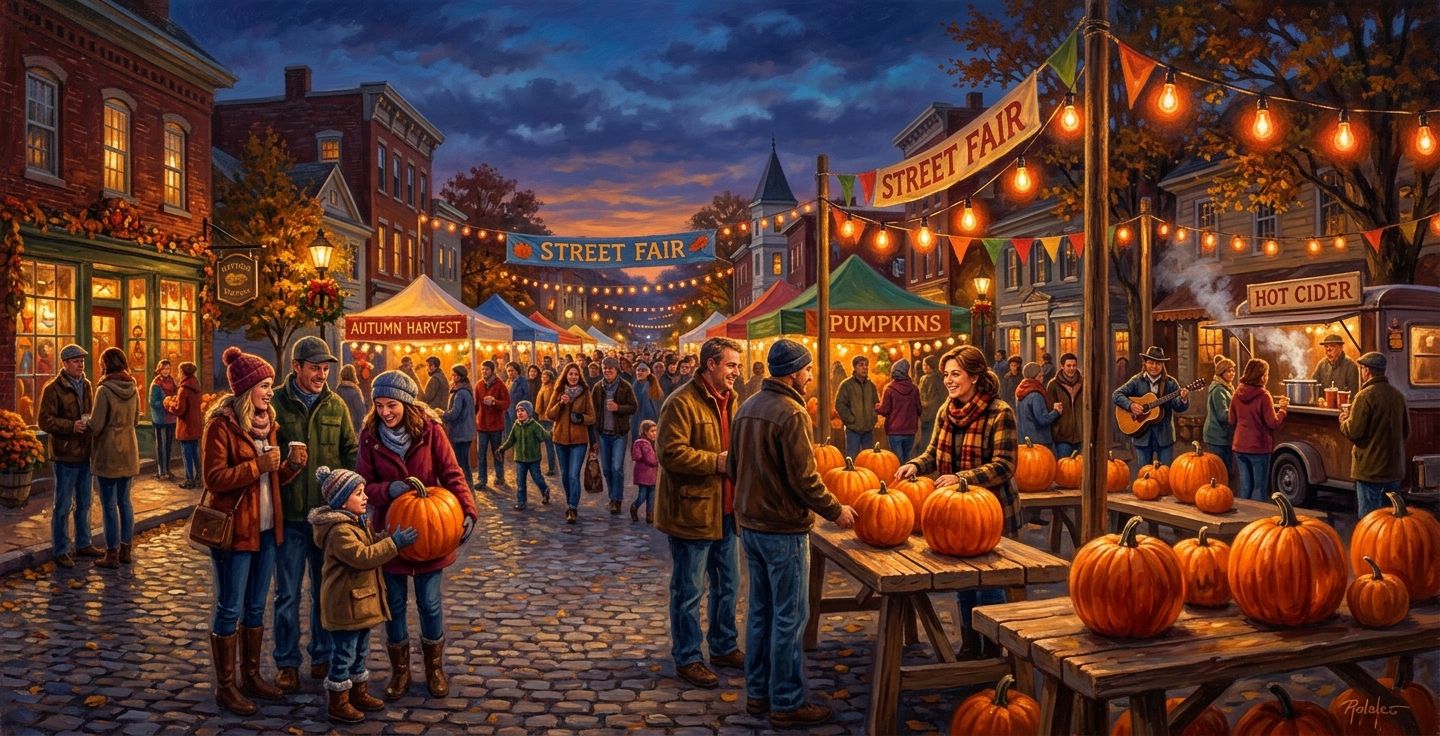
Let us head up to the apple festivals of the Midwest and the Northeast. Imagine the crisp autumn air. The leaves are turning gold and bright red. You can hear the high school marching band warming up behind the local firehouse. The drums echo off the historic brick buildings. None of this would be quite the same without the legendary John Chapman (born 1774, died 1845), the man we all warmly call Johnny Appleseed. He walked barefoot across the frontier, planting nurseries ahead of the pioneers. He was a peculiar fellow, but he had a beautiful mission. He knew that an apple orchard meant a family was going to stay. It meant roots were going deeply into the soil.
When a town gathers today to press sweet cider and bake fresh pies, they are enjoying the fruits of our shared history. The laughter of children running with sticky hands, the older folks sitting on folding chairs tapping their feet to the bluegrass band, it is a perfect picture of America.
The Unsung Heroes of the Fairgrounds
We often just show up and enjoy the bright lights, but there is an army of good folks working behind the scenes to make it happen. Think about the local mechanic who spends his evenings tuning up the antique tractors for the big parade, or the women at the community church who spend weeks baking hundreds of cherry pies. They do it simply because they love their town. I remember a fellow who always arrived at the park at four in the morning to set up the electrical cords for the vendor tents. He never asked for any recognition. He just wanted to make sure the lights came on when the sun went down. These silent volunteers are the true heartbeat of our towns. They demonstrate what a genuine neighborly connection looks like.
A Bright Future Ahead
Some people my age get a little cynical about the world. They say the country is losing its way. But I respectfully disagree. I look at the young parents pushing strollers through the crowded fairgrounds. I look at the teenagers volunteering to paint faces at the charity booth. I see a profound, enduring goodness in them. Our youth are absolutely incredible. They are smart, capable, and deeply caring.
They understand the importance of community just as much as we did. They might use smartphones to take pictures of the parade, but their smiles are exactly the same as the smiles I saw in nineteen fifty five. They are inheriting our local traditions and they are keeping them safe. They add new flavors to the food stalls and new rhythms to the music, but they deeply respect the roots. The future is in very good hands. 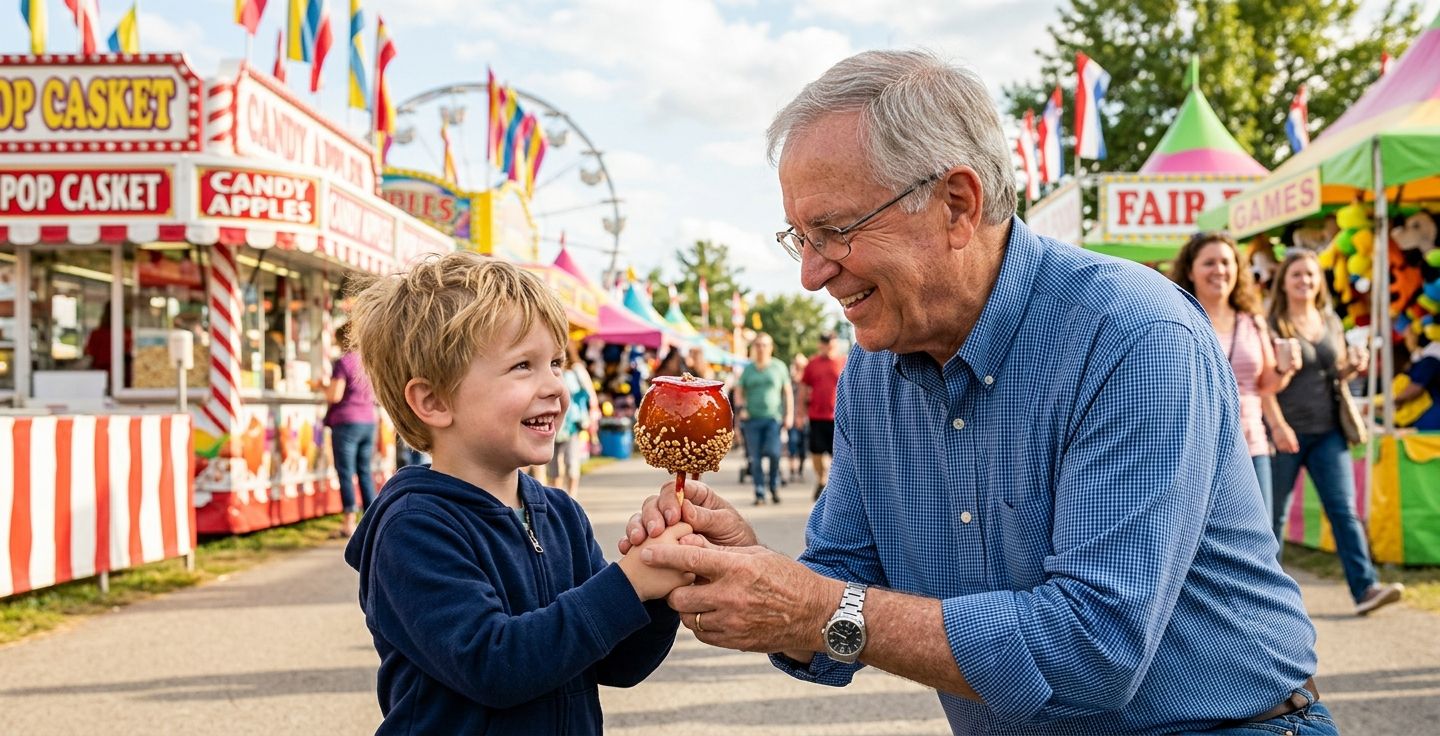
Step Out and Join the Celebration
So I have a simple request for you. Find out when your town is holding its next gathering. It might be a strawberry festival in the spring, a jazz jubilee in the French Quarter, New Orleans, or a magical winter light parade. Do not just stay home. Step out the front door. Take your family with you. Buy a ticket for the local charity raffle. Eat a hot dog from the Lions Club stand.
Most importantly, say hello to the person standing next to you in the ticket line. Ask them how their day is going. We build this nation, and we heal our divides, one simple greeting at a time. The town square is ready for you. The band is starting to play. Come on down and join the party.