
Culture & Traditions
The Rise of the American County Fair
The Late Summer Magic
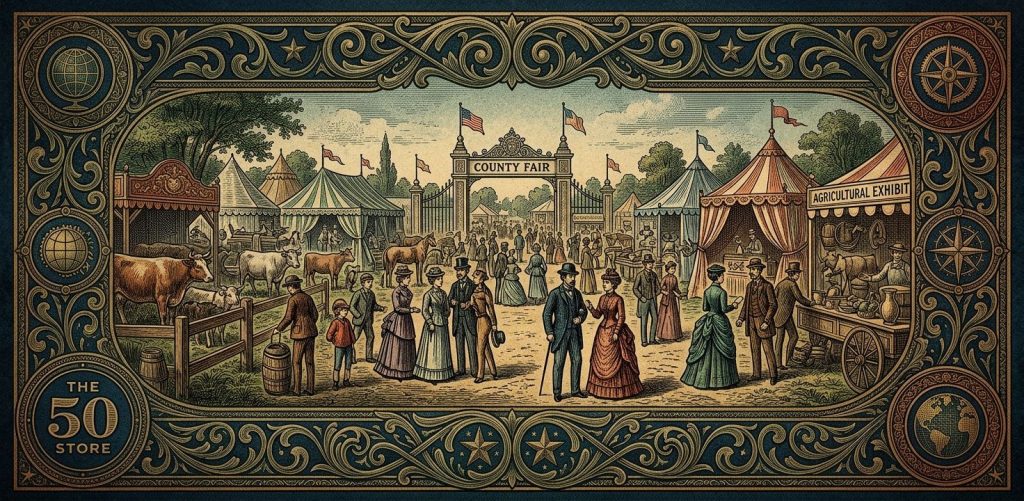
There is a deeply comforting kind of magic that settles over our towns when late summer finally arrives. The days begin to grow just a little bit shorter, and the evening air carries a crisp promise of autumn. Then, almost overnight, an empty field at the edge of town comes alive. It becomes a spectacle of light and sound. The sweet aroma of spun sugar mixes with the earthy scent of sawdust and livestock. These sights and smells gather us together. They pull us away from our daily routines. We find ourselves walking shoulder to shoulder under strings of colorful bulbs. People wander past the animal pens, smiling at neighbors they have not seen since the spring planting. They look up at the glowing wheels turning slowly against the night sky. It is a familiar rhythm. It is a feeling of home.
The Quiet Fields of Yesterday
But these vibrant nights, full of music and light, were not always the reality for our communities. We see the bright lights today, but we easily forget the profound silence of the past. Once, our rural communities were quiet, deeply isolated places. Farmers worked vast tracts of land entirely alone. Neighbors were miles apart, and the roads were often poor, muddy paths that became impassable in the rain. A farmer tending his crops in the valley rarely saw the cattle raised by a man on the ridge. There was a stillness to early American agriculture. People labored through the spring and summer with their heads bowed to the soil. They desperately needed a way to share their knowledge. They needed to learn from one another to survive. They needed a reason to gather and celebrate the harvest before the dark, freezing winter arrived. Isolation was a heavy, quiet burden.
How Did We Build These Bright Cities of Tents?
So, one might ask a simple, curious question. How did a quiet gathering of isolated farmers turn into the sprawling, joyful chaos we know today? What sparked the rise of the American county fair? How did we move from simple agrarian meetings to these massive annual celebrations that define our autumns?
Two Sheep Under an Elm Tree
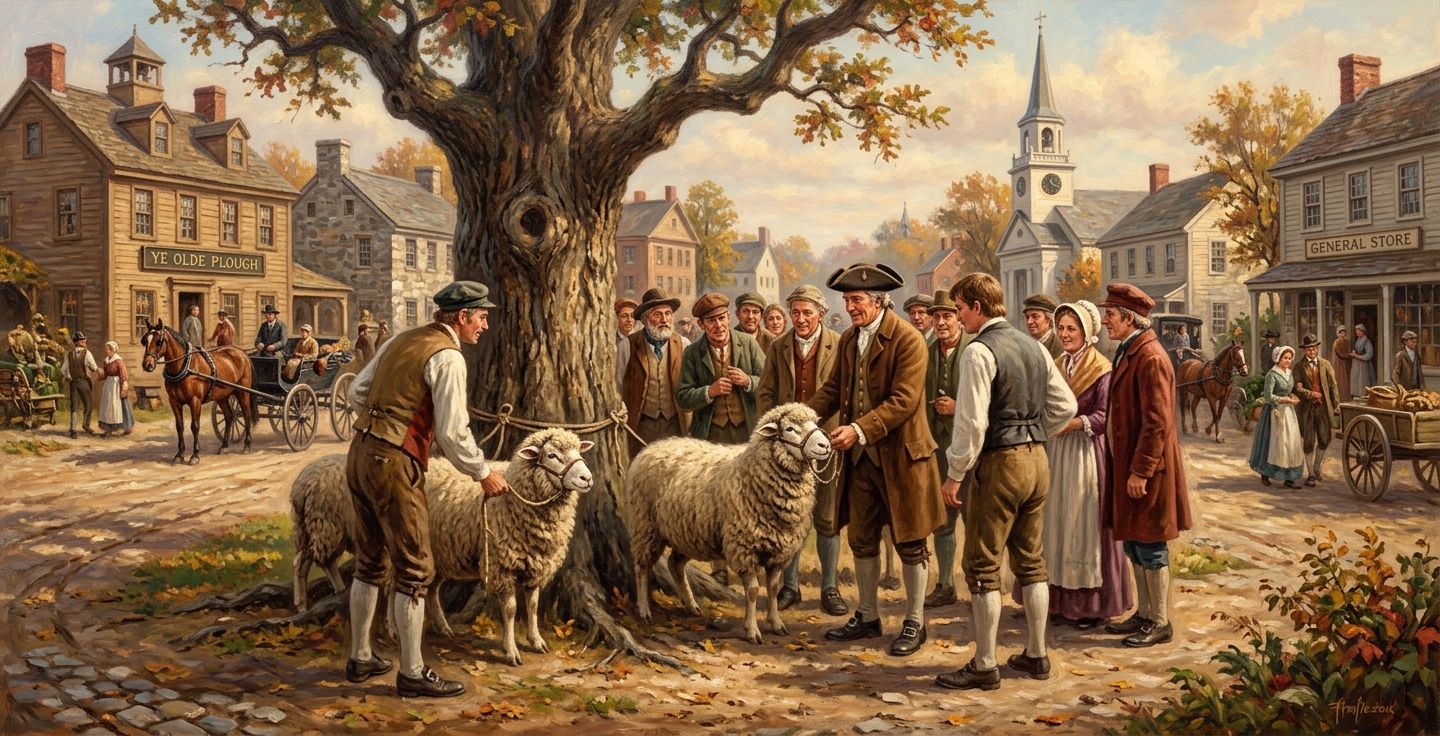
The answer begins with a small, beautifully simple act. Let us look back at the town of Pittsfield, Massachusetts. Back in the early nineteenth century, a man named Elkanah Watson (1758 – 1842) wanted to show his neighbors what good breeding could accomplish. He did not write a long pamphlet. He did not give a tedious speech. Instead, he simply took two fine Merino sheep and tied them to an elm tree in the public square. It was a modest, quiet display. Yet, the crowd that gathered was utterly fascinated. Men and women stopped their wagons to look. They talked. They asked questions.
This little display laid the groundwork for the origins of agricultural shows. Watson saw the spark of curiosity in his neighbors. He realized the power of gathering people to look at something tangible. He organized the Berkshire Agricultural Society shortly after. By 1811, they held a formal event featuring cattle, sheep, and swine. It was the original blueprint for early american county fairs.
The Staggering Scale of Our Celebrations
The growth from that single tree to our modern fairgrounds is astonishing. When you look at the numbers, you realize this is not just a small town hobby. According to the International Association of Fairs and Expositions, over 150 million people visit fairs in North America every single year. A single large state fair can generate hundreds of millions of dollars in economic impact in just a couple of weeks. But the most surprising fact to me is the community effort required. Hundreds of thousands of volunteers log millions of hours annually to make these events happen. They park cars in dusty fields. They take tickets at the gates. Furthermore, over 40 percent of the attendees are young adults and families with children. The tradition is absolutely thriving.
The Pride of the Harvest
Over the decades, these gatherings naturally changed and adapted. They evolved into robust historical us rural exhibitions. The focus broadened far beyond just livestock. Farmers brought their heaviest pumpkins and their fastest horses. Women showcased their finest quilts, their meticulous embroidery, and their brightest jarred preserves.
It became a matter of deep, sustaining local pride. Winning a blue ribbon for a cherry pie or a prized bull was a mark of honor. That ribbon meant you had survived the seasons. It meant you had excelled. Families would display these ribbons in their homes for generations. It tied the community together with threads of friendly competition.
Iron, Steam, and Laughter
Then came the mechanics of the modern age. The growth of regional expos brought new, loud, and wondrous marvels to the quiet fields. Steam engines arrived, huffing and whistling to the amazement of the crowds. Tractors replaced draft horses. And with the machinery came the pure entertainment.
We began to see the cultural impact of vintage carnivals taking shape on the dusty edges of the fairgrounds. Traveling shows brought games of skill and eventually, the rides. A truly marvelous shift happened during the World Columbian Exposition in Chicago, Illinois. A young, ambitious engineer named George Washington Gale Ferris Jr. (1859 – 1896) had a grand vision. He built a massive, rotating wheel made of gleaming steel. His invention is the very cornerstone of pioneer amusement ride history.
Imagine standing in the mud in Chicago. You are looking up at a wheel of steel standing over two hundred and sixty feet in the air. Each wooden car was the size of a train carriage. When people rode that first great wheel, they saw their world from the sky for the very first time. Soon, smaller versions of his magnificent wheel found their way to local fields and pastures across the country. They brought that same heavenly view to small towns everywhere. These rides became the beating heart of traditional fairground attractions. The laughter of children floating down from those seats is a sound that echoes through the generations.
Bright Eyes in the Barns
I have walked these grounds since I was a boy in short pants. I like to sit on a wooden bench near the midway and just watch the crowds today. I see the exact same wonder in their eyes that Elkanah Watson must have seen under that elm tree. The evolution of community festivals is truly a beautiful thing to witness. It is not just about nostalgia for days gone by. It is about the future standing right in front of us, bold and bright.
The sheer level of youth participation in state fairs gives me immense, comforting hope. If you ever worry about the direction of the world, go to the livestock barns early in the morning. Go before the sun is fully up. You will see young boys and girls sleeping in the hay right next to their prize steers. You will hear the gentle hum of clippers as they meticulously groom their animals. They have spent months out in the cold and the heat caring for these creatures.
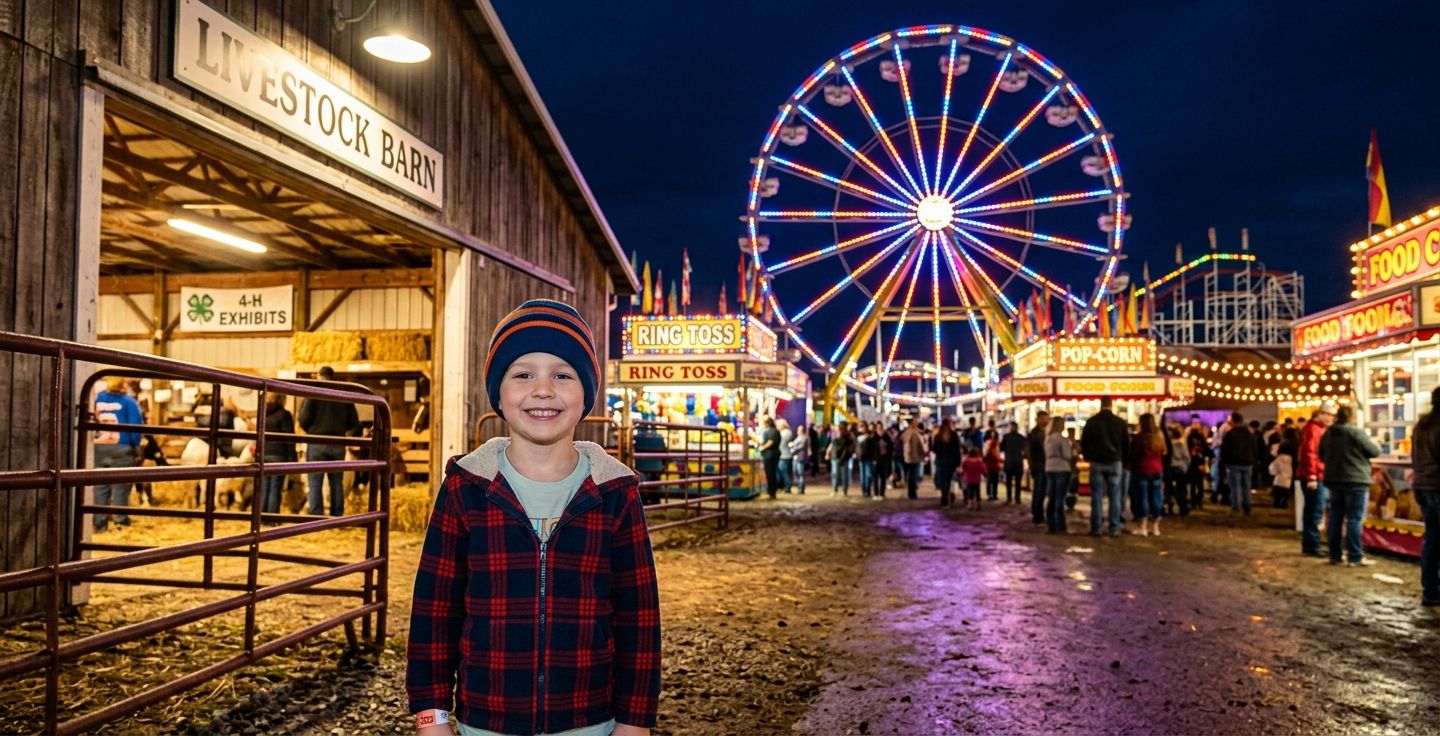
They learn profound responsibility. They learn patience. They learn compassion for living things. These young folks are learning what it takes to feed the world. When the auctioneer calls out the final price for their animal, you see tears of sadness mixed with tears of deep pride. When I look at them, I know our country is in remarkably good hands. They carry the torch forward with such capable, determined spirits. They are our greatest harvest.
Step Up to the Midway
So, when the air turns crisp this year, pay close attention. When the colorful posters go up in the windows of the hardware store, do not just drive past them. Buy the ticket. Walk through those iron gates. Take your children, take your grandchildren, or just take a good friend. Buy a paper bag of hot kettle corn. Walk through the exhibition halls and point out the prize ribbons. Talk to the young farmer about his sheep.
By simply being there, you are breathing life into a vital American tradition. You are participating in a story that began over two hundred years ago. Keep the spirit of the harvest alive. Let us celebrate our communities, our history, and our bright future together. See you at the fair.