
American History & Origins
What Made the 19th Century a Turning Point in U.S. Growth
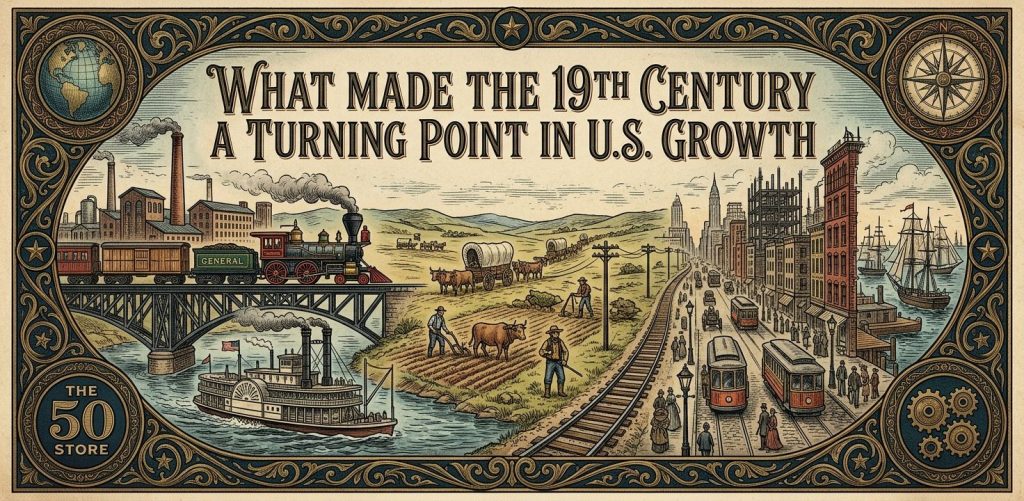
A Quiet Country Stretches Its Legs
It is a beautiful thing to look back and trace the steps of those who walked before us. Think about our country as it was in the year eighteen hundred. The vast majority of our citizens lived within fifty miles of the Atlantic Ocean. Our young country was mostly a collection of quiet farms, dense forests, and small harbor towns. A journey from Boston to New York could take several days of hard riding. A letter sent to a relative in the southern states took weeks to arrive, assuming the rider did not face misfortune along the muddy paths. The roads were often nothing more than dirt trails that became completely impassable during the heavy spring rains.
We had a vast and beautiful land, but the distances were simply too great to manage. It was incredibly difficult to share physical goods, to spread important news, and to build a unified nation. We were separated by massive mountain ranges and endless untamed wilderness. We were a young and fragile republic trying to find our footing in a very large world.
How did we go from a quiet frontier of dirt trails to a roaring national powerhouse in the span of a single human lifetime?
The answer lies in the sheer determination of the men and women who simply refused to be limited by their geography. They picked up wooden shovels, they melted iron ore, and they strung thin copper wires across the open sky. The nineteenth century changed the entire course of human history because everyday people decided to build a foundation that would outlast them. They worked with their bare hands to bridge the impossible gaps.
The Power of Water and Willpower
Let us explore the water first. The rivers were our original highways, but they did not always go where we needed them to go. This is where a man named DeWitt Clinton (born 1769, died 1828) comes into the picture. Many folks laughed at him when he proposed digging a massive artificial waterway from the Hudson River all the way to the Great Lakes. They called it a foolish and impossible dream. Yet, think about the hands that dug the Erie Canal. They were poor farmers and new immigrants working with simple iron picks and wooden wheelbarrows through the dense swamps of upstate New York. It was grueling, mosquito bitten work. You can still visit parts of the Erie Canal today and feel the rich history lingering in the air.
When the water finally flowed through in the year eighteen twenty five, the cost of moving goods dropped by an unbelievable amount. A farmer in the Midwest could suddenly afford to sell wheat to a baker in New York City. Passengers could sit on the flat roofs of packet boats, ducking their heads as they passed under low stone bridges. This single waterway turned New York into the bustling harbor we know today.
Here is a fact that always amazes me when I think about our history. According to the records from the United States Census Bureau, our population grew from a modest five million folks in eighteen hundred to an astonishing seventy six million by the year nineteen hundred. To put that incredible growth into perspective, the United States Patent and Trademark Office records show they issued just forty one patents in the year eighteen hundred. By the year eighteen ninety, the office granted over twenty five thousand patents in a single year alone. That is not just a growing population. That is an absolute explosion of human creativity and problem solving.
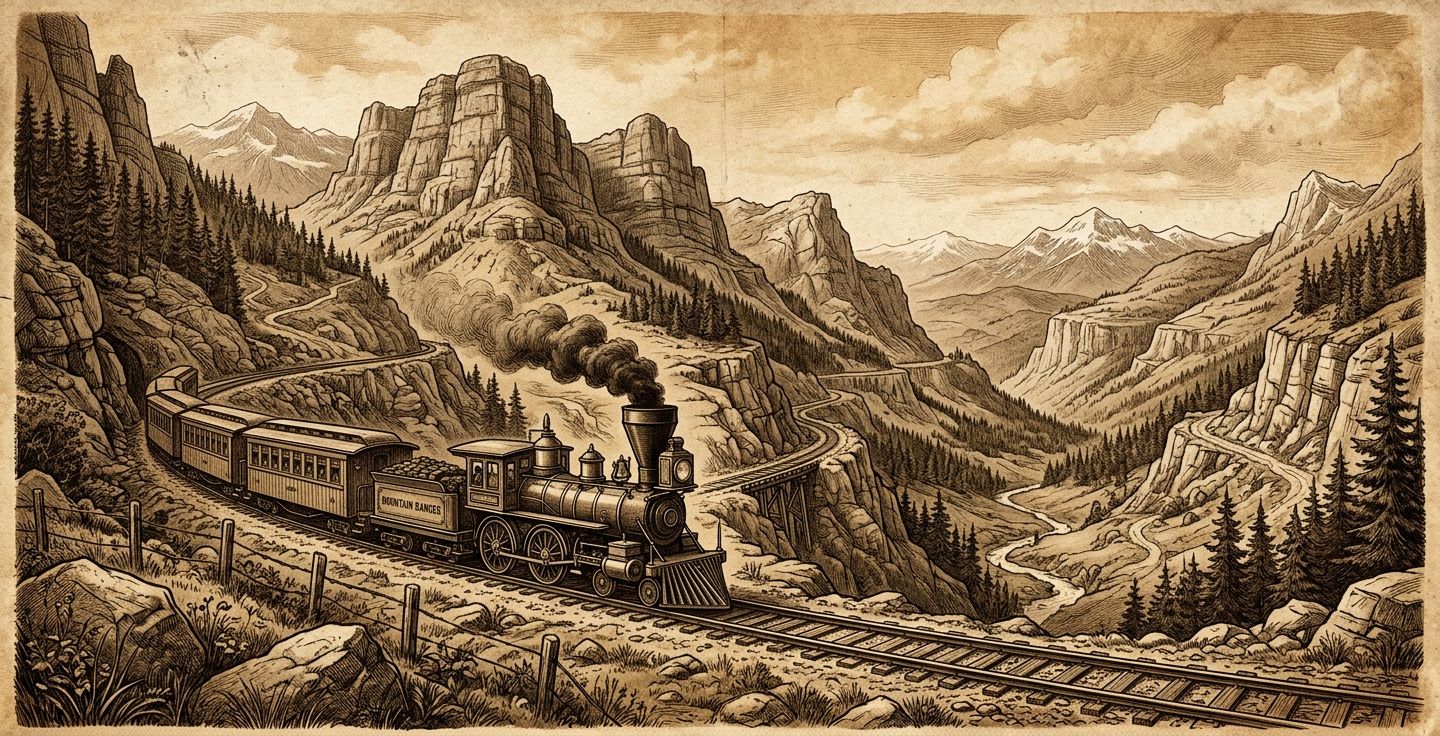
Iron Threads Tying Us Together
Water moved the goods, but we needed something much faster to move the people across dry land. I always feel a deep sense of awe when I think about the Transcontinental Railroad. The dream of manifest destiny pushed eager people westward, but the journey in a wooden covered wagon was perilous and painfully slow. It took months of enduring harsh weather, disease, and broken wagon wheels just to reach the Pacific coast. The western trail was literally littered with discarded belongings from weary travelers who could not carry their heavy burdens any further.
Then came the heavy iron tracks. Men laid down wooden ties and heavy steel rails across dry deserts and blasted through solid granite mountains. It was backbreaking, dangerous labor. At Promontory Summit, Utah, a man named Leland Stanford (born 1824, died 1893) drove the final golden spike into the ground. The heavy hammer strike was celebrated across the entire nation. A dangerous journey that used to take six agonizing months suddenly took less than a single week. The country shrank in size, but our possibilities grew beyond any previous measure.
Voices Across the Wire
As the steam trains rushed across the grassy plains, another miracle was happening right above them on thin wooden poles. Before the eighteen forties, information could only travel as fast as a strong horse could run. Then a brilliant portrait painter named Samuel Morse (born 1791, died 1872) helped give the world the telegraph.
Imagine being a young telegraph operator sitting in a small train depot late at night. The room is quiet except for the ticking of a wall clock. Suddenly, you tap a little brass key, and a message travels instantly to a city hundreds of miles away. The click and clack of the receiver was a brand new language. It was pure magic for its time. The first official message asked what wonders God had created. Soon after, families could learn news of their distant loved ones. Newspapers could print stories from across the continent the very next morning. Businesses could coordinate massive shipments across different time zones. The telegraph wired the nation together and changed how we understood time and distance forever.
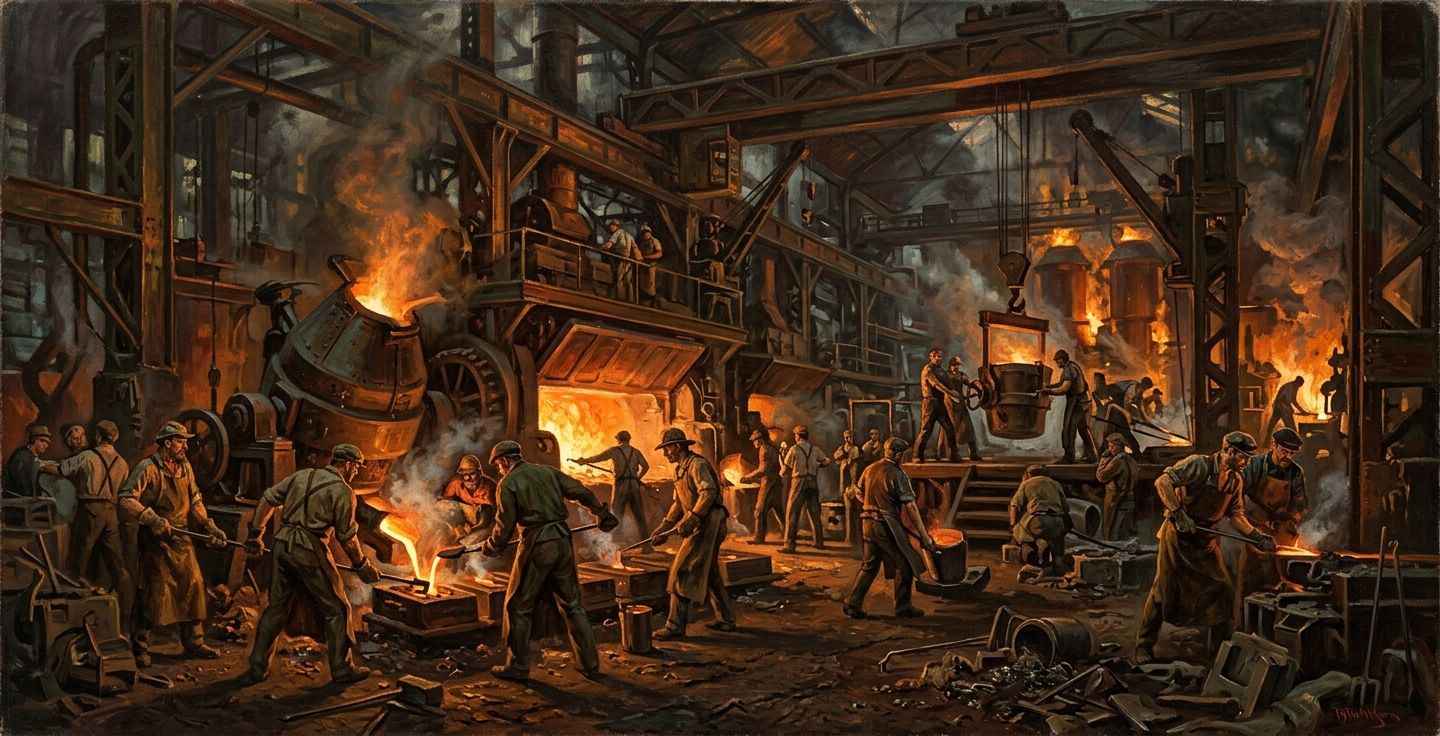
Forging the Future in Fire
None of these physical tracks or communication lines would have been possible without the great roaring fires of the Industrial Revolution. We went from a country of skilled artisans working quietly by candlelight to a land of massive brick factories.
Let me share the story of a young boy named Andrew Carnegie (born 1835, died 1919). He came to America as a poor child with almost nothing in his pockets. He started out working in a dark, dusty cotton factory as a bobbin boy, making just over a single dollar a week. Yet he watched the world around him, he learned the trade of business, and he eventually built a massive empire of steel. In places like Pittsburgh, Pennsylvania, the giant furnaces burned all night long. The air smelled of coal and hot metal. They lit up the night sky with a fierce orange glow that could be seen for many miles.
That rigid steel became the very bones of our growing cities. It allowed us to build the sturdy suspension bridges spanning our widest rivers and the giant skeletons of the first massive skyscrapers reaching up to the clouds. It was difficult and dangerous work for the men in the mills. We owe them a tremendous debt of gratitude. They worked through the terrible heat and the daily danger so their children could have a much better life. Their honest sweat and sacrifice built the modern American skyline we admire so much today.
A Foundation Built for You
When I sit on the porch and watch the modern world rush by, I am filled with a deep, comforting sense of hope. The people of the nineteenth century faced seemingly impossible challenges. They had tools that we would consider incredibly basic today, yet they built enduring wonders. They laid the iron tracks and dug the deep canals that turned this country into a place of endless opportunity.
We have our own unique challenges today, and sometimes the future can look a bit uncertain. But please remember the spirit of those brave folks who came before us. We carry that exact same courage, the same resilience, and the same innovative spark in our hearts today. The future belongs to those who are willing to roll up their sleeves and build it. I encourage you to look at the world around you with a fresh set of eyes. See the sturdy foundations that were laid for us. Think about what beautiful things you can build for the generations yet to come. The American spirit is alive and well within you.
Questions You Might Have About This Era
Let us now look at a few common questions you might have about this remarkable century of growth.