
Icons & Symbols of America
How Historic Landmarks Attract Millions of Visitors
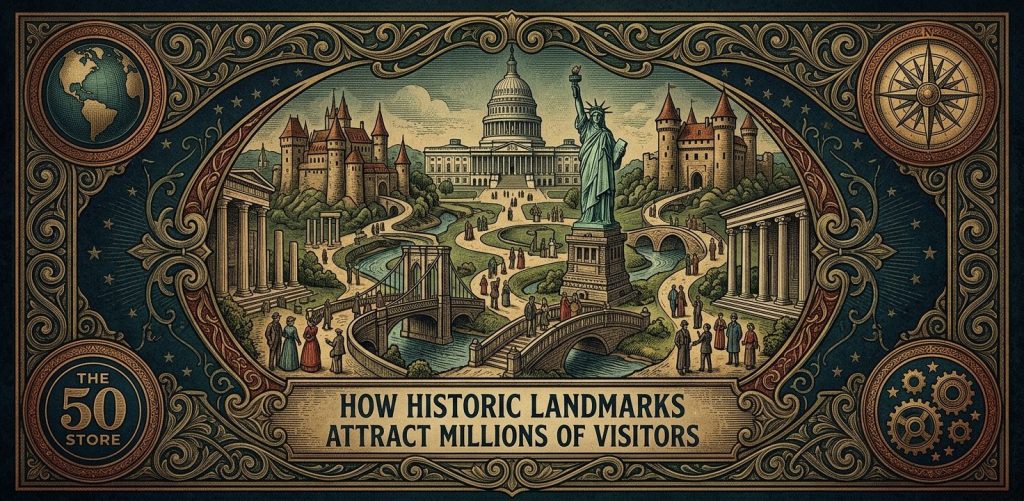
A Quiet Morning in the Harbor
I remember standing on a ferry boat decades ago watching the morning mist roll gently off the waters of the harbor. The air was crisp and tasted of salt and immense promise. The mighty city behind me was waking up as a giant engine of steel and glass looking strictly toward tomorrow. We live in a world that never stops rushing. We build our towers higher and we move our vehicles faster. We constantly seek the next bright thing on the horizon. It is a marvel how connected we have become across vast distances.
Yet in the shadow of all that modern progress something deeply interesting happens. People still gather by the millions at old stone forts and quiet grassy battlefields and creaky wooden homes. We risk losing our connection to the physical roots of our shared story in this dizzying digital age. We forget the simple dirt roads that led us to these sprawling superhighways. So what exactly is it that pulls us back? Why do these quiet places attract so many visitors year after year despite the loud colorful allure of modern entertainment?
The answer lies not just in the bricks and mortar but in the enduring echoes of human spirit those bricks hold. We are collectively searching for grounding. We are looking for solid proof that the people who came before us were real and that they struggled as we do today and that they triumphed over their own great trials.
By the Numbers: A Nation Seeking Its Roots
If you think you are alone in your heartfelt desire to walk ancient halls the numbers will genuinely surprise you. According to the National Park Service in recent years hundreds of millions of people visited our national lands. Historic sites make up a massive vital portion of that foot traffic. A recent comprehensive study by the Advisory Council on Historic Preservation found that heritage tourism contributes tens of billions of dollars to the national economy annually. Also research from the US Travel Association notes an incredible fact. Visitors to historic landmarks stay significantly longer and spend more money than other types of tourists. They are not merely passing through on a hurried vacation. They are lingering and absorbing the atmosphere.
It is abundantly clear that these places are not just dusty forgotten relics. They are vibrant beating hearts of their communities. They are massive tourist destinations that fuel local towns by providing necessary jobs and sustaining local artisans. People crave genuine authenticity and the statistics clearly prove that families are willing to travel great distances to find it.
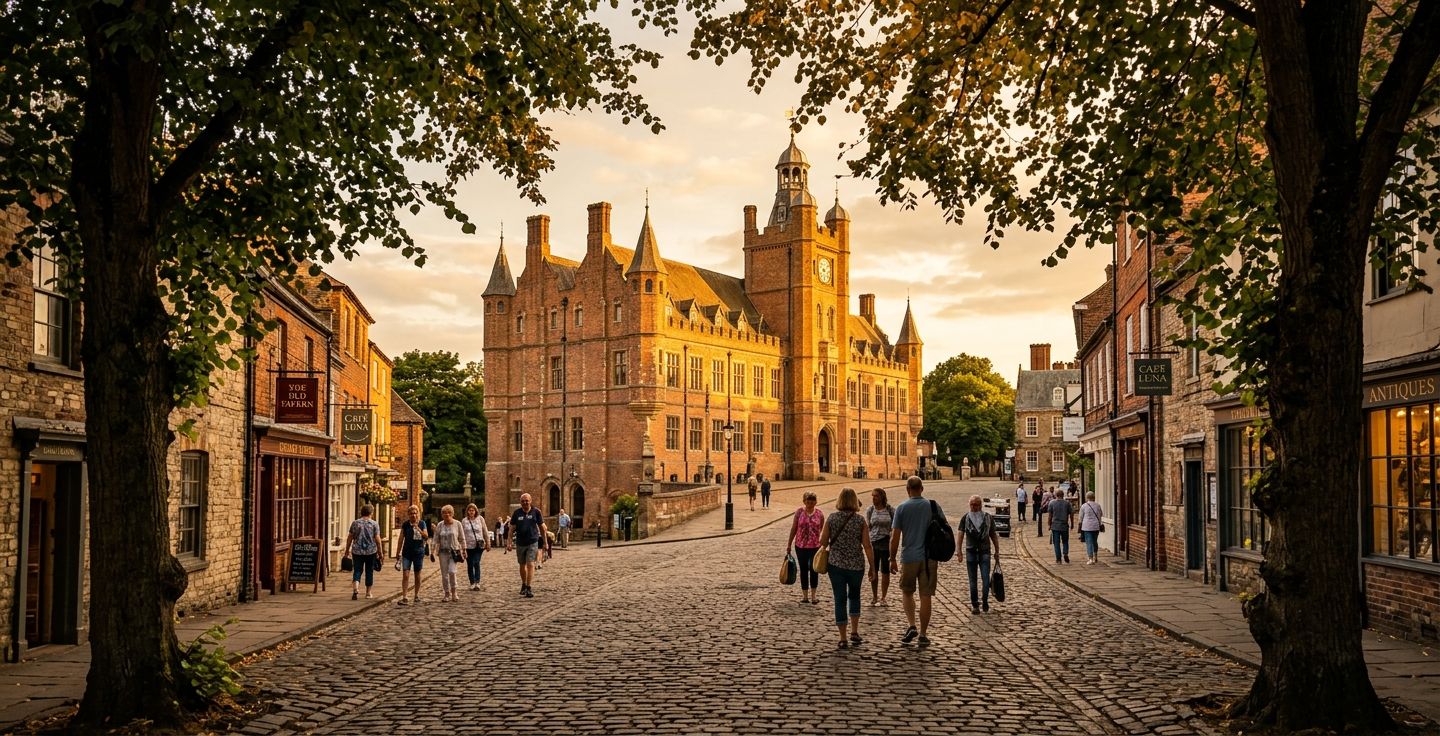
Walking in the Footsteps of Giants
Let me share a story that always warms my heart. It is about a remarkable young woman named Emma Lazarus (born 1849, died 1887). She lived in New York during a turbulent time when the country was expanding and changing at a dizzying pace. Across the wide ocean a massive copper statue was being constructed in France intended as a grand gift for American shores. However America struggled mightily to raise the funds just to build the pedestal upon which it would finally stand. The ambitious project stalled. People lost interest and turned away.
Emma was a gifted poet and she wrote a sonnet called The New Colossus to help raise those crucial funds. She wrote passionately about a Mother of Exiles welcoming the tired and the poor and the huddled masses yearning to breathe free. She did not live to see the full monumental impact of her beautiful words. Yet her small quiet act of writing on a piece of paper changed the entire meaning of the Statue of Liberty forever. It turned a simple political gift of international friendship into a profound global beacon of enduring hope.
When you visit these magnificent architectural wonders you are not just looking at oxidized copper or carved stone. You are standing exactly where people like Emma stood. You are connecting directly with their deepest hopes and their greatest fears. You feel the same coastal wind they felt off the harbor. That is the true enduring magic of these historic places. They completely erase the centuries between us.
A Legacy Woven in the Streets
Think about the quiet dignity of Independence Hall in Philadelphia. Today it sits neatly preserved and surrounded by bustling modern city life. But try to imagine it on a sweltering summer day in the late eighteenth century. You can walk through the exact wooden doors where George Washington (born 1732, died 1799) once walked. He was not yet the stoic marble figure we see on grand monuments today. He was just a man burdened with deep doubts and heavy responsibilities. He was stepping onto the uneven cobblestones wondering if a fragile new nation could actually survive the coming political storms.
We too often read about history as if it were a grand prewritten play where everyone already knew their lines. But history was made by ordinary people taking things one single terrifying day at a time. It is a deeply comforting thought. When we face our own modern challenges and uncertainties visiting these places reminds us that earlier generations faced immense odds too. They survived and they built a lasting future and we will absolutely do the same.
Consider another inspiring story of compassion amidst chaos. Clara Barton (born 1821, died 1912) was a brave soul who utterly refused to sit idle. During the darkest and most frightening days of national conflict she brought wagons of medical supplies directly to the dangerous front lines at places like the Antietam National Battlefield. She braved the choking smoke and the deafening noise and the absolute terror to tend to the wounded and dying soldiers. Her tireless courageous work on those bloody fields eventually led to the founding of the American Red Cross.
When you walk the quiet green fields of Antietam today the silence is almost physically heavy. You are standing on hallowed ground where ordinary people showed extraordinary bravery. These micro histories show us clearly that single brave decisions can ripple powerfully through time creating lasting institutions that heal and inspire us many generations later. This is the very essence of our shared cultural heritage.
Nature as a Sanctuary
We must also look to the vast open spaces of the West to truly understand our complete national story. Think of the boundless energy and deep reverence of John Muir (born 1838, died 1914). He was a man who walked into the towering majestic valleys of the Sierra Nevada and saw something entirely divine. He spent his days happily exploring the rugged cliffs and ancient giant sequoias of what is now Yosemite National Park. At a time when the natural world was often viewed merely as a raw resource to be harvested and sold Muir saw it as a necessary sanctuary for the human soul.
Muir wrote passionate letters and compelling articles urging the leaders of our country to protect these natural cathedrals. His earnest words helped convince politicians to preserve these wild spaces for public enjoyment rather than private gain. His personal story is one of quiet solitary observation leading to monumental national conservation. When you stand at the base of those massive granite walls today listening to the wind whisper softly through the ancient pines you are sharing the exact same sense of awe that moved Muir to fight for its protection. You are partaking in a noble legacy of environmental stewardship.
Let us also consider the beautiful foresight of Frederick Law Olmsted (born 1822, died 1903) and his brilliant vision for Central Park in New York City. He looked at a rapidly growing and crowded metropolis and decided that the people desperately needed a dedicated place to breathe. He believed that peaceful nature should be accessible to everyone regardless of their wealth or social status. Today his incredible vision remains a crucial living piece of our nation. It is a landmark not of war or politics but of public wellbeing and enduring democratic ideals.
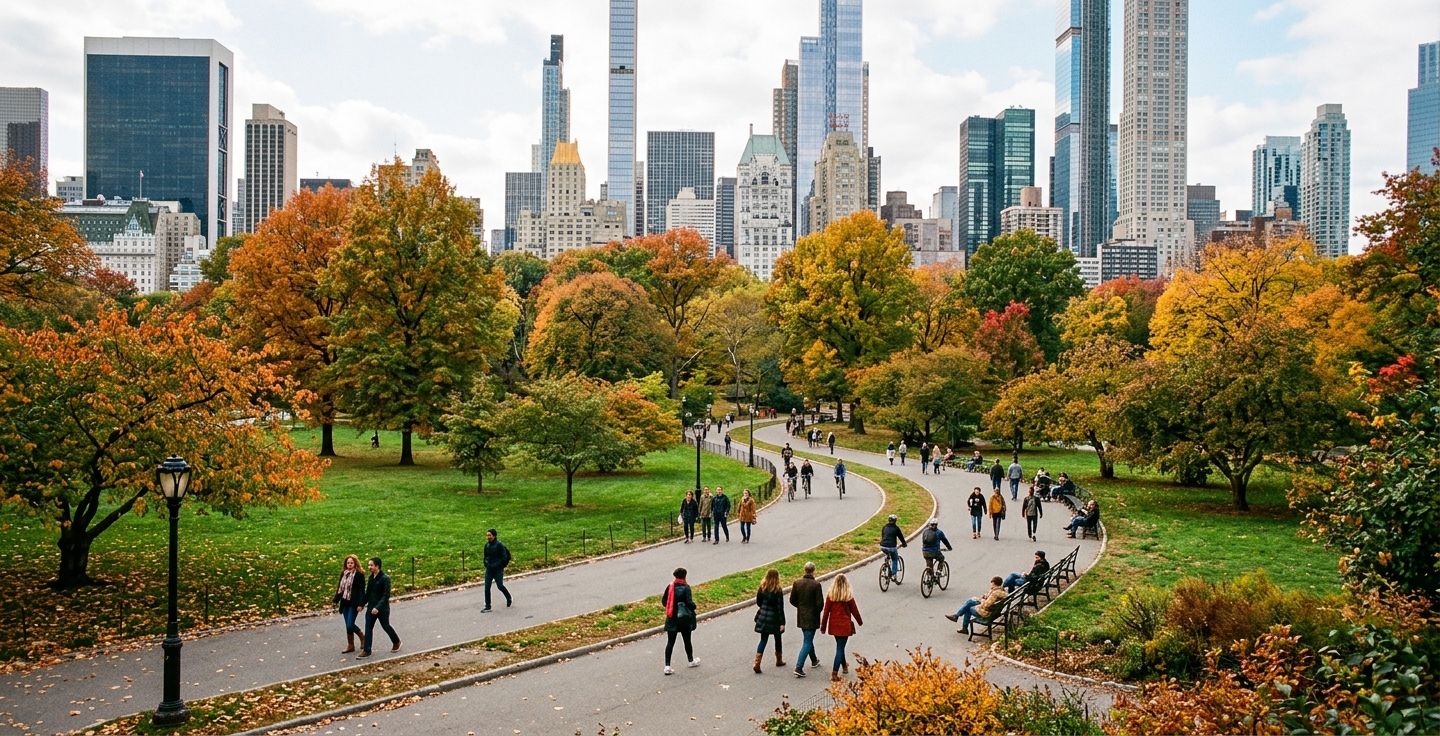
Preserving the Magic for Tomorrow
It is a beautiful responsibility we carry as modern citizens. As we make our joyful plans to visit these sacred national parks and cherished monuments we are doing so much more than taking quick photographs for our family albums. We are actively keeping the vital memories alive. Every ticket bought and every guided tour taken helps preserve these historical structures for the children of tomorrow.
I strongly encourage you to take your family on a long road trip this year. Step away from the glowing screens and walk the solemn beautiful grounds of Gettysburg National Military Park. Feel the quiet of the grassy fields at dawn. Let the younger ones run their small hands over the rough hewn logs of preserved pioneer cabins in the valleys. Show them that history is not just trapped in heavy dusty textbooks. It is a living breathing thing that they are an important part of today.
Our grand nation is still writing its long complex story. The places we choose to save and protect and visit tell the rest of the world exactly what we value most. Let us continue to value courage and creativity and the enduring human spirit. Let us keep walking those old cobblestones with profound gratitude for the past and with immense unwavering hope for the bright days ahead.