
American History & Origins
Why Land Ownership Became Central to the American Dream
A Memory of Dust and Deeds
I have lived in this country my entire life, and I have watched countless seasons change the colors of our neighborhoods. I still clearly remember standing on the wooden front porch of my grandfather’s small farmhouse in Lancaster, Pennsylvania. The wood was weathered by years of harsh winters, and the white paint was peeling around the edges. It was not a grand estate by any stretch of the imagination. Yet, to my grandfather, that single acre of dirt was a kingdom. He would kneel down, pick up a handful of soil, and let it sift through his calloused fingers. He used to tell me that holding your own land was the closest a man could get to holding freedom itself.
This deep, emotional connection to the soil is not just a personal memory. It is the very foundation of how our nation grew. From the earliest days of our history, the promise of acquiring a piece of the earth was the great magnet that drew millions across dangerous oceans. Leaders like George Washington (1732 to 1799) firmly believed that tending to one’s own farm was the most noble pursuit for a free citizen. It was a radical idea at the time. For centuries across the old countries of Europe, the land was tightly controlled by kings, lords, and wealthy aristocrats. The common folks worked their fingers to the bone, yet they never owned the dirt beneath their boots. America offered a completely different path.
The Midnight Race for a Promise
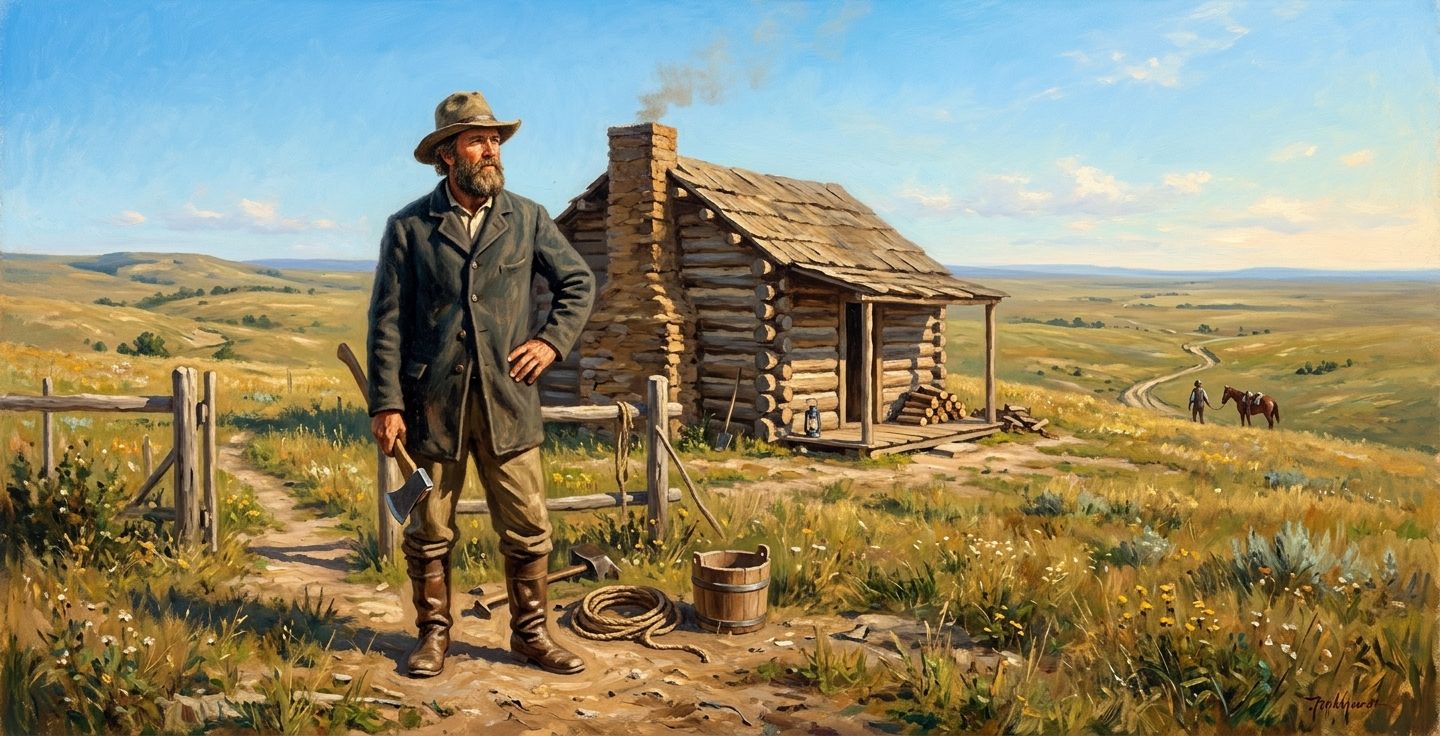
To truly understand how this idea took root, we need to look at the stories of ordinary people who risked everything for a simple deed. Let me share the story of a man named Daniel Freeman (1826 to 1908). He was a Union soldier with a fierce determination in his heart. On a freezing New Year’s Eve in 1862, Freeman found himself attending a festive gathering near a local land office in Brownville, Nebraska. The federal government was about to enact a brand new law that would change the destiny of the nation.
Freeman managed to convince a clerk to open the office just moments after midnight on January 1, 1863. He filed the very first claim under the newly signed Homestead Act. He claimed 160 acres of untouched prairie. He did not buy it with a mountain of gold. He bought it with a promise to live on it, build a home, and cultivate the untamed soil for five years. That piece of paper meant he answered to no landlord. It was a profound shift in how everyday people could claim a stake in their country.
The Reality Behind the Legend
However, the journey was far from simple, and the romantic legend often hides the difficult truth. We tend to look back and imagine that early America was a vast landscape where absolutely everyone owned a sprawling, prosperous farm. The actual history paints a much more complicated picture of struggle.
If we look at historical records from the U.S. Census Bureau, we find a truly surprising statistic. In the year 1890, only about 47 percent of American families actually owned their homes. That means more than half of the country was still renting, sharecropping, or living in boarding houses. Many families worked exhaustingly long hours in dark factories or plowed fields that belonged to wealthy investors. Land was incredibly desirable, but it was not automatically handed to everyone. It had to be fiercely earned, and for many generations, it remained just out of reach.
So, why did folks keep pushing? Why did homeownership become the absolute, beating heart of our desires? The answer lies in the deep human need for security. When you rent a room, your life can be upended by a single notice pinned to your door. When your name is inked on the deed, you sleep with a different kind of peace. That security provides a stable foundation to raise children, to weather economic storms, and to build a life that lasts beyond a single generation.
Building Roots on Suburban Streets
As the decades rolled on, the nature of this dream began to change. The frontier closed, the cities swelled with industry, and a terrible World War changed the entire globe. When the young soldiers came marching home in the late 1940s, they were looking for a fresh start. They wanted peace, quiet, and a place to raise their growing families. They found it in the newly invented suburbs.
Consider the story of a visionary builder named William Levitt (1907 to 1994). He realized that the old ways of building houses one by one were far too slow. He applied factory assembly line methods to residential construction in places like Levittown, New York. Suddenly, massive fields of potatoes were transformed into thousands of identical little Cape Cod houses.
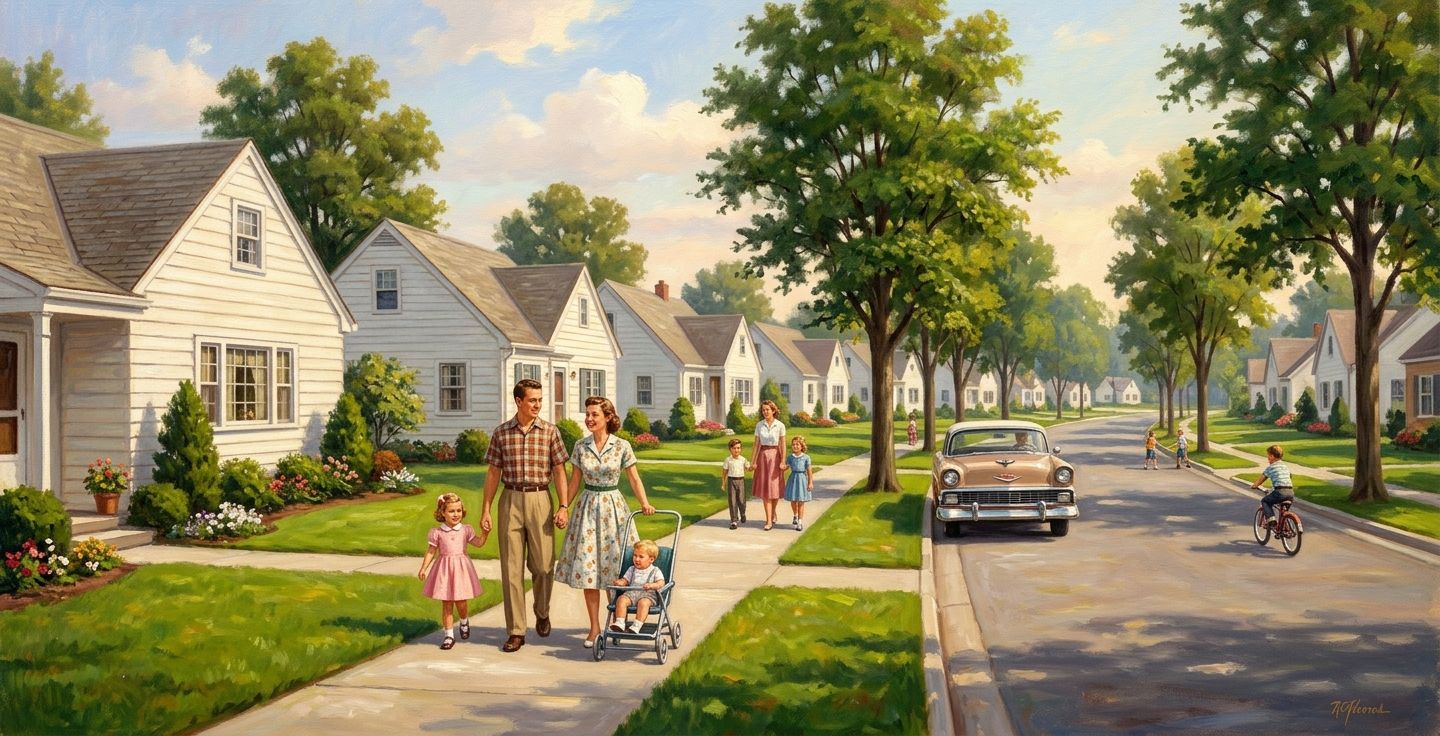
Let me tell you about a quiet street very similar to those early suburban roads. We will call it Elm Avenue. In 1950, Elm Avenue was filled with optimistic young couples using the newly established GI Bill to secure their mortgages. They moved into modest houses with bare, muddy front yards. They spent their weekends planting tiny saplings, building wooden fences, and painting their front doors. If you walk down that same street today, those tiny saplings are massive oak trees that cast wide, cooling shadows over the sidewalks. The children who grew up in those homes went to good schools, started their own businesses, and shaped the modern world.
Passing Down the Torch
Those small suburban houses became incredible engines for building generational wealth. A young family would carefully pay down their mortgage month by month, over the course of thirty years. By the time they reached my age, they owned a valuable asset free and clear. They could borrow against it to send a grandchild to college, or they could pass the property down in their wills. This is the profound magic of strong property rights. According to recent data from the Federal Reserve, home equity continues to represent the largest single source of wealth for the average American household. It is the steady anchor that holds families steady through turbulent economic waters.
I know that right now, the landscape looks incredibly daunting. I speak to many young folks today, good people in their thirties working hard to make a decent living. I hear the worry in their voices. You might look at the skyrocketing prices in the housing market and feel a heavy, discouraging weight on your shoulders. The interest rates seem too high, the down payments feel impossible to save, and the dream can sometimes feel like it belongs entirely to the past.
I want to offer you a word of sincere encouragement. Do not lose hope. Every single generation has faced a frontier that looked absolutely impassable at first glance. My parents survived the bitter depths of the Great Depression when just finding a few pennies for bread was a daily victory. The people who settled the western plains endured freezing winters with nothing but sod walls to protect them. The journey has always been steep.
Your version of the American Dream is still very much alive, even if it looks a little different than it did fifty years ago. Your patch of earth might not be a sprawling farm in Nebraska or a detached house with a white picket fence. It might be a cozy townhome in a bustling city, a renovated duplex you share with a friend, or a small condo with a balcony where you grow tomatoes in clay pots. Ownership takes many beautiful forms. The important thing is to keep planting your seeds. Keep making wise choices, save what you can, and be ready when your unique opportunity arrives. The roots you put down today will eventually grow into the mighty oaks of tomorrow.
Common Questions About Our Enduring Dream
Why was the concept of property so revolutionary for early settlers?
For many centuries in the old world, land belonged almost entirely to a small, wealthy aristocracy. Common folks worked the fields but never legally owned them. When immigrants arrived in the United States, the opportunity to hold a legal deed meant true independence and self reliance. It was a complete reversal of the strict social order they had always known.
What exactly did the historic homestead laws require a person to do?
The laws were not simply free giveaways. A person had to prove their deep commitment to the land. They had to build a suitable dwelling, live on the property continuously for at least five years, and actively cultivate the harsh soil. It was incredibly hard work that tested their endurance and determination every single day.
Is real estate still considered a reliable way to build a financial foundation?
Yes, it remains one of the most stable paths available for ordinary folks. While economic markets will always experience temporary ups and downs, real property tends to appreciate steadily over the long decades. It essentially acts as a forced savings account and provides a physical, enduring asset for the future.
How did suburban expansion alter the way local communities interacted?
The rapid rise of the suburbs created entirely new social dynamics across the country. People moved out of crowded urban centers into open neighborhoods specifically focused on family life, local schools, and weekend community gatherings. It fostered a shared experience among millions of young families starting out at the exact same time.
What is the best approach for a younger person trying to buy a home today?
The absolute best approach is to start small and remain incredibly patient. You do not need to buy your ultimate dream house right away. Look for modest starter homes, consider up and coming neighborhoods, and focus on building steady savings habits. The journey is a long marathon rather than a short, exhausting sprint.
What role does community connection play in the modern concept of owning property?
Owning a place is about far more than just the physical dirt and wood. It is about becoming an active participant in your local area. When you finally put down roots, you naturally start caring deeply about local schools, public parks, and town decisions. It beautifully transforms you from a mere resident into a true stakeholder.