
American Lifestyle
Why Americans Love Big Houses and Open Spaces
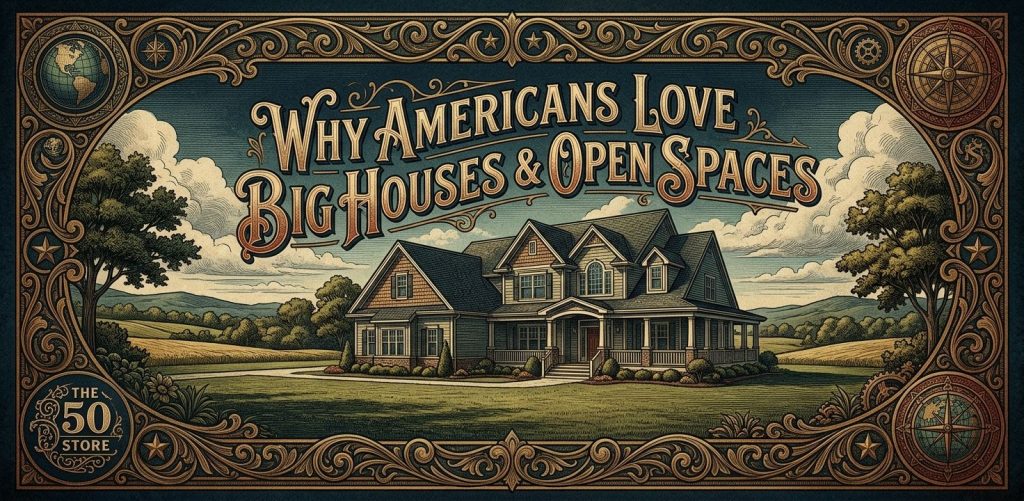
A Memory of Dirt Roads and Endless Horizons
I still remember the smell of sunbaked earth on long summer afternoons. When I was just a boy, the world felt impossibly large. We did not have much in the way of material wealth, but we had the sky. We had the wind blowing across the fields. There was a profound silence out there that you just cannot find in a crowded city. You could hear the wind rustling through the tall grass miles away. It made you feel incredibly small, but also incredibly free. It was a time when the horizon was a daily companion, not something hidden behind towering skyscrapers. My family took a cross-country trip when I was eight years old. We drove for days across the Great Plains, marveling at the sheer scale of our country. The author Willa Cather (1873-1947) wrote beautifully about this vastness, describing the land not just as soil, but as a living, breathing entity. That early exposure to boundless land left a permanent mark on my soul. Space has always been the greatest American character.
The Roots of Our National Craving
To understand our national situation, you have to look at the years right after the Second World War. There was a palpable feeling of boundless optimism in the air. Men were coming home, families were forming, and everyone wanted a quiet place to call their own. I think of my Uncle Arthur. He spent years in crowded barracks and noisy cities during his service. When he returned, he wanted nothing more than a quiet patch of grass. He used his savings to buy a small plot in Levittown, New York.
Arthur attended a local town hall meeting where he shook hands with William Levitt (1907-1994), the man who essentially invented modern suburban living. Uncle Arthur’s house was tiny by today’s standards. It had just a couple of bedrooms and a single bathroom. But to him, it was a magnificent castle. He planted an oak tree in the front yard the very first week he moved in. Watching that tree grow alongside his family was his personal piece of the American dream.
Soon after, the country began to connect these new suburban enclaves. The map of America was forever changed by the vision of Dwight D. Eisenhower (1890-1969). He championed the massive interstate highway system. I remember watching the construction equipment roll through our county, laying down miles of dark asphalt. It felt like watching the future arrive. Suddenly, families were no longer tied to the immediate vicinity of city factories. You could pack up the car and drive down legendary roads like Route 66 to find your own slice of heaven. The automobile and the highway gave us permission to spread out.
Expanding the Dream
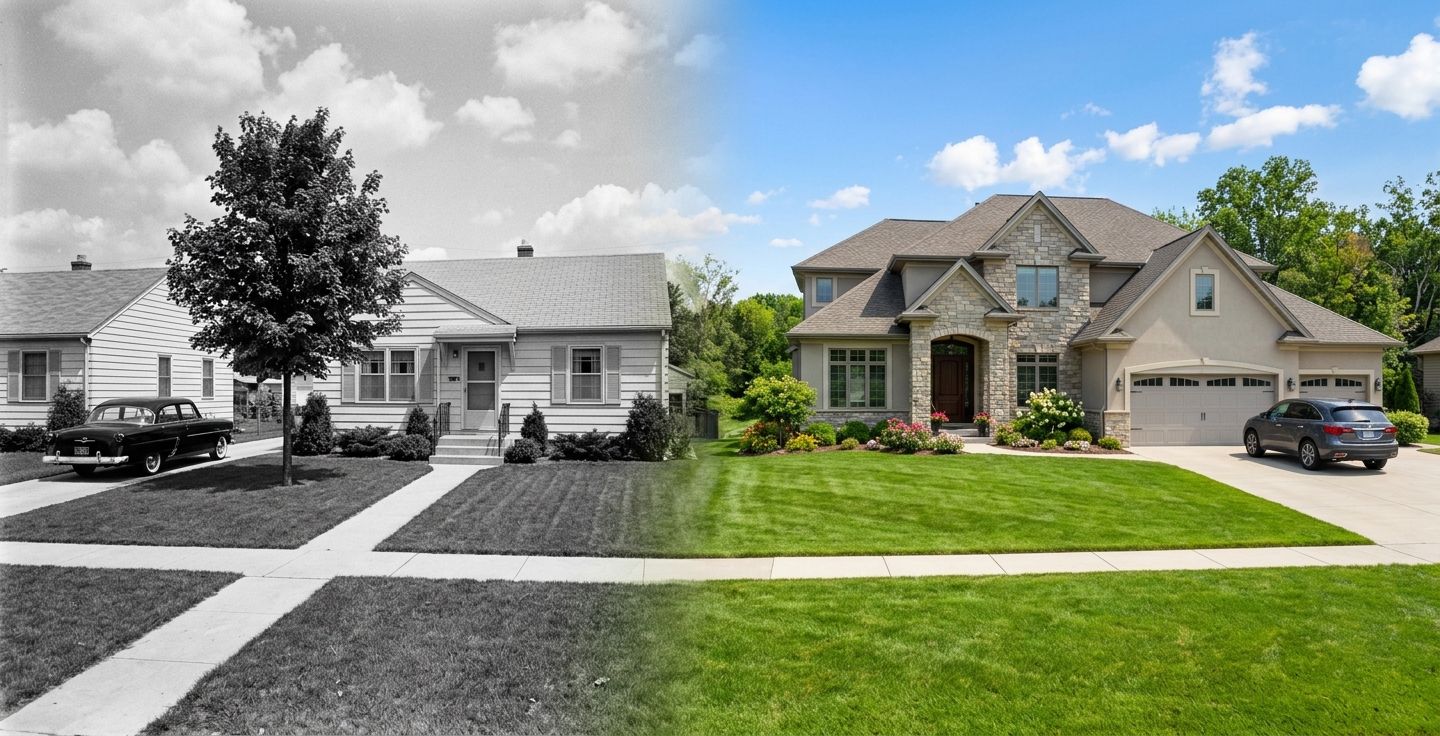
This initial desire for a simple home grew into a fascinating cultural phenomenon. Here is the complication to our simple post-war story. As the decades rolled by, our houses began to stretch and swell. Let us look at some surprising statistics that completely stunned me when I first read them. According to the United States Census Bureau, the average new single-family home in 1950 was a very modest 983 square feet. Entire families of five or six people lived happily in those small, practical quarters.
Fast forward to today. Data from the American Enterprise Institute and recent housing surveys show that the average new single-family home has ballooned to over 2500 square feet. What makes this statistic so remarkable is the dramatic shift in family size. Back in the 1950s, households were much larger. Today, families have fewer children, yet we have nearly tripled our indoor living space. We currently boast more square footage per person than almost any other nation in the world. Our enduring love for big houses has physically reshaped our communities, demanding more land, more materials, and more energy.
Why Do We Need All This Room?
This brings us to a very natural, pressing question. Why do we keep pushing the fences out further? With all this extra room, are we actually happier? Why do we crave such immense, sprawling structures even when our families are smaller than ever before?
The answer is deeply woven into our national psychology. To an American, space is intimately tied to the concept of freedom. From the days of the early pioneers pushing westward, the frontier was viewed as a place of endless possibility and fresh starts. We still carry that frontier spirit in our bones today. We no longer travel by covered wagon, but we still want our own vast territory. A large house and a wide yard represent autonomy. It is a place where you answer to no one but yourself.
Think back to the ideals of our founders. Thomas Jefferson (1743-1826) envisioned a robust nation made up of independent citizens, each deeply connected to their own plot of earth. You can visit his famous estate at Monticello, Virginia to see this architectural and philosophical ideal set in stone. We inherited that mindset. We love our open spaces because they give us room to breathe, to dream, and to create a legacy for our children. It is about crafting a private sanctuary away from the noise of the world.
The Cost of Isolation and the Hope for Connection
However, I must be honest with you. There is a downside to moving further apart. When our houses grow larger and our yards stretch wider, we sometimes lose sight of our neighbors. We trade the friendly front porch for the secluded, private back deck. We gain impressive square footage, but we sometimes sacrifice the warmth of a close-knit community. I have seen neighborhoods where folks live side by side for twenty years without ever learning each other’s middle names. We park our cars in massive attached garages, walk directly into our kitchens, and never have to interact with the world outside. It is a quiet kind of loneliness that can creep up on you when you are surrounded by nothing but your own property lines.
Yet, my heart is filled with incredible hope when I look at the younger generations today. I watch my own grandchildren and their friends buying their first homes. They still appreciate a good yard, but they are using it so differently than my generation did. They are not building impenetrable fortresses. Instead, they are pulling down those tall privacy fences. They are planting vibrant communal gardens and sharing their harvests.
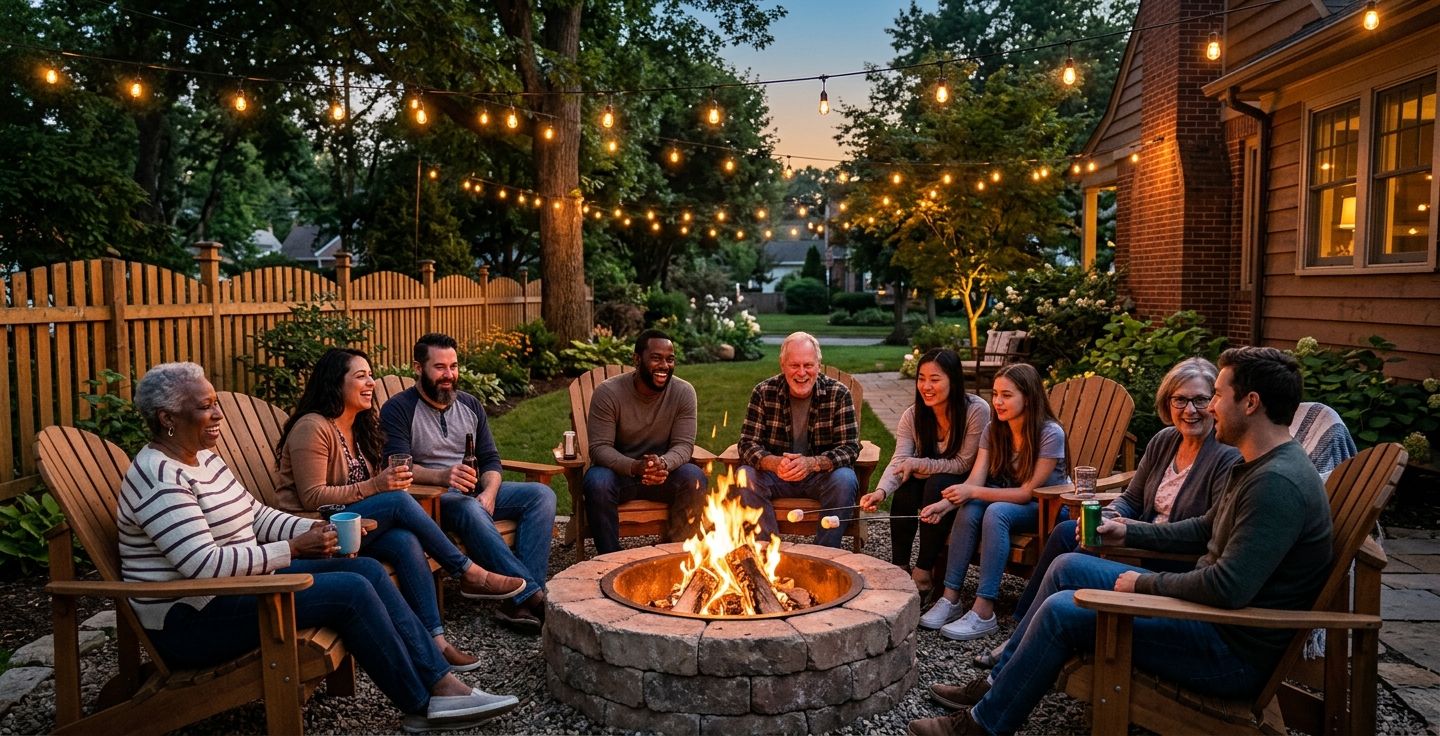
They are setting up fire pits and inviting folks from down the street to share a meal. The younger men and women are taking the vastness of the American landscape and filling it with beautiful, genuine connection. They remind me every single day that a home is not measured by its dimensions or its property lines, but by the love and laughter shared within its walls. They are redefining our national dream for the better.
A Call to Open Your Doors
So, what should we do with all this beautiful space we have been given? I encourage you to look at your own home today with fresh eyes. Whether you live in a sprawling farmhouse in the country or on a modest lot in a busy suburb, see your space as a gathering place. Open your doors. Invite the neighbors over for a cup of coffee or a slice of pie. Use your yard to bridge the gap between people. We have been blessed with the room to grow. Now, it is time to fill that room with true community.
Frequently Asked Questions About American Homes
Why did American houses get so much larger after the 1950s?
Following the post-war economic boom, rising prosperity and the expansion of the interstate highway system allowed developers to buy cheaper land outside of crowded urban centers. This made it far more affordable to build and purchase larger homes. Additionally, cultural shifts began to favor dedicated rooms for specific activities, like family rooms and home offices.
How does the size of an average American home compare to homes in Europe?
American homes are significantly larger than their European counterparts. On average, a new single-family home in the United States is more than double the square footage of a typical home in countries like the United Kingdom or France. This difference is largely due to the vast availability of land in North America and differing historical approaches to urban planning.
Are younger Americans starting to move back into smaller homes today?
Yes, there is a noticeable and growing interest in smaller spaces among younger generations. Concepts like minimalist living and tiny homes have gained popularity. Many younger buyers prioritize walkability, community features, and environmental sustainability over sheer square footage, though the national average for new builds still leans toward larger properties.
What role did the automobile play in the expansion of suburban living?
The widespread adoption of the automobile was the key to suburban expansion. Cars gave people the freedom and flexibility to live comfortably far away from their workplaces and city centers. This created the modern concept of the daily commute and allowed housing developments to spread deeply into vast, previously rural areas.
Did early American pioneers actually live in large homes?
While early pioneers deeply valued possessing vast amounts of land for farming, livestock, and sheer survival, their actual physical dwellings were usually very small. Early cabins and farmhouses were built entirely by hand using local materials. It was only in the twentieth century that the size of the house itself became a primary measure of success.
Will the trend of building massive houses continue indefinitely into the future?
It is highly unlikely that home sizes will continue growing at the rapid pace seen in recent decades. Evolving changes in family structures, growing environmental awareness, and the rising costs of building materials and energy are starting to shift buyer preferences. We are beginning to see a return to more efficient, community-focused architectural designs.