
American Lifestyle
The Great American Commute: Mobility in Modern Life
The Early Days of the Open Road
I remember the morning air feeling different when I was a boy. It smelled of morning dew mixed with the faint, sharp scent of gasoline. We lived near Woodward Avenue in Detroit. Back then, getting from one place to another was an event. A grand journey. The automobile was not just a tool. It was a promise. A man named Henry Ford (b. 1863, d. 1947) had a vision that put the world on wheels. His Model T changed everything for folks like us. Suddenly, the horizon was not a limit. It was an invitation. I remember my father gripping the thin wooden steering wheel. His hands were calloused, strong, and steady. His eyes were wide with the thrill of simple motion. It was pure freedom. We did not call it a commute back then. We called it a drive. A simple, wonderful drive.
The Shift to the Gridlock
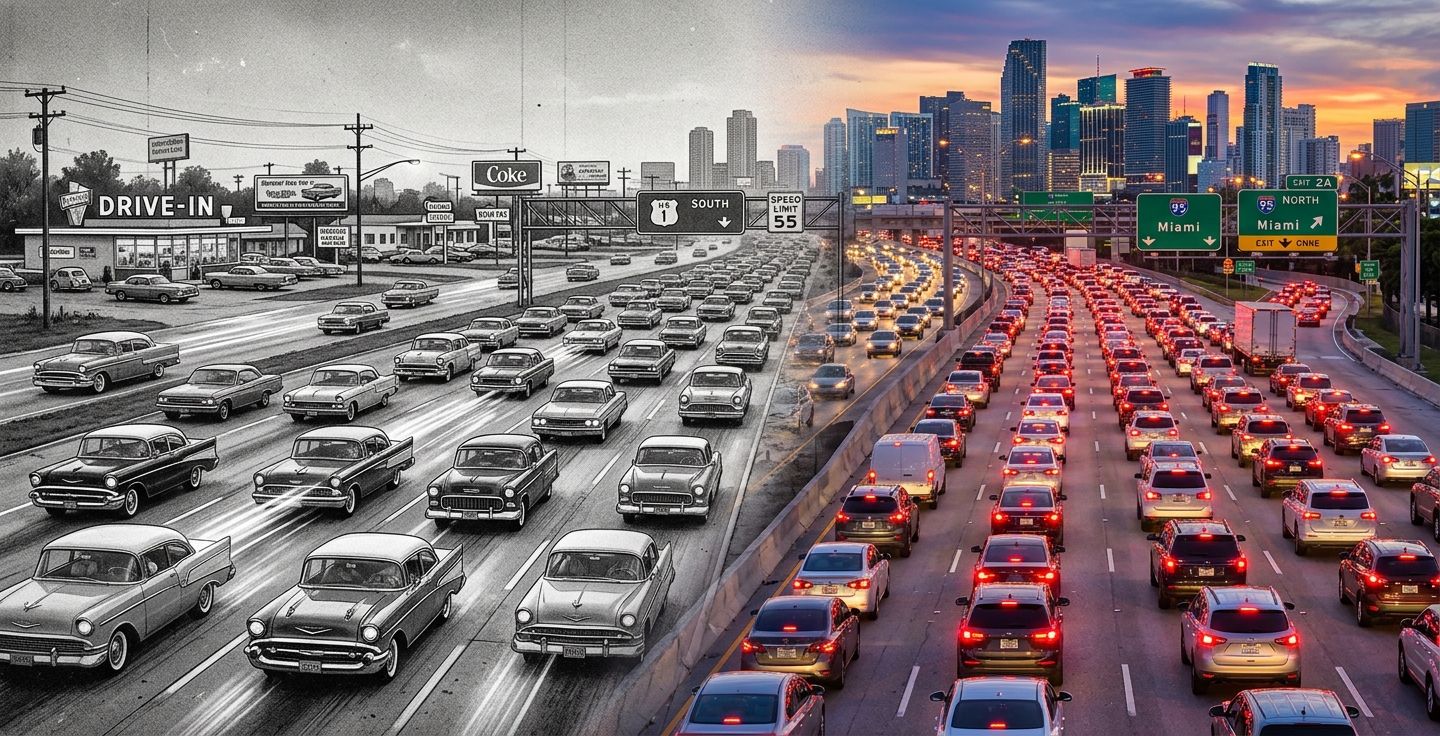
But years turn into decades, and promises change. The open roads filled with metal and exhaust. The joyful Sunday drive gradually morphed into a daily, mandatory grind. Cities expanded rapidly. Suburbs sprawled out like vines across the landscape, stretching further and further away from the city centers. The distance between where we rested our heads and where we earned our keep grew wider every single year. We found ourselves trapped in endless lines of glowing red taillights. The freedom of the open road became the strict confinement of the modern traffic jam. We built massive highways to solve the problem. We sliced through quiet neighborhoods and paved over green fields. Yet, the more lanes we poured in concrete, the more cars arrived to fill them. It felt as though our grand American journey had stalled out entirely.
Asking the Hard Questions
How did a nation born of restless pioneers and open frontiers become stuck in bumper to bumper traffic? When did the simple act of moving from home to work become such a heavy burden on our shoulders? Why did we accept the loss of our precious morning and evening hours as a mandatory tax on making a living? And more importantly, how do we find our way out of this gridlock so our grandchildren can breathe easier and live fuller lives?
By the Numbers: A Heavy Toll
To understand where we are going, we must look honestly at where we are. The numbers tell a stark story, one that often surprises people who have grown numb to the daily grind. Before the world slowed down a few years ago, the United States Census Bureau reported some astonishing figures regarding our daily travel. The average American worker spent nearly twenty eight minutes traveling one way to work. That might not sound like much at first glance. Just a quick radio show, right? But do the math. That adds up to nearly an hour a day. Over a standard working life, you are looking at over four hundred days sitting in a vehicle. More than a full year of your waking life, gone. Lost to the asphalt. Lost to the radio commercials and the blinding glare of brake lights.
For many folks living near New York City, Chicago, or other massive hubs, that number was easily doubled. People were spending two or even three hours every single day just trying to get to a desk and back. That is an enormous sacrifice. That is time stolen from reading bedtime stories to children. Time taken away from sharing a warm meal with a spouse. Time robbed from simply sitting on the front porch and watching the world go by. It is not just a matter of lost time. It is a matter of lost living. We traded our peace for a place in line on the freeway.
When We Traveled Together
It was not always a solo journey in a steel box. Let me tell you about a different kind of mobility. Let us look at a place famous today for its modern traffic and endless ribbons of concrete: Los Angeles. Long before the freeways choked the sky and dominated the landscape, the city was stitched together by a massive network of bright red streetcars. A visionary businessman named Henry E. Huntington (b. 1850, d. 1927) built the Pacific Electric Railway. At its peak, it was the largest electric railway system in the entire world.
Imagine that for a moment. People would step out of their homes in Pasadena or Long Beach, greet their neighbors on the sidewalk, and ride together into town. The gentle, rhythmic rumble of the tracks. The sharp, cheerful sound of the bell ringing at the crossings. You could read a newspaper. You could fold your hands in your lap, close your eyes, and just rest. You were moving, but you were at peace. You were part of a community in motion.
The Loss of Shared Journeys
The red cars vanished, of course. They were systematically replaced by buses and millions of personal automobiles. The narrative of the time, pushed by progress and profit, said we needed more independence. We wanted our own steering wheels. We wanted to leave exactly when we pleased. But in gaining that isolated personal space, we lost a deeply shared experience. We lost the communal rhythm of the early morning. Now, we sit mere inches away from our fellow citizens on the highway, separated by glass and steel, yet we have never felt further apart. We honk our horns in frustration instead of nodding in friendly greeting.
A Deep Desire for Balance
There is a deep, abiding longing in the American spirit for a better way forward. We yearn for the days when travel was a joy, not a heavy chore. We want our time back. I see it in the tired eyes of the young parents rushing home to make dinner before the children fall asleep. I hear it in the weary voices of workers who just want to see the sun set from their own backyards, not through a smudged windshield. We desire a profound return to balance. A world where our infrastructure serves our physical and mental well-being, rather than rigidly dictating our harsh daily schedules. We want to be human beings again, not just drivers operating machines.
Looking Forward with Hope
But my friends, despite the concrete and the endless congestion, I am filled with hope. I truly am. When I look at the bright generations coming up behind us, I see incredible, boundless ingenuity. They are not accepting the grueling hours of travel as an unchangeable law of nature. They refuse to inherit our mistakes without a fight. They are asking hard, necessary questions. They are demanding better, more reliable public transit. They are choosing to walk. They are dusting off bicycles, building safe lanes, and making human power a primary mode of transport once more. They understand that a city should be built for people.
The Quiet Revolution of Home
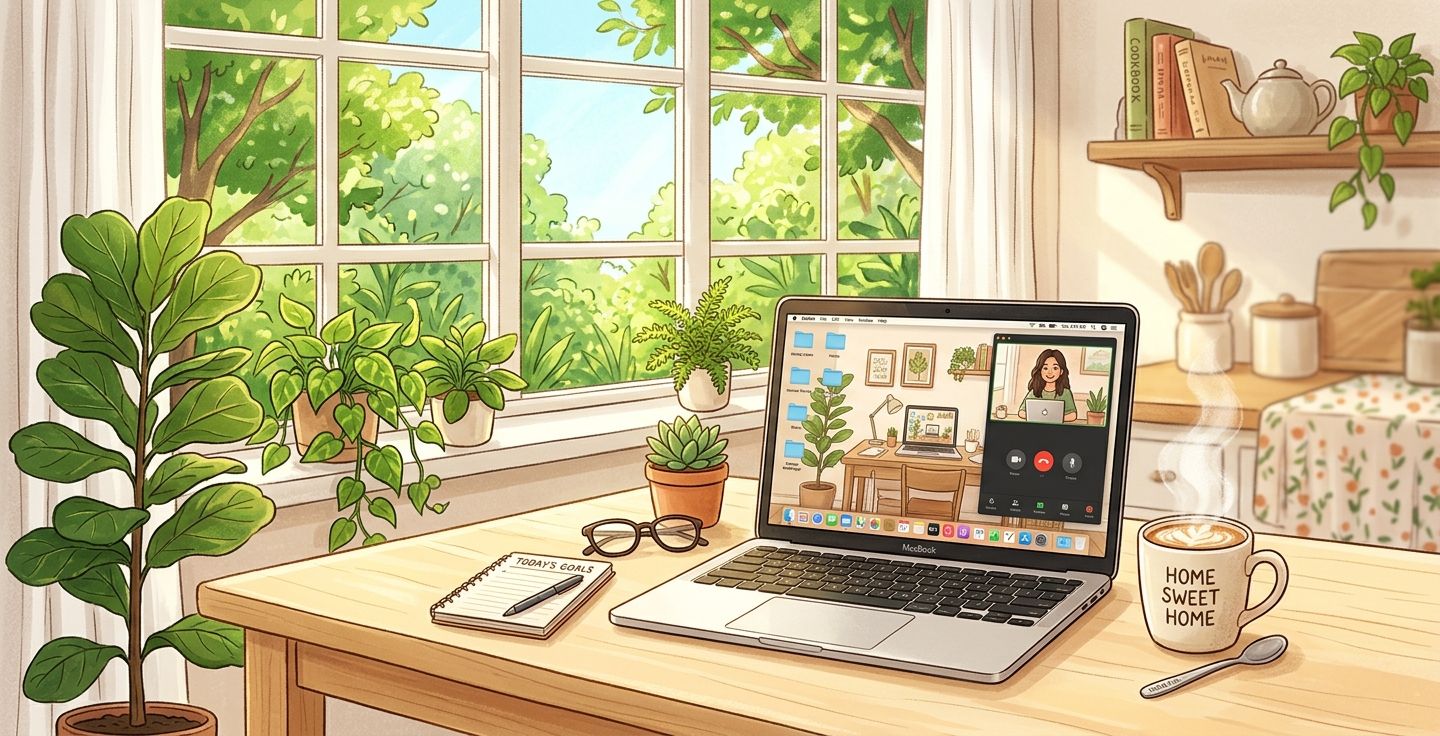
And then there is the quiet, beautiful revolution of our modern time. Working from the living room couch. Or the kitchen table with the sunlight streaming in. Some call it remote work. Some call it telecommuting. Whatever the name, it is a genuine blessing. It took a great, terrifying global hardship to shake our foundations and show us that the old ways were not the only ways. Today, millions of Americans wake up, listen to the birds sing, brew a hot pot of coffee, and walk ten comfortable steps to their office. The miles of exhausting driving have been magically erased by invisible copper wires and wireless signals.
A New Map for a New Era
We are redesigning the map of American life, and we are doing it with heart. Urban planners are finally listening to the people who walk the streets. They are building greenways and walkable neighborhoods. They are looking backward to find deep inspiration for our shared future. We are collectively realizing that the best, most vibrant neighborhood is the one where the local grocer, the friendly barber, and the neighborhood school are just a pleasant, safe stroll away. This was exactly how we lived a century ago, before the engine drowned out the conversation. It is a beautiful, deeply comforting thing to see it returning to our towns.
So, as you step out of your front door tomorrow morning, take a long, deep breath of the morning air. Look down your street. Think about the countless journeys of those who walked it before you. Think about the thoughtful paths we are currently laying down for our children and our grandchildren. We are moving away from the loud, lonely, crowded highways of the past. We are steering, together, toward a calmer, more connected, and much brighter horizon. The great American journey is far from over. It is simply taking a new, much better route. And the scenery ahead looks absolutely magnificent.