Culture & Traditions
Why Fast Food Became So Popular in America
A Window Down on the Open Road
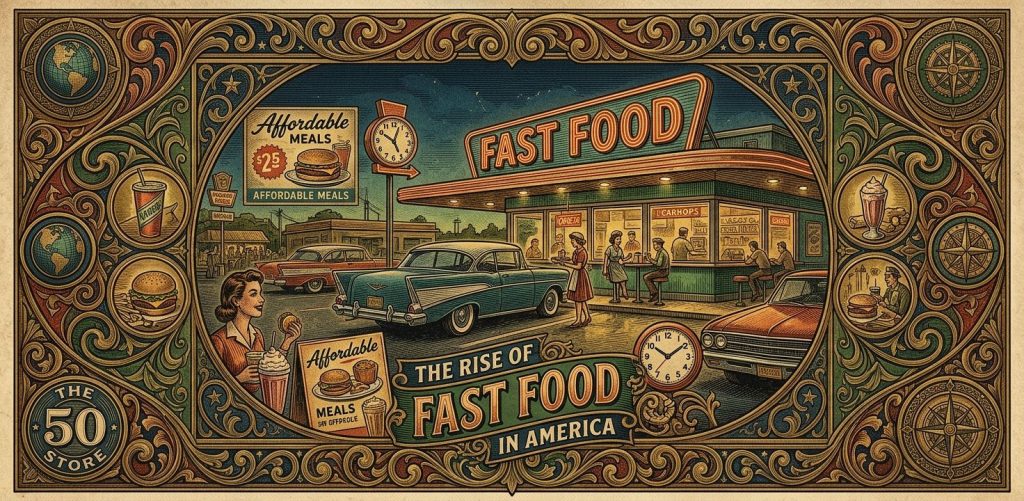
Sometimes I close my eyes and I can still smell the warm summer air of 1955. The scent of fresh cut grass mixed with the rich aroma of grilled onions and engine oil. The country was waking up and the sun was shining on a new era. Neighborhoods were expanding outward into the quiet countryside. People had good jobs and a little extra money in their pockets. Most importantly, we had automobiles. Those beautiful machines of steel and chrome represented pure freedom. We could go anywhere. We were an energetic nation on the move.
When the World Started Spinning Faster
But with all that wonderful motion came a brand new challenge. Life began to speed up. Fathers were commuting longer distances to new office buildings and factories. Mothers were juggling community duties, managing larger households, and increasingly joining the workforce themselves. Time started slipping through our fingers like fine dry sand. The idea of spending two full hours preparing a traditional roast dinner felt exhausting on a busy Tuesday evening. We were moving far too fast for the old ways of doing things.
How Did We End Up Here?
A question hung over almost every neighborhood. How do we feed a hungry family, moving at top speed, without spending a fortune? The answer did not come from a fancy dining room in a big city. It came from a humble little street corner.
The San Bernardino Miracle
Let me tell you a story about a small street side restaurant in San Bernardino. Two brothers named Richard and Maurice ran the place. They paid close attention to what people actually bought. They realized almost all their sales came from just a few simple items like hamburgers, fries, and cold sodas. The brothers decided to take a massive leap of faith. They closed their successful business, retooled the entire kitchen like a factory assembly line, and reopened with a brand new concept. They called it the Speedee Service System.
There were no plates and no waitresses on roller skates. You simply walked up to the window, handed over some small change, and your hot meal was ready in seconds. The burgers were wrapped in simple paper. It was a beautiful choreography of modern commerce. If the pickle jar was too far from the mustard pump, the brothers redesigned the layout. It was absolute precision applied to dinner.
The Numbers Behind the Craving
That simple idea lit a wildfire across the nation. You might be shocked to learn just how massive that fire eventually grew. According to the Centers for Disease Control and Prevention, on any given day, over one third of American adults consume fast food. Data shows that more than 36 percent of us visit a quick service counter daily. Back when I was a young boy, eating a meal cooked by someone else was a rare and special privilege reserved for birthdays or anniversaries. Today, this massive industry generates hundreds of billions of dollars every single year. It is truly astounding to witness such a massive shift in our daily human habits over the course of a single lifetime.
A Man Named Ray
Word of those clever brothers and their incredibly busy hamburger stand eventually reached a traveling milkshake machine salesman. His name was Ray Kroc (born 1902, died 1984). Ray had seen his fair share of hard knocks and failed business ventures. But when he traveled out to California to see this busy stand for himself, his eyes were opened. He saw the massive crowds. He saw the incredible speed. Most importantly, he saw the future of our country.
Ray partnered with the brothers and eventually bought the entire company. He dedicated the rest of his life to spreading those iconic golden arches from coast to coast. Ray understood something fundamental about the American spirit. We deeply craved consistency. We wanted the comforting knowledge that a hot burger in a small rural town in Ohio would taste exactly the same as a burger in a bustling city in New York.
A Ribbon of Concrete
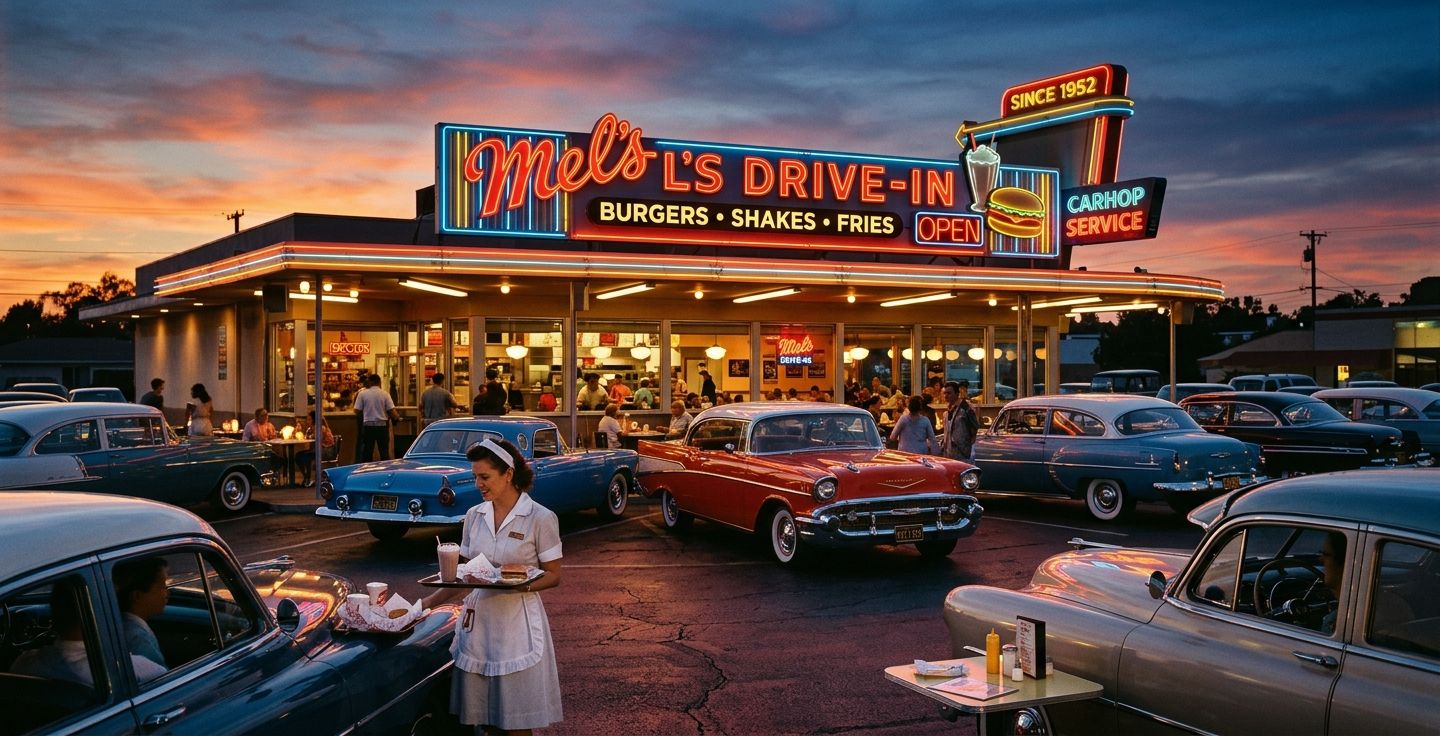
You simply cannot separate this incredible story from the automobile. They grew up together like two best friends on the same neighborhood block. As cars became more affordable for the average family, the classic drive-in restaurant took firm hold of our culture. Teenagers would gather on Friday nights, leaning against car fenders and sharing vanilla milkshakes.
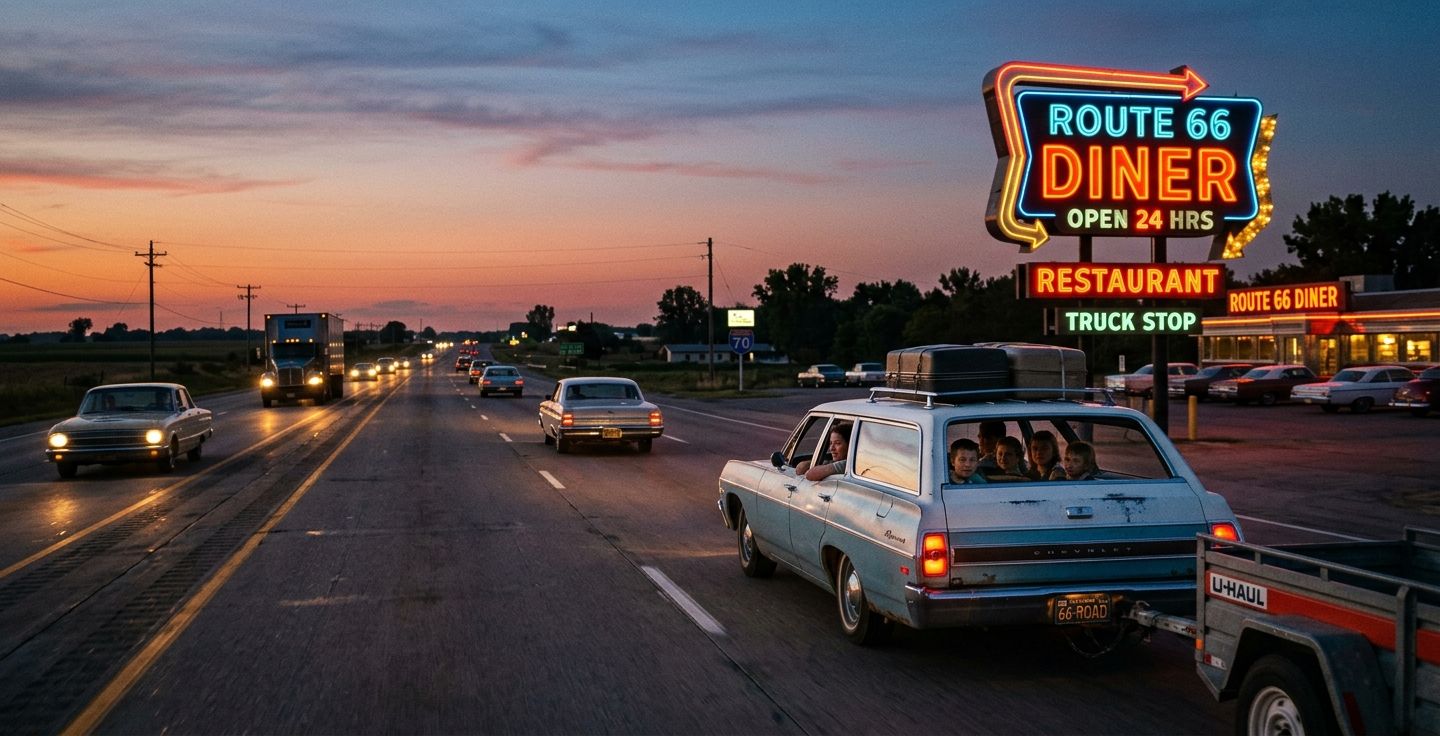
Then came the massive concrete ribbons. President Dwight D. Eisenhower championed the creation of the Interstate Highway System. Suddenly, families were packing up their station wagons and taking long summer road trips to see the Grand Canyon or the bright lights of big cities. Huge glowing neon signs buzzed brightly in the twilight, pointing the way to a hot meal. And what did those traveling families need most? Quick, reliable, and affordable food.
The Colonel on the Road
There were other pioneers on those roads too. Consider a colorful gentleman named Harland Sanders (born 1890, died 1980). Harland lived a dozen different lives before finding his true calling. He worked as a steamboat pilot, an insurance salesman, and a gas station operator. He finally perfected his special chicken recipe using a pressure cooker in Kentucky. When a brand new interstate bypassed his little restaurant and ruined his livelihood, he refused to give up. At an age when most men settle into quiet retirement, he packed his car trunk full of spices and hit the road. He drove from town to town, sleeping in his car, selling his franchise idea to local restaurant owners. That is pure unrelenting perseverance.
More Than Just a Meal
As the years rolled on, brilliant new ideas kept appearing. Business owners recognized that ultimate convenience meant allowing tired parents to grab dinner without ever unbuckling their seatbelts or waking a sleeping toddler in the back seat. The modern drive through window changed the landscape of dining forever.
But the true appeal was always about more than just the speed. It was the savory taste, the salty fries, and the comforting warmth of a paper bag handed through a car window. It was the wonderful feeling of a Friday night reward after a long week of spelling tests and factory shifts. We desired that easy joy. The shiny restaurants with their bright plastic booths became our modern community centers. Little league baseball teams celebrated their hard won victories there. Grandparents took their eager grandchildren there for weekend treats.
Looking Ahead to the Next Generation
Looking back at all those countless miles traveled and all those warm meals shared, I see a beautiful picture of American ingenuity. We recognized a problem of limited time, and we engineered a delicious solution. Now, my hair is gray and I walk a little slower. I spend my days watching my own grandchildren and great grandchildren navigate this busy world.
They are making wonderful new choices today. They are asking for fresher ingredients and lighter options. Many are bringing back home gardens and cooking big meals together on Sundays. It brings a deep and abiding warmth to my chest to see this. The world will surely keep spinning fast, and there will always be a place for a quick burger on a busy road trip. But I encourage you to slow down when you can. Cherish the meals you share, wherever they happen to be. Pull up a chair, or simply park the car, and just enjoy the company of the people you love. The real magic is never in the paper wrapper. It is in the sweet conversation across the table.