
Culture & Traditions
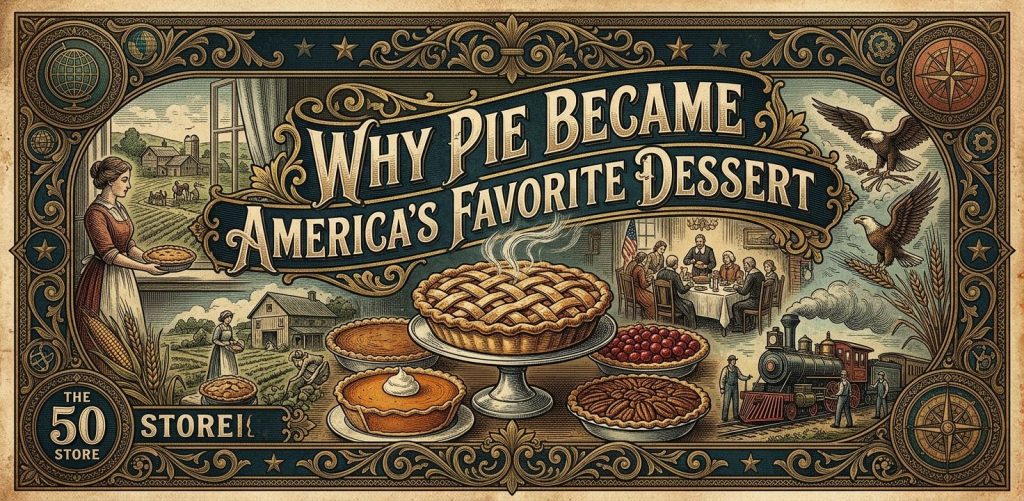
Why Pie Became America’s Favorite Dessert
Sweet American Summer Bomb Pop T Shirt
Wear your story with pride! Celebrate classic American values, history, and heritage with our premium crafted apparel, designed for comfort and durability.
The Comfort of a Warm Kitchen
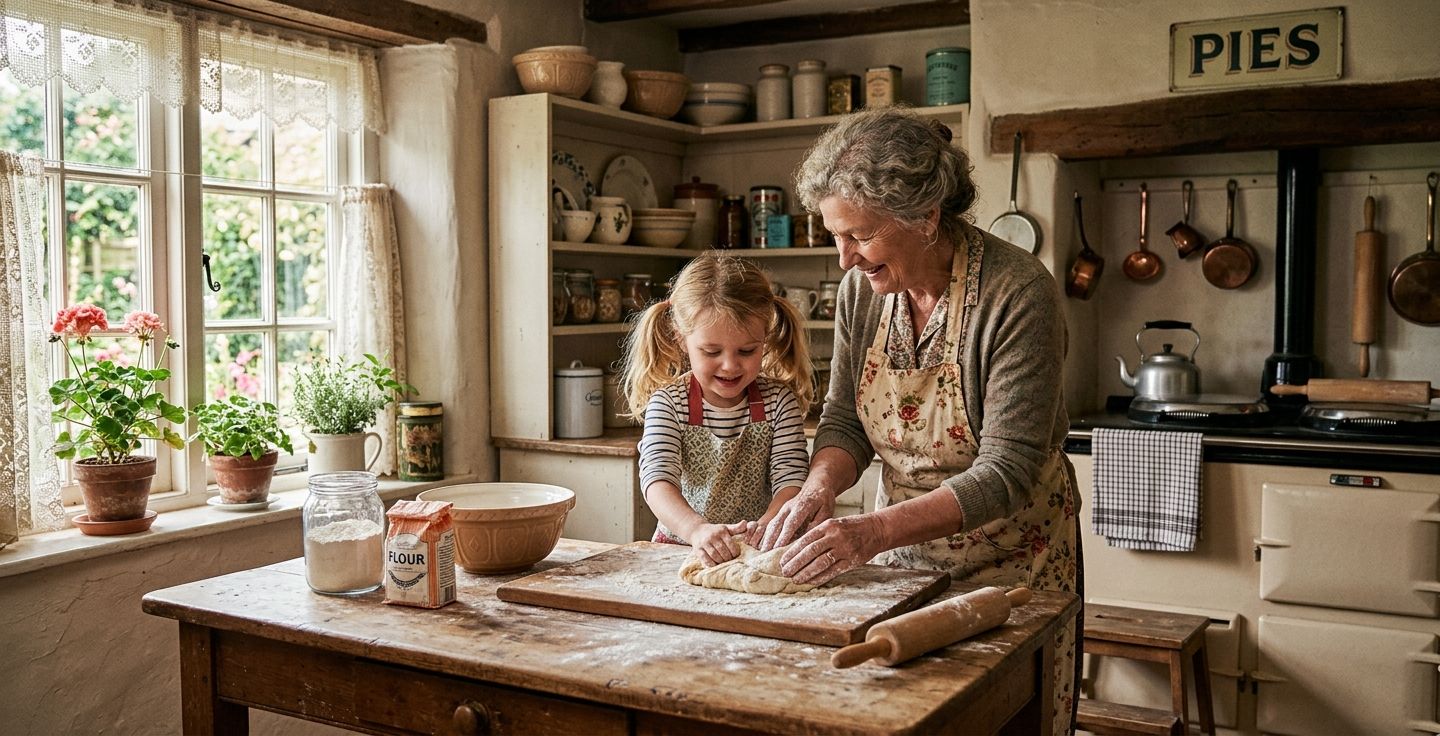
I remember the sound of the wooden rolling pin hitting the flour covered table. Thwack. Roll. Thwack. Roll. My grandmother wore a flour dusted apron that smelled like vanilla extract and strong black coffee. The kitchen was always warm. Even in the dead of winter, when the frost crept up the windowpanes and the wind howled outside, that room was an island of heat and comfort. I would sit on a tall wooden stool, watching her hands work. She had hands that showed her age, yet they moved with graceful precision. It felt like nothing bad could ever happen as long as there was a pie in the oven.
I have lived in this country for my entire life. I have seen boom times and hard times. I have watched dirt roads get paved over and quiet neighborhoods turn into bustling city blocks. Through it all, the simple act of baking has remained a constant thread. It is the very foundation of American culture. When we need to show someone we care, we bring them a pie. When we celebrate a harvest or a holiday, we place a pie at the center of the table. It is our universal language of love.

Sweet American Summer Bomb Pop T Shirt
Wear your story with pride! Celebrate classic American values, history, and heritage with our premium crafted apparel, designed for comfort and durability.
Sweet American Summer Bomb Pop T Shirt
Wear your story with pride! Celebrate classic American values, history, and heritage with our premium crafted apparel, designed for comfort and durability.
Surprising Facts About Our Favorite Treat
Now, you might think my love for pie is just old fashioned sentiment. You might assume that modern folks have moved on to fancier desserts. The facts tell a completely different story. The American Pie Council, a wonderful group dedicated to preserving our baking heritage, has shared some statistics that might surprise you. Supermarkets across the country sell roughly 186 million pies every single year. That staggering number does not even factor in the millions of pies baked from scratch in home kitchens or sold at local diners.
Think about the emotional connection we have to this dessert. Surveys show that 47 percent of Americans immediately associate the word pie with the feeling of comfort. Furthermore, around 36 million Americans state proudly that apple pie is their absolute favorite. We do not just like pie. We rely on it. It anchors our celebrations and brings us together when we need it most.
From Hard Coffins to Tender Crusts
Our situation today is wonderful. We have access to any flavor we can dream up, from lemon meringue to chocolate silk. But the history of pie in our country includes a major complication. Early pies were absolutely nothing like the tender, flaky pastries we enjoy today. When the first European settlers arrived on these shores, they brought the concept of pie with them. However, sugar was scarce and very expensive. Ovens were not reliable. The original pies were strictly practical.
Cooks made a thick, tough dough from flour and water. They molded it into a hard shell. They called these tough crusts coffins. The word coffin back then simply meant a box or a basket. The cooks would fill these hard pastry boxes with meat, spices, and dried fruits. The thick crust acted like a medieval storage container. It kept the filling preserved and safe from bacteria during the long, harsh winters. You did not even eat the crust. You broke it open, ate the savory stew inside, and threw the hard shell to the dogs.
This brings up an interesting question. How did we get from a rock hard box of preserved meat to the delicate, sweet masterpieces we bake today? How did this utilitarian survival food become the undisputed champion of sweet desserts?
Planting the Seeds of Sweetness
The answer is found in the land itself, and in the hands of the people who shaped it. Let us look at a man named John Chapman (born 1774, died 1845). You probably know him by his legend, Johnny Appleseed. John was not just wandering aimlessly throwing seeds into the wind. He was a practical businessman and a visionary. He traveled ahead of the pioneer settlements, planting apple nurseries along the frontier. He made sure that when families arrived to build their homes, there were orchards waiting for them.
Most of those early apples were small and tart. They were mainly used for making hard cider. But as transportation improved, sugarcane became much more affordable and accessible. Cooks realized that if you took those tart apples, added a little cinnamon, and sweetened them with sugar, you created a filling that was pure magic. The hard crust was no longer needed for preservation. It could be enriched with lard and butter. It could become a treat itself.
Bringing Science to the Hearth
The evolution continued in the bustling streets of cities like Boston, Massachusetts. Baking used to be a game of complete guesswork. Recipes in the early days called for a teacup of milk or a lump of butter the size of a walnut. This made it very hard to pass down recipes accurately. A young bride might struggle for years to match the quality of her mother and her baking.
Then came Fannie Farmer (born 1857, died 1915). Fannie was a remarkable woman who changed American cooking forever. In her famous cookbook, she introduced the concept of standardized level measurements. She gave us the modern teaspoon, tablespoon, and cup. Because of Fannie Farmer, traditional baking became accessible to everyone. You no longer had to rely on intuition alone. You could follow the instructions and produce a perfect, tender crust every single time. She brought precision to the kitchen, but she never lost sight of the warmth and love that makes food taste good.
A Delicious Map of Our Nation
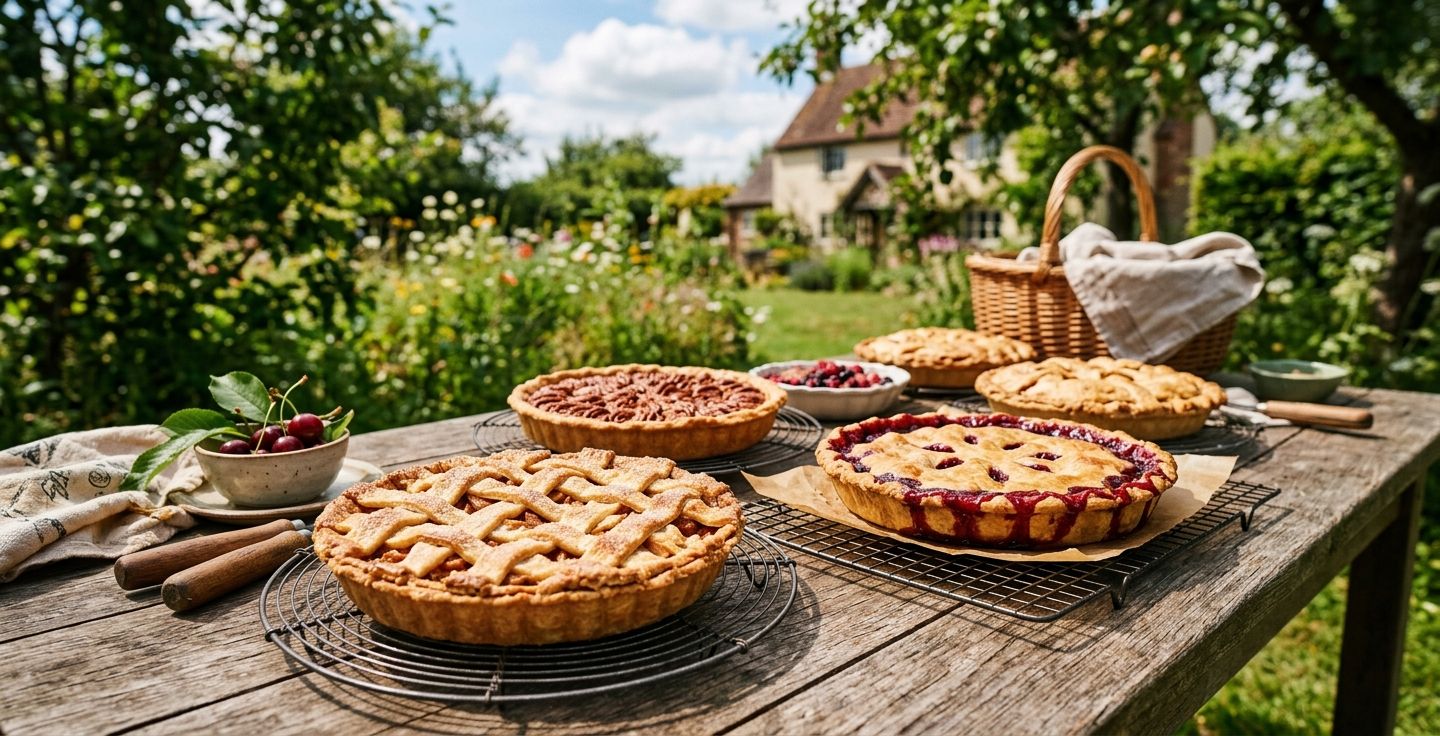
As our country expanded, our pies evolved to reflect the local harvests. Pie is like a delicious map of our nation. If you travel down to New Orleans, Louisiana, you will find pecan pies that are rich, dark, and sweet. The native pecan trees provided a perfect ingredient, and the French influence brought a love for rich syrups and butter. In the southern coastal towns, the tart key lime pie was born out of necessity before widespread refrigeration, using canned sweetened condensed milk and local citrus.
Up in the northern states, the short summers burst with blueberries and cherries, leading to vibrant, fruit filled pies that stain your teeth and warm your soul. Out west, the boysenberries and peaches take center stage. Every region took the basic concept of a pie and made it their own unique creation.
Hope in a Mixing Bowl
Today, life moves faster than ever. People are always looking at their glowing screens. Families are pulled in a dozen different directions by work and school. It is easy to feel disconnected. But then I see the young people of today getting back into the kitchen. I see young fathers tying aprons on their little girls. I see them pulling out faded, handwritten recipe cards to recreate their grandmother and her famous peach pie.
This fills my old heart with so much hope. The younger generations are discovering the joy of slowing down. They are realizing that you cannot rush a good dough. They are bringing back our family recipes. They are keeping the spirit of the American kitchen alive. It tells me that we are going to be okay. The simple, honest things still matter to people, and they always will.
Roll Up Your Sleeves
So, I have a modest request for you. Do not wait for Thanksgiving or the Fourth of July to enjoy a slice of pie. Keep our holiday traditions alive on a regular Tuesday afternoon. Go out to your local market and buy some crisp apples, juicy peaches, or sweet berries.
Take out a large mixing bowl. Cut the cold butter into the flour. Work it together with your fingers. Feel the texture change from coarse sand to a promising dough. Take a deep breath of that wonderful aroma as the crust turns golden brown in the oven. Let it cool on the counter while the juices set. Serve it warm, perhaps with a scoop of vanilla ice cream. Share it with your friends, your children, or your neighbors. Sit together and talk. When you offer someone a slice of homemade pie, you are offering them a piece of our shared history. You are giving them a moment of peace. You are telling them they are welcome at your table.
Common Questions About Baking and History
What makes a pie crust flaky?
The secret to a flaky crust is keeping your ingredients very cold. When small pieces of cold butter or lard melt during baking, they create tiny pockets of steam. That steam pushes the flour apart and separates the dough into those beautiful delicate layers we all love.
Why did early Americans call pie crusts coffins?
In the early days of our country, the crust was not meant to be eaten. It was a hard, dense shell made of flour and water used to preserve the meat filling and keep out the air during long winters. The word coffin simply meant a basket or box in those times.
What is the most popular type of pie in the United States?
Apple pie takes the crown. Millions of Americans declare it their absolute favorite. It is deeply tied to our national identity and remains a comforting staple at most family gatherings and local diners.
Can I bake a great pie without using any special equipment?
Absolutely. For generations, pies were made with nothing more than a bowl, a rolling pin, and a hot oven. Your hands are your best tools for mixing the dough. A simple glass bottle can even work as a rolling pin if needed.
How do I keep the bottom of my pie from getting soggy?
A soggy bottom can be avoided by blind baking the crust for a few minutes before adding your fruit filling. You can also brush the bottom crust with a little egg white to create a protective seal against the hot fruit juices.
Is it better to use butter or shortening for pie dough?
This is a classic debate among bakers. Butter gives the crust a rich and wonderful flavor that cannot be matched. Shortening has a higher melting point, which makes it easier to handle and creates excellent flakiness. Many folks like to use a mix of both to get the best results.