
American Lifestyle
The Story of the American Backyard
The Roots of the American Dream
There is a special kind of magic in the smell of a freshly cut lawn on a Saturday morning. If you have lived in this great country as long as I have, you know exactly what I mean. That scent brings back a flood of memories. It is the smell of summer vacation, of baseball games played with neighbors, and of lemonade sweating in a glass pitcher. For generations, the backyard has been the very heart of the American family experience. But this little slice of paradise was not always a guarantee.
From European Luxury to American Reality
A long time ago, a sprawling green lawn was a luxury reserved strictly for European aristocrats. It took a massive team of groundskeepers to maintain those massive estates. But here in the United States, we have a beautiful habit of taking luxuries and making them available to hardworking, everyday folks. We built a nation on the idea that anyone willing to put in an honest day of work deserves a place to call their own. The American dream was born not just from a desire for liberty, but from a profound longing for a piece of the earth to claim as home.
The Crowded Cities of Yesteryear
In the early twentieth century, things were quite different. This is the situation our parents and grandparents faced. If you lived in a major industrial city, space was a rare and precious commodity. Families were stacked in cramped brick tenements. The skies were often gray with factory smoke, and the streets were paved with concrete and cobblestone. Nature felt like a distant memory. This complication created a deep yearning in the hearts of our citizens. Where could a person find a patch of green to let their children run free? How did everyday Americans carve out their own personal slice of paradise? The answer arrived just after the storm clouds of the Second World War finally cleared.

Grill Chill And Freedom BBQ T Shirt
Wear your story with pride! Celebrate classic American values, history, and heritage with our premium crafted apparel, designed for comfort and durability.
Shop the Look →The Great Post-WWII Suburban Expansion
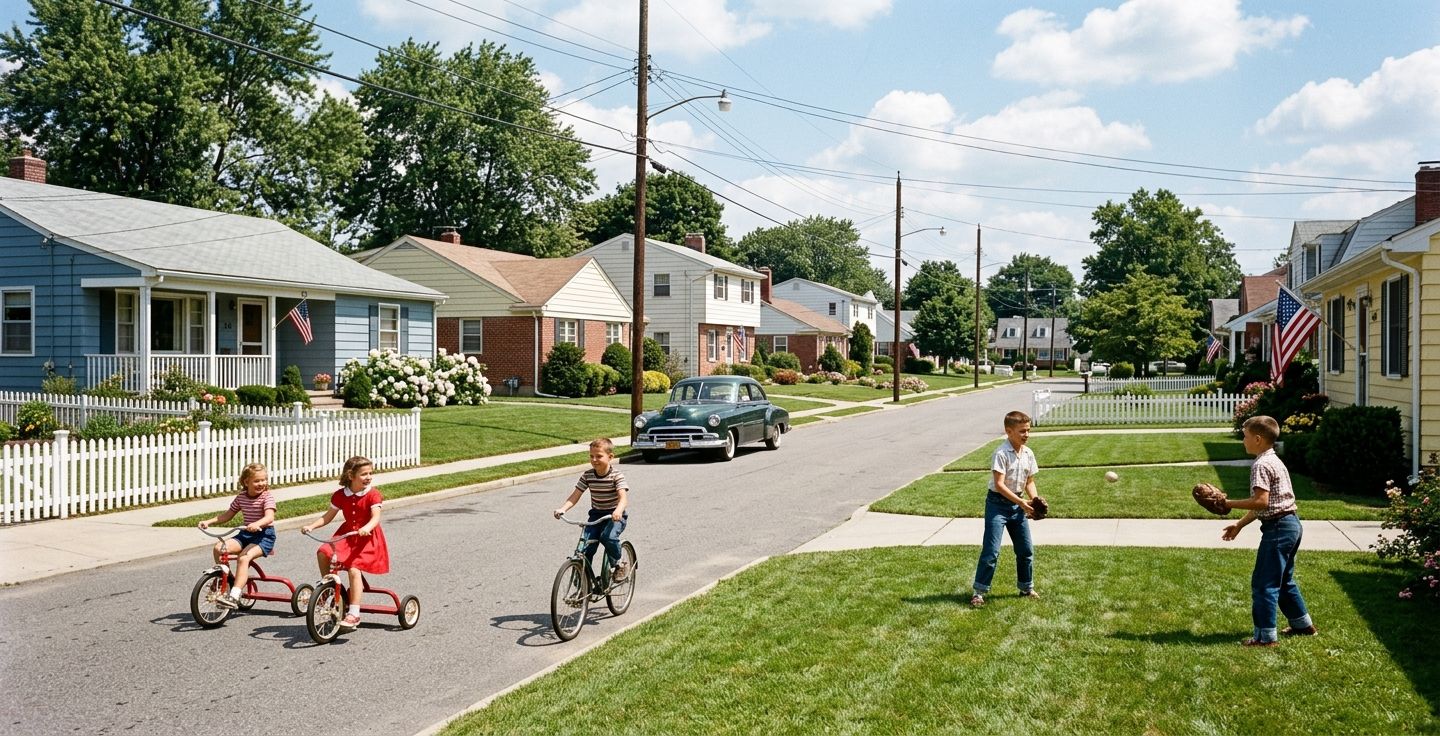
When our brave young men and women returned home from the war, they were ready to start fresh. They had fought for freedom across the globe, and now they wanted to build a peaceful life on their own soil. This profound desire sparked the greatest housing boom in our nation’s history.
A Hero Returns Home
Let me tell you a little story about a fellow named Arthur. Arthur served as an infantryman in the European theater. When he came home to his high school sweetheart, Helen, they initially lived in a tiny apartment above a noisy bakery. They had a baby on the way, and Arthur wanted a yard where his child could play safely in the grass. Thanks to the GI Bill, Arthur was given a fighting chance. He secured a low-interest mortgage that made buying a home cheaper than renting that noisy apartment.
Building a New Way of Life
Arthur was not alone in this journey. Between 1944 and 1952, the Veterans Administration backed an astonishing 2.4 million home loans for returning service members. It is an incredible statistic that changed the map of our country forever. The United States homeownership rate skyrocketed from around 44 percent in 1940 to 62 percent by 1960. This was the dawn of a massive suburban expansion.
Much of this incredible growth was guided by visionaries who understood the needs of the modern family. Enter William Levitt (1907-1994). Levitt applied the brilliant mass-production techniques he learned during the war to the housing market. He built Levittown, New York, turning a massive potato field into a thriving community of affordable homes. Every single house came with a built-in television and, most importantly, a spacious backyard. For the first time in history, the common man had his own private estate.
Creating a Backyard Sanctuary
Once we secured the land, the backyard became something deeply personal to the American family. It evolved from a simple patch of dirt into a true backyard sanctuary. It became a safe haven from the stresses of the modern world. This space is a blank canvas for American family life.
Lessons in the Dirt
Think about the classic elements of a well-loved yard. There is the old oak tree standing tall, holding up a tire swing by a thick frayed rope. There is the birdbath in the corner, attracting robins and blue jays in the early hours of the morning. And there is always a garden.
I remember my own grandfather’s yard vividly. He kept a beautiful vegetable garden in the back left corner. Every Saturday morning, he would be out there on his hands and knees, pulling weeds from around his prized tomato plants. He worked in an auto shop all week, a loud and greasy job. But in his garden, he found absolute peace. He used to tell me that working the soil was his way of saying thank you to God and country for the blessings he had been given. He taught me how to tell when a melon was ripe, and how to gently hold a ladybug. Those are the kinds of life lessons that only happen in a backyard.
The Golden Age of the Backyard Grill
Now, you simply cannot talk about the backyard without talking about the food. The two go hand in hand like baseball and hot dogs. In fact, cooking outside became a defining feature of the American weekend.
The Invention of a Classic
Let us take a trip to Chicago, Illinois in the early 1950s. At that time, folks were cooking outside on open, shallow brick braziers. If the wind blew the wrong way, your steaks were covered in ashes. If it rained, your dinner was ruined. A man named George Stephen (1921-1993) decided there had to be a better way. George worked at Weber Brothers Metal Works, where they manufactured marine buoys for the local harbors.
One afternoon, George had a brilliant idea. He took two halves of a metal buoy, added some air vents, and welded on three steel legs. Just like that, the modern dome grill was born. It kept the ashes off the meat, held the heat in perfectly, and protected the fire from the unpredictable Midwestern weather.
The Center of Social Life
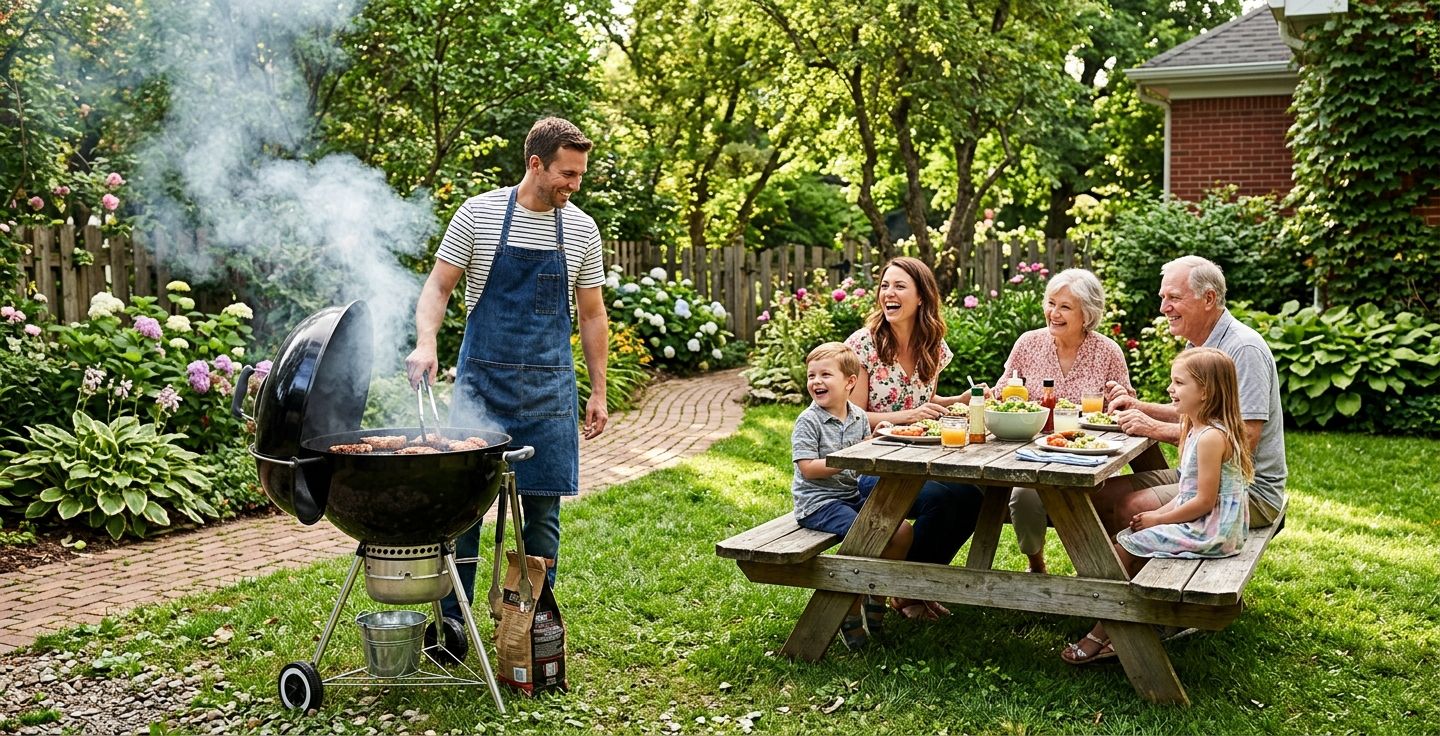
Thanks to inventions like George’s, the backyard grill became the new American hearth. It brought a wonderful sense of community to the suburbs. When smoke started rising into the twilight sky, it was an open invitation. Neighbors would smell the charcoal burning and wander over to chat across the chain-link fence. Soon enough, they were invited through the gate for a cold drink and a warm plate.
The grill breaks down barriers. It does not matter what you do for a living or what kind of car you drive. When you are standing around a fire flipping burgers, hot dogs, and ribs, you are just friends enjoying the evening. The backyard became the absolute best place to host family reunions, birthday parties, and of course, our beloved Fourth of July celebrations.
Gearing Up for the Weekend
Today, the tradition is as strong as ever. When the weekend rolls around, we still fire up the charcoal. We still invite the neighbors over, and we still celebrate the freedoms we hold so dear. The backyard remains a place of warmth, hope, and gathering.
When you step out onto the patio this coming weekend, you want to look the part. You want to feel comfortable while you toss a football with the kids or monitor the ribs on the smoker. That is exactly why having the right patriotic wear is so important. A classic, breathable shirt sporting the red, white, and blue shows your love for this country. It honors the history of the folks who built these neighborhoods from the ground up. It is the perfect attire for kicking back in a lawn chair and watching the fireflies light up the evening sky.
Keep the American spirit alive right in your own backyard. Wear your pride on your sleeve. Embrace the sunshine, invite your friends over, and celebrate our shared history, our homes, and our bright future together.
When did the American backyard become popular?
The American backyard became widely popular shortly after World War II. During this time, the GI Bill enabled millions of returning veterans to purchase affordable homes in newly built suburban neighborhoods, moving away from cramped city apartments to houses with private outdoor spaces.
Who invented the modern dome-shaped backyard grill?
George Stephen invented the modern dome-shaped grill in 1952. While working at a metal works company in Chicago, he cut a metal marine buoy in half, added vents and legs, and created a grill that protected food from wind and rain.
How did the GI Bill impact American homeownership?
The GI Bill provided low-interest mortgages to returning WWII veterans. Between 1944 and 1952, it backed nearly 2.4 million home loans. This support caused the national homeownership rate to jump from 44 percent in 1940 to 62 percent by 1960.
Why is the backyard often called a sanctuary?
The backyard is considered a sanctuary because it provides a private, peaceful retreat from the busy modern world. It is a dedicated space where families can relax, garden, play games, and build lifelong memories in the comfort of their own property.
What is the best clothing to wear for a backyard BBQ?
The best clothing for a backyard BBQ is comfortable, casual attire that allows you to move freely. Breathable patriotic wear featuring classic red, white, and blue colors is a fantastic choice, especially during summer weekends and national holidays.