
Culture & Traditions
The Surprising History Of Why America Calls It Soccer: A British Linguistic Export
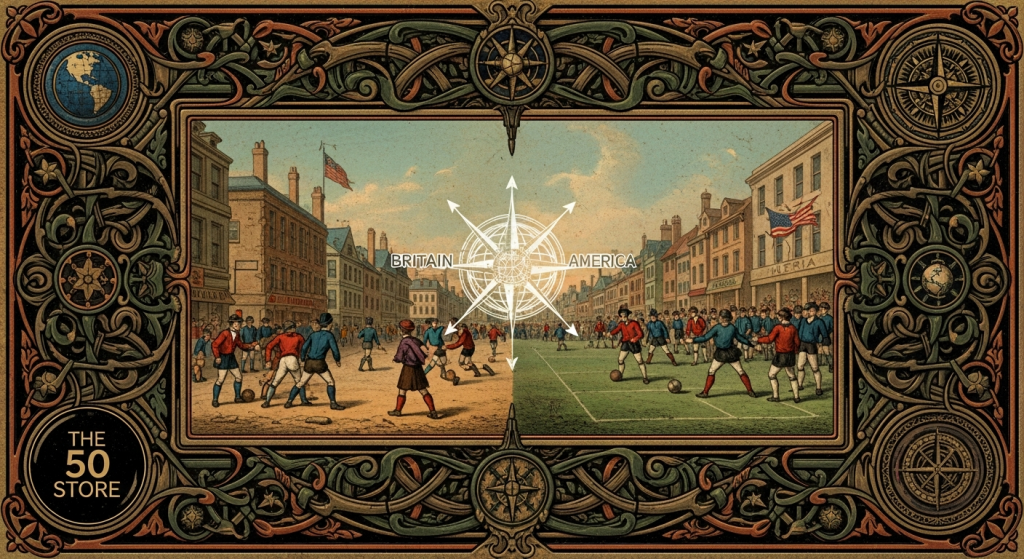
My dear friends, fellow Americans, gather ’round! Today, I want to talk about something that unites us, often puzzles outsiders, and has a truly unexpected story woven into the fabric of our nation. We’re going to unravel the mystery of why America calls it soccer. It’s a question I’ve heard asked countless times, usually with a chuckle, by folks from across the pond, and often, we don’t even know the full answer ourselves. We just do, right?
For generations, the default assumption has been that ‘soccer’ is a purely American invention. You know the drill: ‘We already had our own ‘football,’ so we had to invent a new name for the other kind!’ It’s a tidy, sensible explanation, and frankly, it makes a lot of sense if you don’t dig a little deeper. But like so many things in our rich American story, the truth is far more intriguing, more transatlantic, and, dare I say, a little bit British. Yes, you heard me right! The origin of word soccer isn’t in some dusty American rulebook from the 19th century; it’s steeped in the hallowed halls of Oxford University.
This isn’t just about a word; it’s a micro-history, a little thread that connects us to a broader, global narrative, showing how language evolves, travels, and sometimes, just sticks in one place while the rest of the world moves on. It’s a story of shared heritage, unexpected divergence, and the charming stubbornness of American culture. So, let’s dive into the fascinating football vs soccer history, shall we?
A British Tale: How ‘Soccer’ Kicked Off in Oxford
Now, I know what you’re thinking: ‘Oxford? But isn’t that in England?’ And you’d be absolutely correct! This is where our tale takes its first surprising turn. To truly understand why is soccer called soccer, we need to hop across the Atlantic, back to the mid-19th century. Back then, various forms of ‘football’ were played in British public schools and universities. These weren’t the standardized games we know today; they were a wild mix of rules, often differing from one institution to the next. Some allowed handling the ball, others strictly forbade it. It was a bit of a glorious mess, really.
In 1863, a pivotal moment arrived with the formation of The Football Association in England. Their goal was to standardize the rules of what they called ‘association football’ (the kind where you mostly kick the ball) to distinguish it from ‘rugby football’ (the kind where you carry and throw it). This was a big deal, laying the groundwork for the modern game.
Fast forward a couple of decades to the 1880s, and we find ourselves among the bright, often playful, students at Oxford University in England. These young men had a habit of creating slang, a kind of linguistic shorthand, for just about everything. Rugby football was often shortened to ‘rugger.’ Following this pattern, ‘association football’ became ‘assoc.’ And from ‘assoc,’ with a cheeky addition of ‘-er’ (a common slang suffix at the time, think ‘fiver’ for five pounds), the term ‘soccer’ was born. It was purely british slang soccer, a collegiate nickname, not a formal name, but it caught on like wildfire among a certain set.
Isn’t that a kicker? The word we use, the one that sets us apart, was born out of a very British, very academic, and very informal tradition. It wasn’t an official decree; it was a bit of university banter that accidentally found its way into immortality. It truly highlights how fluid and unpredictable language can be.
Surprising Stats: The Global Game’s American Anomaly
When you think about the global reach of ‘football,’ it’s truly astounding. FIFA, the international governing body, boasts more member countries than the United Nations! We’re talking about billions of fans worldwide. Yet, when they say ‘football,’ almost everyone is talking about the game we call ‘soccer.’ It’s a fascinating linguistic divide, isn’t it?
Here in the U.S., the growth of soccer, despite our unique name for it, has been nothing short of phenomenal. Did you know that in the early 2010s, soccer surpassed ice hockey as the fourth-most popular sport in the United States, according to a Gallup poll? And perhaps even more strikingly, data from the U.S. Soccer Federation indicates that soccer is one of the fastest-growing major sports in terms of participation. We’re talking about millions of kids playing youth soccer every year, far outpacing many other sports. These numbers are from credible sources, showing just how deeply the game has woven itself into American life, even with its peculiar name.
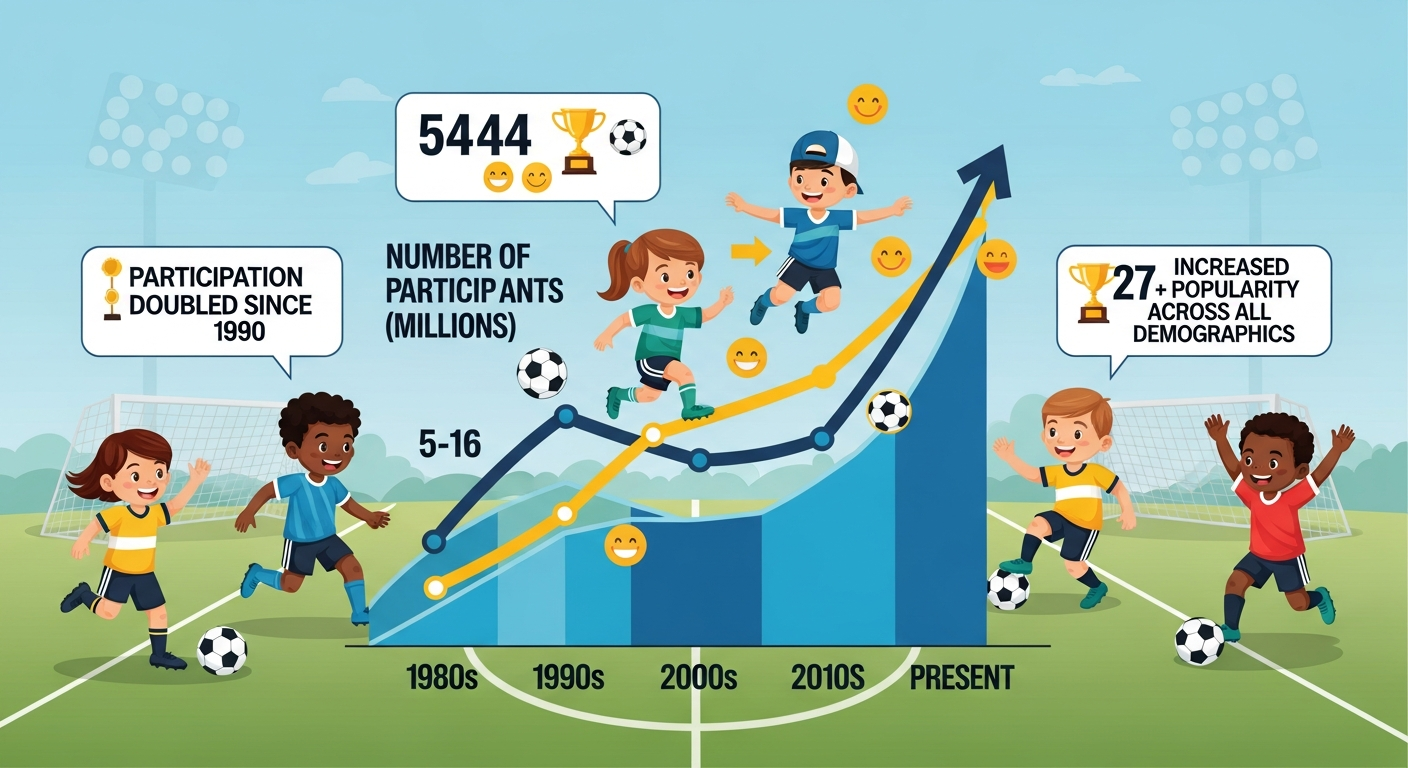
These stats really bring home the point: despite our linguistic divergence, the love for the beautiful game is flourishing on American soil. It makes you proud, doesn’t it? To see something that started as university slang in England become a foundational part of our American sports landscape. The sheer scale of its adoption here, sometimes against the tide of established sports, is a true testament to its universal appeal.
Across the Pond: ‘Soccer’ Finds a Home in America
So, the word ‘soccer’ existed in Britain as a playful abbreviation. But how did it travel across the Atlantic and become entrenched in American English? This part of the soccer etymology is just as compelling. When various forms of ‘football’ began to arrive in the United States in the late 19th century, they faced a crowded field, literally and figuratively. American universities were already developing their own distinct brand of football, which would eventually become the iconic gridiron sport we know and love today.
As early as the 1860s and 70s, colleges like Princeton University and Rutgers University were playing games that blended elements of rugby and what would become association football. But the American game, with its forward passes and elaborate strategies, quickly diverged. By the time association football truly started to gain traction in the U.S. in the early 20th century, particularly in immigrant communities and industrial towns (think of the textile mills of Fall River, Massachusetts, or the steel towns of Pittsburgh, Pennsylvania), the ‘football’ name was already firmly claimed by the American game.
This is where the British slang term, ‘soccer,’ became incredibly useful. It provided a clear, unambiguous way to distinguish between the two sports. If you said ‘football,’ everyone knew you meant the American game. If you said ‘soccer,’ they understood you were talking about association football. It was a practical solution to a linguistic problem, and it worked like a charm. My grandfather, who worked in the steel mills, told me stories about how the immigrant communities, particularly those from Europe and Latin America, brought their love for ‘soccer’ with them, playing spirited matches on makeshift fields after long shifts. It wasn’t just a sport; it was a piece of home, a shared joy that transcended language barriers, except for that one particular word.
The term ‘soccer’ was adopted not just by casual fans but by official organizations. The U.S. governing body for the sport, founded in 1913, was eventually named the United States Football Association, but unofficially, and increasingly officially, the sport was referred to as ‘soccer.’ This practical need for differentiation cemented the term in American English, and thus began our unique chapter in american soccer history.
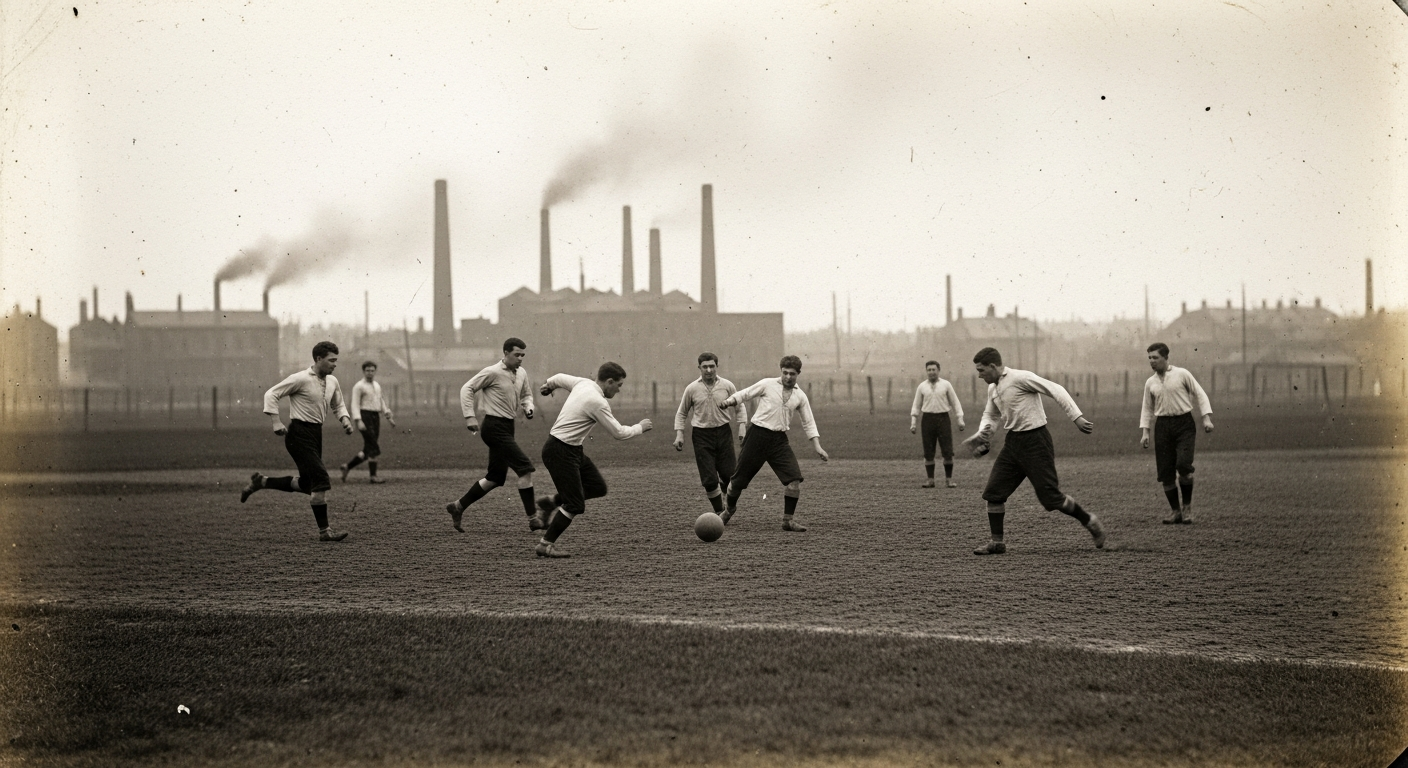
What’s truly remarkable is that this adoption wasn’t contentious. It was a natural, almost inevitable evolution given the circumstances. We weren’t trying to be contrarian; we were just trying to make sense of a world with two popular sports sharing a similar name. It’s a testament to the American spirit of practicality, finding a solution that works for our unique context.
The Great Linguistic Divide: Why Britain Moved On, and We Didn’t
Here’s where the story gets even more interesting. While ‘soccer’ was taking root in the U.S., what was happening in Britain? For decades, ‘soccer’ remained a common, accepted term alongside ‘football.’ You’d hear it in newspapers, in casual conversation, even by commentators. It was just another word for the game. But as the 20th century progressed, something subtle started to shift.
In Britain, rugby football became less of a mainstream competitor, and ‘association football’ simply became ‘football’ by default. There was no longer a pressing need for a distinguishing term. The ‘rugger’ players had their game, and the ‘football’ players had theirs. The slang term ‘soccer’ gradually began to fall out of favor, especially in the latter half of the 20th century. Some scholars suggest a subtle cultural shift, where ‘soccer’ became associated more with American usage and, as such, was shed by the British who wished to distinguish their game from the American one.
But over here, in the land of the free and the home of the brave, we kept it. Why? Because the original reason for its adoption never went away! Our own brand of ‘football’ continued to dominate the national sports landscape. NFL football is a powerhouse, a cultural phenomenon deeply embedded in our autumns and winters. If we suddenly started calling association football just ‘football,’ imagine the confusion! Every sports conversation would require clarification: ‘No, not *that* football, the *other* football!’ It would be a nightmare.
So, we clung to ‘soccer’ out of necessity and, perhaps, a touch of American individualism. It became part of our identity, a small but significant linguistic marker that distinguishes our sporting culture. It’s not a mistake; it’s a piece of living history, a direct descendant of that original british slang soccer, preserved in our lexicon like a linguistic fossil, telling a story of transatlantic travel and cultural adaptation.
When I think about it, there’s something wonderfully American about our stubborn embrace of ‘soccer.’ It wasn’t born out of arrogance or isolation, but out of practicality and a natural response to our unique sporting landscape. It’s a testament to how our country, while built on shared heritage, forged its own path, even in the smallest details of language. It reminds me that America isn’t just a place, but a vibrant, evolving story, always creating its own traditions and charting its own course, even if sometimes, those courses loop back to a university quad in England.
So, the next time someone asks you, with a quizzical look, why america calls it soccer, you can share this incredible journey. You can tell them that the origin of word soccer is as British as afternoon tea, that it sailed across the ocean, found a vital role distinguishing two beloved sports, and became a permanent, cherished part of our nation’s linguistic identity. It’s a beautiful, uniquely American tale, and it makes me proud to know a little more about the rich, surprising history embedded in the words we use every day. It’s a reminder that our history isn’t just in grand monuments or famous battles, but in the everyday language we share, binding us together, and setting us apart, all at once. God bless America, and pass the soccer ball!
Great content! Keep up the good work!
Thank you ExoWatts, We will do our best.