
American Sports & Pastimes
The American Camping Tradition—from Tin Cans to RVs
Sweet American Summer Bomb Pop T Shirt
Wear your story with pride! Celebrate classic American values, history, and heritage with our premium crafted apparel, designed for comfort and durability.
The Spark of the Outdoors
The crisp morning air holds a scent you can never quite capture in a photograph. It is a rich, earthy blend of damp pine needles, morning dew, and the faint, lingering woodsmoke from the night before. I have walked under these towering green canopies for more decades than I care to count, and the feeling never gets old. The wilderness has always been our great equalizer. You step off the pavement, leave the loud noise of the city behind, and suddenly you are just a person standing under an impossibly vast sky. It is a beautiful thing. It feels like returning to a home you did not know you missed. The American outdoors is a vast, welcoming canvas where millions of us have painted our fondest family memories.
I remember the days when a weekend getaway meant tossing a heavy canvas tent and a few scratchy wool blankets into the back of a trusty station wagon. We did not have lightweight synthetic fabrics, and we certainly did not have battery powered espresso machines. We brought what we could carry, and we made do with what we had. The camping tradition has always been about returning to our roots, but the way we actually go about it has evolved drastically over the years. We have traveled from the humble days of sleeping on the hard ground to cruising the interstate highways in rolling palaces.

Sweet American Summer Bomb Pop T Shirt
Wear your story with pride! Celebrate classic American values, history, and heritage with our premium crafted apparel, designed for comfort and durability.
Sweet American Summer Bomb Pop T Shirt
Wear your story with pride! Celebrate classic American values, history, and heritage with our premium crafted apparel, designed for comfort and durability.
A Shift in the Wind
If you look at the numbers today, the sheer volume of people heading into the trees is magnificent. According to the recent annual report by Kampgrounds of America, a highly respected source, camper numbers have surged. Over ninety two million American households now identify as campers. Let that sink in for a moment. Furthermore, the Outdoor Industry Association reported that over half the United States population over the age of six participated in some form of outdoor recreation last year alone. That is a staggering number of people seeking solace in nature. It warms my old heart to see so many folks eager to explore the trails and lakes.
But this incredible surge in popularity brings a natural complication. The woods are getting crowded, and the very way we experience nature has shifted entirely. We have traded quiet isolation for bustling parks, and basic survival for high tech comfort. When I watch families roll into a site with air conditioned trailers, satellite televisions, and glowing string lights, I have to chuckle. It is a far cry from the old days. With so many modern conveniences at our fingertips, are we insulating ourselves from the very nature we came to experience? How do we balance the undeniable comfort of modern recreation with the authentic, raw magic of the wilderness? The answer, I believe, lies in looking back at how this whole tradition started.
The Era of the Tin Can Tourists
Let me tell you about a fascinating chapter in our history, back when the automobile was just beginning to change the world. In the summer of nineteen nineteen, a group of adventurous souls gathered at a park in Florida. They called themselves the Tin Can Tourists. They were everyday folks who recognized the profound freedom offered by the newly affordable automobile. They packed up their cars, strapped homemade tents to the running boards, and hit the dirt roads. They earned their quirky name because they relied heavily on canned food, heating their simple meals directly on their car engines or over small fires. This was the true birth of tin can camping. They did not have designated sites or running water. They had the open road, a spirit of adventure, and each other.
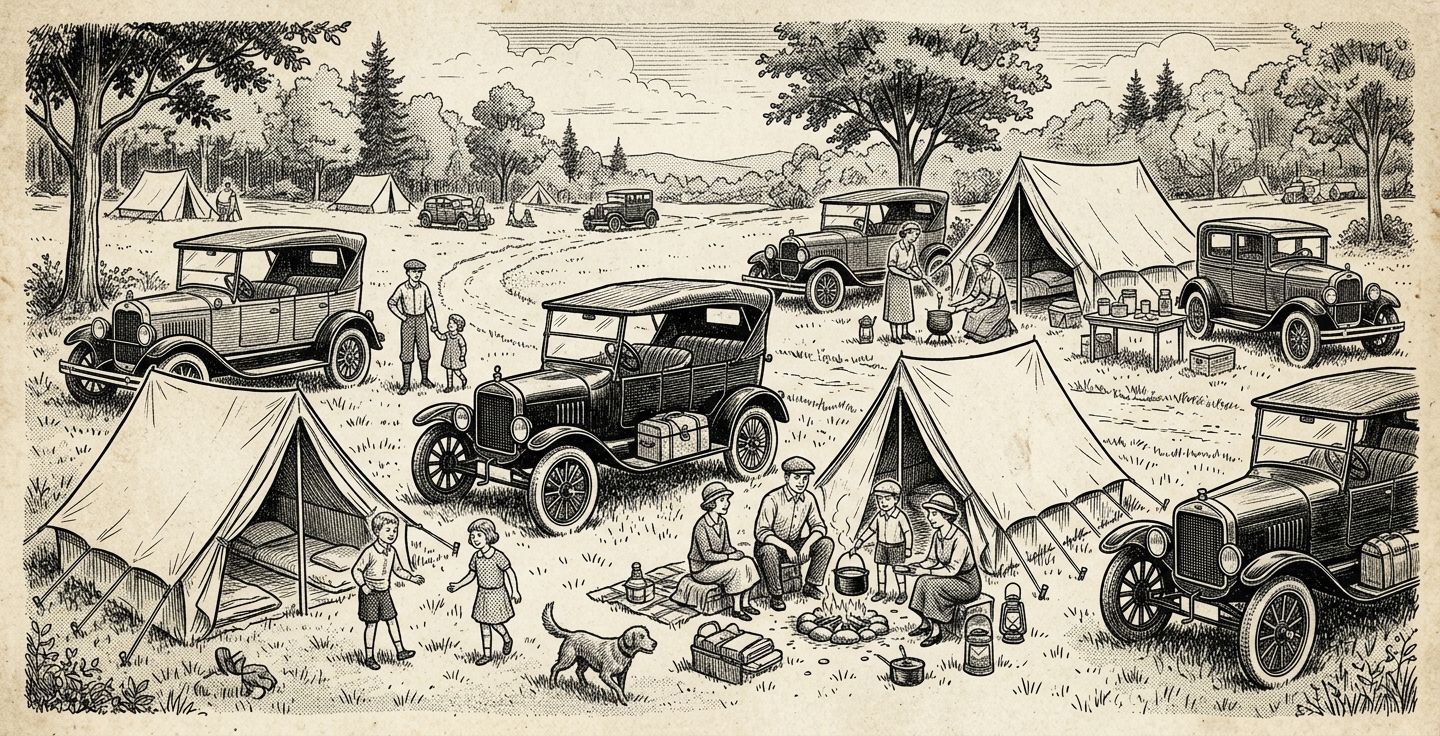
Consider the story of a single stretch of road. The Lincoln Highway was one of the first transcontinental roads for automobiles. It stretched all the way from Times Square to San Francisco. Along this dusty route, early auto camps sprang up naturally. A farmer might charge a nickel to let a weary family pitch a tent in his apple orchard. That small transaction, repeated thousands of times along the highway, changed the very fabric of American travel. It birthed the roadside motel industry and eventually the modern RV park. It was a grassroots movement of exploration that brought everyday people closer to the land.
Paving the Way to the Wilderness
We owe a tremendous debt to visionary folks like Stephen Mather (1867-1930), the first director of the National Park Service. Mather saw these eager motorists and realized a fundamental truth. If people were going to drive out to see the wonders of this country, they needed safe places to park and sleep. He championed the creation of accessible roads and clean facilities. Without his tireless work, the sprawling network of national forest campgrounds we enjoy today might never have existed. He understood that to protect the land long term, you had to make people fall in love with it first. He paved the way for the great American tradition of taking long, winding family road trips across state lines. He made the wild accessible to the working man.
Then there were men like Arthur Carhart (1892-1978). He was a landscape architect for the Forest Service. In nineteen nineteen, he was sent to survey the San Isabel National Forest in Colorado to plot out summer home sites. But when he saw the pristine beauty of the area, he did something radical. He argued that the land was far too special to be divided up for private homes. He believed it should belong to everyone. His bold recommendation led to the creation of the first federally designated wilderness area. It was a massive shift in how we viewed public land. It was no longer just a resource to be harvested; it was a sanctuary to be preserved for the common good.
From Heavy Canvas to High Tech
Let us talk about the equipment that made these journeys possible. The vintage camping gear we used in the mid twentieth century was built incredibly tough, designed to last a lifetime. I still have an old heavy canvas tent that smells faintly of mildew and fond memories. We used a simple cast iron camp stove that weighed a ton but cooked the best morning bacon you have ever tasted in your life. Today, folks have ultra light titanium pots and incredibly compact wood burning camp stoves that fold down to the size of a small paperback book. The innovation is truly marvelous. It allows people of all ages, sizes, and physical abilities to spend time outdoors safely and comfortably.
Fast forward to today, and the canvas tents and tin cans have evolved beyond my wildest dreams. We see magnificent motorhomes that cost as much as a suburban house. We also see rugged overlanding vehicles outfitted with glowing rooftop tents, high capacity solar panels, and heavy duty suspension systems capable of climbing rocky mountain passes. These impressive machines allow adventurers to stray far from the paved paths and stay off the grid for weeks at a time. Yet, regardless of whether you are sleeping inside a luxury coach or a simple pop up tent on a truck roof, the core desire remains exactly the same.
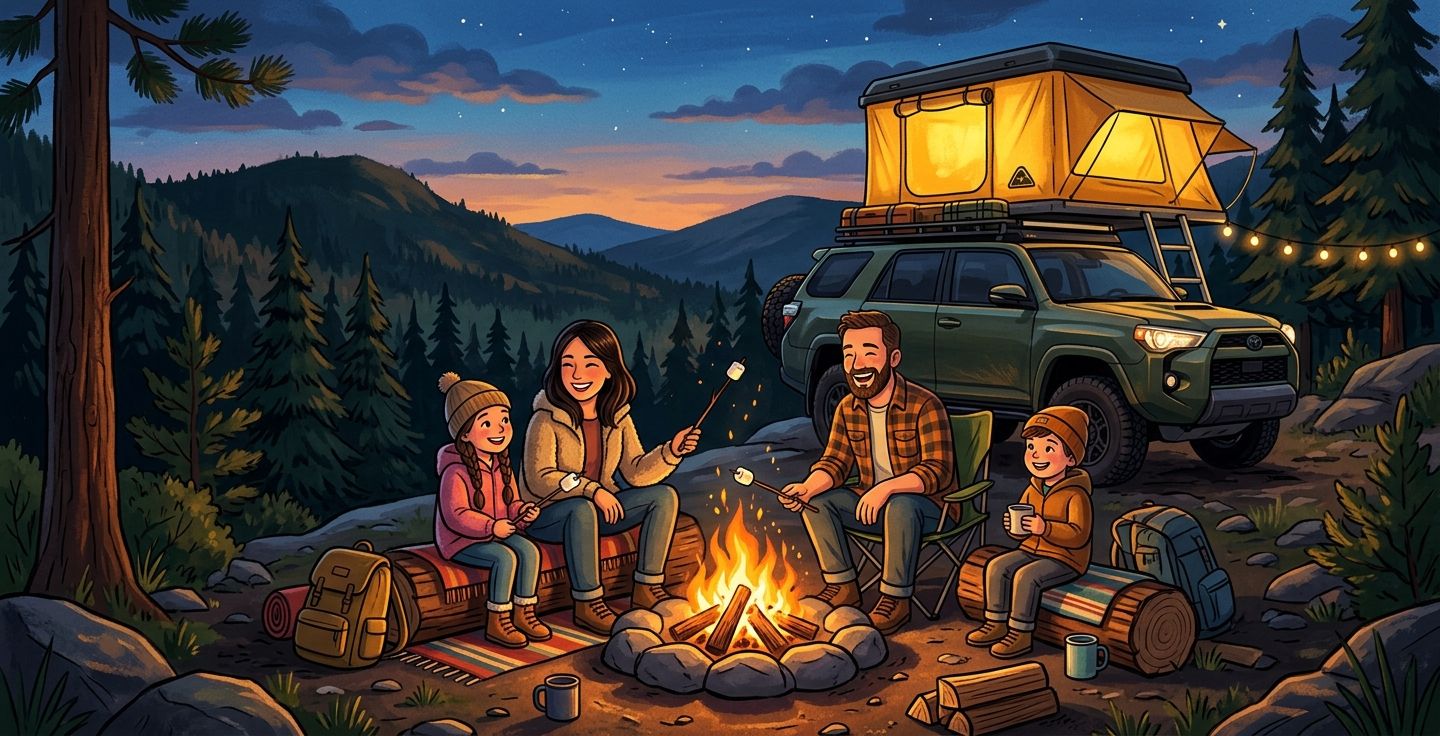
We all just want to wake up to the gentle sound of birdsong. We want to sit around a crackling fire, roast marshmallows, and share stories that make us laugh until our sides ache. We want to feel the warmth of the flames on our faces during those timeless campfire singalongs. The vehicles change, but the human heart does not.
Passing the Torch
As the equipment got smarter and more efficient, some folks feared we would forget the old ways entirely. It is true that basic wilderness survival skills are not as common as they once were. Knowing how to read a topographic map, predict the weather from the clouds, or start a fire with damp wood are arts that require patience and practice. But I see a beautiful resurgence happening all around us. Younger generations are actively craving authenticity. They are enrolling their kids in community outdoor education programs. They are learning proper camping food storage techniques to protect the local bear populations. They are fiercely protective of our public lands. They pack out their trash and leave the woods better than they found them. This fills my old heart with immense hope. The stewardship of our natural world is in exceptionally good hands.
And let us not forget our loyal four legged companions. In my youth, bringing a dog along was sometimes a hassle, and many parks turned them away. Now, pet friendly camping is the standard almost everywhere you go. Park rangers have recognized that dogs are an essential part of the modern family. Seeing a golden retriever happily panting at the end of a long hiking trail, tongue lolling and tail wagging, is a pure delight. It reminds us that nature is a joyous playground for all creatures, great and small.
Common Questions from the Trail
As I sit by the fire sipping black coffee and chatting with new neighbors, I often hear the same questions popping up. Here are a few honest thoughts from an old timer who has seen a bit of everything.
Do I need expensive gear to start exploring?
Absolutely not. While a luxury motorhome is nice to look at, the woods simply do not care how much money you spent. A simple, sturdy tent, warm sleeping bags, and a basic cooler are all you truly need to make lifelong memories. Start small, borrow gear from a friend if you can, and just see how the fresh air feels.
Are public lands becoming too crowded for peace and quiet?
It can certainly feel that way, especially during the summer months at the famous national parks. But remember, this country is wonderfully massive. If you look beyond the glossy magazine covers and seek out lesser known state parks or remote stretches of the wilderness, you will find all the peace and quiet your soul desires. Sometimes you just have to drive one dirt road further.
How do we pass these precious traditions down?
Involve the young ones early and often. Let them gather the kindling for the fire. Teach them the old songs your parents taught you. Let them get their hands dirty. Most importantly, show them your own unbridled enthusiasm. Joy is highly contagious, and when children see you marveling at a starry sky, they will learn to marvel right along with you.
Keeping the Fire Burning
From the early days of soldering tin cans to car radiators, to the modern marvels of rolling luxury homes, the American camping tradition has always been a beautiful work in progress. We have grown in numbers, and we have upgraded our gear, but the spirit of the woods remains untouched. The wilderness still calls to us, offering a quiet refuge from a noisy world. It offers a place to reconnect with our families, our history, and ourselves. I am deeply optimistic about the future. I see young parents teaching their children to respect the rivers and the trees, ensuring these wonders will be here long after my time is done. So, I leave you with this thought. When was the last time you sat under a canopy of stars and just listened to the wind in the trees, and what is stopping you from packing up the car this weekend?