
Immigration, Diversity & Identity
Chop Suey Adaptation: How Cantonese Pioneers Built The First American-Chinese Menus
I love a good adventure, especially one that takes me back through time, exploring the ingenuity and grit of those who shaped our American landscape. Today, I want to share a journey not through canyon lands or alpine meadows, but through the kitchens and dining rooms of early America. A journey to understand a dish that, while often overlooked or even scoffed at today, stands as a monument to resilience: Chop Suey.
Walk into virtually any local Chinese restaurant across America, from the bustling heart of a big city to the quietest small town, and you are stepping into a century of survival, adaptation, and entrepreneurial spirit. For many of us, Chinese food is comfort, tradition, a go-to weeknight meal. But how did it become so ubiquitous? The answer, surprisingly, often starts with one humble dish. Chop Suey wasn’t a traditional import from the ancient culinary traditions of China; it was an ingenious adaptation, a culinary testament to frontier endurance, created by early Cantonese pioneers in California who sought to survive and, against all odds, to thrive.
The Gold Rush Kitchens: A New American Frontier
The mid-19th century in America was a time of frenzied opportunity and brutal hardship. The California Gold Rush, sparked in 1848, beckoned dreamers from around the globe, promising untold riches. Among them were tens of thousands of Chinese immigrants, predominantly young men from the Pearl River Delta region of Guangdong province, especially from the Taishan and Siyi districts. They arrived on America‘s shores, often landing in what would become San Francisco’s vibrant Chinatown, eager to stake their claim in the ‘Gold Mountain.’
But the promise quickly soured. The reality was harsh. Chinese miners faced rampant discrimination, violence, and discriminatory legislation like the Foreign Miners’ Tax, first enacted in 1850 and later expanded in 1852, which targeted non-American miners, effectively pushing many Chinese out of the mines. As I’ve explored the ghost towns and forgotten corners of the West, I’ve seen how quickly dreams turned to desperation for many. Excluded from mainstream employment, these resourceful pioneers turned to the few avenues available: laundries, railroad construction, and, crucially, cooking.
They opened small eateries, first to serve their own communities, but soon, out of necessity, to feed the diverse, hungry population around them. These weren’t opulent dining establishments; they were often simple, functional spaces designed to provide quick, affordable meals. This was the crucible where American-Chinese cuisine began its fascinating transformation.
Sizzling the Scraps: The Birth of a New Flavor
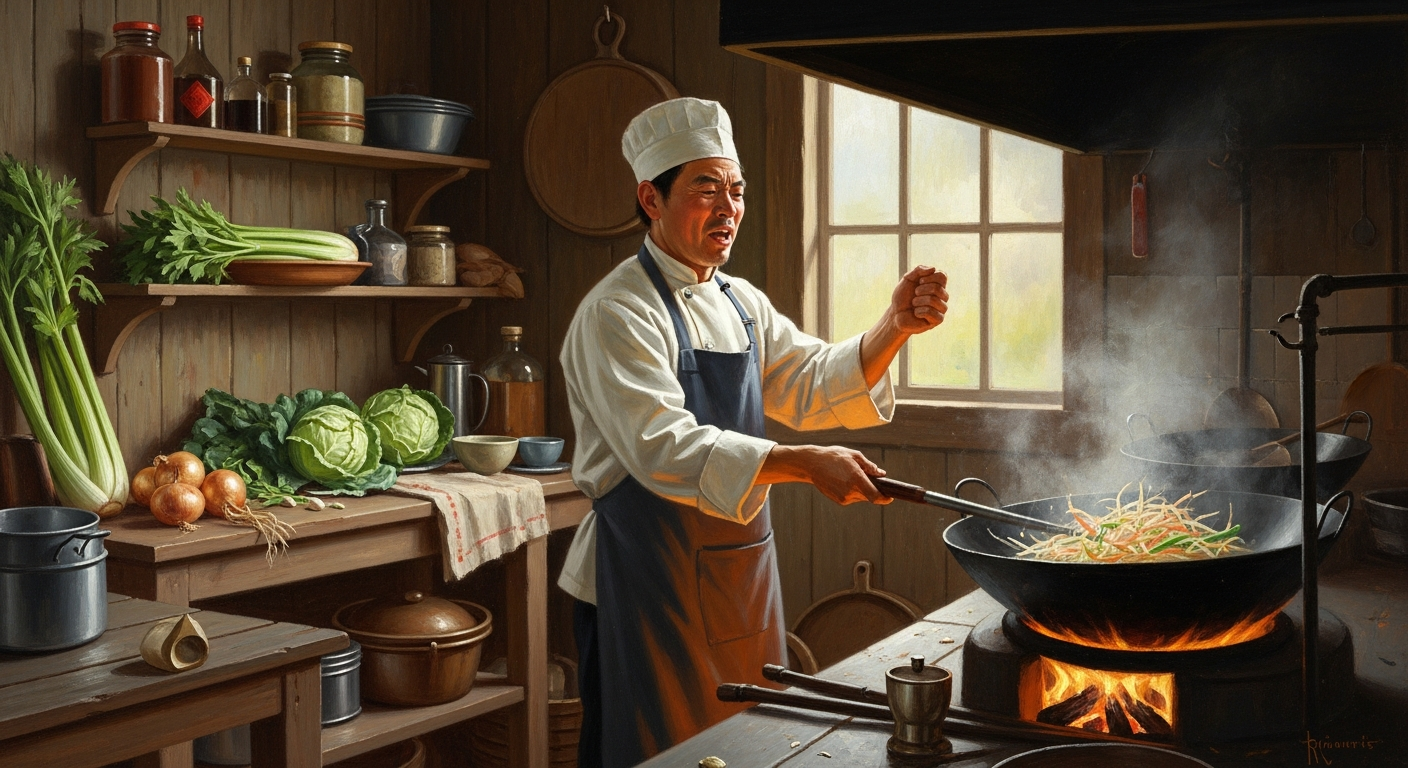
The early Cantonese chefs, with their deep understanding of stir-frying and flavor balance, faced a distinct challenge: how to cook for an American palate with American ingredients. Back home, their cuisine was rich with fresh seafood, regional vegetables, and intricate sauces. In the frontier towns of California, however, ingredients were limited and often unfamiliar. They had to adapt. This meant tossing together whatever local meats and vegetables were available – often celery, onions, bean sprouts, cabbage, and cuts of chicken or pork – and seasoning them in a way that appealed to a broader, non-Chinese clientele.
The ingenious solution was Chop Suey. The name itself, ‘tsap seui’ in Cantonese, literally means ‘miscellaneous leftovers’ or ‘odds and ends.’ It was a dish born of necessity, resourcefulness, and culinary skill. Imagine a bustling kitchen in a Gold Rush town: a skilled chef, perhaps remembering the flavorful stir-fries of his homeland, looks at a basket of local produce and a few cuts of meat. With a sizzling wok and a dash of soy sauce, garlic, and ginger, he transforms these disparate elements into a satisfying, hearty meal. This was true culinary alchemy, making something delicious from very little.
The flavors were intentionally adapted. While traditional Cantonese cuisine might feature subtle, complex spice profiles, Chop Suey often leaned into a more savory-sweet balance, less spicy, and with a texture that was familiar yet exotic enough to intrigue American diners. This wasn’t about compromising authenticity; it was about brilliant market adaptation. It was about creating a bridge, one plate at a time.
This pragmatic approach paid off handsomely. By the early 20th century, Chinese restaurants were multiplying across the nation. Consider this surprising statistic: In 1890, there were roughly 600 Chinese restaurants in the U.S. By 1920, that number had skyrocketed to over 3,000, and by 1930, it was an astonishing 6,500. This exponential growth was largely fueled by dishes like Chop Suey, demonstrating its incredible appeal and the entrepreneurial drive of these pioneering families. (Source: Yong Chen, ‘Chop Suey, USA: The Story of Chinese Food in America,’ Columbia University Press, 2014)
The Chop Suey Craze: America’s First ‘Exotic’ Fast Food
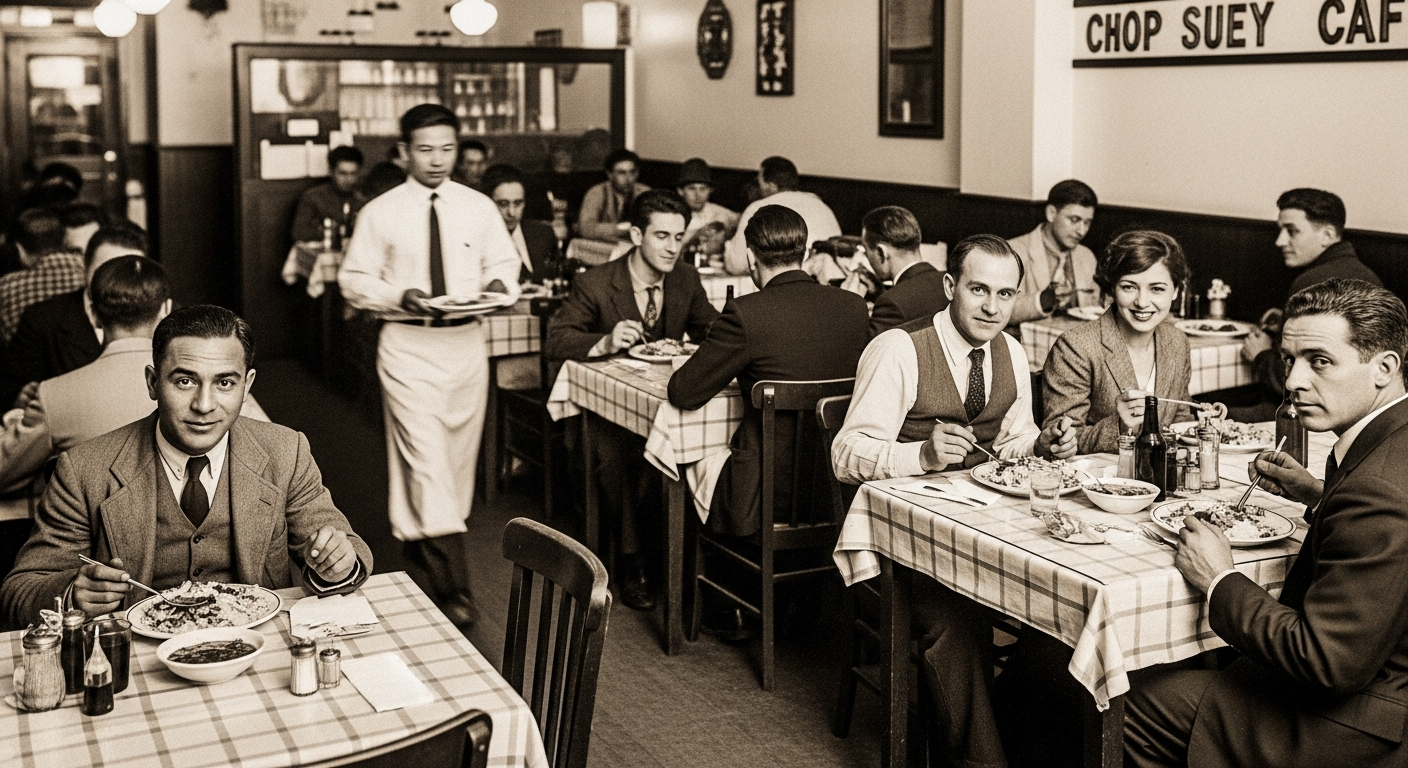
The early 20th century witnessed the full bloom of the Chop Suey craze, especially in cities like New York City’s bustling Chinatown. ‘Chop Suey joints,’ as they were affectionately called, became a sensation. They offered something new: an ‘exotic’ dining experience that was also incredibly affordable and available late into the night. Bohemian artists, theater-goers, factory workers, and even high society flocked to these establishments.
The journalist and social critic Herbert Asbury famously described the allure of Chinatown’s late-night eateries in his 1930 book, ‘The Gangs of New York,’ highlighting their popularity as places where diverse crowds mingled over cheap, hearty meals. This wasn’t just about food; it was about culture, community, and the thrill of the new.
This dish, born from ‘miscellaneous leftovers,’ became a cultural icon. It played a pivotal role in demystifying Chinese culture for many Americans, serving as an accessible entry point to a new cuisine. It was a dish that transcended social barriers, enjoyed by almost everyone. As I guide groups through historic downtowns, I often point out the faded signs of what were once thriving Chop Suey houses, silent witnesses to this fascinating era.
The First Fast-Food Success: Building an Empire of Ingenuity
What I find truly remarkable is how early Cantonese families built a massive, self-reliant network of small businesses across the entire nation. During a time of intense anti-Chinese sentiment, epitomized by the devastating Chinese Exclusion Act of 1882, which effectively banned Chinese laborers from immigrating and denied existing residents citizenship, these restaurants were more than just eateries; they were lifelines. They provided employment, community support, and a pathway to economic stability in a hostile land.
Chop Suey, and the restaurants that served it, were the original American fast food success story. They offered quick service, consistent quality (within their adapted framework), and unbeatable affordability. Families pooled resources, trained new generations, and sent their children to open new restaurants in every corner of the country. This model of self-sufficiency, fueled by dishes like Chop Suey, allowed an entire community to not just survive, but to lay the groundwork for the incredibly diverse and successful Chinese-American culinary landscape we enjoy today.
The legacy of Chop Suey is more profound than most realize. This single dish paved the way for the modern Chinese-American restaurant, which is now one of the most common dining options in America. It showed immigrant communities how to adapt, how to innovate, and how to build a lasting presence through sheer hard work and culinary genius. It’s a story of hope, resilience, and the enduring spirit of adaptation that defines so much of the American experience.
How to Identify a Classic American-Chinese Menu Adaptation
If you’re like me, you love to dig into the roots of local culture, especially through food! Here’s a simple guide to help you spot a menu that honors the early Cantonese pioneer spirit:
- Look for ‘Combination Plates’: A hallmark of early American-Chinese menus, these plates offered a variety of dishes (often Chop Suey, Chow Mein, Fried Rice) in a single, affordable serving.
- Spotting ‘Chop Suey’ or ‘Chow Mein’ prominently: These were the foundational dishes. If they’re still on the menu, especially as a main category, it’s a nod to history.
- Sweet & Sour Everything: While sweet and sour flavors exist in traditional Chinese cuisine, their widespread application to pork, chicken, and even shrimp is a distinctly American-Chinese adaptation.
- Heavy Use of Celery & Onion: Remember, early chefs used what was available. These vegetables are often prominent in older recipes.
- Fortune Cookies: A purely American invention, originating in California, though its exact history is debated between Japanese and Chinese-American confectioners. If you get one, you’re experiencing a piece of American-Chinese culinary history!
A Timeline of Cantonese Ingenuity in America
To truly appreciate the journey of Chop Suey, let’s look at some key milestones:
| Year/Period | Event/Development | Impact on American-Chinese Cuisine |
|---|---|---|
| 1848-1850s | California Gold Rush & Initial Chinese Immigration | Influx of Cantonese immigrants; discrimination forces many into laundry and restaurant businesses. |
| 1850s-1870s | First Chinese Restaurants Emerge | Establishment of eateries primarily serving Chinese workers, gradually attracting curious non-Chinese diners. Dishes like early Chop Suey begin to take shape from available ingredients. |
| 1882 | Chinese Exclusion Act Passed | Severely restricts Chinese immigration, reinforcing the need for self-sufficient economic niches like restaurants for survival. |
| Late 1800s – Early 1900s | Rise of Chop Suey & Chow Mein | Chop Suey becomes a national sensation, marketed as exotic yet affordable. Chinese restaurants become common across the US. |
| 1920s-1940s | ‘Chop Suey Palaces’ & Expansion | Restaurants become larger, more decorative, and mainstream, solidifying Chinese-American cuisine as a permanent fixture. Establishment of family-run restaurant chains. |
| 1960s-Present | Diversification & Regional Cuisines | While Chop Suey fades in prominence, its success paves the way for new waves of Chinese immigration and the introduction of more regionally diverse and ‘authentic’ Chinese dishes to American menus. |
Celebrate the Spirit of Adaptation
The story of Chop Suey is more than just a culinary footnote; it’s a profound chapter in American history, a testament to the power of adaptation and the unwavering spirit of immigrant communities. It reminds us that often, the most enduring innovations spring from the humblest beginnings, forged in the fires of necessity.
When I think of the journey these pioneers undertook, the challenges they overcame, and the delicious legacy they left behind, I’m filled with such admiration. It’s a narrative that echoes the very spirit of America itself: ingenuity, perseverance, and the constant reshaping of dreams against new horizons.
So, the next time you sit down for a plate of Chinese-American food, take a moment to appreciate the incredible journey that brought it to your table. You’re not just enjoying a meal; you’re partaking in a vibrant, living history.
Speaking of celebrating this incredible journey, The50 Store has a fantastic way to honor this history. Check out their “Chop Suey Café Retro Vintage Tee.” It features a retro, mid-century restaurant sign print on our ultra-breathable combed cotton, letting you wear a piece of this pioneering spirit. It’s a perfect nod to the genius of immigrant adaptation that built America’s first fast-food empire!