
American Sports & Pastimes
The Sandlot Baseball Legacy: How Empty City Lots Breathed Life Into Youth Sports
No dugouts, no formal uniforms, and no referees. Just a worn leather ball, a taped wooden bat, and an empty neighborhood lot. This was the world of Sandlot Baseball, the grassroots pastime that breathed life into youth sports across 20th-century America. I remember those days like they were yesterday, the dust motes dancing in the late afternoon sun, the shouts and laughter echoing down the street. It wasn’t just a game, it was a way of life, a summer ritual etched deep into the heart of countless American kids, myself included.
It feels like a different country sometimes when I look at youth sports today. Modern leagues, specialized training, travel teams, and professional coaches. They all have their place, I suppose, but something has been lost, too. We’ve traded a little bit of magic, a little bit of that raw, unvarnished joy, for structure and competitive pressure. It makes you wonder, doesn’t it? What did we gain, and what did we leave behind in those overgrown fields and asphalt stretches?
The Spirit of the Neighborhood Sandbox
The Rise of the Sandlot: Where Dreams Took Root
Back at the turn of the last century, as America’s cities swelled with new families, a craving for simple recreation grew. Working-class children, often the sons and daughters of immigrants seeking a new start, looked for any patch of open ground. A vacant lot between buildings, an unused corner of a park, even a stretch of street where traffic was sparse. These weren’t designed for baseball, but they became sacred spaces. It was here, on these improvised diamonds, that the national game truly took hold, binding together communities from New York’s Lower East Side to the burgeoning neighborhoods of Chicago and Los Angeles.
Baseball, simple in its premise yet endlessly complex in its play, was a perfect fit. It didn’t require expensive equipment or a perfectly manicured field. Just a ball, a bat, and enough kids to field a couple of teams. My grandpappy used to tell me stories about playing with a bat carved from an old fence post and a ball so battered it was mostly string and tape. They made do, you see, and in making do, they created something truly special.
It’s interesting to consider how much things have changed. Today, the world of youth sports often comes with a hefty price tag. The Aspen Institute, a respected think tank, reported that families spent an average of $693 per child annually on youth sports in 2022, with some sports like ice hockey and football reaching thousands of dollars. Compare that to the sandlot, where the only cost was a little ingenuity and a lot of heart. This shift is stark, isn’t it?
Improvised Ground Rules: Creativity on the Fly
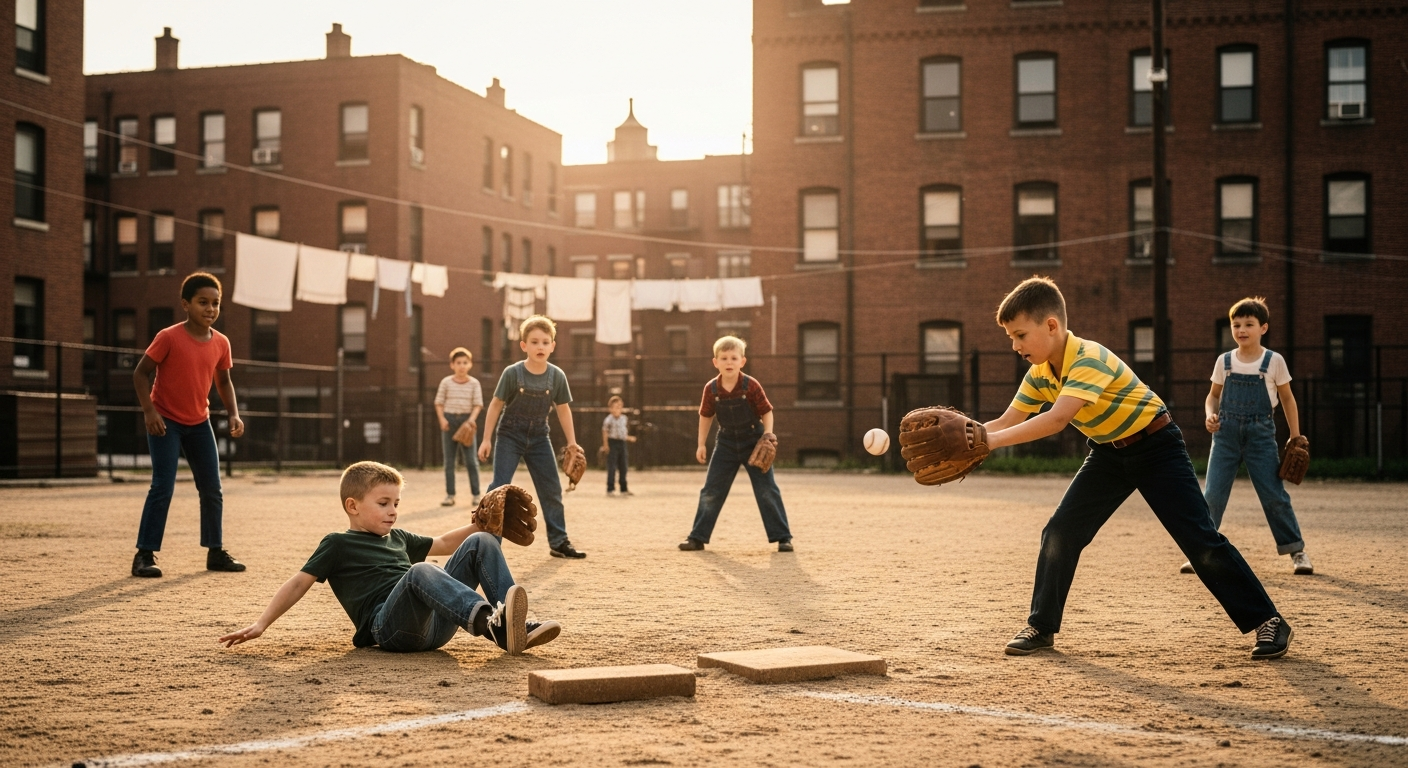
One of the true marvels of sandlot baseball was its incredible adaptability. There were no official rulebooks handed out by some governing body. Every game had its own peculiar set of rules, hammered out on the spot, often changing mid-inning. Bases might be an old cardboard box, a flat rock, a discarded tire, or even a younger sibling willing to stand still for a moment. Home plate could be a worn-out hubcap, a brick, or a chalk mark on a wall. The outfield fence? That might be Mrs. Henderson’s prize-winning rose bushes, or the formidable front porch of Mr. Miller’s house.
I remember one summer in my old neighborhood. We had a sandlot down by Miller’s Creek, and if you hit the ball into the water, it was an automatic home run, but you had to go fish it out! That was the rule, decided by us kids after a particularly frustrating argument one sweltering afternoon. These weren’t just quirky details, mind you. They fostered creativity, problem-solving, and a deep sense of ownership over the game. Every swing, every chase, every slide was a negotiation with the environment and with each other.
Self-Governing Sports: Lessons Beyond the Diamond
Perhaps the most powerful aspect of sandlot baseball was its self-governing nature. There were no parents yelling instructions from the sidelines, no adult coaches dictating strategy, no umpires to make the final call. The kids were in charge. If there was a dispute over a close play at first base, it was up to the players to sort it out. And sort it out we did, often with loud arguments, a bit of pushing and shoving, but ultimately, a resolution. It built character, taught diplomacy, and instilled a powerful understanding of fair play and compromise.
Imagine the skills learned: conflict resolution, teamwork, leadership, and resilience. These weren’t taught in a classroom; they were forged in the heat of competition, under the watchful eye of your peers. You learned quickly that if you cheated or acted unfairly, you simply wouldn’t be picked for the next game. That was a powerful incentive to do right. It built genuine camaraderie, too. I still cherish memories of my childhood friends, like Tommy “The Terror” Johnson and little Maria Rodriguez, who could hit a line drive better than any boy, all of us united by the love of the game, regardless of our backgrounds or the differences outside the lot.
This contrasts sharply with a trend we see today. A study published in the American Journal of Play noted a significant decrease in children’s outdoor free play over the past few decades, with organized activities increasingly taking its place. While organized sports offer many benefits, that spontaneous, unstructured time on the sandlot cultivated something unique.
A Timeless Legacy: From Humble Lots to Hallowed Halls
The spirit of the sandlot didn’t just stay in those dusty fields; it blossomed into a timeless legacy that shaped American culture and sports. Many of America’s greatest baseball legends, from Babe Ruth, who famously honed his raw talent in the streets and empty lots of Baltimore, to Jackie Robinson, who broke barriers with a graceful athleticism developed through countless hours of play, learned their fundamental love for the game in informal settings. Think of Joe DiMaggio in San Francisco’s North Beach, or Ted Williams in the sandlots of San Diego. Their stories are woven into the very fabric of baseball history.
These places, these humble beginnings, were nurseries for greatness. They taught perseverance, the joy of a perfectly struck ball, and the sting of a missed catch. They built the foundation for players who would one day grace hallowed grounds like Yankee Stadium, Wrigley Field, and the now-lost Ebbets Field. The tales of their sandlot days became part of their personal mythos, making them all the more relatable, all the more American.
And then there’s the enduring power of film, particularly the movie The Sandlot. That movie, with its nostalgic portrayal of summer days, neighborhood rivalries, and the shared adventure of childhood, perfectly captured the essence of what those empty lots meant. It wasn’t just about baseball; it was about friendship, growing up, facing your fears, and finding your place in the world. It reminded us all of a time when the biggest worry was whether we had enough daylight left for one more inning.
Urban Roots and Tactile Details
It’s important to remember that sandlot baseball wasn’t just a suburban idyllic scene. It was a crucial part of integrating diverse immigrant neighborhoods in America’s booming cities. When families arrived from distant lands, speaking different languages, baseball often became a common tongue. On the sandlot, Polish, Italian, Irish, German, and African American kids found common ground. The rules of the game were universal, even if the specific ground rules varied. It was a place where differences melted away, replaced by the shared goal of winning the game. That, to me, is one of the most beautiful aspects of its legacy, a truly patriotic ideal: unity through play.
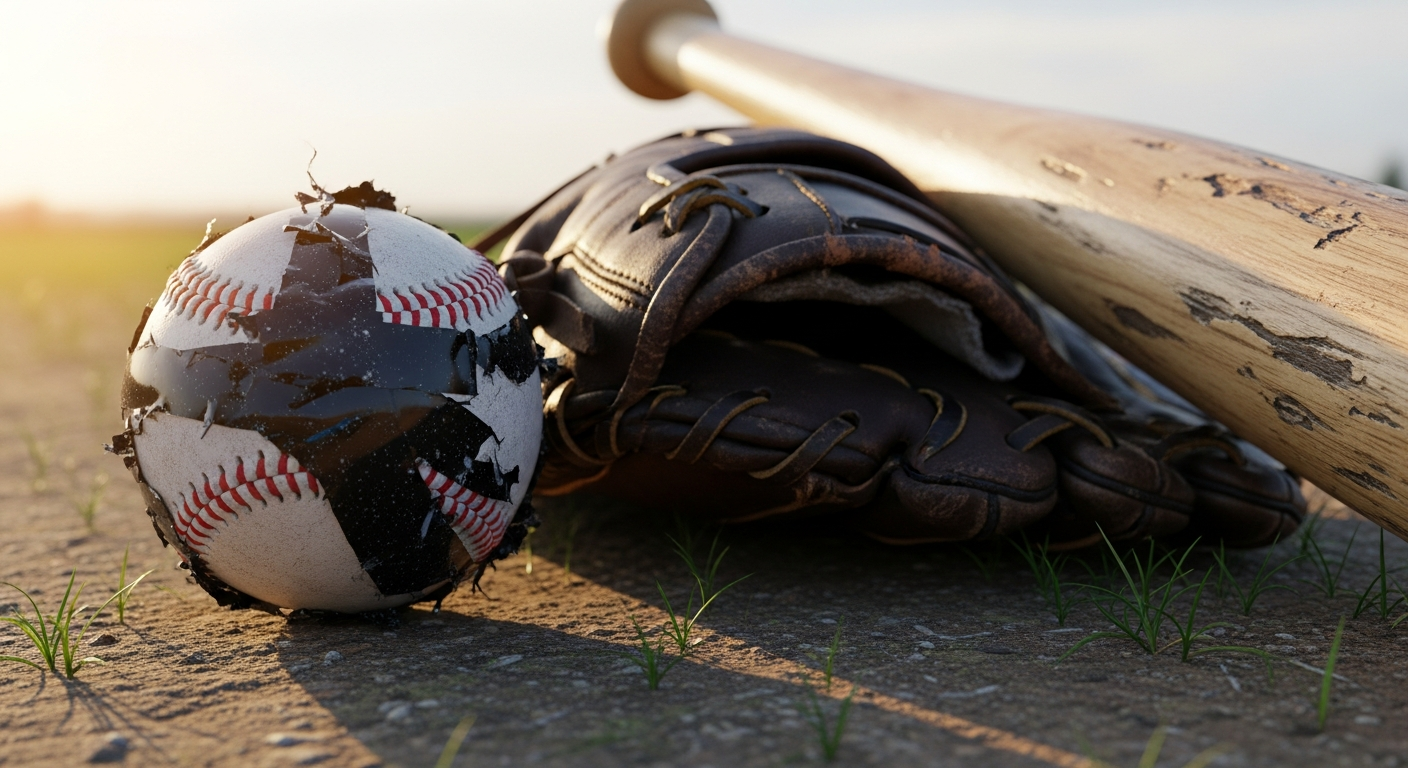
And the tactile details! Oh, they stick with you. The way a worn leather glove, handed down from an older brother, felt on your hand. The heavy, reassuring thud of a ball wrapped in black electrical tape, keeping it together for just one more game. That tape wasn’t just practical; it was a badge of honor, a sign of a well-loved, well-played ball. The feel of dusty dirt sliding under your bare feet as you rounded third. The smell of freshly cut grass (or sometimes, just weeds) on a warm afternoon. These sensations are etched into the memories of anyone who played there, a testament to the raw, visceral experience of the sandlot.
The truth is, those sandlots were more than just places to play. They were schools of life, laboratories for social interaction, and melting pots for American culture. They taught us how to win with grace, lose with dignity, and always, always come back for another game. They instilled a love for baseball that has lasted a lifetime for so many of us, a love for the spirit of competition, fair play, and community. We may not have as many empty lots today, but the spirit of the sandlot, that yearning for simple, self-directed play, still lives on in the hearts of those who remember, and perhaps, can inspire future generations to find their own patches of dirt and build their own legends.
Relive the Golden Days of Summer
Remember those golden days of summer, the crack of the bat, the shouts of your friends, and the endless possibilities of an afternoon on the diamond? You can keep that spirit alive. Relive the glory with our “Sandlot Baseball Club Distressed Tee.” It features a distressed, vintage-print vector design on premium, breathable combed cotton, perfect for a casual game of catch or just reminiscing about the good old days. It’s more than just a shirt; it’s a nod to a simpler time, a tribute to where the love of the game truly began.