
American Lifestyle
What It’s Like to Live in a Typical U.S. Neighborhood
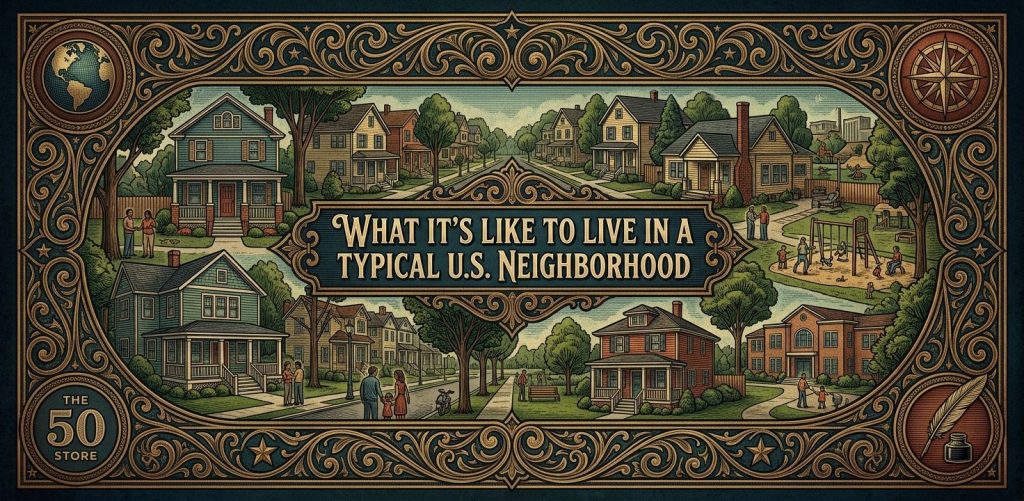
There is a specific sound a screen door makes when it slams shut on a warm July evening. It is a quick double tap of wood and wire mesh, followed by the soft patter of children running down the driveway. That sound used to be the heartbeat of the American street. When I was a boy growing up, the neighborhood was our entire universe. You knew the names of the dogs, the makes of the cars, and exactly whose apple tree you were allowed to climb. The boundaries of our world were defined by our bicycle rides. Life was lived out in the open, visible and shared.
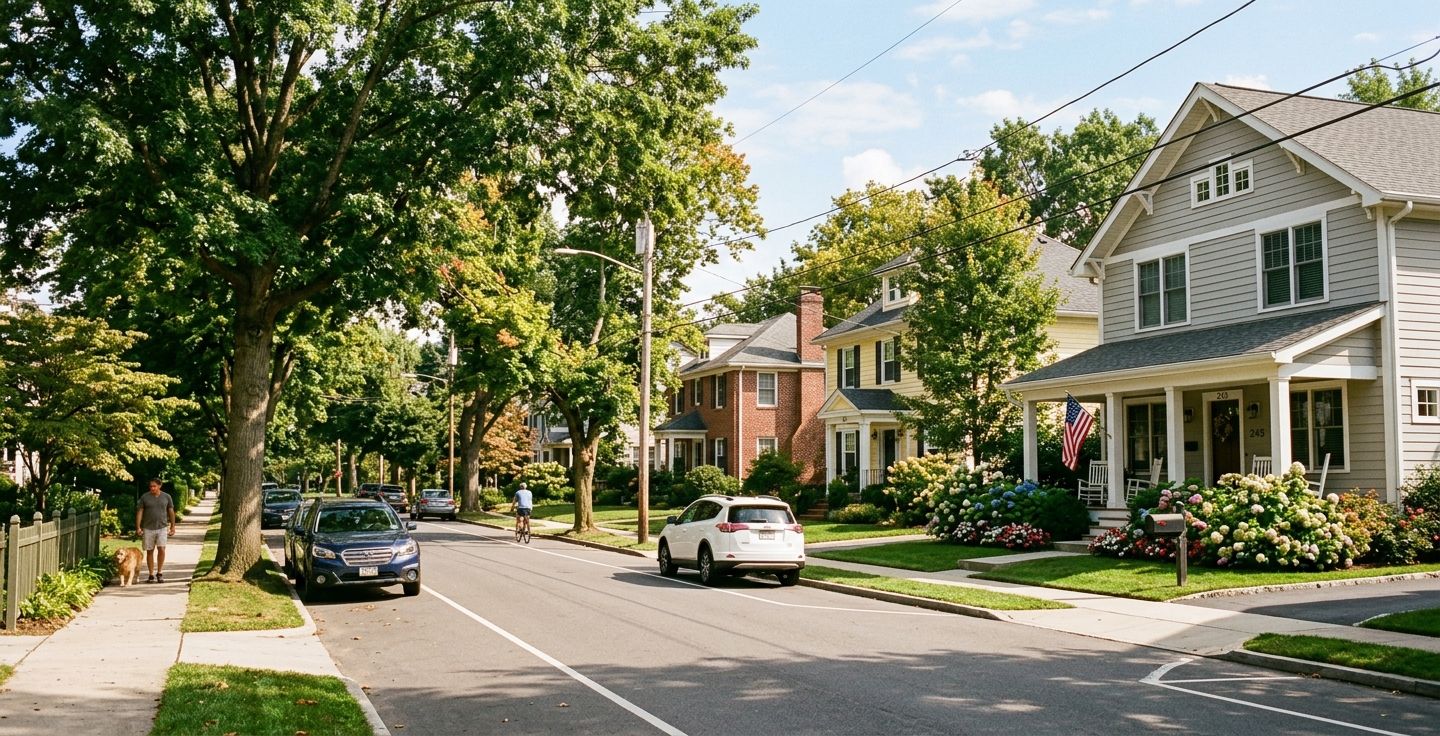
The situation today feels quite different for many folks. We still live side by side. We still share property lines, sidewalks, and the occasional overhanging oak tree branch. Yet, the complication we face is subtle. We have slowly retreated indoors. Air conditioning pulled us off the front porch. Fences grew a few feet taller to protect our private oasis. The invention of automatic garage door openers meant we could drive right into our homes, press a button, and shut out the world without ever stepping outside to wave at the person next door. Our homes became fortresses of comfort.
This reality brings up a very important question. Have we lost the spirit of our local streets forever? And how do we find our way back to each other in a world that constantly encourages us to look at screens instead of faces? The answer is not found in tearing down our modern comforts or living in the past. The answer lies in making small, intentional choices to step outside again. We must remember that we are social creatures. We thrive when we know the people who share our little patch of the earth.
The Changing Shape of Our Streets
Let me share something that might surprise you. According to recent surveys by the Pew Research Center, only about twenty six percent of Americans say they know most of their neighbors. Furthermore, the United States Census Bureau reports that the average size of a newly built single family home has more than doubled since the nineteen fifties. Back then, homes averaged around one thousand square feet. Today, new homes often exceed two thousand five hundred square feet. We have built much more space for ourselves. We have constructed thicker walls for more belongings, even as our household sizes have shrunk. We are living further apart from the folks who sleep just fifty feet away.
It was not always designed to be this way. Think about the winding roads and green spaces of places like Radburn, New Jersey. Back in the nineteen twenties, city planners envisioned places where people could walk safely. They wanted homes facing common gardens rather than concrete streets. A visionary planner named Clarence Perry (1872-1944) championed what he called the neighborhood unit. He believed every home should be within an easy walk of an elementary school, a park, and a local shop. He wanted streets to foster connections naturally.
Decades before him, the famous landscape architect Frederick Law Olmsted (1822-1903) helped design suburban communities with the same flowing, natural grace he brought to massive city projects like Central Park. They understood a fundamental truth. The physical space we inhabit shapes the way we treat each other. When we build spaces for walking and lingering, people walk and linger.
When mass housing boomed after the Second World War, places like Levittown, New York sprang up almost overnight. Developer William Levitt (1907-1994) applied assembly line techniques to house building. These early mass suburbs were crowded with young families. While imperfect and exclusionary for many, the sheer density of young children there meant that neighborly interaction was entirely unavoidable.
Micro-Histories of the Sidewalk
Let me tell you a story about my childhood street. It was a modest stretch of brick and siding, shaded by towering elm trees. There was a man named Mr. Henderson who lived at the corner house. Mr. Henderson worked at the local hardware store. When the city came through to widen the road in the nineteen seventies, many folks decided to put up tall privacy fences. They wanted to block out the noise of the passing cars.
Mr. Henderson did the exact opposite. He built a low, three foot high wooden picket fence. He planted bright red geraniums along the edge. He spent his long summer evenings leaning on that little fence. He waited for people to walk their dogs. He waited for kids to ride their bicycles. He knew that a fence did not have to be a barrier. It could be a gathering place.
Mr. Henderson became the unofficial mayor of our little block. He knew who was sick and needed a hot casserole delivered. He knew whose lawn mower was broken and needed a quick spark plug fix. One small, intentional choice kept a dozen homes stitched together. It was a beautiful thing to witness. It showed me that true community happens because someone decides to stay visible.
Finding Joy in the Neighborhood Canvas
As the decades rolled on, the cul-de-sac became the new symbol of residential life. Some planners criticize them for being disconnected. But if you have lived on one, you know the absolute magic they hold. They become safe havens. The circular patch of asphalt turns into a summer baseball diamond or a shared canvas for sidewalk chalk.
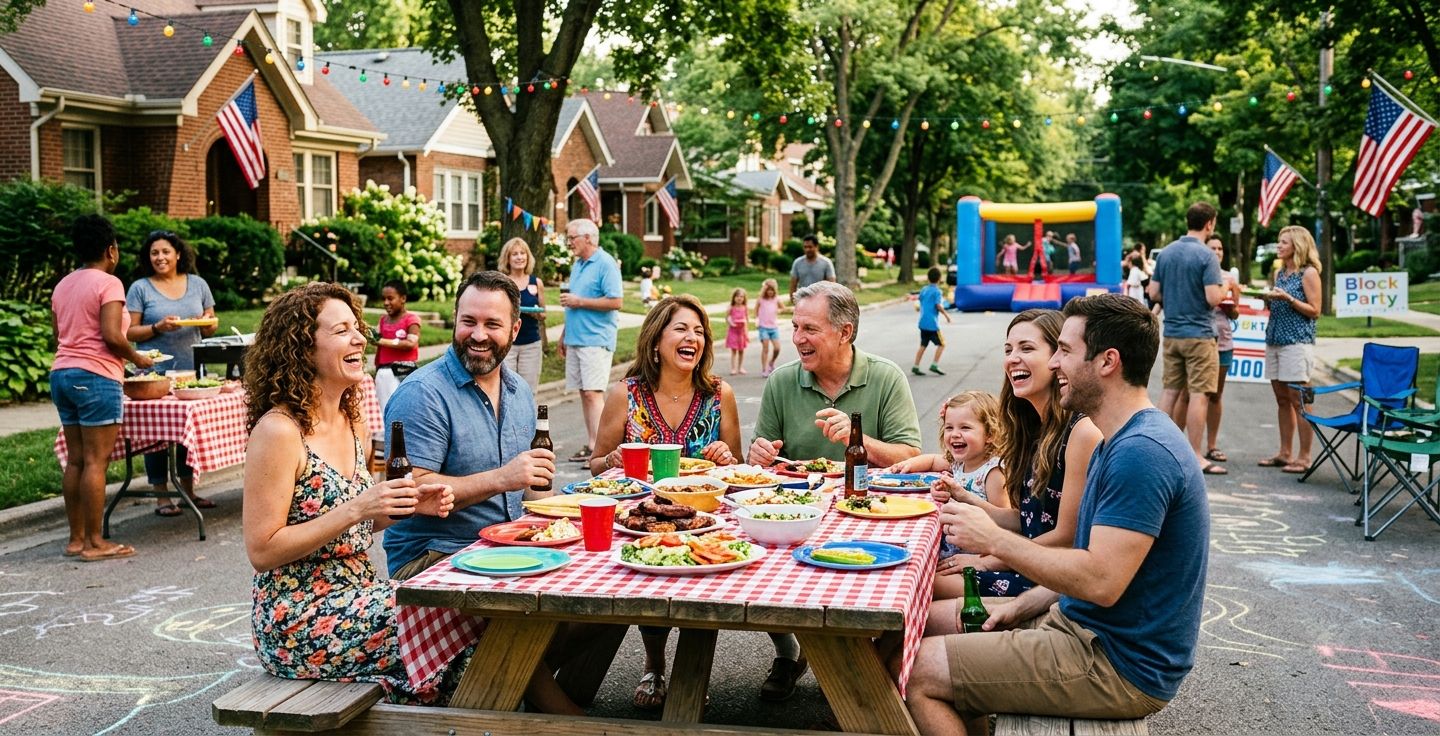
I vividly remember the year we organized our first official block party. It was late August. The thick summer heat had finally broken. We dragged folding tables out of our dark basements and lined them up right in the middle of the street. Someone brought a heavy, portable charcoal grill. Mrs. Gable brought her famous yellow mustard potato salad.
We strung paper lanterns between the streetlights. We sat out there until the stars came out. We learned more about our neighbors in that single night than we had in the five years prior. We discovered that the young couple next door was expecting their first child. We found out the quiet older gentleman across the street had served in the same military division as my uncle. These are the threads that hold society together. They are invisible until you take the time to weave them together over a shared meal and a simple conversation.
Stepping Into a Brighter Tomorrow
You might be sitting there reading this today and feeling a bit lonely. You might be wishing you lived on a street like Mr. Henderson’s. But here is the wonderful truth. You have the power to create that warm feeling right where you are. You do not need a time machine to find a friendly neighborhood. You just need a little bit of courage to break the ice.
Start small. The next time you walk out to check your mail, linger by the box for an extra minute. If you see someone walking by, offer a simple wave and a warm smile. Plant some colorful flowers near the sidewalk instead of hiding them all in the backyard. Pull your lawn chair out to the driveway on a nice evening with a glass of iced tea. You will be absolutely amazed at how quickly people will gravitate toward a welcoming presence.
I look at the younger generations today, and my heart swells with immense hope. I see young parents organizing neighborhood cleanups on Saturday mornings. I see vibrant community gardens sprouting up across great cities like Portland, Oregon and Austin, Texas. I see folks using the internet not to escape reality, but to organize local tool libraries and mutual aid groups. The basic human desire to belong is strong. It never truly fades away. It just takes different forms for different eras.
The typical American street is not a faded relic of the past. It is a living, breathing thing. It requires care. It requires active participation. So go ahead and take that brave first step. Knock on a door to introduce yourself. Share some ripe tomatoes from your summer garden. Offer to shovel a snowy walkway in the winter. The best days of our neighborhoods are not behind us. They are waiting patiently for us to build them, together.