
American Sports & Pastimes
East Of Eden Book
Our American Heartbeat: Why ‘East of Eden’ Still Sings
Folks, there are some stories that just settle deep into your bones, aren’t there? They whisper lessons you didn’t even know you needed, echoing through the years. For me, and for countless Americans, John Steinbeck’s masterpiece, East of Eden, is one of those stories. It’s more Than Just a book; it’s a living, breathing testament to the American spirit, a sprawling epic that captures the very essence of struggle, choice, and the stubborn, beautiful hope that defines us.
I’ve lived a good long life, seen a lot of changes in this country we call home, and I’ve learned that the greatest truths often come not from grand pronouncements, but from the quiet, sometimes messy, lives of ordinary people. Steinbeck understood this better than most. He looked at the Salinas Valley of his youth, the place he loved and knew so intimately, and he saw a microcosm of the whole human experience, a stage where the timeless drama of good and evil played out against the backdrop of our nation’s hopeful, sometimes brutal, pioneering heart.
The Valley of Our Souls: Where Genesis Meets California Dreamin’
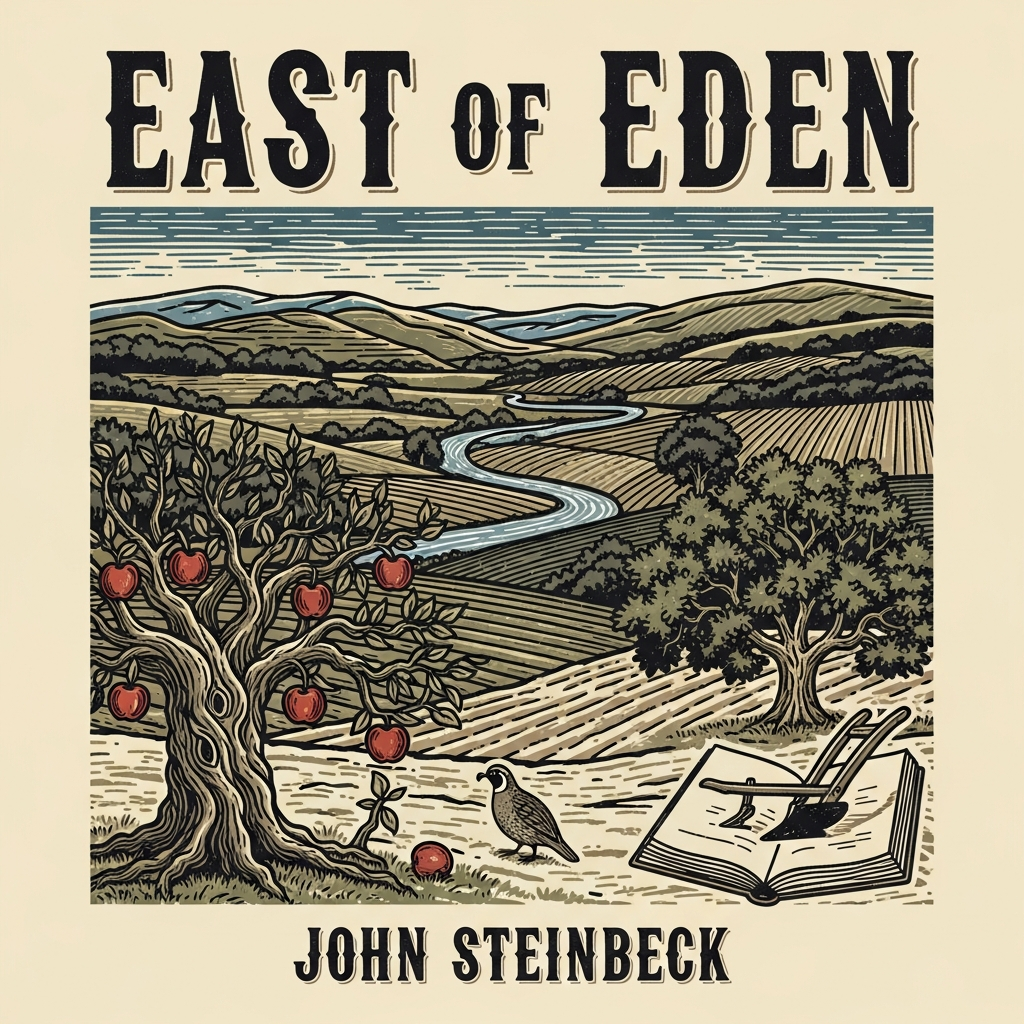
When you open East of Eden, you’re not just reading words; you’re stepping onto sacred ground. Steinbeck paints the Salinas Valley as a character itself, vivid and alive, with its two mountain ranges, the Gabilans and the Santa Lucias, forming the dramatic frame for all the human drama. It’s a valley of abundance and scarcity, of hard work and breathtaking beauty, a place where American Dream was born, struggled, and sometimes died, only to be reborn again. It’s a place that mirrors our own varied landscapes, from the bustling cities to the quiet farmlands, all connected by a shared history.
The story primarily follows two families, the Trasks and the Hamiltons, through generations. The Hamiltons, based on Steinbeck’s own maternal family, are a clan of optimistic, often unlucky, but always resilient Irish immigrants, embodying the relentless striving that built much of this nation. The Trasks, on the other hand, are a fictional creation, burdened by a dark, ancestral curse, seemingly fated to repeat biblical patterns of rivalry and yearning for acceptance. These aren’t just characters; they’re archetypes, reflections of the conflicting impulses within each of us, and within our nation itself.
Now, did you know that when East of Eden was first published in 1952, it sold more than 250,000 copies in its first six weeks alone? That’s not just a commercial success; it tells you something profound about how deeply its story resonated with Americans right from the start. People recognized themselves in its pages, saw their own family struggles, their own hopes and heartbreaks laid bare with honesty and compassion. That kind of enduring appeal isn’t just about good writing (though Steinbeck was a master); it’s about touching on universal truths that transcend time and place, truths that are woven into the very fabric of our American story.
My own grandfather, a man who worked the land and carried the scars of both triumph and failure, always used to say, “The soil remembers everything.” And reading East of Eden, you feel that same memory. You see the echoes of those who first broke ground, who planted seeds not just for crops, but for generations. It reminds me of the countless ‘micro-histories’ across our nation, of families who arrived with nothing but a dream, faced unimaginable hardships, and yet persevered, building towns, communities, and a future. It’s a story about the constant push and pull between the promise of the land and the limits of human nature, a tension that has always defined the American frontier, be it literal or metaphorical.
*Timshel*: Our American Doctrine of Choice
If there’s one word that defines East of Eden, one concept that Steinbeck believed was the beating heart of the book, it’s timshel. It’s a Hebrew word, central to the story of Cain and Abel, and in Steinbeck’s interpretation, it’s a revolutionary idea. In the King James Bible, it’s often translated as “thou shalt” or “thou will,” implying a command or a prediction. But in Steinbeck’s rigorous study of the original Hebrew, guided by his wise Chinese servant character, Lee, he discovers its true, profound meaning: “thou mayest.”
Think about that for a moment. “Thou mayest.” It’s not a divine decree or an inescapable fate. It’s an invitation, a burden, a glorious freedom. It means that humanity has the choice, the power, to overcome evil, to master sin, to choose goodness. It places the responsibility squarely on our shoulders, not as a curse, but as our greatest blessing. This idea, my friends, is as American as apple pie and the Fourth of July. It’s the very foundation of our belief in individual liberty, in the power of a single person to make a difference, to choose their own path, and to strive for a better tomorrow.
In a world that often feels predetermined, where narratives of victimhood and unavoidable circumstance can sometimes take hold, timshel shouts a defiant message of hope and empowerment. It says, ‘No matter your inheritance, no matter the shadows of your past, you have the profound ability to choose.’ It’s the ultimate call to agency, to self-determination. And isn’t that what we’ve always celebrated in America? The idea that you can reinvent yourself, rise above your circumstances, and forge a new destiny? It’s the spirit that built this nation, one choice at a time.
The Shadows We Inherit, The Light We Forge
Steinbeck doesn’t shy away from the darker aspects of human nature. The character of Cathy Ames, a woman of almost pure evil, forces us to confront the uncomfortable truth that darkness exists. She’s a chilling reminder that not all battles are external; some are fought within the very soul. But even with Cathy, the presence of others who choose kindness, who choose love, who choose to protect and nurture, shines brighter by contrast. It reminds us that even in the face of profound malice, the human spirit’s capacity for good is never truly extinguished. It’s a balance, a constant tension, much like the push and pull of different ideologies that have always shaped our national dialogue.
The Trask family’s journey, particularly that of Adam Trask and his sons, Cal and Aron, is a deep dive into the weight of family legacies. We all carry something from our parents, our grandparents, our ancestors. Sometimes it’s a blessing, sometimes a burden. But East of Eden asserts that while we inherit circumstances, we *choose* our character. Cal Trask, struggling with his dark impulses and a desperate need for his father’s love, is the embodiment of this struggle. His story is a powerful exploration of how we can grapple with our inherited traits, acknowledge our flaws, and still strive for redemption. It’s about the hard work of personal growth, something every American, no matter their background, can relate to. We’ve all seen families, maybe even our own, wrestle with similar dynamics, trying to break cycles, to heal old wounds, and to build something better for the next generation.
A Story for All Seasons: Finding Hope in Hardship
What makes East of Eden so eternally relevant is its unwavering belief in the human spirit. It’s not a fairy tale; it’s gritty, painful, and often heartbreaking. But it is, fundamentally, a story of hope. It reminds us that even when the path is uncertain, even when we stumble and fall, the power to choose goodness, to choose love, to choose connection, remains our most potent weapon. It teaches us that the pursuit of a moral life, though arduous, is its own reward. This message is more vital now than ever, in a world that sometimes feels overwhelmed by complexity and cynicism.
For me, this book encapsulates a profound American ideal: the idea that our destiny is not fixed, that our future is not written in stone, but rather it is continually being written by the sum of our individual choices. It’s a story that asks us to look inward, to examine our own hearts, and to remember that the battle between good and evil isn’t out there in some distant land; it’s right here, in each of us, every single day.
It’s a reminder that true strength isn’t about never falling, but about getting back up, learning, and making a new choice. That’s the American spirit, isn’t it? That belief in second chances, in redemption, in the power of a fresh start. It’s the courage to face our own ‘Cain’ moments and, through grace and conscious effort, to embrace our ‘Abel’ potential. This enduring narrative offers comfort and challenge in equal measure, urging us to consider the impact of our actions on ourselves, our families, and our wider community.
Our American Story Continues: Pick Up The Book
So, my friends, if you haven’t had the pleasure of truly sitting down with East of Eden, I urge you to do so. Or, if it’s been a while, pick it up again. Let Steinbeck’s words wash over you. Let the sun-drenched, dust-filled plains of the Salinas Valley transport you. Allow the stories of the Trasks and the Hamiltons to remind you of your own family’s journey, your own choices, your own capacity for good. It’s an investment in understanding not just a pivotal piece of American literature, but in understanding ourselves, our neighbors, and the very soul of this remarkable country.
Let’s remember the powerful, hopeful message of timshel. Let’s embrace our power to choose, to strive, and to build a future rich with kindness, understanding, and the unwavering belief that we may overcome our challenges, both personal and national. That, to me, is the greatest American story of all.
Frequently Asked Questions About ‘East of Eden’
What is the main theme of ‘East of Eden’?
The main theme of ‘East of Eden’ is the freedom of choice between good and evil, encapsulated by the Hebrew word timshel, meaning “thou mayest.” It explores human responsibility, the struggle against inherited sin, and the power of individuals to choose their own moral path and strive for redemption.
Who are the main characters in ‘East of Eden’?
The main characters include Adam Trask, a complex father figure; his sons Cal and Aron Trask, who represent the Cain and Abel archetype; Cathy Ames, a woman embodying pure evil; and Samuel Hamilton, an insightful and compassionate patriarch based on Steinbeck’s own grandfather. Lee, Adam’s Chinese servant, is also a pivotal character, serving as the philosophical voice of the novel.
What does ‘timshel’ mean in ‘East of Eden’?
In ‘East of Eden,’ timshel is Steinbeck’s interpretation of a Hebrew word from the biblical story of Cain and Abel. It means “thou mayest,” signifying humanity’s freedom to choose, to master sin, and to overcome evil. It’s a powerful message of human agency and the ability to choose one’s own destiny rather than being bound by fate.
Is ‘East of Eden’ a patriotic novel?
While not overtly patriotic in a political sense, ‘East of Eden’ is deeply patriotic in its exploration of core American ideals. It celebrates individual liberty, the power of choice, the possibility of self-reinvention, and the relentless pursuit of a better life, often against challenging circumstances. These themes resonate with the pioneering spirit and the enduring American belief in opportunity and redemption.
Where is ‘East of Eden’ set?
The novel is primarily set in the beautiful and fertile Salinas Valley of California, a region that John Steinbeck knew intimately as his childhood home. The valley itself acts almost as a character, its natural beauty and challenging conditions forming the backdrop for the human drama.
Why is ‘East of Eden’ considered a classic?
‘East of Eden’ is considered a classic due to its epic scope, its profound exploration of universal human themes like good versus evil, free will, and family legacy, and its rich, masterful storytelling. Steinbeck’s vivid characterizations and deep philosophical insights into the human condition, combined with its historical backdrop, give it lasting literary significance.
Is ‘East of Eden’ based on a true story?
Partially. While the Trask family and Cathy Ames are fictional, the Hamilton family in the novel is based on John Steinbeck’s own maternal family, who were early settlers in the Salinas Valley. Steinbeck weaves together family history, local lore, and biblical allegory to create his sprawling narrative.