
Icons & Symbols of America
The History of Heart & Star-Spangled Icons: How the American Flag Became Fashion
My dearest friends, fellow Americans, have you ever stopped to truly look at our flag? Not just as a symbol flying high on a pole, but as something woven into the fabric of our everyday lives, even into the clothes we wear? I’m an old soul, I suppose, and I’ve seen a lot of history unfold in these United States. I remember a time when the Stars and Stripes were primarily a solemn sight, reserved for military parades, government buildings, or the somber occasion of a fallen hero’s funeral. It was a signal, a standard, a profound emblem of our nation’s sacrifice and resolve. But over the decades, something beautiful happened: this revered symbol began to migrate. It moved from strictly formal settings into our homes, our communities, and yes, into our closets. Today, you can spot a spirited american flag heart shirt at a backyard barbecue, a denim jacket adorned with a patch at a concert, or even a sophisticated scarf bearing the iconic colors at a fancy brunch in New York City. How did this transformation happen? How did a banner of war and diplomacy become a beloved statement of fashion and personal pride? Let’s take a stroll down memory lane, shall we?
From Flag Code to Front Rows: A Patriotic Fashion Journey
It’s fascinating, isn’t it, to consider how something so sacred could become so prevalent in our daily wear? For many years, the U.S. Flag Code (Title 4, Chapter 1 of the United States Code) was quite clear, stating that the flag itself ‘should not be embroidered on such articles as cushions or handkerchiefs and the like, printed or otherwise impressed on paper napkins or boxes or anything that is designed for temporary use and discard.’ This was a nation that deeply respected its symbols, often to the point of rigidity. But the human spirit, especially the American spirit, has a way of finding new expressions for old truths.
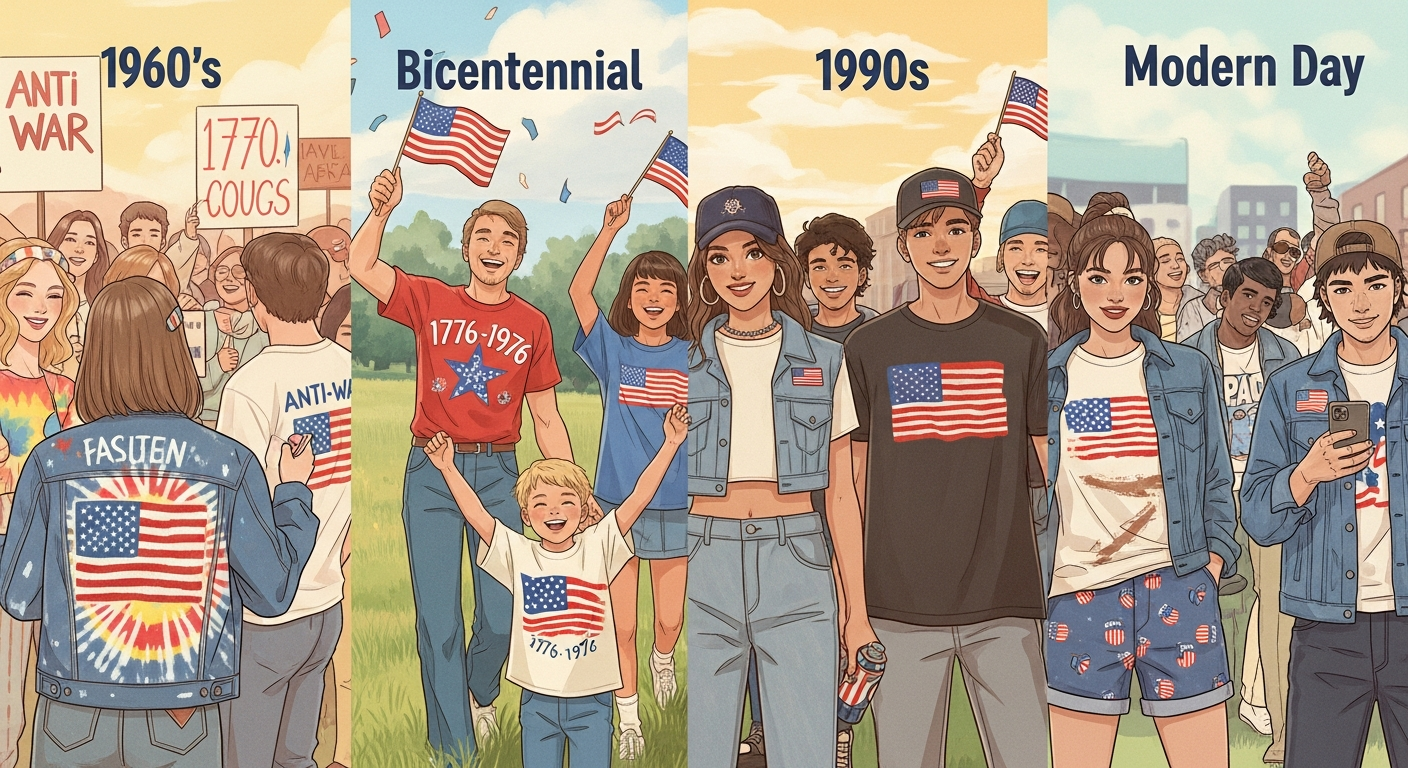
Our journey begins in the tumultuous 1960s. This was an era of profound change, questioning, and artistic explosion. Young people, particularly the counterculture movement, began to adopt the flag not always as a symbol of conventional patriotism, but as a bold statement. Wearing the flag, or elements of it, became a form of protest against the Vietnam War, a way to reclaim the symbol for peace, or simply a declaration of individuality. Figures like Abbie Hoffman famously wore flag shirts, often challenging the very definitions of patriotism and desecration. This era saw a distinct shift, a breaking of old molds, and the flag’s presence in civilian apparel began to take root, albeit controversially at first. It was a time when denim jackets and bell bottoms became canvases for self-expression, and the Stars and Stripes, in various artistic interpretations, found their way onto these unexpected mediums. It really felt like a seismic shift, a moment when the kids started saying, ‘This is *our* flag too, and we’ll wear it our way.’
Then came the mid-1970s, a period that truly cemented the flag’s place in mainstream fashion: the 1976 Bicentennial celebration. This was a nationwide party, a moment for every American to reflect on 200 years of independence. Suddenly, red, white, and blue exploded everywhere. From bicentennial coins to commemorative stamps, and most importantly, into apparel. Department stores were awash with patriotic attire. I remember Main Street in my hometown, lined with bunting, and folks of all ages sporting sweaters, t-shirts, and accessories emblazoned with stars and stripes. It was during this time that the friendly, approachable designs, like the american flag heart shirt, really started to appear. They offered a softer, more intimate expression of love for country, a warmth that transcended mere formality. This surge in flag-related merchandising wasn’t small either; the U.S. Census Bureau reported a significant uptick in sales for ‘patriotic goods’ categories during 1975-1976, showcasing a widespread public embrace. It felt less like a code and more like a hug, you know?
The trend continued, cycling through different eras. The 1990s brought a wave of retro sportswear, where classic American motifs, including the flag, were celebrated on athletic wear, hoodies, and sneakers. Designers began incorporating flag elements into high fashion, pushing boundaries further. And, of course, the events of September 11, 2001, sparked an unprecedented surge in overt patriotism. The Flag Manufacturers Association of America (FMAA) reported that U.S. flag sales alone surged by an estimated 50% in the year following 9/11, reflecting a profound desire for unity and solace. This period saw an explosion of flag imagery in all forms, including widespread adoption in everyday apparel, often with a renewed sense of pride and remembrance. It wasn’t just about fashion; it was about communal comfort and strength.
Vintage American Flag Heart Shirt
Wear your story with pride! Celebrate classic American values, history, and heritage with our premium crafted apparel, designed for comfort and durability.

Grill Chill And Freedom BBQ T Shirt
Wear your story with pride! Celebrate classic American values, history, and heritage with our premium crafted apparel, designed for comfort and durability.
Symbolism in Stitching: The Heart of the Matter
What makes an american flag heart shirt so endearing? It’s the beautiful, simple combination of two powerful symbols. The flag, representing our nation’s history, its ideals, its struggles, and its triumphs. And the heart, a universal emblem of love, compassion, and warmth. When you put them together, you get something truly special. It’s not the grand, formal declaration of a flag flying above a courthouse; it’s a personal, intimate whisper of affection for home. It’s the kind of shirt you wear to a family reunion in Kansas City, to a Fourth of July picnic, or simply while tending your garden, feeling a quiet pride in your heritage. I’ve seen countless folks, young and old, wear these shirts with a genuine smile. It tells a story of love for country that’s less about politics and more about community, about shared values, about the simple joy of being American.
It speaks to the core of what many Americans feel: a deep, abiding love for their country, expressed in a way that feels personal and accessible. The heart softens the formality of the flag, inviting a different kind of connection, one rooted in everyday experiences and personal sentiment rather than grand pronouncements. It’s a symbol that says, ‘I love this country, warts and all, because it’s my home, and it holds my heart.’
Material Matters: Choosing Your Patriotic Wear
As patriotic apparel has evolved, so too have the materials and printing techniques. Gone are the days when an iron-on patch was your only option for a quick patriotic flair. Today, you’ve got a wonderful range of choices, each offering a different feel and longevity. Let’s look at some common options, keeping comfort, durability, and breathability in mind.
| Fabric & Print Type | Comfort | Longevity | Breathability | Best Use Case |
|---|---|---|---|---|
| **Basic Synthetic (e.g., Polyester Blend) with Iron-On/Heat Transfer** | Moderate; can feel less soft than cotton, especially in warmer climates. | Short to Medium. Print can crack or peel over time with washes and heat. | Low to Moderate. Less absorbent than natural fibers. | Cost-effective event wear, one-off celebrations. Quick and easy. |
| **Vintage Cotton Chino Blend with Screen Print** | High; buttery-soft, comfortable against the skin. Ages well with a worn-in feel. | High. Good quality screen prints on durable cotton can last for years without significant fading or cracking. | High. Cotton is naturally breathable and absorbent, ideal for warm weather. | Everyday wear, casual outings, building a collection of cherished patriotic tees. |
| **Modern Performance Fabric (e.g., Moisture-Wicking Polyester) with Sublimation Print** | High; often smooth, lightweight, and designed for athletic comfort. | Very High. Sublimation dyes the fabric fibers directly, making the print virtually indestructible and fade-proof. | High. Engineered to wick sweat away, excellent for active lifestyles. | Sporting events, outdoor activities, active patriotism. |
When you’re picking out that perfect american flag heart shirt, consider not just the design, but how it feels and how long you want it to last. A soft cotton blend is always a winner for comfort, but modern fabrics offer fantastic durability for those who lead active lives.
Caring for Your Patriotic Tees: Keeping Colors Bright
There’s nothing quite like a crisp red, white, and blue shirt, is there? But those vibrant colors, especially the deep reds and blues, need a little love to stay true. Preventing color bleeding and fade, especially when you have stark white areas right next to vivid dyes, is key to keeping your patriotic garments looking sharp. Here’s a simple guide:
Sorting is Key:
- **Separate Colors:** Always wash your red, white, and blue items with similar colors, or ideally, by themselves for the first few washes. Red is a notorious bleeder! Never, ever throw a brand-new red and white shirt into a load of pure whites.
- **Turn Inside Out:** This protects the printed design from abrasion during the wash cycle, helping to prevent cracking and fading.
Washing Wisdom:
- **Cold Water Only:** Hot water can cause dyes to bleed and fade faster. Cold water is your best friend for preserving color integrity.
- **Gentle Cycle:** A less aggressive wash cycle puts less stress on the fabric and the print.
- **Mild Detergent:** Choose a detergent formulated for colors or a mild, color-safe option. Avoid harsh bleaches or detergents with strong whitening agents, especially near the colored parts.
- **Consider a Color Catcher:** For the first few washes, toss in a color catcher sheet. These little marvels are designed to trap loose dyes in the wash water, preventing them from redepositing onto other fabrics (or the white parts of your shirt!).
Drying Do’s and Don’ts:
- **Low Heat or Air Dry:** High heat is a fabric’s enemy. It can cause shrinking, fading, and can damage screen-printed designs, leading to cracking. Tumble dry on low heat, or even better, air dry your patriotic tees by laying them flat or hanging them. This is especially crucial for preventing the crisp white areas from taking on a pinkish hue from bleeding red dye.
- **Avoid Direct Sunlight (for extended periods):** While drying outdoors is great, prolonged exposure to direct sunlight can cause colors to fade over time.
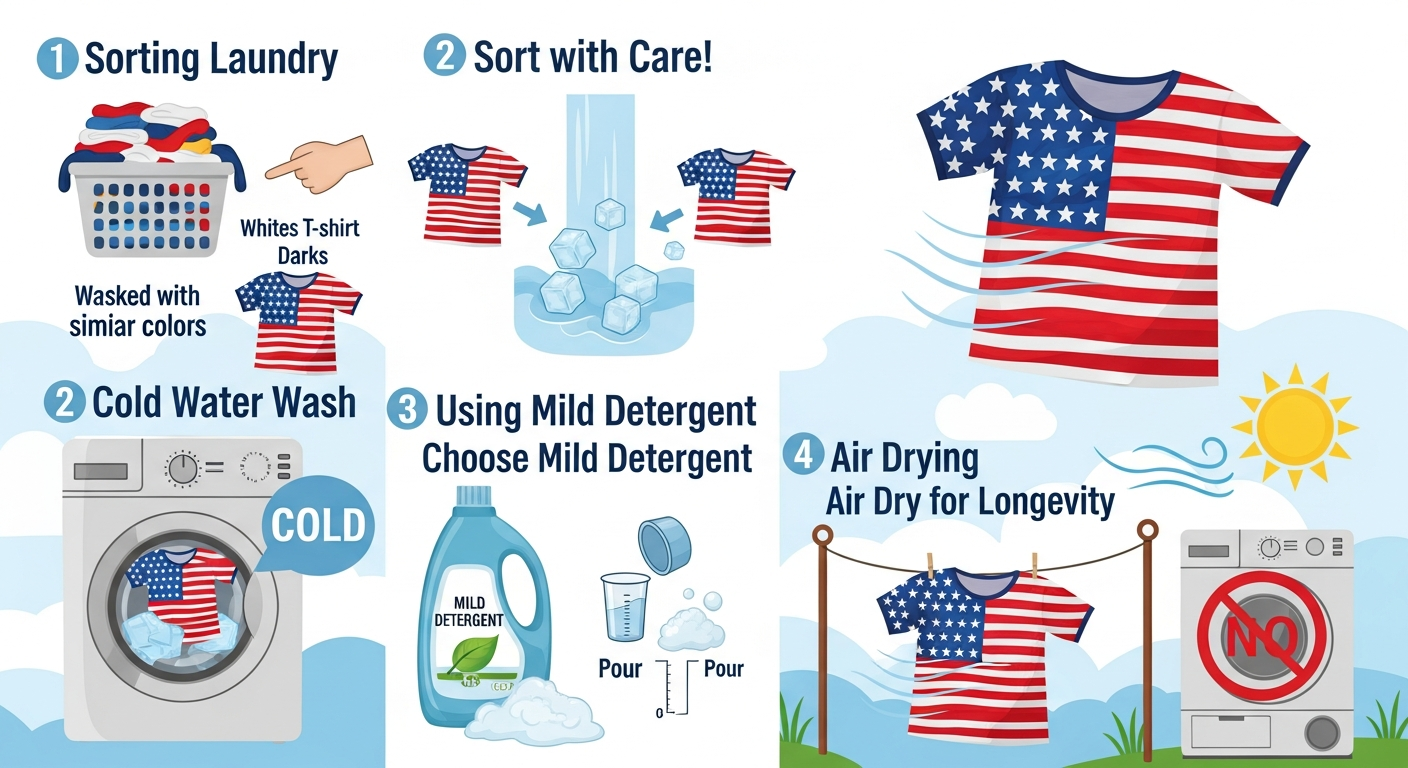
Following these steps will help ensure that your beloved american flag heart shirt, or any other patriotic garment, stays vibrant and comfortable for years to come. It’s a small effort for a lasting symbol of pride.
From the solemn fields of battle to the casual comfort of our daily lives, the American flag has a story as rich and varied as the people it represents. Its journey into fashion is a testament to our nation’s adaptability, its enduring spirit, and our capacity to express love for our country in countless heartfelt ways. It’s a journey that speaks volumes about who we are, a people who can cherish tradition while embracing new forms of expression. And that, my friends, is a truly American story.