
American Lifestyle
Saturday Morning Cartoons: The Tv Ritual That Bound A Generation Of American Kids
In the 1970s and 80s, Saturday morning carried a specific, almost mystical magic. Long before streaming services offered endless on-demand entertainment, and years before every screen in our pockets could summon a cartoon with a tap, millions of American kids woke up early, pulled on their pajamas, grabbed a giant bowl of sugary cereal (usually something with marshmallows or a prize inside!), and sat cross-legged on the rug for a truly shared experience: Saturday Morning Cartoons.
It was more than just television; it was a ritual. For four glorious hours, the living room transformed into a sanctuary, a vibrant, noisy portal to animated worlds where superheroes always triumphed, talking animals solved mysteries, and slapstick comedy reigned supreme. As a folklorist, I find this period fascinating because it represents a cultural sync, a collective experience that bound an entire generation of children together, teaching us shared jokes, common heroes, and the universal language of Saturday morning joy.
The Weekly Appointment: A Four-Hour TV Sanctuary
From roughly 8 AM to Noon, major television networks, primarily ABC, CBS, and NBC, reserved this precious time slot exclusively for children’s programming. This wasn’t a casual affair. These networks strategized, invested, and competed fiercely for the attention of young viewers. For many of us, the week revolved around this appointment. After a long school week, the freedom of Saturday morning felt limitless, and the promise of new adventures on the screen was the sweetest reward. I remember the faint hum of the television warming up, the distinct smell of warm milk and sugar, and the hushed anticipation as the network’s Saturday morning ident would flash across the screen. It was pure bliss.
The Cereal Box Hype: A Multi-Sensory Experience
The sensory details of Saturday mornings are etched deeply into the memories of those who lived it. The distinct crunch of Cap’n Crunch or the vivid colors of Fruity Pebbles, the clink of a spoon against a ceramic bowl, and the mesmerizing glow of the television screen were all part of the sacred atmosphere. But the cartoons themselves were only half the story. The commercial breaks were just as integral to the ritual, acting as a vibrant marketplace of childhood dreams. Suddenly, we were immersed in worlds of action figures like He-Man and the Masters of the Universe, new Barbie dolls, intricate playsets, and fast-food tie-ins that promised a toy with every kids’ meal. These ads weren’t just interruptions; they were a continuation of the fantasy, fueling our wish lists and playground conversations.
Growing up in Ohio, my grandmother often had a box of something extra sweet on hand, a special treat just for Saturday. I’d sit there, still in my footie pajamas, a blanket draped over me, watching as the colorful, often hand-drawn advertisements flickered past. It was a time when the lines between imagination, play, and television blurred into one beautiful, uninterrupted flow.
The Golden Animation Era: Heroes, Hilarity, and Heart
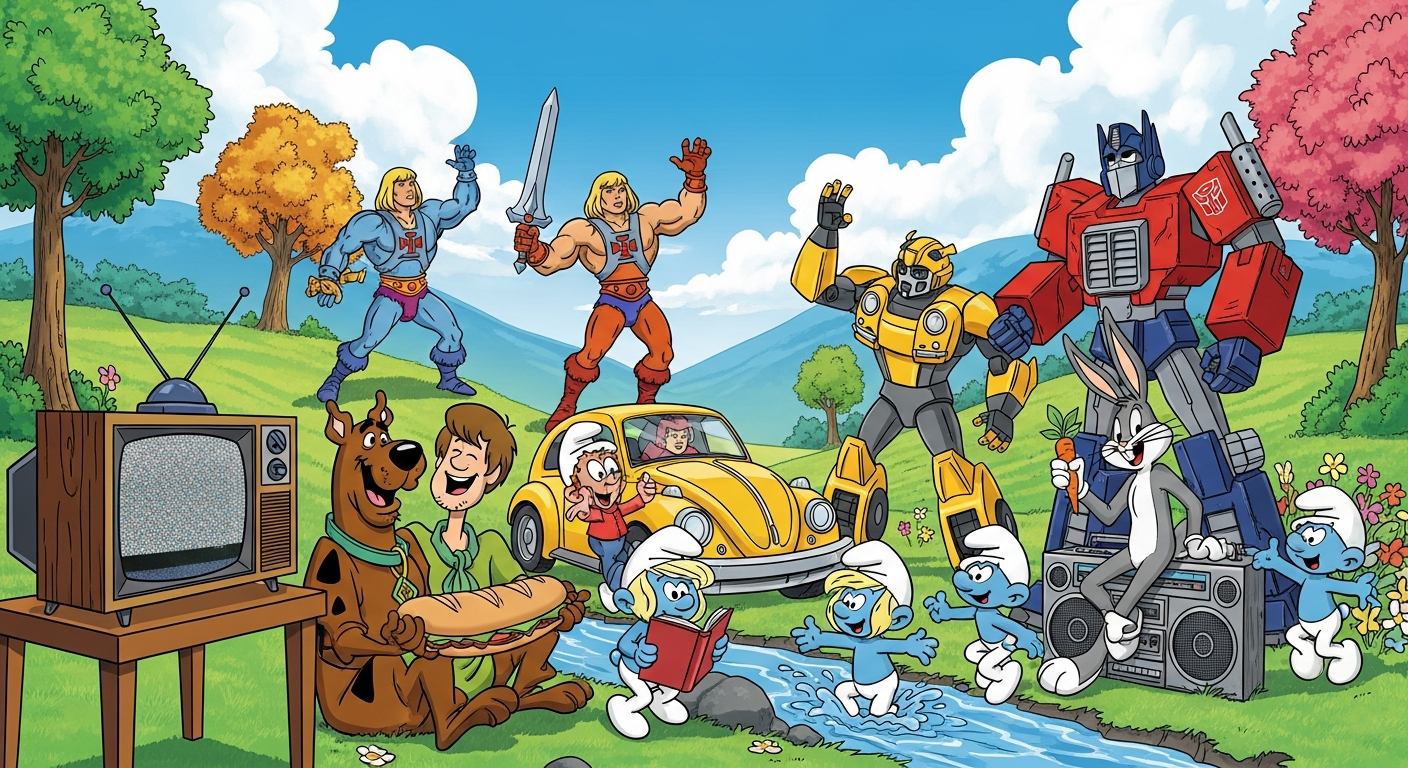
This period, particularly from the mid-1960s through the late 1980s, is often considered the ‘Golden Age’ of Saturday morning cartoons. It was an era that gave us indelible characters and beloved franchises. Hanna-Barbera Productions, founded by William Hanna and Joseph Barbera, was a dominant force, churning out classics like Scooby-Doo, Where Are You!, The Flintstones, and The Jetsons. Filmation brought us the epic adventures of He-Man and the Masters of the Universe, while shows like Super Friends united our favorite DC Comics heroes. Even the Looney Tunes gang had a resurgence, ensuring new generations discovered Bugs Bunny and Daffy Duck.
The cultural impact was immense. By the mid-1970s, it’s estimated that over 85% of American children aged 2-11 tuned into Saturday morning cartoons, making it one of the most widely consumed shared cultural experiences in the country. Nielsen ratings from the era consistently showed these blocks drawing tens of millions of viewers weekly, often outperforming many adult prime-time shows in their target demographic. Advertising revenue soared, with networks generating hundreds of millions of dollars annually from toy companies, cereal brands, and fast-food chains eager to reach this captive audience. Imagine that level of communal engagement today!
This wasn’t just passive viewing; it was interactive. We’d sing along to theme songs, mimic catchphrases, and debate plot points with our friends at school on Monday. These shows taught us about friendship, problem-solving, and the eternal struggle between good and evil, all wrapped in a colorful, entertaining package.
A Bygone Ritual: Why This Shared Tradition Endures in Our Memories
The Saturday morning cartoon block was a unique cultural phenomenon because it was a scheduled event. You had to be there, present and accounted for, or you’d miss it. There was no pausing, no rewinding, no binging a whole season in one afternoon. This scarcity created a heightened sense of anticipation and value, fostering a true communal experience among millions of young viewers across the country, from the bustling streets of New York City to the quiet farmlands of Ohio. We were all watching the same thing, at the same time, feeling that same pure, unadulterated joy.
The Shift: From Shared Block to Endless Options
The decline of Saturday morning cartoons was a gradual process, influenced by several factors that reshaped the media landscape of childhood entertainment. The advent of cable television in the 1980s and 90s was a major disruptor, introducing 24/7 children’s programming channels like Nickelodeon (launched 1979), Cartoon Network (launched 1992), and Disney Channel. Kids no longer had to wait an entire week for their favorite shows; they could watch them any day, often any time.
Furthermore, the rise of home video (VCRs) and later, video games (Nintendo’s NES in 1985, Sega Genesis in 1989) offered children alternative forms of entertainment that were interactive and on-demand. Regulatory changes also played a role; the Children’s Television Act of 1990 imposed stricter limits on commercial time during children’s programming and mandated educational content, making the traditional, often toy-heavy, cartoon blocks less profitable for networks.
One by one, the major networks phased out their dedicated blocks. NBC was the first of the ‘Big Three’ to discontinue Saturday morning cartoons in 1992, opting for a teen-oriented block. CBS followed suit in 2005, and ABC officially ended its traditional cartoon block in 2011. The last holdout, The CW, aired its final Saturday morning cartoon block in 2014, marking the official end of an era that had spanned over five decades.
This timeline highlights the evolving media landscape:
| Era | Key Characteristics | Example Shows | Dominant Networks | Cultural Impact |
|---|---|---|---|---|
| Golden Age (1960s-1980s) | Dedicated 4-hour blocks, high ratings, heavy toy advertising. | Scooby-Doo, Super Friends, Smurfs, He-Man, Transformers. | ABC, CBS, NBC. | Massive shared cultural experience; defined childhoods. |
| Transition Era (1990s) | Introduction of cable kids’ channels, shifting network strategies, early video games. | Teenage Mutant Ninja Turtles, Power Rangers, early educational content. | Cable (Nickelodeon, Cartoon Network) gaining prominence; network blocks begin to shrink. | Audience fragmentation begins; ritual begins to fade for some. |
| Decline & End (2000s-2014) | Dominance of 24/7 cable and streaming; focus shifts to educational programming on broadcast. | Educational blocks (e.g., ‘DIC Kids Network’, ‘Kids’ WB’ rebrands). | The CW last major network to air a block (ended 2014). | The end of the traditional Saturday morning cartoon block era. |
Recreating the Magic: How to Host Your Own Retro Saturday Morning Cartoon Party
While the network-driven ritual may be gone, the spirit of Saturday morning cartoons lives on in our collective memory. It’s a joy that can absolutely be recreated! As someone who loves to celebrate traditional gatherings, I’ve found a way to bring this nostalgic experience back for family and friends. Here’s a simple guide to hosting your own retro Saturday morning cartoon party:
- The Cereal Bar Extravaganza: This is non-negotiable! Set up a dedicated table with 4-5 different classic sugary cereals (think Lucky Charms, Fruity Pebbles, Trix, Cinnamon Toast Crunch). Offer regular milk, chocolate milk, and maybe even some non-dairy options. Don’t forget the fun spoons!
- The Viewing Setup: If you have an old CRT television set, dust it off for authentic vibes! Otherwise, a modern TV works just fine. The key is to stream classic cartoon episodes. Services like Boomerang or even YouTube have extensive archives of shows from the 70s, 80s, and 90s. Create a playlist beforehand, mimicking a real block.
- Comfort is King: Encourage guests to come in their pajamas or comfy clothes. Have blankets and pillows scattered around the viewing area to recreate that cozy ‘cross-legged on the rug’ feeling.
- Interactive ‘Commercial Breaks’: Instead of actual commercials, plan short, fun activities. Play classic board games like Candyland or Chutes and Ladders, have a simple craft station (coloring pages of old cartoon characters!), or even a quick ‘toy show and tell’ where guests share a favorite childhood toy. You can even find compilations of old TV commercials on YouTube to play during these breaks for extra authenticity!
- Retro Snacks Beyond Cereal: Think fruit snacks, Pop-Tarts, or even homemade toaster pastries. Keep the snack options simple and reminiscent of childhood treats.
It’s a wonderful way to share a piece of your childhood with the next generation or simply to relive those cherished moments with friends. The smiles and shared laughter are guaranteed, proving that some traditions, even those from a screen, hold timeless appeal.
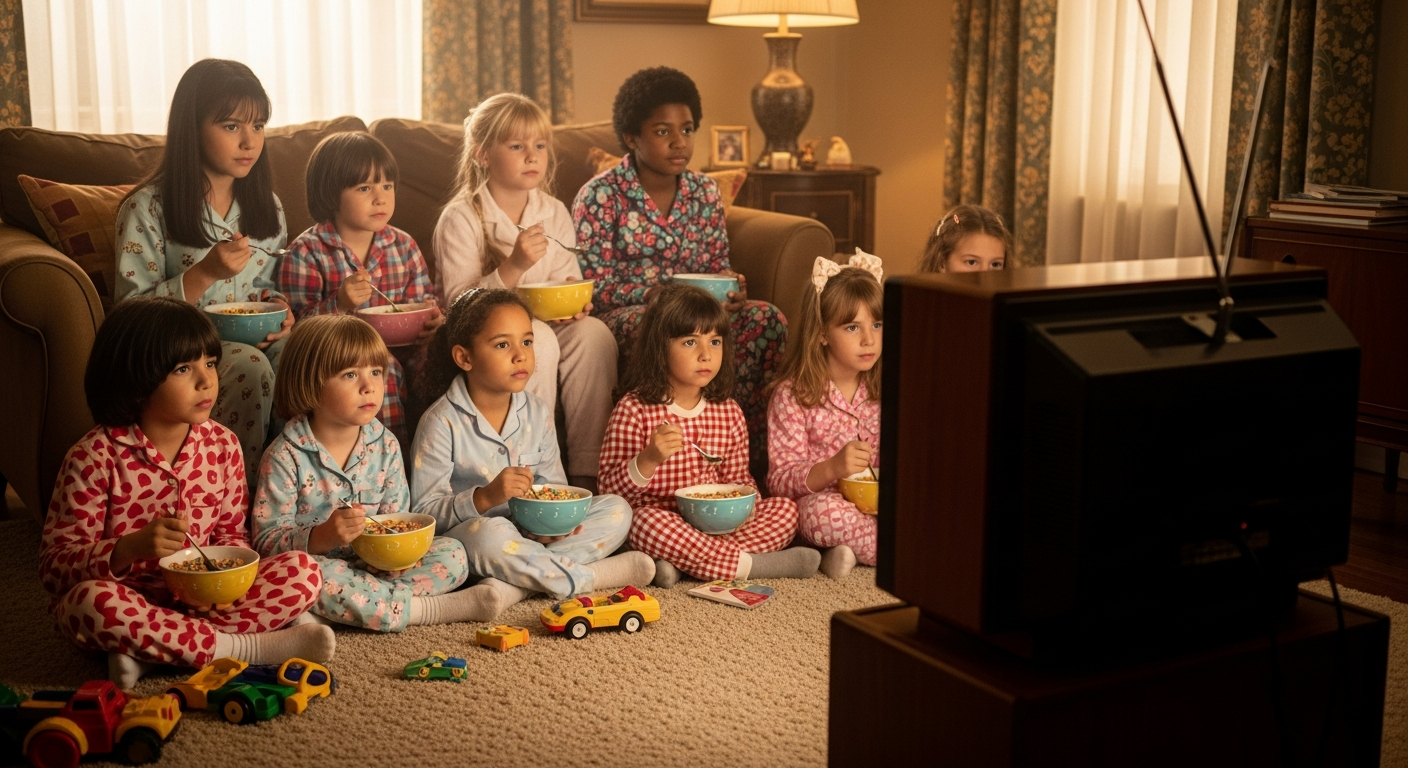
This communal viewing experience, steeped in sugar and saturated in color, wasn’t just entertainment; it was a cornerstone of American childhood. It reminds us of a time when the entire country, from sea to shining sea, could share in the same simple joys every Saturday morning. It’s a memory I hold dear, and one that I love to talk about with anyone who remembers those magical hours.
Relive the Cozy, Colorful Mornings of Your Childhood
For those of us who remember those incredible mornings, the feeling never truly fades. It’s more than just nostalgia; it’s a connection to a simpler time, a moment of shared experience that shaped a generation. If you’re looking to carry a piece of that warmth and vibrant memory with you, The50 Store’s ‘Saturday Morning Cartoon Club Retro Tee’ is a perfect way to do it. It features a beautifully distressed vintage print on our ultra-breathable combed ring-spun cotton, designed to bring back all those cozy, colorful memories with every wear. It’s not just a shirt; it’s a little piece of that pure, unadulterated joy we all remember.