
American Lifestyle
The Saturday Morning Ritual: Farmers Markets and the Return to Local
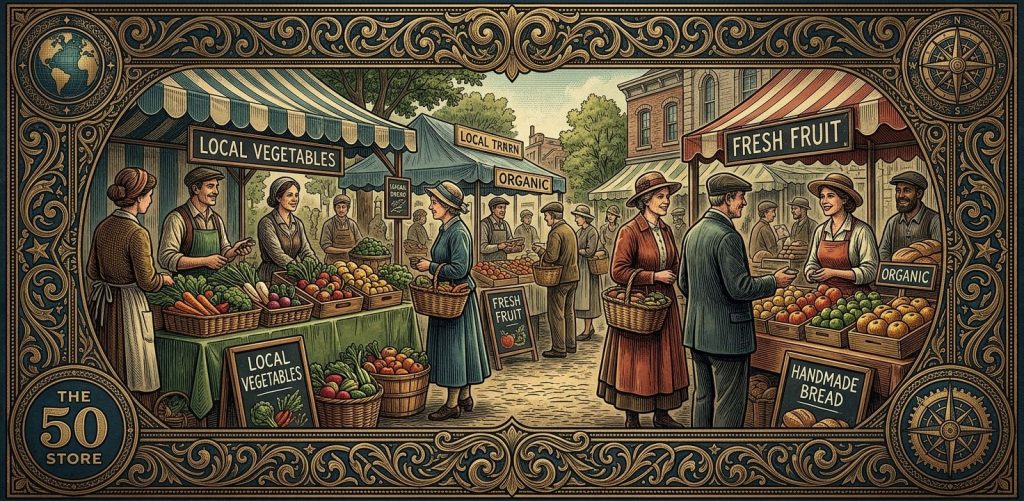
Introduction: The Shift From Big-Box Stores Back to Community Hubs
Picture a typical Saturday morning thirty years ago. The situation was familiar to almost every American family. We would pile into the station wagon and drive miles down the interstate to a massive, windowless big box store. We bought our tomatoes in hard plastic clamshells. We picked out apples that were waxed to a high shine under buzzing, cold fluorescent lights. We pushed squeaky metal carts down miles of identical aisles.
The complication arrived slowly but surely over the years. We began to feel entirely disconnected from the very food on our family dinner plates. The faces at the store checkout lanes changed every week. We did not know who grew our food. We did not know where it came from. We had no idea what was sprayed on it to make it look so artificially perfect. The food looked like a painting, but it tasted like water. We lost our connection to the changing seasons and the local harvest.
This growing emptiness left us asking a vital question. How do we reclaim our sense of belonging, support our neighbors, and truly taste the fruits of our own local soil again?
The answer has been waiting for us all along. It never really left us. We are returning to the Saturday morning farmers market. This is a beautiful shift from sterile corporate aisles back to vibrant community hubs. It is a return to something deeply and proudly American. It is a celebration of our soil, our hardworking neighbors, and our shared heritage. 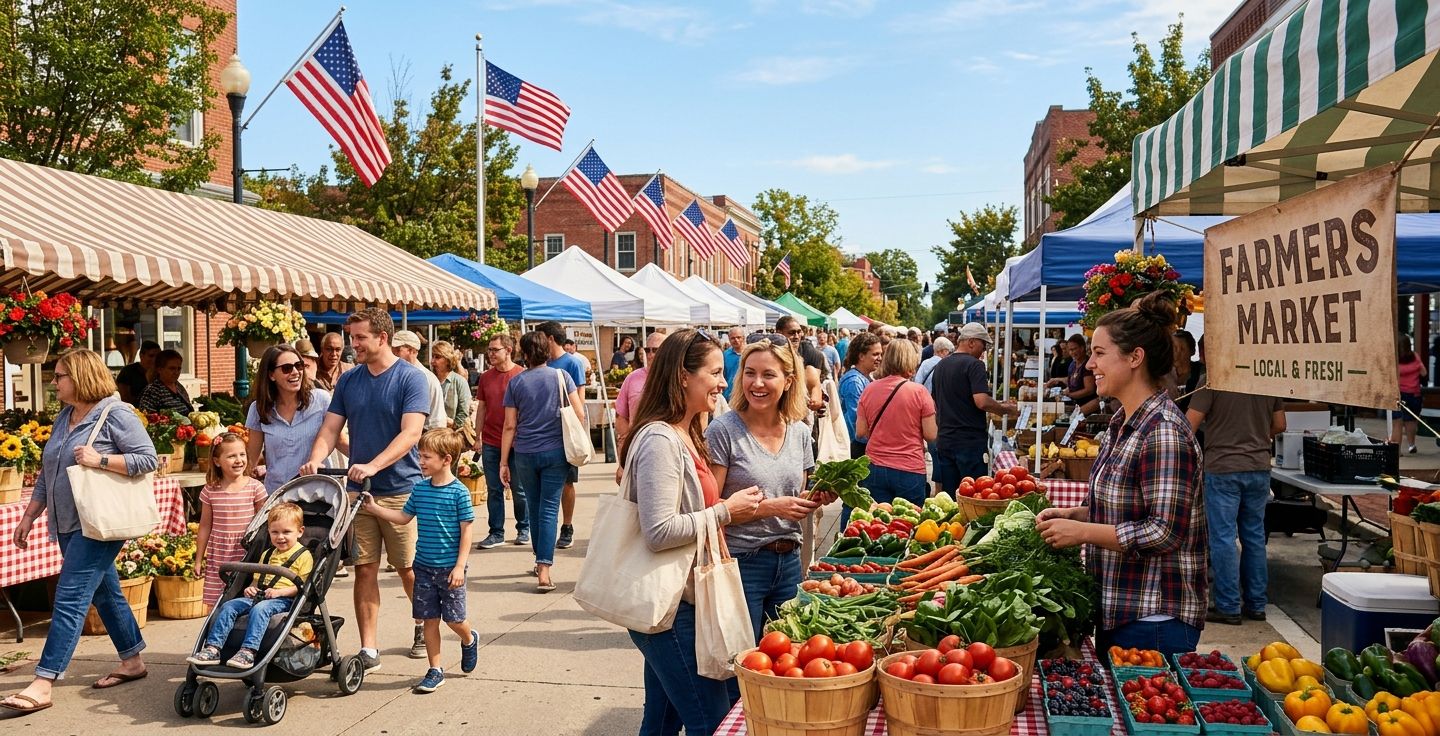

The 1776 Winners History Premium Tee
Wear your story with pride! Celebrate classic American values, history, and heritage with our premium crafted apparel, designed for comfort and durability.
Shop the Look →The History of the American Local Market
Let us look back at how we got here. The American local market is not some fleeting modern trend. It is the very bedrock of our early national economy. When you walk through a bustling open-air market today, you are stepping into a rich tradition that stretches back to the founding of our great nation.
The Roots of Independence
Take a moment to consider a fascinating micro-history of a colonial farmer in eighteenth-century Virginia. He would load up his heavy wooden cart before dawn and travel rutted dirt roads to reach the town center. He was not just selling corn. He was trading news, debating politics, and building community trust. Our founding fathers understood this intimate bond. George Washington (1732-1799) was a passionate farmer who constantly sought to improve crop rotation at Mount Vernon. He knew a strong nation required a strong agricultural foundation. Similarly, Thomas Jefferson (1743-1826) wrote extensively about how the independent farmer was the incorruptible backbone of a healthy republic.
Sustaining the Nation
This historical spirit is alive and thriving today. If you visit historic sites like the Lancaster Central Market in Pennsylvania, you can feel the echoes of generations past. We may have lost our way for a few decades when the sheer convenience of mass-produced groceries tempted us away from our local roots. But the tide is turning in a magnificent way.
Let me share a truly inspiring statistic with you. According to the United States Department of Agriculture, the number of registered farmers markets in America has grown from just 1,755 in 1994 to well over 8,700 today. That is a massive, encouraging leap. This surge shows a profound national awakening. Americans are hungry for authenticity. They are hungry for food that actually tastes like the earth it was grown in.
Why Local Produce Connects Us to the Land and Each Other
There is a special, quiet magic in buying a tomato that is still warm from the morning sun. When you take the time to shop for seasonal produce at a local stand, you are doing much more than just checking items off a weekly grocery list. You are deeply connecting with the land beneath your feet.
Tasting the Seasons
We live in a beautiful, diverse country. Every region has its own distinct soil and special harvest. When we eat what is in season locally, we align our bodies with the natural rhythms of our hometowns. Think about the sweet corn of the Midwest in late July, or the juicy peaches harvested in Georgia. A crisp autumn apple pulled from an upstate New York orchard tastes completely different than one shipped thousands of miles across the ocean. It tastes like home. It tastes like crisp October mornings and woodsmoke.
Knowing the Hands That Feed You
This profound connection goes far beyond just the flavor on your tongue. Buying directly from the person who planted the seed builds an unbreakable bridge of trust. You can look a farmer right in the eye and ask how the recent heavy rains affected the strawberry crop. You learn about the hard work, the early mornings, and the sheer American grit required to keep American agriculture thriving. It is a genuinely beautiful thing to know the rough, calloused hands that feed your family.
This face-to-face relationship fosters a sense of immense gratitude that you simply cannot find in the glowing self-checkout lane of a mega-supercenter. We start to care more about the local weather patterns. We start to care about the health of the local soil. We begin to actively root for the prosperity of our neighbors. When the farmer succeeds, the community succeeds.
The Social Experience of the Saturday Market
The Saturday market is a glorious feast for all the human senses. It is the absolute closest thing we still have to the old American town square. I challenge you to wake up early this coming weekend, grab a cup of coffee, and just stand quietly to observe the bustling scene.
A Feast for the Senses
You will hear the gentle hum of acoustic guitars from a local musician playing on the corner for tips. You will hear the joyful laughter of children chasing each other around the fountain. You will smell the rich, dark aroma of freshly roasted coffee beans mingling with the sweet, buttery scent of warm, sugar-dusted pastries baked just down the street. 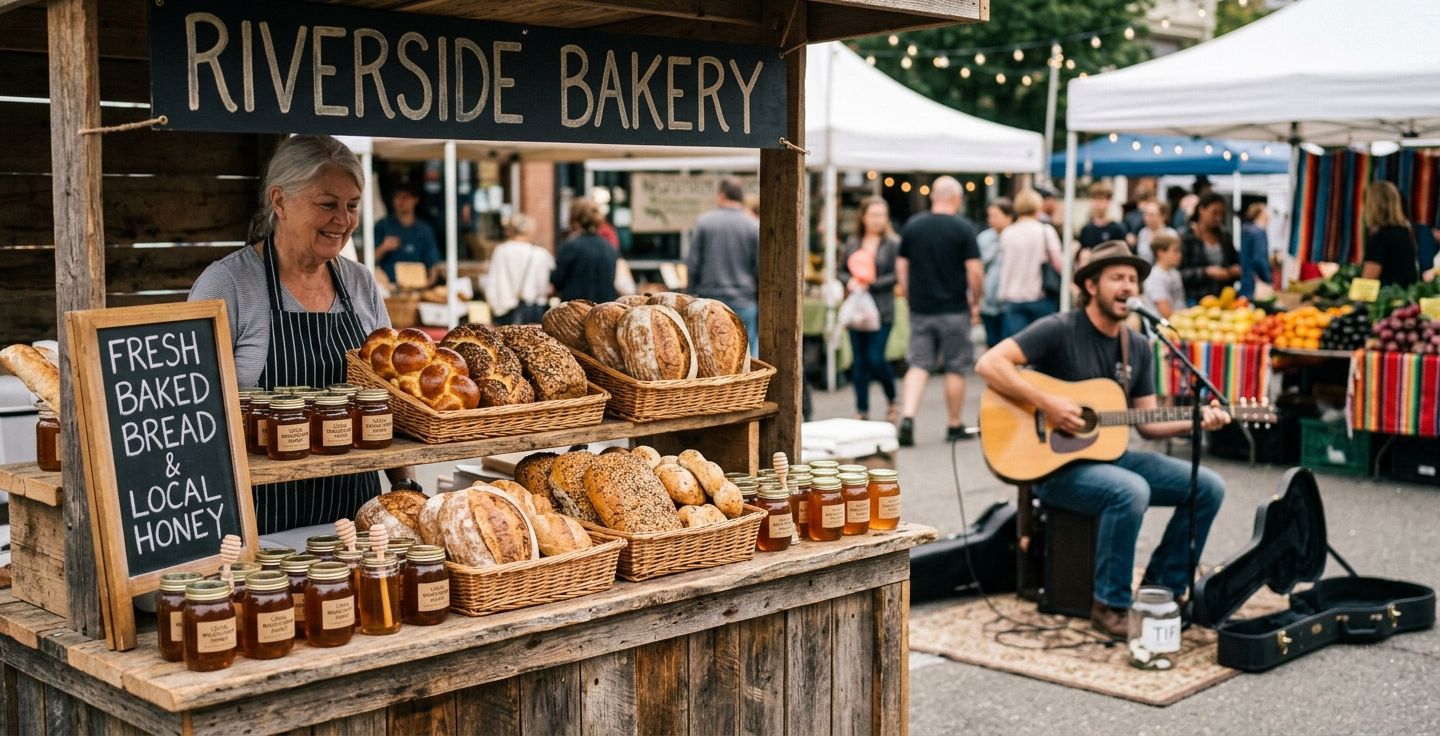
Rebuilding the Town Square
This is the place where neighbors actually run into each other on purpose. It is where you pause your busy day to pet a friendly golden retriever or catch up on the local high school football team’s Friday night victory. The market forces us to slow down our racing minds. In a fast-paced world that constantly demands we rush, the market warmly invites us to stroll.
Our children learn deeply valuable life lessons here. They witness a real exchange of value. They hand over a crumpled paper dollar bill and receive a bright, imperfect but delicious peach in return. They learn that real food does not magically appear in shrink wrap. It takes sunshine, dirt, rain, and human sweat. By making this a weekly ritual, we are raising a generation that values quality, patience, and true community.
Encouraging a Local First Patriotic Lifestyle
Choosing to spend your hard-earned money at a local farm stand is one of the most quietly patriotic acts you can perform on a regular basis. It is a powerful declaration of your personal values. By actively supporting the local economy, you are ensuring that independent family farms stay in business for the next generation. You are keeping beautiful green spaces and working landscapes alive in your home state. You are telling your community that you firmly believe in its future.
True self-reliance starts at the local level. When we buy from our neighbors, we make our towns stronger, more resilient, and more united. We depend less on long, fragile supply chains and more on the capable hands of the people who live right down the road.
So I encourage you to make a very simple but profound change this week. Grab a sturdy canvas tote bag and head out to your town square or local parking lot on Saturday morning. Buy your carrots with the green leafy tops still firmly attached. Buy a jar of local wildflower honey to help support the neighborhood bees. Look the vendor in the eye, smile, and shake the hand of the person working the cash box.
Choose a local first lifestyle. Let us rebuild the sturdy fabric of our great country one neighborhood, one family farm, and one crisp apple at a time. It is a small step, but it is a vital step back home.