
Icons & Symbols of America
Why the Bald Eagle Symbolizes American Strength: A Deep Dive into National Emblems
Goodness, has it been a journey! For nearly a century and a half now, I’ve watched this grand nation of ours grow, stumble, and rise again, always under the watchful eye of our most magnificent symbol: the Bald Eagle. I remember as a boy, seeing pictures of that proud bird, its wings spread wide, on everything from our dollar bills to the old post office signs. There’s a certain feeling, a warmth in your chest, when you truly connect with what that bird stands for.
Back in 1782, our fledgling nation, barely a few years old, was grappling with its identity. They needed something strong, something clear, to represent the ideals they’d fought so hard for. After six long years of debate, three committees, and countless sketches, the Continental Congress finally settled on the design for the Great Seal of the United States. And there, at its very heart, majestically unfurling its wings, was the American Bald Eagle. It wasn’t just a pretty picture; it was a powerful declaration of sovereign freedom and the unyielding strength our young republic aimed to embody. It said, ‘Here we stand, independent and resolute,’ for all the world to see.
The Great Debate: Turkey or Eagle?
Now, many folks have heard the charming story, often retold around campfires and dinner tables, about Benjamin Franklin‘s supposed preference for the wild turkey over the bald eagle. The tale goes that Franklin, with his characteristic wit, found the eagle to be ‘a bird of bad moral character’ for its habit of stealing food from other birds, while he lauded the turkey as a ‘true original native of America… a bird of courage.’ It’s a wonderful anecdote, full of the spirit of our founders.
But here’s a little secret, one that only careful study of history books reveals: while Franklin certainly penned his critical thoughts about the eagle in a letter to his daughter Sarah in 1784, the Continental Congress had already adopted the Great Seal, complete with the eagle, two years prior, on June 20, 1782! So, as much as we love the image of Franklin championing the humble turkey, it’s more of a delightful myth than an actual legislative debate. The choice was made. The eagle, fierce, solitary, and soaring above all, was our bird.
Why the eagle, then, if not for a fiery debate against a turkey? Well, the committee, which included Charles Thomson, Secretary of the Continental Congress, and William Barton, a Philadelphia artist, were looking for symbolism that resonated with classical antiquity, signifying power, authority, and independence. The eagle, a long-standing emblem of empires and gods, fit the bill perfectly, but with an American twist. Our eagle was unique, native to this continent, not some imported royal bird.
And let me tell you, this bird is no slouch. Did you know that a Bald Eagle can spot a rabbit from a mile away? Or that its grip, powerful enough to carry prey weighing up to its own body weight (around 10-14 pounds), has a crushing power estimated at over 750 pounds per square inch (PSI)? That’s nearly ten times stronger than an adult human’s grip! (Source: U.S. Fish & Wildlife Service). It’s a truly formidable creature, reflecting the bold, unyielding spirit that founded this nation. It’s no wonder that even today, an american bald eagle t shirt remains a popular way to show that enduring pride.
Patriotic Bald Eagle Vintage USA Flag T-Shirt
Wear your story with pride! Celebrate classic American values, history, and heritage with our premium crafted apparel, designed for comfort and durability.

Patriotic Bald Eagle Vintage USA Flag T-Shirt
Wear your story with pride! Celebrate classic American values, history, and heritage with our premium crafted apparel, designed for comfort and durability.
Symbology of the Great Seal: A Nation’s Values Etched in Gold
The Great Seal isn’t just an image; it’s a meticulously designed statement of our national character, a visual Constitution of sorts. Every element the eagle carries or interacts with tells a story about who we are and what we stand for. Let’s take a closer look at these powerful symbols, designed with such careful thought by our founders:
| Symbolic Element | Meaning and National Value | Specific Details |
|---|---|---|
| Bald Eagle | Sovereignty, strength, freedom, and independence. It is a native North American bird, representing a truly American identity, not inherited from European monarchies. | Its head is turned towards the olive branch, signifying a preference for peace, though prepared for war. |
| Olive Branch | A universal symbol of peace and reconciliation. It reflects the nation’s desire for peaceful relations. | Held in the eagle’s right talon, it contains 13 leaves and 13 berries, representing the original 13 states. |
| 13 Arrows | Represent the ability and willingness to defend the nation’s sovereignty, its readiness for war if necessary. | Held in the eagle’s left talon, there are 13 arrows, again symbolizing the original 13 states united in defense. |
| Shield (on the eagle’s breast) | Symbolizes unity and defense. The horizontal bar at the top represents the Congress, uniting the states below. | Features 13 vertical stripes (palewise), alternately red and white, representing the 13 states united under one government. The blue chief (top bar) signifies Congress. |
| E Pluribus Unum (Latin Motto) | ‘Out of Many, One.’ Represents the union of the 13 states into one cohesive nation. | Featured on a scroll held in the eagle’s beak. This motto encapsulates the very essence of the American experiment. |
| Constellation of 13 Stars | Represents a new constellation taking its place among sovereign nations. | A glory (rayed circle) of 13 stars above the eagle’s head, signifying the birth of a new, independent nation. |
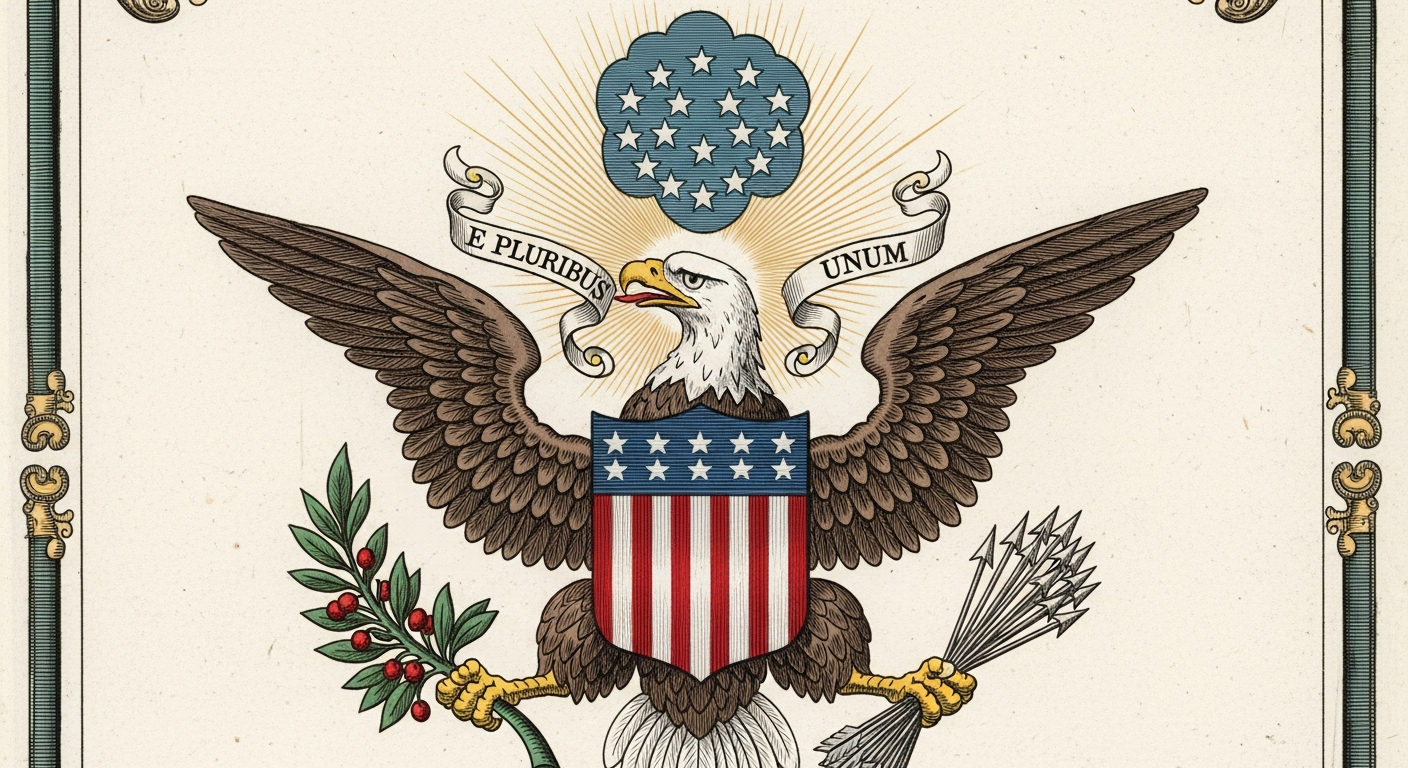
It’s truly remarkable how much thought went into this. Every detail, carefully chosen, forming a complete picture of our nation’s aspirations and principles. This isn’t just decoration; it’s a foundational document, visual and enduring, etched into the very fabric of our national identity.
From Extinction to Triumph: A Conservation Story
As much as the bald eagle symbolizes our strength and resilience, its own story mirrors our nation’s journey in a profoundly moving way. There was a time, not so long ago, when our national bird, this proud emblem of America, was in deep trouble. I remember hearing stories in the 60s about how rare it was to spot an eagle. It broke your heart a little.
By the mid-20th century, the bald eagle population had plummeted dramatically across the contiguous United States. Habitat loss played a part, but the primary culprit was the widespread use of the pesticide DDT. This chemical, used heavily from the 1940s to the 1960s, worked its way up the food chain, weakening eagle eggshells, making them so fragile that parent birds often crushed them during incubation. From an estimated 100,000 nesting pairs in the 1700s, the population in the lower 48 states had dwindled to a shocking low of only 417 known nesting pairs by 1963. It was a crisis of monumental proportions.
But just as Americans have always risen to challenges, we rallied to save our national bird. Here’s a quick look at the pivotal moments that brought the eagle back from the brink:
Key Milestones in Bald Eagle Conservation:
- 1940: Bald and Golden Eagle Protection Act. This vital federal law made it illegal to possess, sell, or transport bald eagles (and later, golden eagles) or their parts, effectively halting direct persecution.
- 1963: Population Low. As noted, only 417 nesting pairs were recorded in the lower 48 states. This dire statistic spurred greater action and awareness.
- 1972: DDT Ban. The U.S. Environmental Protection Agency (EPA) banned DDT. This single action was arguably the most crucial step in the eagle’s recovery, allowing their reproductive success to rebound.
- 1973: Endangered Species Act (ESA). The bald eagle was one of the first species listed as endangered under this landmark legislation. This provided federal protection for eagles and their critical habitats, spearheading recovery programs, reintroduction efforts, and public education. Organizations like the U.S. Fish & Wildlife Service and state wildlife agencies worked tirelessly, often in partnership with local communities and volunteers, to monitor populations and protect nesting sites.
- 1995: Reclassified to ‘Threatened.’ Thanks to decades of dedicated conservation, the population had recovered sufficiently for the eagle to be downlisted from ‘Endangered’ to ‘Threatened.’ It was a huge step forward, a sign that our collective efforts were working.
- 2007: Delisted from ESA. A truly triumphant moment! The bald eagle was officially removed from the list of threatened and endangered species. Its population had soared to an estimated 9,789 breeding pairs in the lower 48 states. This wasn’t a signal to stop caring, but a testament to what we can achieve when we unite for a common purpose.
- 2020: Continued Growth. By 2020, the U.S. Fish & Wildlife Service reported more than 71,400 nesting pairs in the contiguous U.S. – a quadrupling of the population since 2009! What an incredible comeback. (Source: U.S. Fish & Wildlife Service).
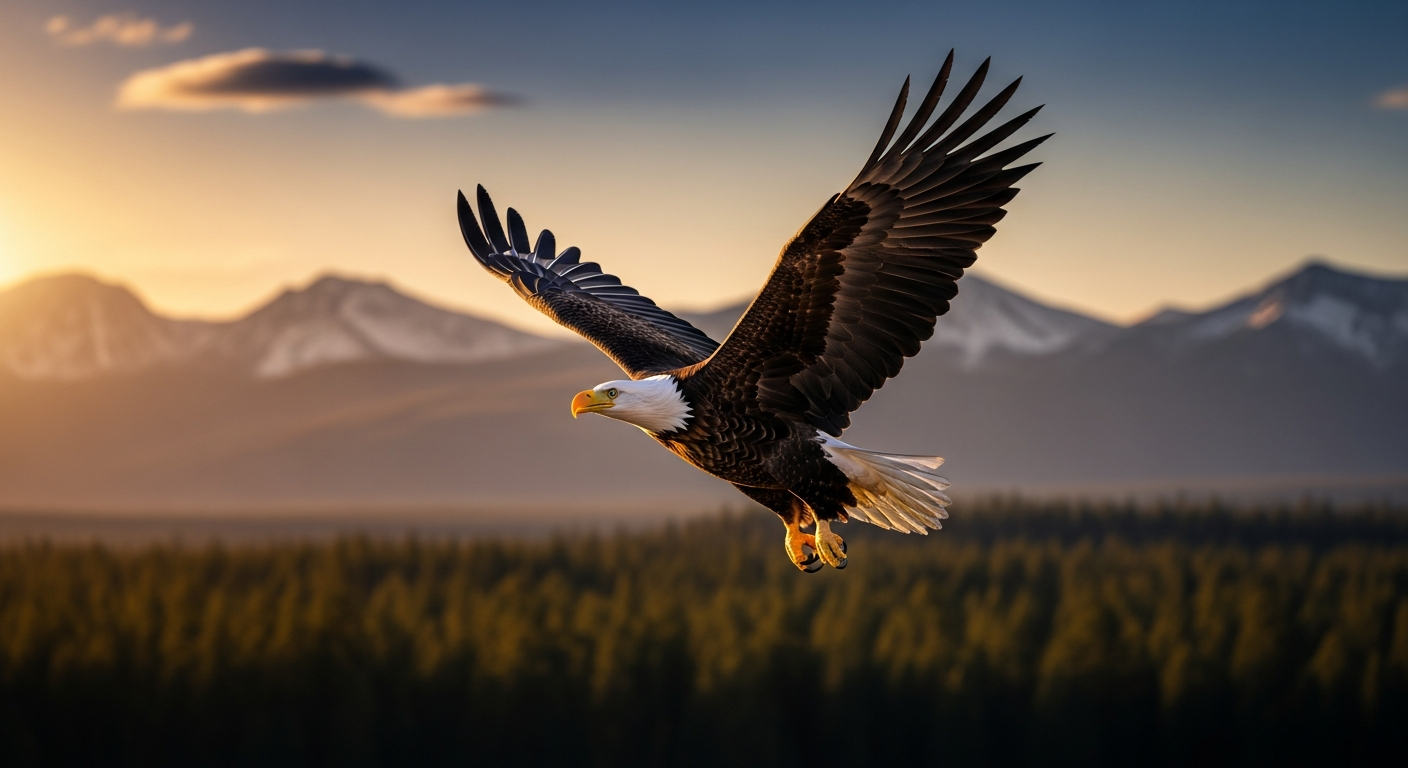
This remarkable comeback story isn’t just about a bird; it’s about us. It shows our willingness to recognize a problem, understand its root causes, and work together, across state lines and political divides, to fix it. It’s a powerful testament to our national character: resilient, adaptable, and deeply committed to preserving the precious gifts we’ve been given. Just like our nation, the bald eagle has faced adversity, stood at the edge, and through diligent effort and a shared vision, returned stronger than ever.
It’s a reminder that the strength of America isn’t just in its military might or economic power, but in its ability to protect its natural heritage, to heal, and to strive for a better tomorrow. When I see an eagle now, soaring high above the Potomac River near Washington, D.C., or nesting quietly by a lake in my home state, I don’t just see a bird. I see a symbol of hope, a living embodiment of the ideals etched into our Great Seal, and a promise that with perseverance, anything is possible for this grand experiment we call America.