
Culture & Traditions
Preserving The American Story: The History And Heritage Of Scrapbooking
My friends, let’s just talk for a moment about memories. We live in an astonishing age, don’t we? Our phones hold thousands of pictures, our computers even more. Every precious moment, every grandchild’s first steps, every family vacation, all captured in brilliant color, instantly shareable across the globe. It’s a marvel, truly. But I’ve noticed something, and perhaps you have too. In this ocean of digital snapshots, how often do we actually sit down and *feel* those memories? How often do we truly connect with them, or pass them down in a way that feels solid, real, and lasting?
That’s where the timeless, tactile art of scrapbooking steps in. It’s more than just gluing pictures onto paper; it’s a profound act of storytelling, a true American tradition of `memory preservation`. For generations, compiling photos, ticket stubs, handwritten notes, and treasured keepsakes has been a deeply personal act, crafting a tangible narrative of a family’s journey. In a world of fleeting digital images, a physical scrapbook offers a beautiful, enduring way to hold history in your hands, a vibrant echo of the past reaching into the future. It’s a `traditional american craft` that tells our story, piece by precious piece.
The Curious Roots of American Memory-Keeping
Now, you might think scrapbooking is a relatively modern hobby, something that really took off in the last century with accessible photography. But the `history of scrapbooking` runs much deeper, weaving its way through the very fabric of our nation’s story. In fact, some of our most esteemed forefathers were pioneers in their own unique forms of memory preservation, long before the term ‘scrapbook’ was even coined.
Take Thomas Jefferson, for example. The man who penned the Declaration of Independence wasn’t just collecting ideas; he was meticulously organizing them. His ‘commonplace books’ weren’t picture albums, but they were the intellectual scrapbooks of their day, filled with quotes from philosophers, observations on agriculture, scientific notes, and clippings from newspapers. He’d cut out articles of interest and paste them into bound volumes, creating a personal archive of knowledge and current events. Imagine the mind of a nation-builder, sorting and saving bits of wisdom and news, much like we might save a child’s drawing today. You can almost picture him in his study at Monticello, carefully arranging his thoughts.
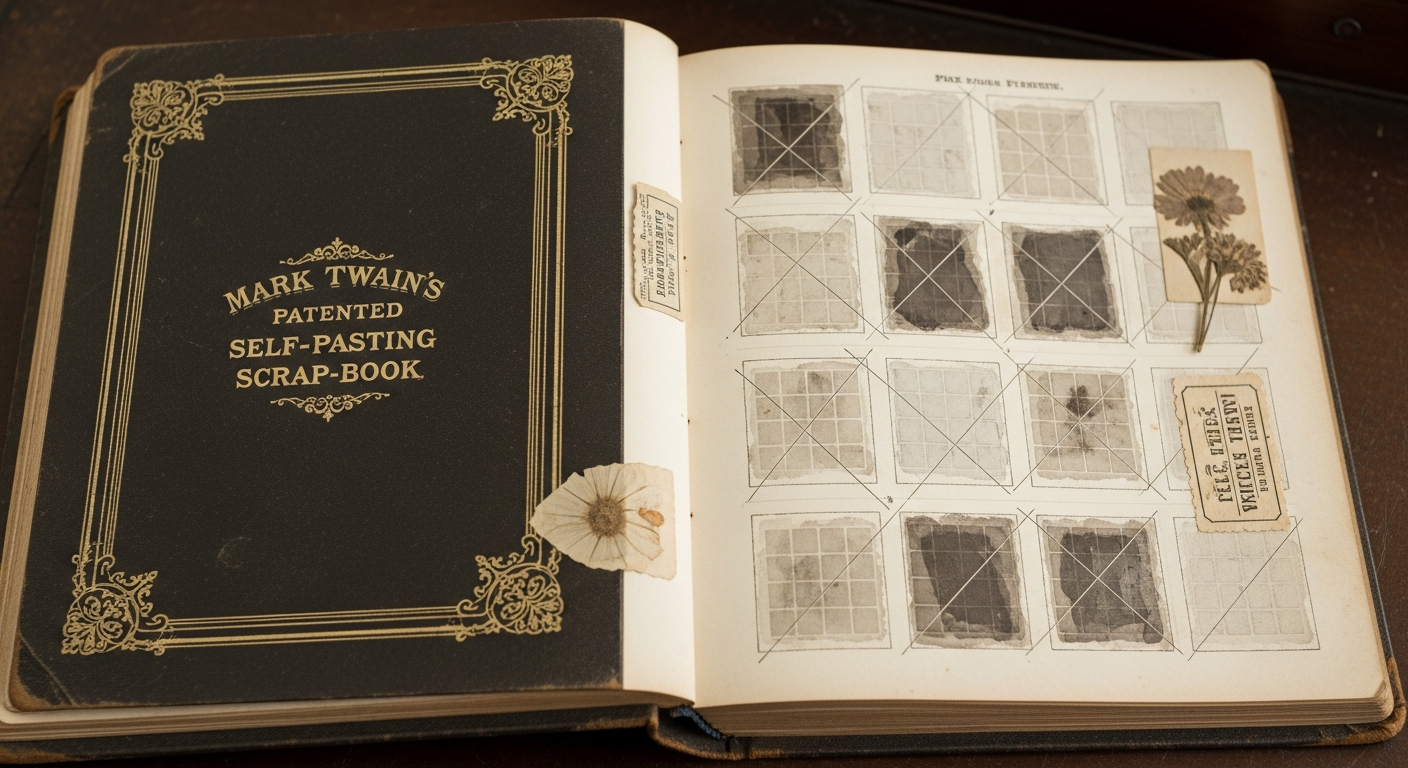
And then there’s Mark Twain, the great American humorist, who literally put his stamp on scrapbooking. Frustrated with the messy process of pasting items into books, he patented his ‘Mark Twain’s Adhesive Scrap-Book’ in 1872. This ingenious invention featured pre-gummed pages, ready to be moistened and used. It was a massive success, selling hundreds of thousands of copies and making Twain a tidy sum, far more than some of his books did! From his home in Hartford, Connecticut, Twain championed a simpler way for everyday Americans to compile their mementos.
Isn’t that surprising? The foundational principles of scrapbooking were being explored by visionaries who shaped our country, highlighting a fundamental human desire to collect, curate, and remember. This early inclination blossomed into a beloved hobby. Consider this: While digital photography now dominates, with platforms like Instagram and Facebook housing billions of images, an HP study once revealed that over 80% of photos taken are never actually printed. They remain unseen, forgotten in the digital ether. This stark reality underscores the enduring value of physical scrapbooks, giving our memories a tangible home and ensuring they don’t become part of that lost 80%.
Milestones in American Memory Preservation
The journey of scrapbooking is a fascinating thread in American history, evolving from personal archives to a widespread cultural phenomenon. Here’s a look at how it unfolded:
| Era / Period | Key Developments / Practices | Cultural Significance |
|---|---|---|
| 17th – 18th Century | Commonplace Books (Jefferson, Washington); Friendship Albums (poetry, sentiments); Recipe Collections. | Primarily for intellectual pursuit, moral instruction, and social bonding among the educated elite. Manual cutting and pasting. |
| Mid-19th Century | Rise of Daguerreotypes and Carte de Visites; Autograph Albums gain popularity; Printed ephemera collected. | Early photographic integration. A growing desire to preserve personal and social connections in a physical format. |
| Late 19th Century | Mark Twain’s patented self-pasting scrapbook (1872); Kodak ‘Brownie’ camera (1900) makes photography accessible. | Commercialization and democratization of scrapbooking. Moving from elite hobby to widespread domestic art. |
| Early 20th Century | Emphasis on family photographs, travel souvenirs, and ‘baby books.’ Early albums often simple, focusing on photo display. | Documenting everyday life and family milestones becomes central, especially for women in the home. |
| Post-WWII Era (1940s-1960s) | Boom in family life and homeownership fuels demand for memory-keeping; dedicated photo albums become standard. | Reinforces the idea of the family album as a cherished heirloom, capturing the ‘American Dream.’ |
| Late 20th Century (1980s-Present) | Emergence of dedicated craft stores; development of acid-free, lignin-free materials; rise of digital scrapbooking. | A resurgence of the craft, focusing on archival quality and creative expression. From simple albums to elaborate storytelling. |

Grill Chill And Freedom BBQ T Shirt
Wear your story with pride! Celebrate classic American values, history, and heritage with our premium crafted apparel, designed for comfort and durability.
A Thread Through Our Cultural Story
As photography became more accessible, scrapbooking evolved from a solitary, intellectual pursuit into a cherished communal hobby, especially among women. It became a beautiful form of domestic art, a way to celebrate family, friends, and special occasions. During the late 19th and early 20th centuries, women’s clubs often included scrapbooking in their activities, sharing ideas and techniques, turning it into a shared creative outlet. It was a lovely way to build community, to connect over shared memories and the quiet joy of making something beautiful.
I remember my own grandmother, bless her heart, with her big, worn scrapbooks. They weren’t fancy by today’s standards, often just dime-store albums with photos carefully glued in, sometimes with corners yellowed from age. But oh, the stories they held! Faded pictures of picnics by the river, a cousin’s wedding, my grandfather in his army uniform, letters tied with ribbon, even a pressed flower from a long-ago dance. Each page was a window into their lives, a glimpse of the joy and hardship, the small moments that together formed their world. Her scrapbooks weren’t just collections of pictures; they were a living history, a `family heritage album` that taught me more about where I came from than any textbook ever could.
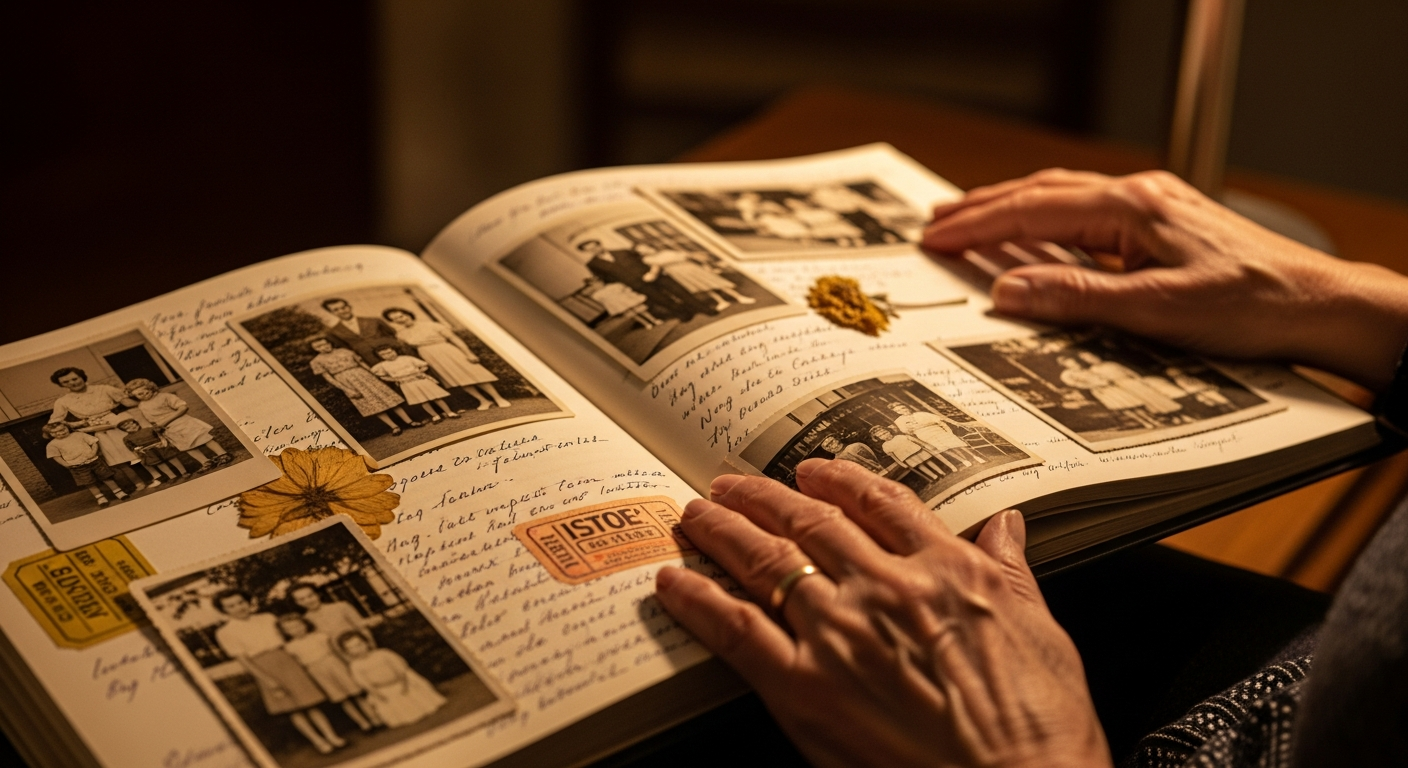
This deep personal connection is what gives scrapbooking its enduring power. It’s a way to pause, to reflect, and to celebrate the everyday miracles that often get lost in the rush of life. It’s about taking those fragmented bits of life – a concert ticket, a child’s drawing, a holiday card, a lock of hair – and weaving them into a cohesive narrative. It’s a testament to the fact that every life is a story worth telling, a heritage worth preserving. It keeps the past alive, not just in our minds, but in our hands, in a tangible form that can be shared, touched, and felt across generations.
Beyond personal family histories, scrapbooking also became a quiet guardian of local history. Town historians and community groups used these techniques to document the changing face of their neighborhoods, preserving news clippings, event programs, and photographs that tell the story of Main Street, the local diner, or the annual Fourth of July parade. These `vintage papercrafts` aren’t just quaint relics; they are invaluable primary sources, preserving the spirit and details of times gone by for future generations to explore.
Bringing Your Own Story to Life: How to Start a Scrapbook
Feeling inspired? Good! There’s no better time than now to begin preserving your own family’s unique story. If you’ve ever wondered `how to start a scrapbook`, let me tell you, it’s simpler than you might think, and immensely rewarding. You don’t need to be an artist; you just need a heart full of memories and a desire to share them.
A Practical Guide to Crafting Your Family’s Legacy
-
Gather Your Treasures (and Your Tools):
Start by collecting what you want to include. This could be old photos, new prints, ticket stubs from a special event, children’s artwork, postcards, handwritten letters, report cards, or even pressed flowers. For tools, you’ll need:- An album (acid-free and lignin-free are best for longevity).
- Acid-free paper and cardstock (for pages and embellishments).
- Photo-safe adhesive (glue sticks, tape runners, or photo corners – avoid rubber cement or regular glues).
- Scissors or a paper trimmer.
- Pens for journaling (pigment-based and acid-free).
- Optional: Decorative elements like stickers, stamps, embellishments, and decorative papers.
-
Choose Your Theme (or Just Start!):
You can create a scrapbook for a specific event (a wedding, a vacation, a baby’s first year) or a period of time (a decade, a year in review). Or, just pick a collection of photos and start telling their story. Don’t let perfection be the enemy of good. Sometimes, the most meaningful albums are the ones that simply begin. -
Select and Sort Your Photos:
Go through your collected photos and pick out the ones that tell the story best. Don’t feel you need to include every single picture. Group them logically – by event, by person, or chronologically. -
Plan Your Layout (or Go with the Flow):
Before sticking anything down, arrange your photos and other elements loosely on a page. This lets you play with composition and see what feels right. Think about how the elements work together to tell a visual story. You can use sketches for inspiration or just trust your eye. -
Add Journaling (The Heart of the Story):
This is perhaps the most crucial step for `memory preservation`. Don’t just show the picture; tell its story! Who is in the photo? Where and when was it taken? What were you feeling? What memories does it evoke? This written narrative transforms a simple photo album into a rich historical document, a true `family heritage album`. -
Embellish and Protect:
Once you’re happy with the layout and journaling, carefully adhere everything to your pages. Add any decorative elements you like, but remember, the focus should always be on the memories. Finally, consider using page protectors to safeguard your precious work from dust, spills, and wear over the years.
The beauty of scrapbooking, this wonderful `traditional american craft`, is that it truly is a labor of love. It’s an act of mindfulness, a quiet rebellion against the fleeting nature of our digital world. Each page you create isn’t just a collection of items; it’s a carefully curated chapter in your family’s ongoing saga, a gift of history for those who will come after us.
So, I encourage you, embrace the joy of `vintage papercrafts` and modern techniques. Pick up some supplies, dust off those old photos, print some new ones, and start writing your story. Because in doing so, you’re not just preserving memories; you’re strengthening the threads of family, community, and the enduring American spirit, ensuring our stories live on, vibrant and real, for generations to come. That, to me, is what America is all about – building a legacy, one beautiful memory at a time.