
Culture & Traditions
How to Host a Traditional American Summer BBQ: The Ultimate Backyard Checklist
There’s a certain magic that settles over our neighborhoods when the days stretch long and the sun paints the sky with golden hues. It’s the unmistakable call of the sweet American summer, and with it, the timeless tradition of the backyard barbecue. For generations, the sizzle of meat over an open flame, the aroma of smoke mingling with fresh-cut grass, and the joyful chatter of family and friends have been the very heartbeat of our nation’s leisure. It’s more than just a meal; it’s a foundational American social ritual, a beautiful blend of culinary history, family gathering, and that quintessential outdoor lifestyle we cherish so much.
I’ve seen a lot of summers, from the quiet charm of small-town gatherings to the lively energy of big-city cookouts. And through all those years, one thing holds true: the humble backyard barbecue is where memories are made, stories are shared, and the bonds of community are strengthened. But I know some folks feel a bit overwhelmed by the idea of hosting. Maybe you’re wondering how to get that perfect smoky flavor, or how to juggle all the moving parts for a truly smooth event. It’s a fair concern. After all, a great barbecue isn’t just about throwing some burgers on the grill; it’s an art, a science, and a generous act of hospitality, all rolled into one.
But what if I told you that hosting a traditional, unforgettable American summer BBQ is not only entirely within your reach, but it can also be a joyful, stress-free experience? It’s about understanding a few key principles, a bit of history, and embracing the spirit of the occasion. Did you know that barbecue’s roots in America stretch back to pre-colonial times, with indigenous peoples cooking meats over pits? Or that George Washington himself was known to host massive barbecues, once reportedly roasting an entire ox for his guests? It’s a tradition deeply embedded in our national story!
Consider this: the barbecue industry in the U.S. is a booming force, with grill and smoker sales consistently reaching into the billions of dollars annually, signaling just how central this activity is to our national leisure. And yet, despite the widespread love for it, a recent survey suggested that nearly 40% of home grill owners feel some level of anxiety about preparing a large BBQ for guests, citing concerns from uneven cooking to managing different dietary needs. That tells me there’s a real hunger for practical, encouraging guidance. So, let’s roll up our sleeves and get you ready to host a truly legendary cookout that will leave your guests smiling and your heart full.
The Regional BBQ Flavor Map: A Taste of America
One of the most glorious things about American barbecue is its incredible diversity. Drive just a few hundred miles in any direction, and you’ll encounter an entirely different approach to smoking, saucing, and serving. It’s a culinary landscape as varied and vibrant as our country itself! Understanding these regional nuances isn’t just for food historians; it’s a secret weapon for any host, allowing you to choose a style that truly resonates with your taste buds or even offer a delightful tour of America‘s best right in your own backyard.
Let’s take a look at some of the titans of American barbecue. Each style tells a story, a micro-history of the ingredients and cultures that shaped it. From the sweet, molasses-heavy sauces of Kansas City to the tangy vinegar of the Carolinas, there’s a world to explore:
| Regional Style | Signature Meats | Typical Wood Type | Sauce Base & Flavor Profile |
|---|---|---|---|
| Kansas City BBQ | Burnt ends, ribs (pork & beef), brisket, chicken. | Hickory, Oak. | Thick, sweet, molasses- and tomato-based, often with a hint of spice. |
| Memphis BBQ | Pulled pork (shoulder), ribs (wet or dry). | Hickory. | Often dry-rubbed ribs (no sauce), or a thinner, tangy, tomato- and vinegar-based sauce for wet ribs/pulled pork. |
| Texas BBQ | Brisket (beef), beef ribs, sausage. | Post Oak (predominantly), Mesquite. | Minimalist; salt, pepper, and smoke are paramount. Sauces, if any, are thin, savory, and usually served on the side. |
| Carolina BBQ (Eastern & Western) | Whole hog (Eastern), pork shoulder (Western). | Hickory, Oak, Pecan. | Eastern: Thin, vinegar- and pepper-based. Western (Lexington style): Ketchup-, vinegar-, and pepper-based. |
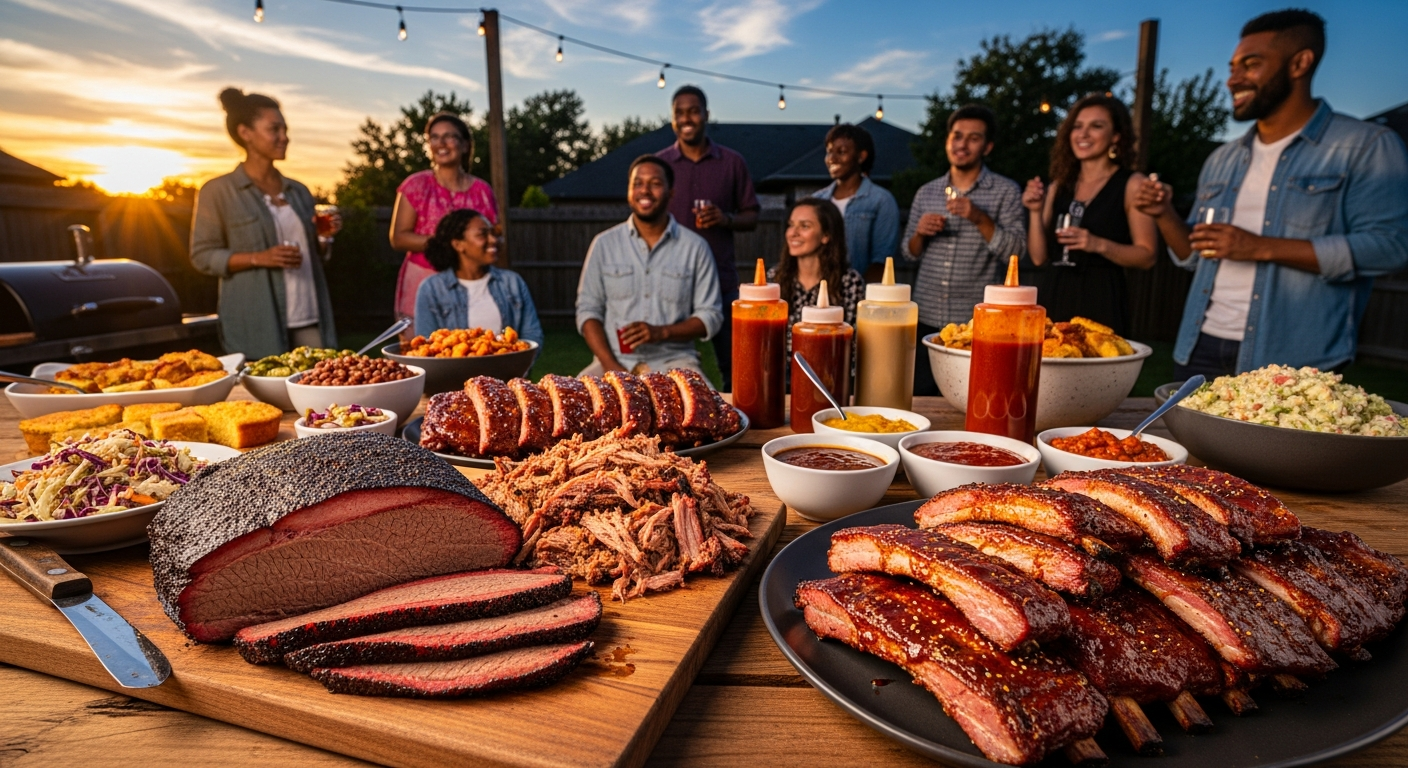
When I think of the sheer variety, I’m reminded of a trip I took to Charleston, South Carolina, years ago, where I first tasted true whole-hog Eastern Carolina ‘cue. It was utterly different from the beef brisket I grew up with in Texas, but equally magnificent. Each region tells a tale of its agricultural bounty, its history, and its people’s ingenuity. So, pick a style that calls to you, or try to emulate a few to give your guests a culinary journey!

Grill Chill And Freedom BBQ T Shirt
Wear your story with pride! Celebrate classic American values, history, and heritage with our premium crafted apparel, designed for comfort and durability.
Shop the Look →Backyard Layout & Thermal Zones: Setting Your Stage for Success
Before the first spark flies, let’s talk about your stage: the backyard. A well-organized grilling area is the secret to a relaxed host and perfectly cooked food. Think of it like a chef’s kitchen, but under the open sky! You want a flow that minimizes movement, prevents cross-contamination, and keeps everything within easy reach. This isn’t just about convenience; it’s about food safety and efficiency. Nobody wants to be sprinting back and forth to the kitchen while the ribs are on the brink of perfection.
Diagnostic Guide for Grill Station Setup:
-
Assess Your Space:
- Clearance: Ensure your grill is at least 10 feet away from any flammable structures (house, fence, low-hanging branches). A sudden flare-up isn’t a summer memory anyone wants.
- Level Surface: Place your grill on a stable, non-flammable surface like concrete or pavers. A wobbly grill is a dangerous grill.
- Wind Direction: Position your grill to avoid direct wind, which can make temperature control difficult and blow ash or smoke towards guests.
-
Define Thermal Zones on Your Grill:
- Direct High-Heat Zone: This is for searing, getting those beautiful grill marks, and cooking quick-cook items like burgers, hot dogs, and thin steaks. On a charcoal grill, pile coals on one side. On a gas grill, turn burners to high on one side. Aim for 450-550°F (232-288°C).
- Indirect Low-Heat Zone: This is your ‘oven’ on the grill, perfect for slow cooking, smoking, and finishing thicker cuts like briskets, ribs, or whole chickens. Food cooks by convection, not direct flame. On a charcoal grill, leave one side free of coals. On a gas grill, turn off burners on one side, letting heat from the direct zone circulate. Aim for 225-300°F (107-149°C).
- Warm Zone (Optional): If your grill has a warming rack, use it to keep cooked items warm or gently toast buns. If not, the coolest part of your indirect zone can serve this purpose.
-
Establish Prep & Serving Stations:
- Raw Food Prep Area: Designate a clean table or surface near the grill, exclusively for handling raw meats. Use separate cutting boards and utensils (e.g., color-coded) to prevent cross-contamination with cooked food.
- Cooked Food Holding Area: Have a clean platter or tray ready for cooked meats, placed away from raw ingredients. Keep it warm if possible, or covered to retain heat.
- Tool Station: Keep all your grilling tools (tongs, spatulas, meat thermometer, basting brush) within arm’s reach. I always say, a good grill master is never scrambling for a tool!
- Waste Receptacle: A nearby trash can makes cleanup easier and keeps your area tidy.
-
Safety First:
- Fire Extinguisher: Have a small fire extinguisher or a bucket of sand/baking soda readily accessible.
- Gloves/Mittens: Protect your hands from heat.
- Lighting: If grilling extends into the evening, ensure adequate lighting for safe cooking and serving.
Getting these zones right, from my experience, makes all the difference between a frantic cook-off and a smooth, enjoyable culinary performance. It truly sets the stage for a memorable meal.
The Host’s Actionable Timeline: Your Path to a Perfect BBQ
Now that your stage is set, let’s talk about the playbook. A truly successful barbecue, the kind where you actually get to enjoy your own party, hinges on preparation. It’s like building a good house; the foundation and framing need to be solid before you hang the drywall. This timeline will help you break down the tasks into manageable chunks, ensuring you’re calm, collected, and ready to greet your guests with a genuine smile, not a harried expression.
24 Hours Out (The Day Before):
- Meat Prep: Apply rubs to any large cuts (brisket, pork shoulder, ribs). Marinate chicken or other meats. Pat them dry before applying rub for better bark.
- Sauce & Sides: Prepare homemade barbecue sauces, coleslaw, potato salad, baked beans, or any other cold sides. These often taste better the next day!
- Wood & Charcoal: Soak wood chips for smoking (if using) for at least 30 minutes, or longer if you prefer. Ensure you have plenty of charcoal or propane.
- Drink Prep: Fill coolers with ice and drinks. Make homemade lemonade or iced tea.
- Clean & Organize: Clean your grill grates thoroughly. Tidy the backyard, set up seating, and ensure pathways are clear.
- Table Setting & Supplies: Lay out tablecloths, check for enough plates, cutlery, napkins, and serving dishes. Don’t forget condiments!
- Music Playlist: Curate a playlist of your favorite summer tunes. Good music sets the mood!
4-6 Hours Before Guests Arrive:
- Start Smoker/Grill: For slow-cooked meats, get your smoker or grill to its target temperature and add your meat. Low and slow is the mantra for tender results.
- Final Side Preps: Chop vegetables for salads, slice buns, and make any last-minute additions to your pre-prepared sides.
- Dessert Check: Ensure desserts are ready or require minimal assembly later.
- Restrooms: Give the guest bathroom a quick once-over.
1-2 Hours Before Guests Arrive:
- Set Out Cold Sides: Transfer cold salads and other prepared sides from the fridge to serving bowls. Keep them chilled until serving time.
- Prep Quick-Cook Meats: Form hamburger patties, season hot dogs, skewer kebabs.
- Fire Up Grill (High Heat): If you’re doing quick-cook items, start heating your direct zone.
- Lighting & Ambiance: If it’s an evening affair, check patio lights, candles, or citronella torches.
30 Minutes Before Guests Arrive:
- Final Touches: Check ice levels in coolers, put out bug spray, light torches.
- Dress Yourself: Change into your grill master uniform (more on that next!).
- Relax & Breathe: Take a moment to enjoy the fruits of your labor. The hard work is done!
This timeline, a version of which I’ve refined over decades, keeps me from getting flustered. It ensures that when my neighbors, the Miller family from down the street, or my niece, Clara, pull up the driveway, I’m not frantically chopping onions, but rather, I’m ready with a cold drink and a warm welcome. It truly makes all the difference in making your sweet American summer gathering feel effortless.
Classic Americana BBQ Dressing: The Grill Master’s Unofficial Uniform
Alright, we’ve talked about the food, the setup, and the timing. But what about the person making all this magic happen? The grill master! While there’s no official uniform, per se, I’ve noticed a distinct pattern over the years. The true American grill master, the one who’s comfortable and confident tending the flames, usually sports a particular look.
It’s all about comfort and practicality, seasoned with a dash of American pride. Think comfortable, breathable graphic tees. These aren’t just any t-shirts; they’re often adorned with subtle (or not-so-subtle) patriotic motifs, perhaps an eagle, a classic American car, or even a clever BBQ-themed slogan. Why? Because you’re working with heat, smoke, and sometimes a stray splatter of sauce. You need something that breathes, can handle a bit of wear and tear, and lets you move freely as you flip burgers or tend to a brisket.
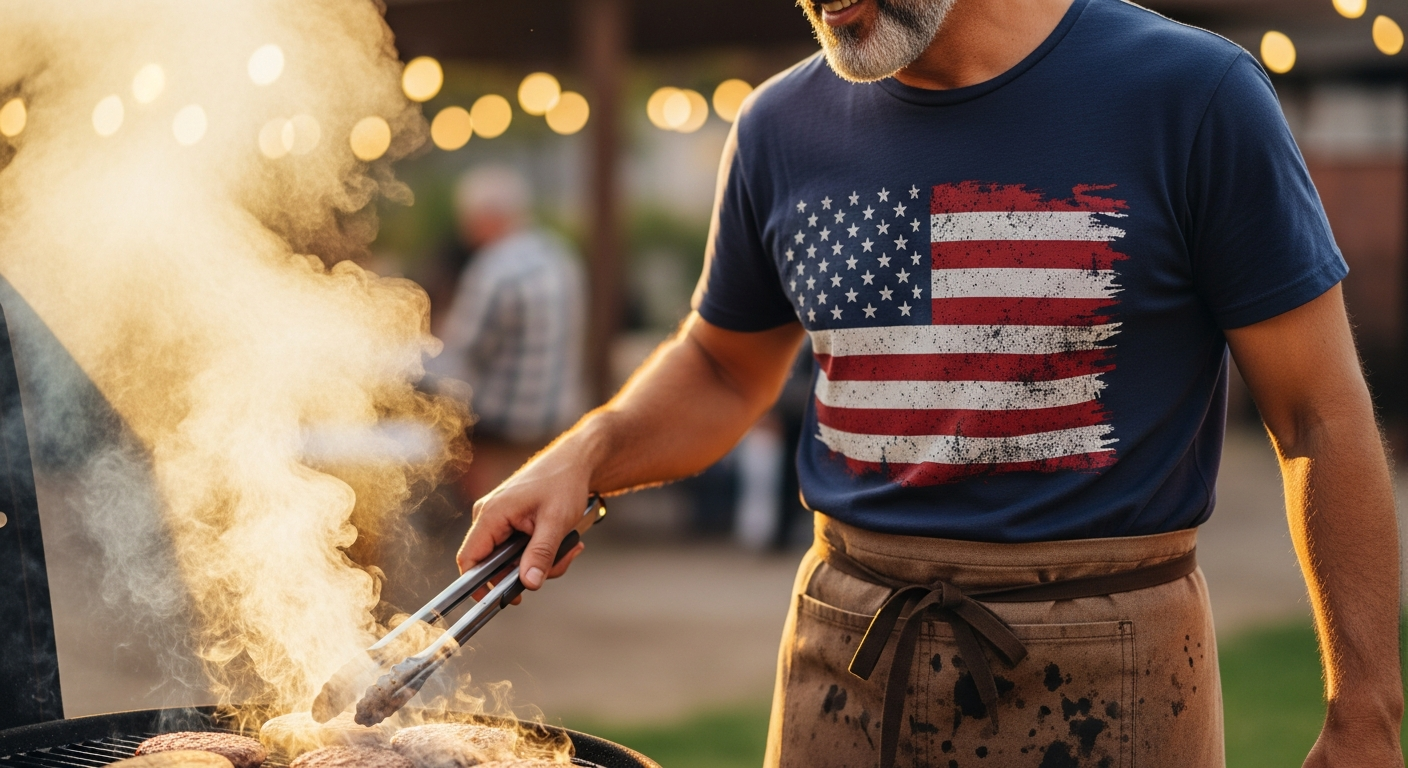
Pair that tee with a trusty pair of well-worn jeans or comfortable shorts, and sturdy, closed-toe shoes (safety first, my friends, no open sandals around hot coals!). Add a good apron, maybe one gifted by the kids with a sweet, hand-drawn design, and you’re not just dressed for the job; you’re embodying the spirit of the occasion. It’s a casual, unpretentious look that says, ‘I’m here to cook, to share, and to enjoy this beautiful day with you all.’ It’s a uniform that speaks to the heart of American hospitality: relaxed, genuine, and always ready for a good time.
Hosting a traditional American summer BBQ is truly one of life’s great pleasures. It’s a chance to slow down, connect, and celebrate the simple joys that bind us. With these tips and a little bit of planning, you’ll be well on your way to creating those unforgettable summer memories, year after year. Happy grilling, my friends, and here’s to many more sweet American summers!