
American Lifestyle
The Gooey Revolution: How Diy Slime Conquered American Childhood And Creative Play
Growing up in rural Ohio, my grandmother’s kitchen was always alive with the scent of rising bread, the clatter of canning jars, and the quiet hum of creative energy. We didn’t have ‘screen time’ worries; our hands were busy with dough, yarn, or the rich earth of her garden. So, when I first saw the DIY slime craze sweep through our American neighborhoods, I admit, I was fascinated. It seemed like such a modern phenomenon, yet at its heart, it was a timeless call to hands-on creation, much like the traditional crafts I’ve spent my life studying.
It began as a simple home experiment, a playful mix of common household items, and quickly transformed into what I like to call ‘The Gooey Revolution.’ This vibrant movement cleared grocery shelves of glue and shaving cream, becoming a multi-million dollar sensory craze that defined a generation’s childhood. In a world increasingly saturated with digital distractions, DIY slime offered a tactile, squishy, and wonderfully messy antidote. It’s more than just a passing fad; it’s a profound return to the basics of imaginative play, a staple of modern American childhood, and a testament to human ingenuity. How did this simple chemical reaction capture so many hearts and hands? Let’s explore the vibrant slime craze history.
The Kitchen Chemist: Unlocking the Gooey Magic
At its core, making slime is a delightful foray into polymer chemistry, accessible right from your kitchen counter. Remember those science experiments with baking soda volcanoes? This is just as exciting, perhaps even more so, because you get to squish your results! The secret lies in a basic cross-linking polymer reaction. Polyvinyl acetate, the primary ingredient in most craft glues like Elmer’s, is a long chain of molecules. When you introduce an ‘activator’ (often borate ions from borax, liquid starch, or contact lens solution combined with baking soda), these ions create bridges between the glue’s polymer chains, turning a liquid into that wonderfully elastic, gooey substance we call slime.
I recall my own nieces, eyes wide with wonder, meticulously measuring ingredients, chatting about the perfect consistency. It reminded me of watching my grandmother carefully measure flour for her sourdough starter, an intuitive understanding of chemistry passed down through generations. The beauty of a homemade slime recipe is its accessibility. You don’t need a lab; you need a bowl, a spoon, and a sense of adventure.

Essential Slime Ingredients for Your First Batch
For those new to the gooey world, here’s a common breakdown of slime ingredients:
- Glue: White PVA glue (like Elmer’s School Glue) is the classic choice for opaque, stretchy slime. Clear PVA glue is used for transparent, glass-like slimes.
- Activator: This is where the magic happens! Common activators include a borax solution (1 teaspoon borax dissolved in 1 cup warm water), liquid laundry starch, or a solution of contact lens saline (which contains borate ions) mixed with baking soda. The choice of glue and activator slime combination dictates the final texture.
- Water: Often added to adjust consistency, making the slime more pliable.
- Optional Add-ins: Food coloring for vibrant hues, glitter for sparkle, craft foam beads for crunchy slime, or even essential oils for a pleasant scent. For fluffy slime tutorial seekers, shaving cream is a must-add!
From Local Craft Fairs to Global Feeds: The Digital Spark
While the basic science of slime has been around for decades, its meteoric rise in the 2010s was undeniably fueled by the digital age. This is where the modern story truly begins. Platforms like YouTube and Instagram became the unexpected catalysts, turning kitchen tables into global stages. Young creators, often teenagers, shared their how to make slime experiments, variations, and satisfying ASMR squishes, building enormous communities. I’ve seen this happen with heritage crafts too, but never at this scale!
Consider these astonishing figures: In 2017, the peak of the craze, searches for ‘how to make slime’ on YouTube soared by over 500% year-over-year. Videos showcasing new slime recipes and textures garnered hundreds of millions of views. For instance, Karina Garcia, dubbed ‘The Slime Queen,’ built an empire with her DIY videos, attracting millions of subscribers. This wasn’t just passive viewing; it was interactive. Kids across the country, from Los Angeles to rural Vermont, were inspired to recreate, innovate, and share their own creations. The online community fostered a sense of belonging and friendly competition, driving innovation in colors, textures, and scents.
The Soothing Squish: Sensory Play in a Digital Age
Why did slime resonate so deeply? I believe it’s a powerful response to the increasing pressure of our digital lives. As a folklorist, I’ve long observed that humans instinctively seek out hands-on, tactile experiences. This isn’t just about entertainment; it’s about our well-being. Slime offers incredible sensory play activities, providing a much-needed break from the glowing screens that dominate our days.
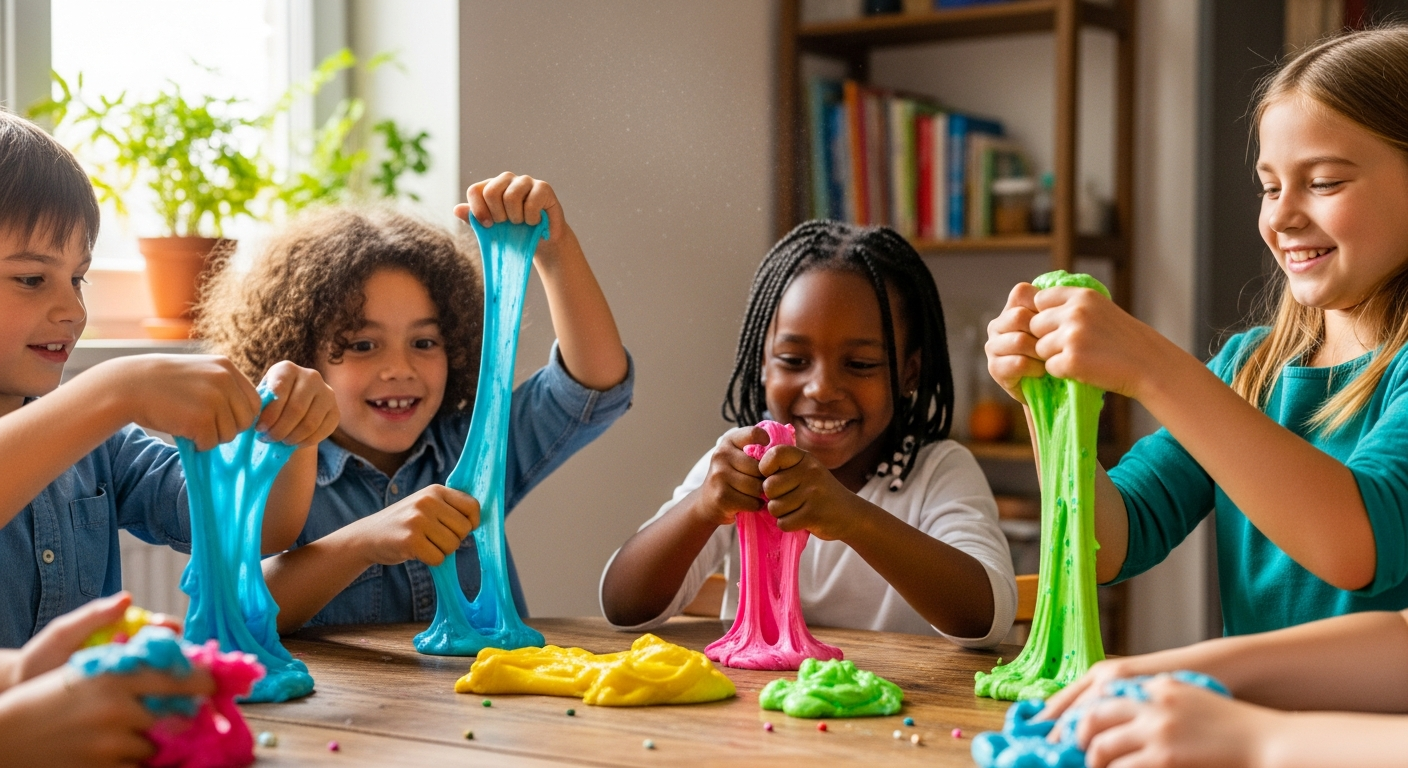
The act of kneading, stretching, and squishing slime engages multiple senses, promoting mindfulness and focus. For children, it can be a calming activity, helping to regulate emotions and reduce anxiety. It provides a non-verbal outlet for creativity, allowing them to experiment with colors, textures, and even sounds. In a world where screen-time burnout is a genuine concern, sensory toys for kids like slime offer a tangible, immediate, and satisfying alternative.
Benefits Beyond the Goo: Why Tactile Play Matters
- Stress Reduction: The repetitive motion of playing with slime can be incredibly soothing, acting as a natural stress reliever for both children and adults.
- Fine Motor Skill Development: Kneading, pulling, and shaping slime strengthens small hand muscles, crucial for writing and other detailed tasks.
- Creativity and Experimentation: Slime encourages open-ended play, allowing kids to explore different textures, colors, and additions without strict rules. It’s a fantastic avenue for children crafts ideas.
- Sensory Regulation: For children with sensory processing sensitivities, slime can provide essential tactile input in a safe, controlled way.
From Lemonade Stands to Slime Shops: Young Entrepreneurs
Perhaps one of the most heartwarming aspects of the slime craze is the incredible entrepreneurial spirit it ignited in young people. What started as a hobby in countless kitchens quickly scaled into small businesses, often run by pre-teens and teenagers. These young innovators learned about supply chains, marketing, customer service, and even product development. I’ve seen it firsthand at local craft markets, where tables piled high with colorful, scented slimes stood proudly beside traditional artisan wares.
Consider the story of Maddie Rae, who started her slime business at 13 and quickly grew it into a national brand, even appearing on television shows. Her journey, like many others, began with a fascination for mixing homemade slime ingredients and a knack for sharing her creations online. This phenomenon wasn’t just about making a product; it was about building a brand, understanding a market, and connecting with customers, all valuable lessons in business and life. It represents a delightful blend of traditional craft mentality and modern e-commerce savvy.
Mastering the Goo: A Simple Homemade Slime Recipe (Classic White Glue)
Ready to try your hand at the gooey revolution? Here’s a basic homemade slime recipe that uses readily available slime ingredients, perfect for an afternoon of sensory play activities:
| Slime Type | Main Glue | Common Activator(s) | Key Characteristics | Best For |
|---|---|---|---|---|
| Classic White Glue Slime | Elmer’s White School Glue | Borax Solution, Liquid Starch, Contact Solution + Baking Soda | Stretchy, pliable, opaque, easy to make. | Beginners, general tactile play. |
| Clear Slime | Elmer’s Clear Glue | Borax Solution, Contact Solution + Baking Soda | Transparent, jewel-like, often embeds glitter or charms. | Visual appeal, embedding small items. |
| Fluffy Slime | Elmer’s White School Glue | Shaving Cream + Activator (Borax Solution or Contact Solution) | Airy, soft, expands, holds shape well, resembles a cloud. | Stress relief, satisfying squishes, light textures. |
| Butter Slime | Elmer’s White School Glue | Clay (often Daiso Clay) + Activator (Borax Solution or Contact Solution) | Smooth, spreadable, less sticky, soft, similar to clay. | ASMR, unique texture, shaping. |
Step-by-Step Guide to Making Basic Slime:
- Gather Your Slime Ingredients: You’ll need 1/2 cup (4 oz) white PVA glue, 1/2 teaspoon baking soda, 1 tablespoon contact lens solution (ensure it contains borate ions), food coloring (optional), and a mixing bowl with a spoon.
- Mix Glue and Baking Soda: Pour the glue into your bowl. Stir in the baking soda until it is fully dissolved. This step is crucial for preparing the glue to react with the activator.
- Add Food Coloring (Optional): If you want a colorful slime, add a few drops of food coloring now and mix thoroughly.
- Introduce the Activator: Add the contact lens solution. Stir slowly but continuously. You’ll notice the mixture beginning to thicken and pull away from the sides of the bowl. This is your glue and activator slime forming!
- Knead Your Slime: Once it’s too thick to stir, take the slime out of the bowl and begin kneading it with your hands. It might be sticky at first, but with continued kneading (about 5-10 minutes), it will become smooth, stretchy, and less sticky. If it’s still too sticky, add a tiny bit more contact solution, a few drops at a time, and continue kneading.
- Store Properly: When you’re done playing, store your DIY slime in an airtight container to prevent it from drying out.
For a fluffy slime tutorial, simply add about 1-2 cups of shaving cream to your glue *before* adding the baking soda and activator, then proceed with the steps above. It creates a wonderfully airy and soft texture.
The Lasting Legacy of the Gooey Revolution
As I reflect on the unexpected journey of DIY slime, I see echoes of the vibrant folk traditions I cherish. It’s about community, creativity, and the joy of making something with your own hands. It reminds us that even in our fast-paced, digital world, there’s an undeniable pull towards tangible, sensory experiences, especially for our children. The gooey revolution wasn’t just a trend; it was a powerful statement about the enduring human need for play, connection, and creation.
So, whether you’re a seasoned ‘slimers,’ a curious parent, or just looking for engaging children crafts ideas, I encourage you to embrace the simple magic of how to make slime. It’s a wonderful way to foster creativity, provide calming sensory input, and perhaps, create a few cherished memories around your own kitchen table, just like we did in my grandmother’s day.