
Geography & the American Landscape
The Cathedral Of Redwoods: Saving The World’S Tallest Giants From The Logging Boom
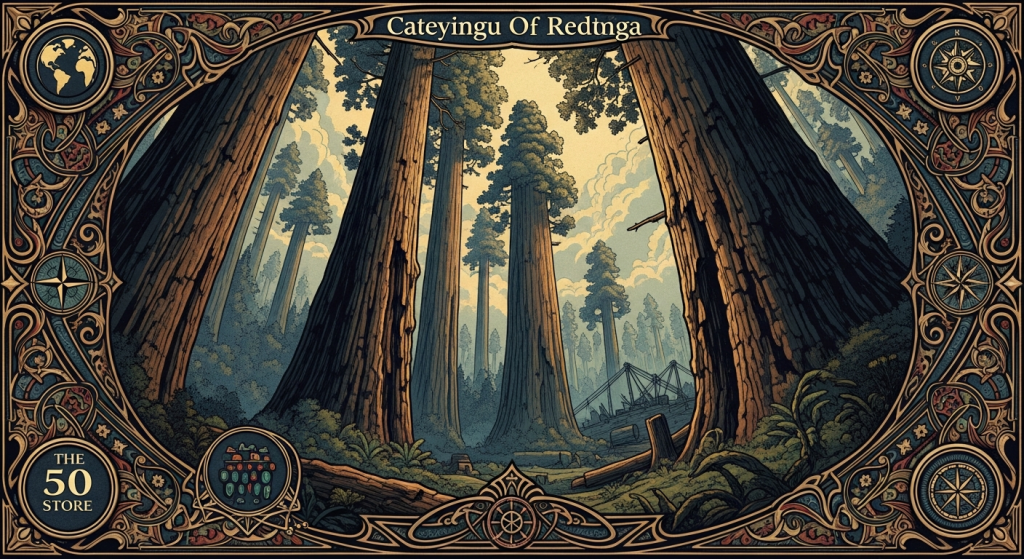
When I stand among the towering redwoods of Northern California, I feel a profound sense of awe, a quiet reverence that settles deep within my bones. These are not merely trees; they are living monuments, ancient sentinels that have witnessed millennia unfold. As an outdoor journalist and geographer, I’ve traveled America‘s wild spaces, but nowhere else does the sheer scale of life quite take your breath away like it does in a redwood grove. Yet, it’s a sobering thought that just over a century ago, these magnificent ‘Cathedrals of Redwoods,’ as some called them, were on the brink of vanishing forever.
Imagine, if you will, the early 20th century. The air, thick with the scent of pine and rich earth, was increasingly punctuated by the relentless roar of saws and the thud of ancient giants falling. This wasn’t some distant threat; it was a cataclysm unfolding across California’s pristine coastal ranges. The tallest living organisms on Earth, trees that had stood sentinel since the Roman Empire, were being chopped down at a terrifying, industrialized rate. They were cut for shingles, for railroad ties, for housing, fueling a booming nation with seemingly endless natural resources. The forests, which had stood undisturbed for countless generations, were being cleared at a pace that defied imagination. It’s a hidden truth, one that still sends a shiver down my spine when I think about how close we came to losing them all.
The Logging Gold Rush: A Race Against Time
Post-railroad California, particularly the wild stretches of Humboldt County, became the epicenter of a timber rush that mirrored the frenzied search for gold decades earlier. The vast, contiguous stands of old-growth coastal redwoods (Sequoia sempervirens) were seen not as irreplaceable wonders but as raw material. Timber companies, armed with increasingly powerful machinery, moved through these primeval forests with ruthless efficiency. By 1910, an estimated two million acres of old-growth redwoods stretched along California’s coast. Just ten years later, that number had plummeted. It was an era of unchecked industry, driven by demand and a pervasive belief in nature’s infinite bounty. I often guide groups through second-growth forests, and the difference is stark: the even spacing, the younger age, a palpable absence of that ancient, layered silence that only comes with millennia of unbroken growth.
The Unseen Cost of Progress
The logging boom wasn’t just felling trees; it was dismantling entire ecosystems, destroying habitats that had evolved over millions of years. Rivers became choked with silt, salmon runs dwindled, and the unique microclimates fostered by the redwood canopy began to disappear. The sheer scale of the destruction was almost incomprehensible, often leaving behind a scarred, barren landscape that looked nothing like the verdant ’emerald cathedrals’ it once was.
The Road Trip of 1917: A Pledge for Posterity
It was against this backdrop of widespread ecological devastation that a pivotal moment occurred. In 1917, three visionary conservationists, united by a shared sense of alarm, embarked on a road trip through the ravaged redwood country of Northern California. These men – Madison Grant, a passionate conservationist; Henry Fairfield Osborn, a paleontologist and president of the American Museum of Natural History; and John C. Merriam, another prominent paleontologist from the University of California – witnessed firsthand the gaping, ugly scars left by clear-cutting. They saw ancient trees, felled and limbed, their colossal trunks awaiting transport, and entire hillsides stripped bare.
Their journey was a profound awakening, transforming abstract concern into concrete resolve. It wasn’t enough to simply lament the loss; action was desperately needed. It was on this trip, amidst the stumps and the silence where giants once stood, that they swore to build a ‘Cathedral of Redwoods’ that would stand forever. Their vision wasn’t just about saving individual trees, but about preserving entire groves, creating a permanent sanctuary for these natural wonders.
Save the Redwoods League: A Nation Rallies
From the ashes of despair, hope began to sprout. Inspired by their road trip, Grant, Osborn, and Merriam, along with other like-minded individuals, officially founded the Save the Redwoods League in 1918. Their mission was clear and urgent: to rescue significant stands of redwood forests from the logger’s axe through private acquisition and transfer to public ownership. It was an ambitious, almost audacious plan, relying not on government decree, but on the power of citizen action and collective passion.
The League’s strategy was simple yet profoundly effective: buy back forested parcels, tree by tree, acre by acre, using donations from everyday Americans. They rallied support through persuasive campaigns, showing the public images of both the awe-inspiring beauty of the redwoods and the stark destruction wrought by logging. People from all walks of life contributed – from schoolchildren saving pennies to wealthy philanthropists donating large sums. This grassroots movement became a powerful force, demonstrating that conservation was not just a niche interest, but a shared responsibility.
Their tireless work and the generosity of thousands led to incredible milestones:
| Year | Key Event/Milestone | Impact |
|---|---|---|
| 1918 | Save the Redwoods League Founded | Organized the first systematic effort to buy and preserve redwood lands. |
| 1920s-1930s | Establishment of State Parks | Purchased key groves that formed the core of California’s State Redwood Parks (e.g., Humboldt Redwoods State Park, Prairie Creek Redwoods State Park). |
| 1931 | Newton B. Drury joins as Secretary | Brought professional leadership, expanding the League’s reach and effectiveness. |
| 1968 | Redwood National Park Established | Federal recognition and protection for significant remaining old-growth forests, merging with existing state parks. |
| Ongoing | Continuous Land Acquisition & Restoration | The League continues to purchase threatened groves and fund vital restoration efforts. |
The Uncompromised Truth: A Legacy Forged in Generosity
Thanks to the unwavering dedication of the Save the Redwoods League and the generosity of ordinary citizens, over 200,000 acres of redwood forest that would have otherwise been logged were successfully saved and protected. This astounding achievement ensured that future generations, like mine and yours, could stand beneath these titans. Imagine: coastal redwoods can live over 2,000 years and grow to heights of over 370 feet – the equivalent of a 37-story skyscraper. Their immense age and size make them incredibly unique, filtering fog into life-giving moisture and sheltering a rich biodiversity. 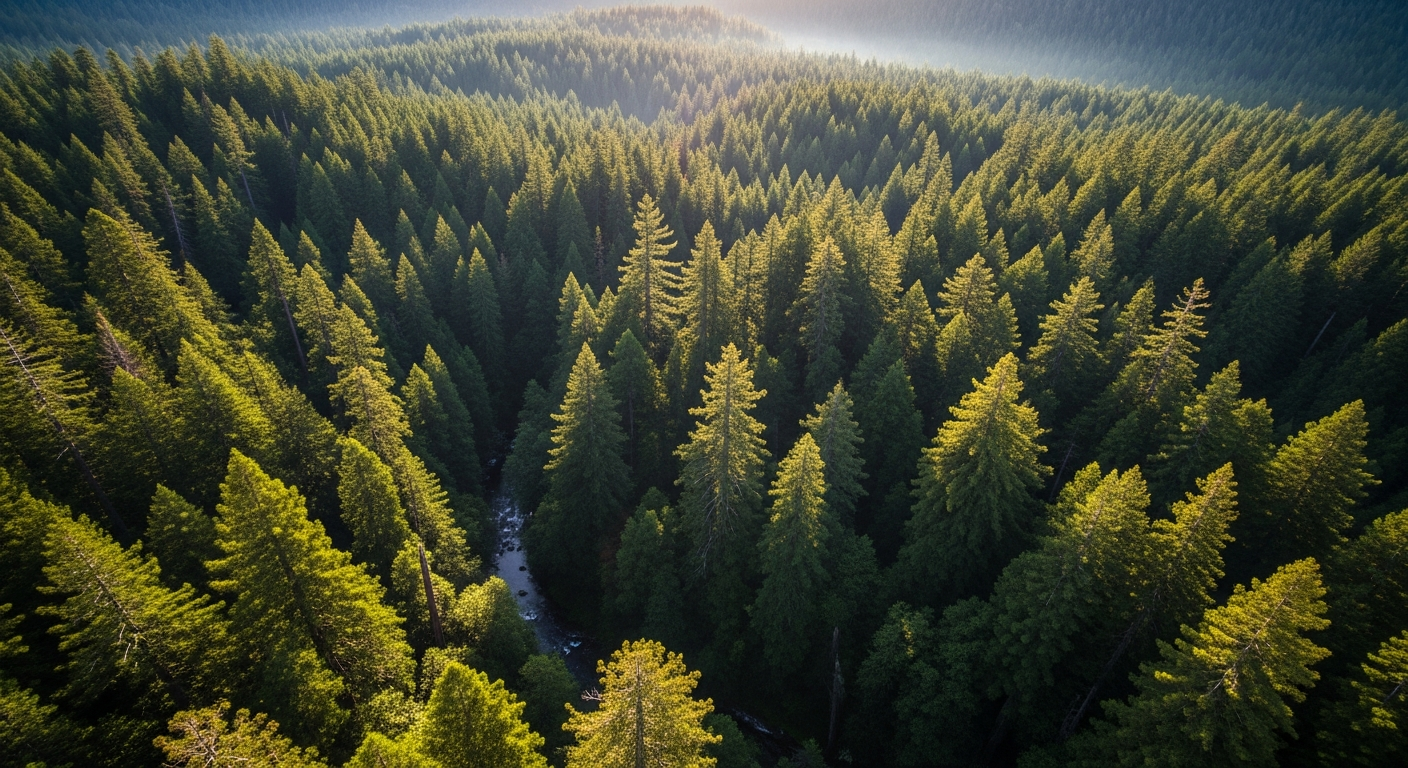
A Permanent Sanctuary: Redwood National and State Parks
The crowning achievement of these early conservation efforts, bolstered by decades of sustained advocacy, came in 1968 with the establishment of Redwood National Park. Later, in 1994, it officially became the Redwood National and State Parks (RNSP), a unique collaboration between federal and state agencies. Today, RNSP protects 139,000 acres, encompassing not only magnificent old-growth redwood forests but also vast prairies, oak woodlands, wild rivers, and 37 miles of pristine coastline. It’s a place where ancient history and vibrant present collide, a living laboratory for scientists and an unparalleled sanctuary for the soul.
When I visit, I often reflect on the dedication of those early pioneers. They saw beyond the immediate profit, envisioning a future where these natural wonders could continue to inspire, humble, and teach us. Their efforts ensured that we can still walk through groves like Tall Trees Grove, feeling the cool, damp air and listening to the whispers of trees that predate our modern civilizations. It’s a testament to what a few determined individuals, backed by a caring public, can achieve.
How You Can Help Keep the Redwoods Standing Tall
The battle for conservation is never truly over. While vast areas are now protected, threats like climate change, illegal logging, and invasive species continue to challenge the long-term health of these precious ecosystems. We all have a role to play in safeguarding this incredible legacy. Here’s a practical guide on how you can contribute:
- Visit Responsibly: When you explore Redwood National and State Parks, stay on marked trails, pack out everything you pack in, and respect wildlife. Leave no trace, allowing the next visitor to experience the same pristine beauty.
- Support Conservation Organizations: Organizations like Save the Redwoods League continue their vital work of acquiring threatened lands, restoring logged areas, and funding scientific research. Your donations, no matter how small, make a tangible difference.
- Educate Yourself and Others: Learn more about the unique ecology of redwoods and share their story. Understanding their importance fosters a deeper appreciation and commitment to their protection.
- Advocate for Sustainable Practices: Support policies and businesses that promote sustainable forestry and combat climate change, both crucial for the long-term survival of redwood forests.
- Volunteer: If you live near redwood parks, consider volunteering your time to help with trail maintenance, invasive species removal, or educational programs.
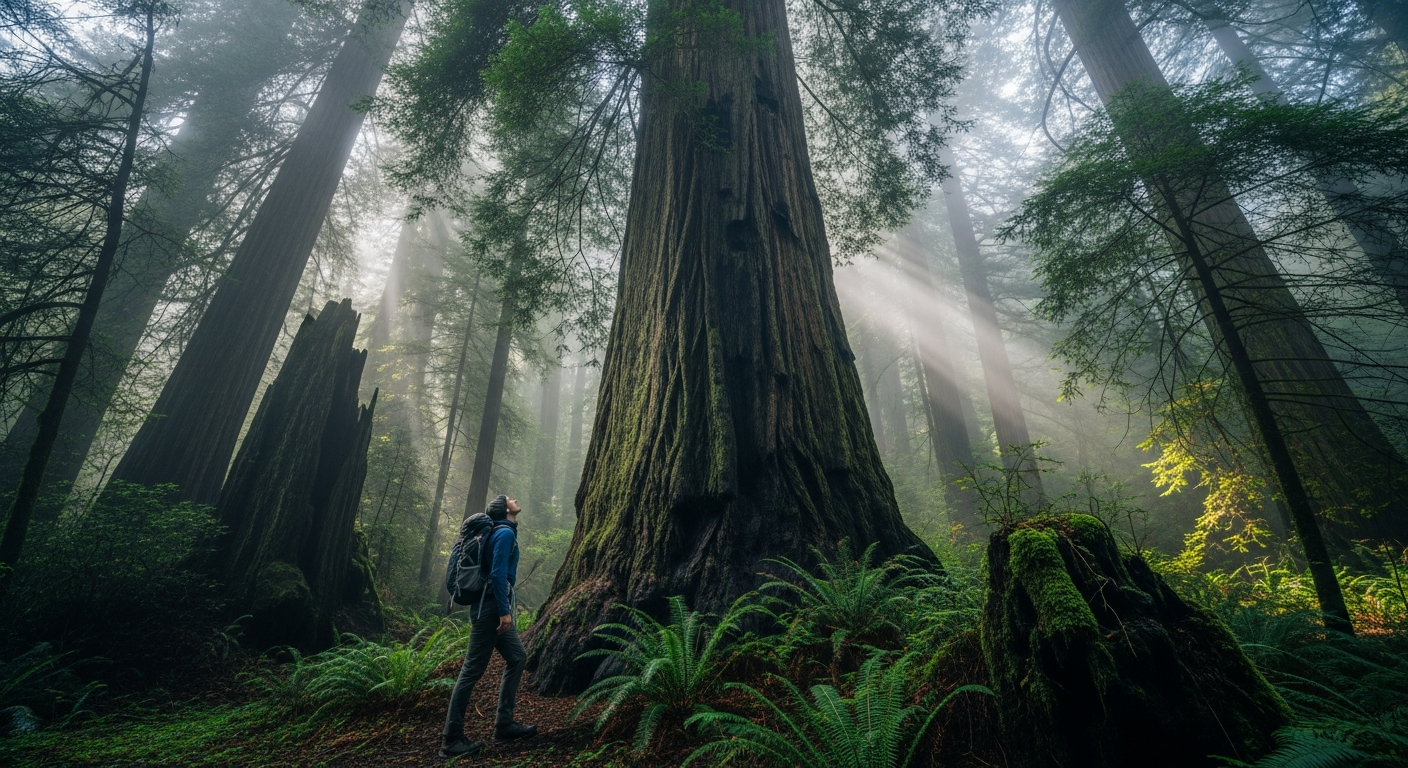
Standing beneath the sky-scraping canopy, feeling the quiet majesty of the giant redwoods, you carry a piece of history, a profound connection to the enduring power of nature and the remarkable story of those who fought to save it. It’s a feeling that stays with you, a gentle reminder of our shared responsibility to protect these irreplaceable landscapes.
For those who feel this connection as deeply as I do, The50 Store offers the ‘Save the Redwoods Heritage Trail Tee.’ It’s more than just a shirt; it’s a wearable tribute to these incredible forests. Printed with water-based eco-inks on our ultra-breathable combed ring-spun cotton, it’s designed for comfort on any trail, evoking the quiet strength and enduring spirit of the redwoods themselves. Wear it as a symbol of your appreciation, and carry the story of their preservation wherever you go.