
Icons & Symbols of America
The Cowboy Hat: An Icon of Freedom, Work, and Myth
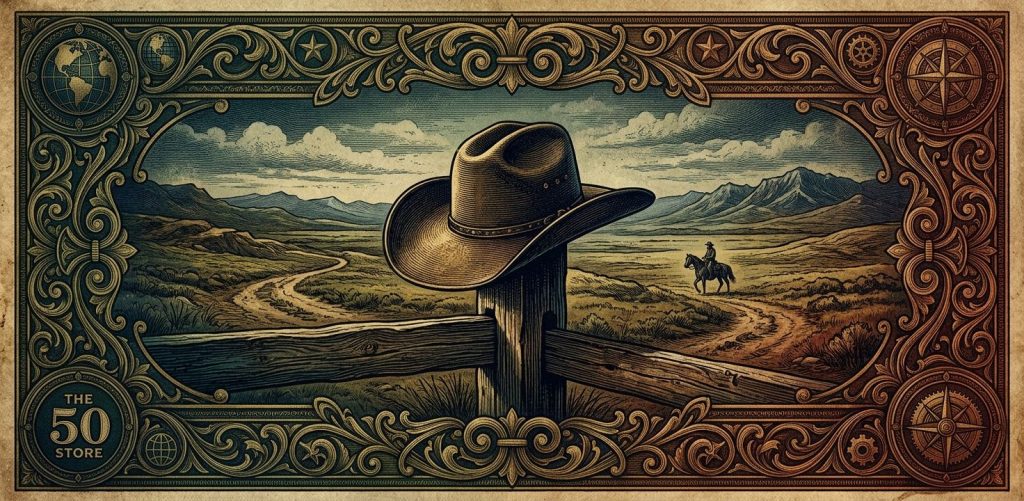
I sit out on my front porch most afternoons. The world moves fast these days. Cars hum by in a rush. People walk past with their eyes aimed squarely at the glowing screens in their hands. But yesterday afternoon, something caught my eye. A young woman walked past my yard wearing a crisp, wide-brimmed felt hat. She stood tall. She looked straight ahead at the horizon. It made me smile. That silhouette is unmistakable. The cowboy hat is still with us. It has never left.
It is funny to think about how things change. Out in the rugged American West, a hat was not a fashion choice. The sun beat down on the open plains like a blacksmith hammering hot iron. The wind carried sharp grit that could blind a man in minutes. A good, sturdy hat was a matter of pure survival. Yet somehow, this basic tool of daily labor became our greatest national myth. It turned into an enduring icon of freedom. It became a universal symbol of hard work.
How did a simple piece of molded fur become the crown of the American spirit? The answer is a story of sheer determination. It is a story of people facing impossible odds and refusing to bend.
Patriotic Bald Eagle Vintage USA Flag T-Shirt
Wear your story with pride! Celebrate classic American values, history, and heritage with our premium crafted apparel, designed for comfort and durability.
A Simple Tool for a Harsh Land
To truly understand the hat, we have to look back at a man named John B. Stetson (1830 to 1906). He was the son of a successful hat maker from Philadelphia. His life could have been very comfortable. But his lungs were weak. He caught tuberculosis. The doctors told him he did not have long to live. So, he made a brave choice. He went west. He wanted to see the grand, open spaces of this vast country before his time was up.
He eventually ended up near Pikes Peak in the early 1860s. The weather out there was harsh. The cold rain soaked him to the bone. The sun blistered his skin. To stay dry and protect himself, he used an ancient felting technique he learned from his father. He took raw animal fur, mostly beaver and rabbit. He boiled it, kneaded it, and manipulated it with his bare hands until it formed a dense, waterproof cloth.
He shaped this material into a hat with a massive brim and high crown. People laughed at him at first. His companions thought it looked enormous and ridiculous. But the laughter stopped when the rains came. That wide brim kept the freezing water completely off his neck. It perfectly shaded his eyes from the blinding afternoon glare. It was so well made that he could even use it as a bucket to hold water for his horse to drink.
He called his magnificent creation the Boss of the Plains. He started selling them to the rough men moving into the territories. The demand was absolutely unbelievable. If you look at the historical numbers, they are truly astonishing. By 1906, the Stetson manufacturing plant was producing nearly two million hats a year. Think about that for a moment. Two million hats a year in an era long before modern, computerized machines did all the heavy lifting. The western wear market never really slowed down. Even today, recent industry research reports indicate the global western wear market is valued at over 70 billion dollars. People all over the world still desperately want a piece of that independent frontier spirit. It is not just a passing trend. It is a permanent fixture in our shared culture.

Patriotic Bald Eagle Vintage USA Flag T-Shirt
Wear your story with pride! Celebrate classic American values, history, and heritage with our premium crafted apparel, designed for comfort and durability.
Patriotic Bald Eagle Vintage USA Flag T-Shirt
Wear your story with pride! Celebrate classic American values, history, and heritage with our premium crafted apparel, designed for comfort and durability.
The Vaqueros and the Working Spirit
But we must be honest about our history. The true roots of this grand style go back even further than Mr. Stetson. Long before the famous brands existed, the proud vaqueros of northern Mexico and early California were already riding the endless plains. They wore beautifully crafted wide sombreros to shield themselves from the brutal desert heat.
When the English speaking settlers arrived in those territories, they were green. They did not know the land. They learned from these master horsemen. They adopted their roping methods. They adopted their heavy leather saddles. And most importantly, they adopted their headwear. The modern cowboy hat was born directly from this profound sharing of knowledge and survival skills.
It is a beautiful thing. Different groups of people came together under the vast, open sky. They figured out how to survive together. The hat reminds us of that deep, shared history. It belongs to the tough ranchers who still work from the faint light of dawn until the deep purple dusk. It belongs to the calloused hands that stretch barbed wire fences and quietly tend to cattle in the freezing snow.
I remember taking a trip to Fort Worth many years ago. I walked down by the old stockyards. The air was thick with the smell of dust, hay, and livestock. The wooden pens were full of men and women doing extremely hard physical labor. Every single one of them wore a hat. You could literally read a person’s life story by the shape and condition of their brim.
A tightly curled edge meant one thing. A flat, rigid brim meant another. The dark sweat stains wrapping around the base of the crown told honest stories of long, hot days. The fine layer of pale dust settling into the felt spoke of dry seasons, hard rides, and unbroken dedication. The hat was not a costume. It was a vital part of their anatomy.
A Crown of Freedom and Independence
There is a very good reason we still hold a deep love for this particular shape. When you carefully place a western hat on your head, something inside you shifts. You stand just a little bit straighter. You square your shoulders. You instantly feel a deep, grounding connection to the frontier.
It represents the beautiful, enduring idea that you can make your own way in this chaotic world. You are not confined by brick walls or glass towers. You have the freedom to ride out into the great unknown. You have the power to face the storms and come out the other side stronger.
I look around and see young folks today facing a complicated, noisy world. Everything moves so quickly. The pressures they face are different from the ones we faced, but they are just as heavy. But when I sit on my porch and see a young man or a young woman tip the brim of a felt hat, I feel a profound, overwhelming sense of hope for the future.
They are carrying forward a quiet spirit of resilience. They are keeping the best parts of our national myth alive. And let me tell you, it is a very good myth. It is a story of relying on your own two hands. It is a story of treating your neighbors with quiet, dignified respect. It is a story of finishing the hard job you started, no matter how long it takes.
Passing the Torch to a New Generation
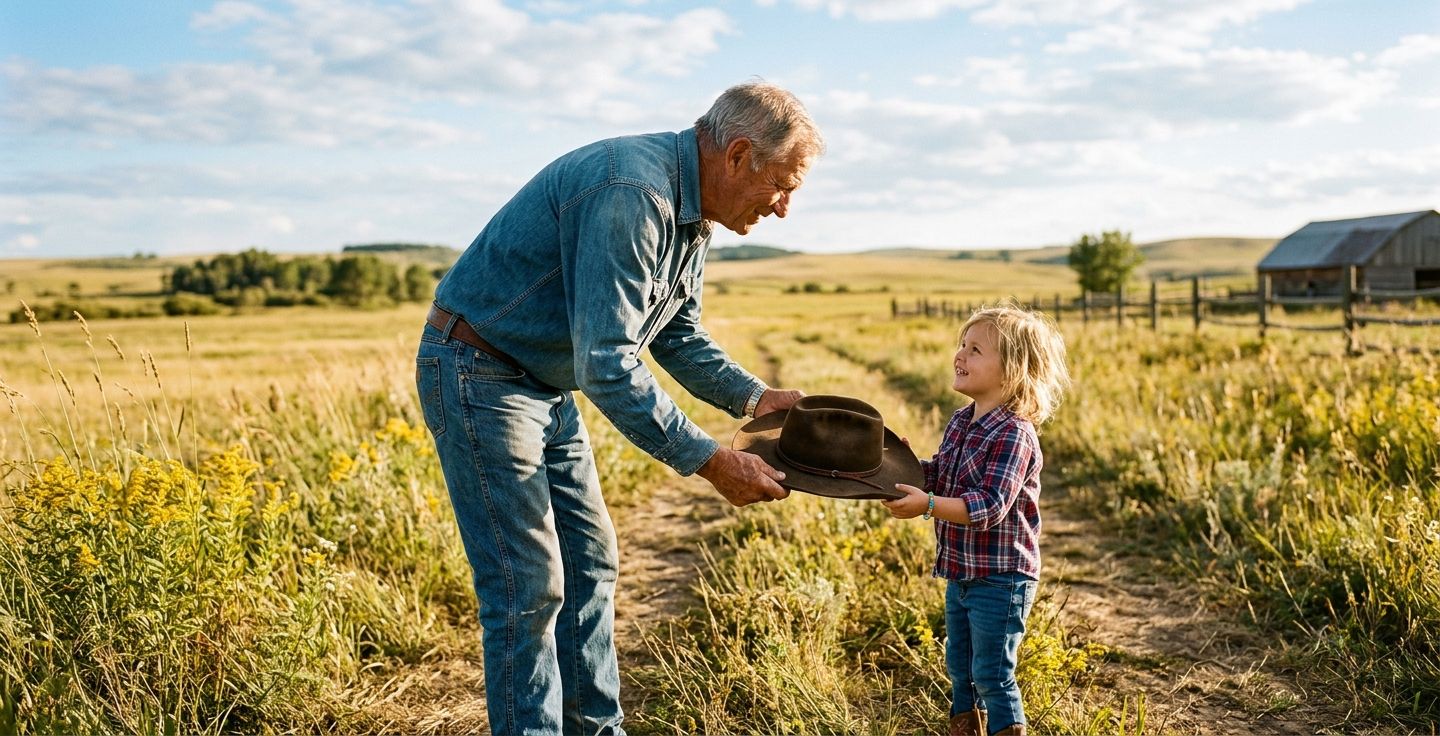
We absolutely need that resilient spirit now more than we ever have. We need young people who are willing to roll up their sleeves and work hard. We need good folks who can look out at the distant horizon and see endless possibilities instead of just terrifying obstacles. The hat itself is merely an object made of felt or straw. But the deep values it represents are completely timeless.
If you have never worn one yourself, maybe give it a try. Do not worry about feeling silly. Find a good, well-made hat that fits properly. Take the time to steam it and shape it to fit the unique contours of your own face. Let it gather a little trail dust. Let it slowly become a true part of your own personal story.
Common Questions About the Cowboy Hat
Over the years, I have heard folks ask a lot of questions about our favorite piece of headwear. Here are a few answers to the things people wonder about most often.
What is the practical purpose of the dents in a cowboy hat?
The creases and dents were originally practical. They allowed a working ranch hand to easily grab the hat and take it off or put it on with one hand. Over time, different creases became associated with specific regions and styles.
Did real cowboys in the Old West wear Stetson hats?
Yes, many of them did. The Boss of the Plains became incredibly popular after the Civil War. It was durable and waterproof. However, many early cowboys also wore old bowler hats or slouch hats before the wider brim styles became standard.
How do you properly care for a felt hat?
You should brush it regularly with a soft bristle brush. Always brush in a counterclockwise direction on the top. When you set it down, place it upside down on its crown so the brim does not lose its carefully crafted shape.
The Journey Continues
To sum things up nicely, the cowboy hat began as a necessary piece of survival gear for a very harsh environment. Through the brilliant ingenuity of hardworking folks like John B. Stetson and the incredibly rich, masterful traditions of the vaqueros, it evolved. It became a beloved staple of western life. Today, it stands as an incredibly powerful, universally recognized icon of American freedom and honest work. It beautifully connects our distant past directly to our hopeful future.
I have seen a whole lot of years quietly pass by from this porch. I have seen countless fashion trends come and go with the changing wind. But some things in this world are truly built to last. I am so deeply glad that the younger generation is actively finding their own unique way to wear this proud, historical symbol. They wear it well.
What unique story will your hat tell about you when the time comes to pass it down to the next generation?