
American Sports & Pastimes
Understanding The Red Card: Soccer’S Ultimate Penalty Explained
My friends, few things in sports hit you quite as hard, quite as suddenly, as the flash of a red card. It’s a moment that freezes time, sucking the air out of the stadium and sending a collective gasp through the crowd. One second, you’re watching a vibrant, flowing game, full of hope and strategy. The next, a player is walking off the field, head down, and everything changes. It’s a dramatic, definitive penalty that carves itself into the memory of every fan, coach, and player involved.
For those of us who’ve watched the beautiful game grow here in America, from its humble beginnings to the roaring stadiums we fill today, understanding these pivotal moments is key to truly appreciating the spectacle. Soccer, with its global language and universal passion, offers lessons in fairness, resilience, and the sheer unpredictability of life itself. And right at the heart of that drama, dictating the ebb and flow, is that little red rectangle. You might ask, what is red card in soccer, really? It’s more than just a punishment, it’s a crucial element of the game’s integrity, a clear line drawn in the sand that ensures fair play and protects the spirit of competition we Americans hold so dear.
The Whistle, The Cards, and a British Innovation
It’s easy to imagine that referee cards have always been a part of soccer, but like many things we cherish, they actually have a fascinating origin story. Before the late 1960s, a referee’s communication was largely verbal, or through hand gestures. This often led to confusion, especially in international matches where language barriers could turn a simple warning into a heated misunderstanding. Picture a packed stadium, thousands of fans, and a player genuinely unsure if he’s been warned or sent off. It was a recipe for chaos, and as an old-timer, I can tell you, it sometimes felt like the wild west out there!
A Blast from the Past: How Referee Cards Came to Be
The turning point came during the 1966 FIFA World Cup in England. A quarter-final match between England and Argentina grew particularly contentious. The referee, Rudolf Kreitlein, cautioned Argentinian captain [[Antonio Rattín]] but the player, either not understanding or refusing to accept the decision, wouldn’t leave the field. English manager Alf Ramsey later sought clarification from FIFA referee chief, the truly brilliant Englishman [[Ken Aston]] (you can read more about him on Wikipedia), regarding another incident in the same game where two English players were verbally cautioned but it wasn’t immediately clear to the press or even the players themselves.
Aston, pondering how to make referee decisions universally clear, was driving home one day and stopped at a traffic light. He saw the red and yellow lights and had an epiphany. Yellow for ‘caution’, red for ‘stop’ or ‘send off’. Simple, intuitive, and transcends language. What a stroke of genius, wouldn’t you say? These soccer referee cards were first introduced at the 1970 World Cup in Mexico, and the game hasn’t been the same since. It immediately brought clarity and professionalism to the officiating, making the rules clear for everyone involved, from the players to us fans in the stands.
Some Surprising Numbers
You might think red cards are super rare, but they happen more often than you’d imagine, and their impact is truly staggering. For instance, did you know that in a highly competitive league like Spain’s La Liga, during the 2022-2023 season, there were a whopping 148 red cards issued across 380 matches? That’s almost one red card every two or three games! Compare that to the English Premier League in the same season, which saw 30 red cards. The difference highlights how different leagues and referee interpretations can shape the game. Furthermore, studies by analytics firms often suggest that a team reduced to ten players sees their win probability drop significantly, sometimes by as much as 10-15% instantly, depending on the game state. It’s not just a penalty; it’s a monumental shift in the balance of power on the field.
The Rules of the Game: When Red Means Go
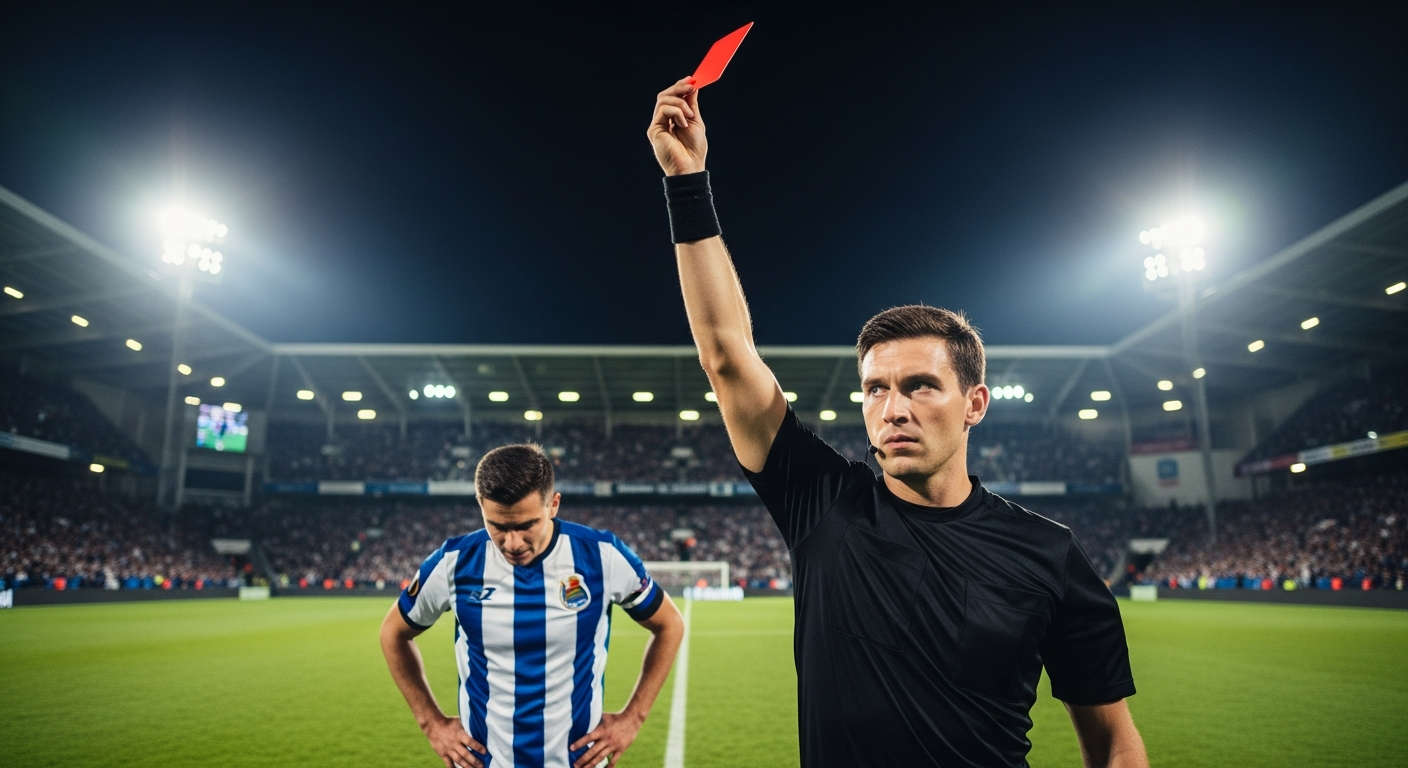
Understanding the difference between a direct red card and a double yellow card is crucial for any fan. Both lead to the same immediate outcome – expulsion from the game – but the reasons behind them tell very different stories. These soccer penalties are the ultimate disciplinary actions a referee can take, designed to uphold the fairness and safety of the game.
Direct Red Card: No Questions Asked
A direct red card is exactly what it sounds like: a straight-up sending off for a single, severe offense. There’s no prior warning, no yellow card. The referee goes straight for the red, and the player is off. The offenses that warrant a direct red are typically those that are dangerous, unsporting, or deny a clear goal-scoring opportunity. These are the moments that can turn a match on its head in an instant. The soccer rule guide outlines these scenarios clearly:
-
Serious Foul Play: This usually involves excessive force or brutality in challenging an opponent for the ball, especially if it endangers the safety of the opponent. Think of a reckless, two-footed tackle from behind. Ouch.
-
Violent Conduct: This is an act of aggression against an opponent, teammate, official, or any other person, often when the ball isn’t even in play. Spitting at someone also falls into this category. It’s about maintaining respect and order on the field.
-
Denying a Clear Goal-Scoring Opportunity (DOGSO): If a player prevents a clear goal or an obvious goal-scoring opportunity by deliberately handling the ball (except a goalkeeper in their penalty area) or by committing a foul, a red card is usually issued. This is one of the most tactical and often debated soccer fouls explained, as it involves judgment of proximity, direction, number of defenders, and control of the ball.
-
Offensive, Insulting or Abusive Language and/or Gestures: This is straightforward. Respect for the game and for all involved is paramount.
Double Yellow Card: Accumulation and Consequences
Then there’s the double yellow card. This means a player has committed two cautionable offenses in the same match. Each individual offense, on its own, would only warrant a yellow card. But once that second yellow flashes, it automatically triggers a red card. The referee first shows the second yellow, then immediately follows with the red, indicating the player’s dismissal. It’s a cumulative penalty, reflecting a player’s inability or unwillingness to adjust their behavior after a warning.
Common yellow card offenses that can lead to a red include persistent fouling, unsporting behavior, dissent, delaying the restart of play, or entering/leaving the field without permission. It’s a good reminder that even minor infractions, when repeated, can have major consequences. Those are the red card rules in a nutshell.
The Aftermath: Suspensions and Beyond
Getting a red card isn’t just about leaving the field for that game. It nearly always comes with a red card suspension for future matches. The length of the suspension depends on the severity of the offense. A direct red for denying a goal-scoring opportunity might lead to a one-match ban, while violent conduct could result in multiple matches, or even an investigation by the league’s disciplinary committee. For us American fans, seeing a star player sidelined for key games is tough, but it reinforces the idea that no one is above the rules, a principle we value deeply.
A Game of Ten: The Tactical and Human Impact
When a player is sent off, the game fundamentally changes. What was once a balanced contest becomes a monumental challenge for the team with ten players, and a significant advantage for their opponents. It’s a moment that tests character, strategy, and resilience like almost nothing else in sports.
The Chess Match on the Field
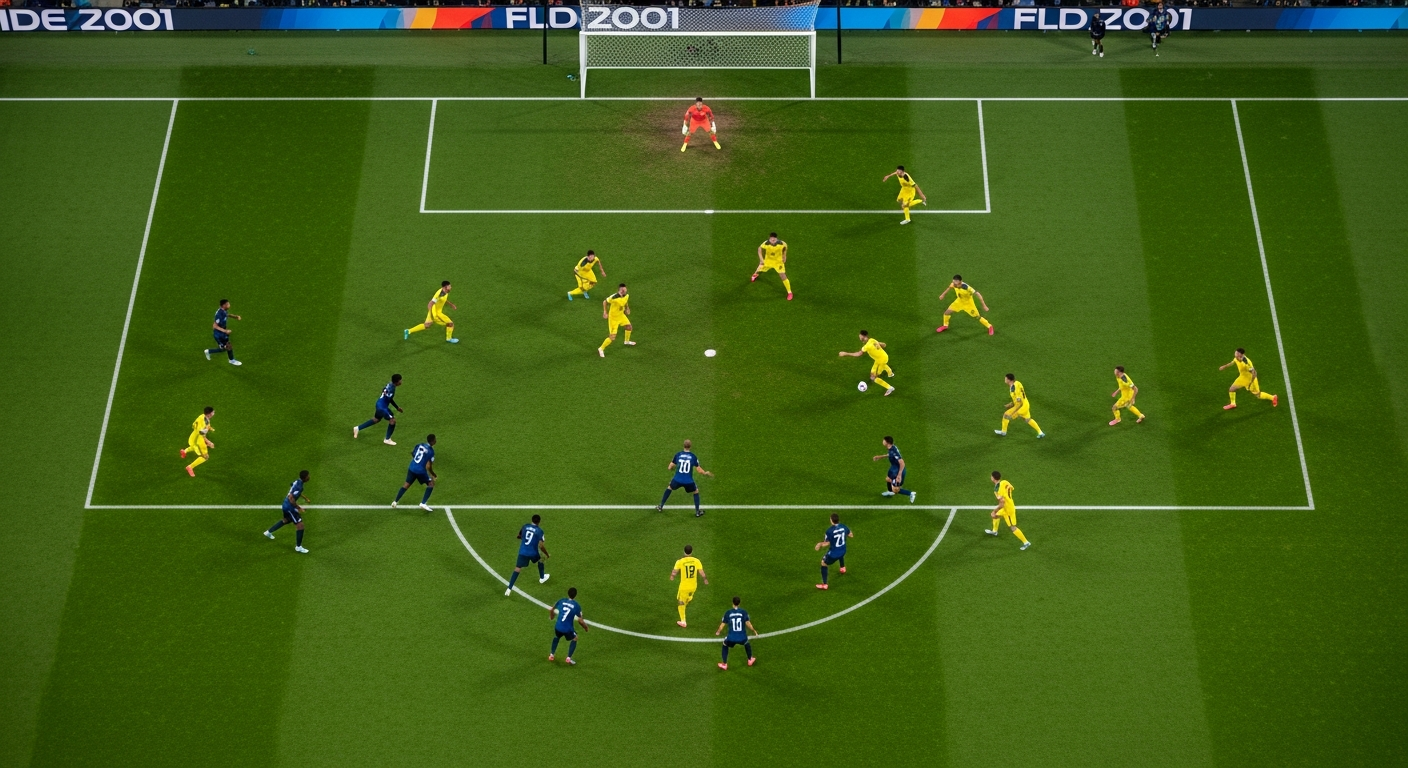
For the coaching staff, a red card means an immediate, frantic recalculation. They have to decide how to reorganise their team to cover the missing player. Do they sacrifice an attacking player for a defender? Do they shift formations from a 4-3-3 to a 4-4-1, or a 5-3-1, just to hold the line? It becomes a desperate chess match, trying to plug holes and maintain some semblance of attacking threat while severely handicapped. I’ve seen teams pull off incredible upsets playing with ten men, fueled by sheer grit and determination. Those are the moments that make you proud, seeing that American fighting spirit come alive!
The psychological impact is immense, too. For the player sent off, there’s often immediate shame and frustration, knowing they’ve let their teammates down. For the remaining players, it can be a crushing blow to morale, or it can galvanize them, creating a ‘we’re in this together’ mentality. And for the opposing team, it’s a huge boost, knowing they have a numerical advantage. The energy in the stadium shifts, the chants grow louder, and every pass, every tackle feels amplified.
The Spirit of the Game
Ultimately, the red card, though harsh, serves to protect the integrity of the game. It ensures that dangerous play is punished, that respect is maintained, and that the contest remains fair. In a world where competition can sometimes spill over into unfairness, these rules remind us of the importance of sportsmanship. It’s a tough lesson, sometimes delivered with a dramatic flourish, but it’s a lesson that makes the game stronger, more exciting, and more worthy of our passion. It’s a reflection of our national character, where rules and consequences, tough as they may be, ultimately lead to a more just and respected game.
Moments Etched in Memory: Red Cards in History
Some red cards fade into obscurity, just another statistic. Others, however, become legendary, forever tied to a player, a match, or even a nation’s sporting memory. They are micro-histories within the grand narrative of soccer, shaping outcomes and careers.
American Grit and Global Drama
Globally, perhaps no red card is as iconic as [[Zinedine Zidane]]’s headbutt on Marco Materazzi in the 2006 World Cup Final. A moment of unbelievable talent marred by a sudden, shocking act of aggression that cost France dearly in the biggest game of all. Zidane, a legend, walking past the trophy he would not lift, is an image forever etched in my mind, a poignant reminder of human imperfection under immense pressure. It highlights the fine line between genius and frustration.
Closer to home, we’ve seen our share of dramatic red cards in MLS and for the U.S. Men’s National Team. While perhaps not as globally famous, these moments hold deep significance for us American fans. Think of the intense rivalry matches, where emotions run high and a red card can feel like a betrayal, or a defiant stand. I remember a particularly feisty match at the historic Rose Bowl Stadium a few years back, where a controversial sending off turned the tide, and the roar from the crowd was something you felt in your bones. These are the moments that truly encapsulate the passion Americans bring to soccer, a passion that has grown exponentially in my lifetime.
Even a player like [[Clint Dempsey]], a fierce competitor and one of our nation’s best, faced red card moments in his career. While not always for egregious fouls, they remind us that even the most disciplined players can get caught up in the heat of the moment, or push the boundaries of what’s allowed. These instances, whether fair or controversial, add layers to the narrative of our teams and our sport. They fuel debates, they become talking points for years, and they contribute to the rich red card soccer history that gives the game its incredible depth.
So, the next time you see that bright red card flash, don’t just see a penalty. See the history, the intricate red card rules, the tactical shifts, and the raw human drama that makes soccer so compelling. It’s a testament to the game’s commitment to fairness and its enduring power to thrill and challenge. It reminds us that even in heated competition, there are boundaries, and respecting those boundaries makes the victory, or even the valiant defeat, all the more meaningful. It’s a beautiful game, my friends, and understanding every facet, even the tough ones, only deepens our love for it. Here’s to many more years of cheering, learning, and celebrating the spirit of soccer, right here in America.